Suspended Row
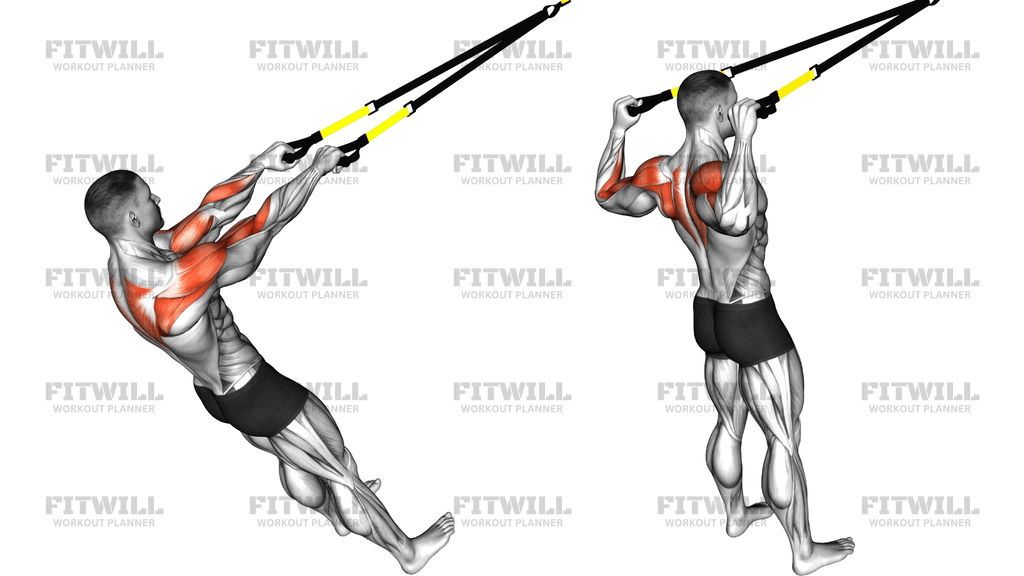
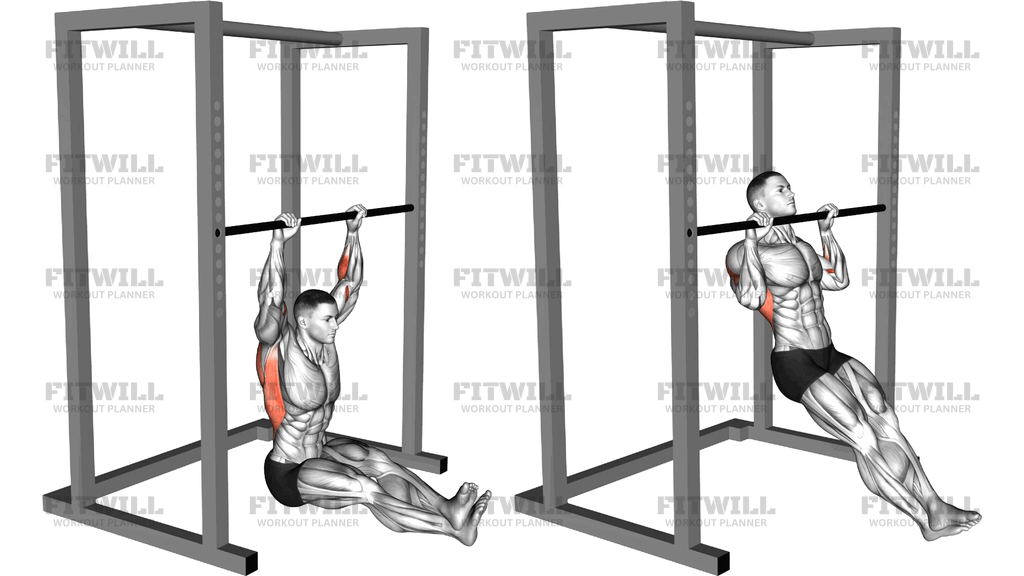
Suspended Row is a bodyweight pulling exercise performed with rings or suspension straps anchored overhead. In the image, the body is held in a straight line from shoulders to heels while the hands stay in a neutral grip, so the exercise is really a test of upper-back strength, body tension, and clean scapular control. It is most often used to build the traps, rhomboids, lats, rear shoulders, and biceps without needing a machine or external load.
The setup matters because the angle of your body changes the difficulty more than anything else. A more upright torso makes the row easier; walking the feet farther forward makes it harder. From the start, the goal is to keep the ribs down, glutes tight, and neck long so the pull comes from the back and arms instead of from sagging through the hips or craning the head. The rings should stay even so one shoulder does not take over the rep.
Each repetition begins with the shoulder blades set and the arms straight. As you pull, drive the elbows back and keep them close enough that the rings travel toward the lower ribs or lower chest rather than drifting out wide. That path lets the upper back work hard while the shoulders stay organized. Pause briefly in the top position with the chest lifted and the shoulder blades squeezed together, then lower slowly until the arms are straight again without collapsing the torso.
Suspended Row is useful when you want a strict horizontal pull that also challenges core stiffness and shoulder positioning. It fits well in accessory strength work, warm-ups for pulling sessions, or conditioning circuits where you want clean repetitions instead of heavy loading. Beginners can use a more upright angle or slightly bent knees, while stronger lifters can progress by lowering the feet, straightening the body more aggressively, or adding a slower eccentric phase.
The biggest technique errors are shrugging the shoulders toward the ears, letting the hips sag, yanking with momentum, or flaring the elbows so far that the row turns into a shoulder-dominant movement. If the front of the shoulders feels pinched, reduce the range slightly and keep the rings closer to the body. When done well, Suspended Row trains the upper back in a very practical way: strong pulling mechanics, stable shoulder blades, and consistent tension from the first rep to the last.
Fitwill
Log Workouts, Track Progress & Build Strength.
Achieve more with Fitwill: explore over 9600 exercises with images and videos, access built-in and custom workouts, perfect for both gym and home sessions, and see real results.
Start your journey. Download today!




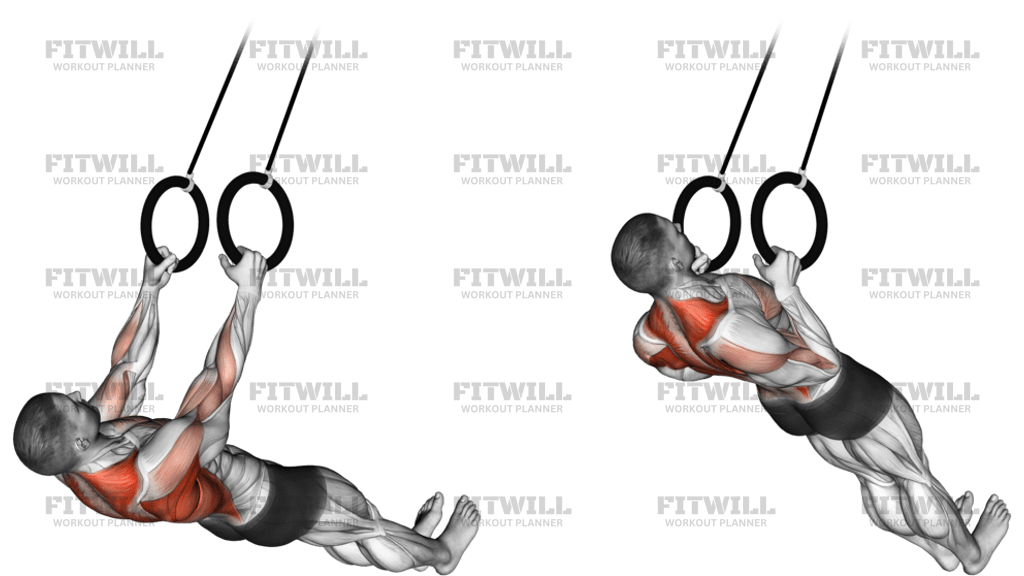
Instructions
- Adjust the rings or suspension straps to a height that lets you start with straight arms while your body stays in a long line from head to heels.
- Grip the rings with a neutral grip, step your feet forward, and lean back until your torso is angled under the anchor.
- Plant your heels, squeeze your glutes, and keep your ribs down so the hips do not drop during the row.
- Set your shoulders by pulling them slightly back and down before the first pull.
- Pull your body toward the rings by driving the elbows back and keeping them close to your sides.
- Bring the rings toward your lower ribs or lower chest while keeping your body straight.
- Pause briefly at the top with the shoulder blades squeezed together and the chest open.
- Lower yourself under control until the arms are straight again, then repeat for the planned reps.
Tips & Tricks
- A more upright body angle makes the row easier; stepping the feet farther forward increases the challenge quickly.
- Keep the rings even from rep to rep so one arm does not rotate the torso or shrug harder than the other.
- Think about pulling the elbows back, not just curling the hands, so the upper back stays in charge of the movement.
- If your hips sag, shorten the lever by moving the feet back a little or bending the knees slightly.
- Lower under control for a full count instead of dropping quickly from the top position.
- Keep your chin tucked lightly and your neck long so you do not crane toward the rings.
- Exhale as you pull and finish the rep with the chest and shoulder blades under control, not with a hard arch.
- Stop the set when the rings start drifting, the shoulders shrug, or the torso can no longer stay rigid.
Frequently Asked Questions
What muscles does Suspended Row work most?
It emphasizes the upper back, especially the traps and rhomboids, while the lats, rear shoulders, and biceps help finish the pull.
Is this the same as a ring row?
Yes. This is a suspended or ring row variation, using the body angle and ring position to create the resistance.
How do I make Suspended Row easier?
Stand more upright, keep the feet closer to the anchor, and use a smaller range if needed while you learn to keep the torso straight.
How do I make it harder?
Walk the feet farther forward, keep the body more horizontal, or add a slower lowering phase so each rep lasts longer.
Where should the rings go at the top?
In a clean rep, the rings travel toward the lower ribs or lower chest, not up toward the neck or out to the sides.
Can I bend my knees during the row?
Yes. Slight knee bend can make the setup easier and help you keep the hips from dropping, especially when you are learning.
Why do my shoulders shrug during this exercise?
The angle is probably too hard or the pull is starting without a proper shoulder set. Make the body more upright and pull the shoulders back and down first.
Is Suspended Row good for beginners?
Yes, as long as the body angle is kept manageable. It is a good way to learn horizontal pulling without loading the spine heavily.