Twist Sit-Up
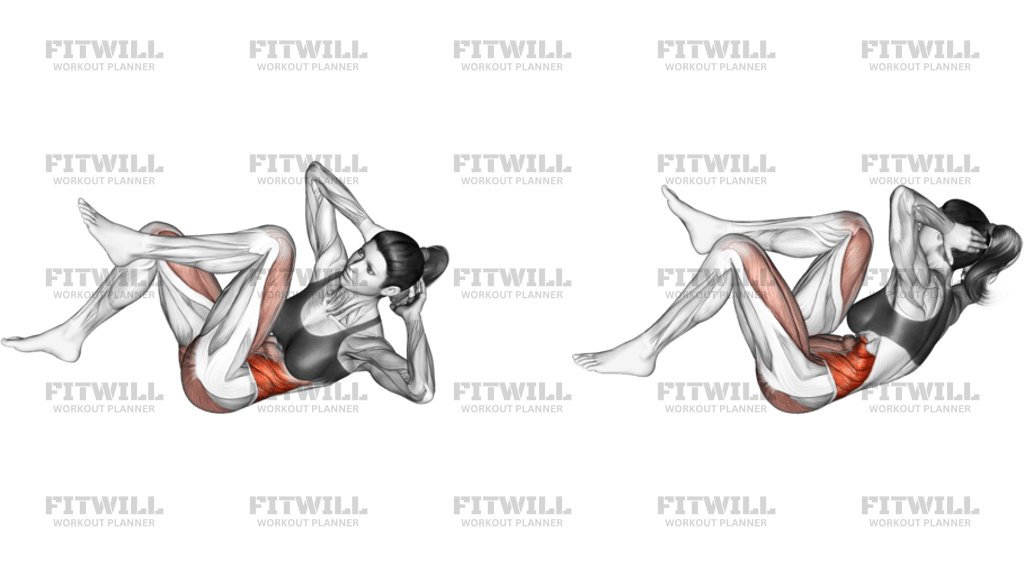
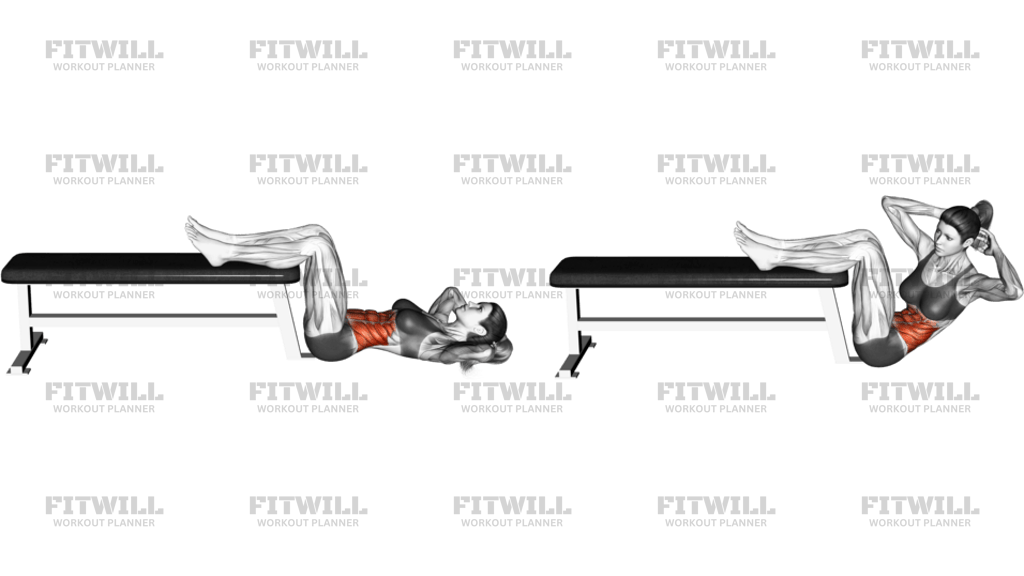
Twist Sit-Up is a bodyweight core exercise performed on the floor with the lower legs supported on a bench. That bench support changes the lever on your trunk and hips, so the exercise becomes a deliberate blend of spinal flexion and rotation instead of a fast, sloppy crunch. The goal is not just to sit up, but to curl the ribs toward the pelvis while turning one shoulder toward the opposite knee.
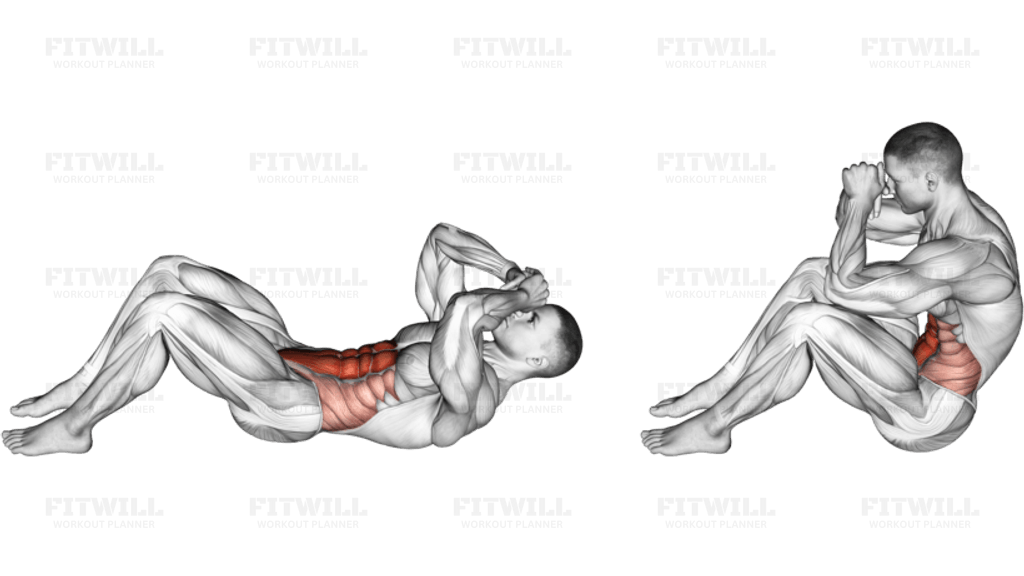
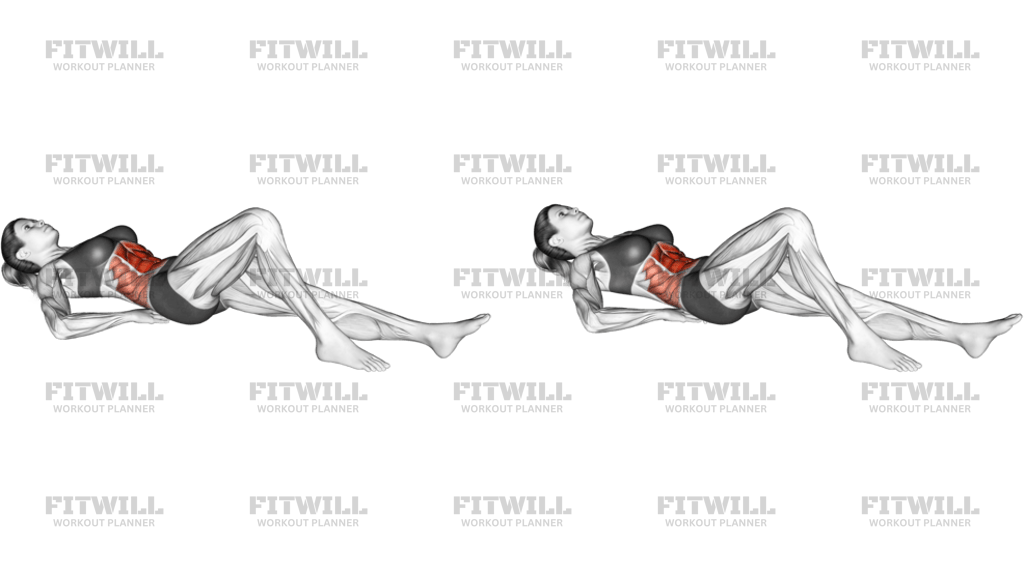
The main muscles involved are the abs, with the obliques helping create the twist and the hip flexors assisting through the lift. In technical terms, the rectus abdominis does most of the flexion work, while the external obliques and iliopsoas help control the rotation and rise. Because the feet stay elevated, you can focus more on trunk control and less on leg drive, which makes the setup especially useful for core-focused training.
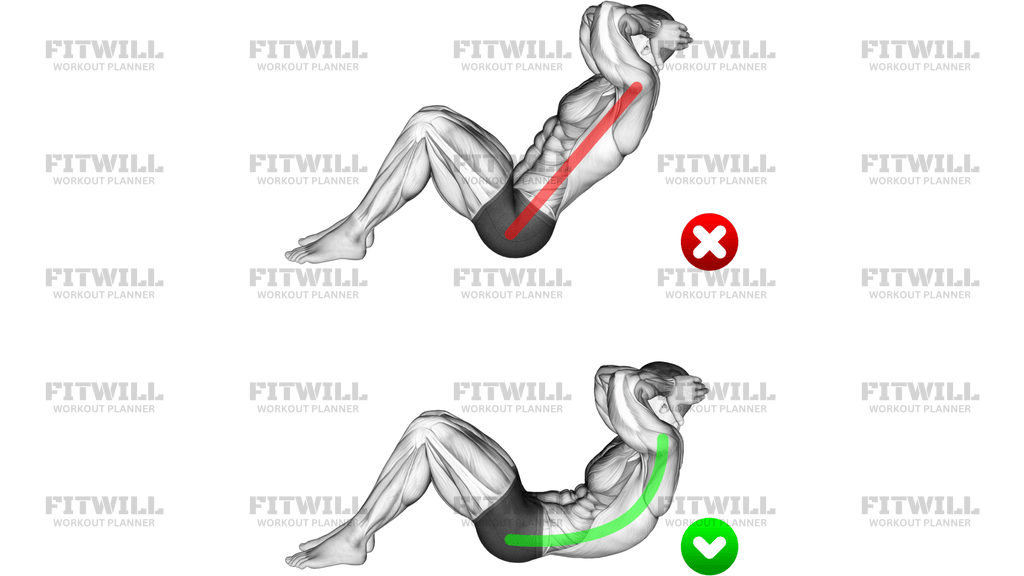
Setup matters here. Lie back with your calves or heels resting on the bench, knees bent, and your lower back in contact with the floor at the start. Place your hands lightly behind your head or at the sides of your temples, keep the elbows open, and brace before you move. A good rep starts from a long, controlled spine and ends with the shoulder coming up and across without yanking the neck or collapsing the chest.
As you lift, rotate through the rib cage rather than just swinging the elbows. Exhale as you curl up, then lower under control until your shoulder blades return to the floor and the abdomen stays engaged. The best version of this exercise feels smooth and repeatable, with the torso doing the work and the hips staying quiet. If you feel the lower back arching hard, the movement is too large or too fast.
Twist Sit-Up fits well in core sessions, abdominal accessory work, or warm-ups where you want controlled trunk flexion and rotation. It can be scaled by reducing range of motion, slowing the tempo, or keeping the twist small. Beginners can use it if they stay light, controlled, and strict, but the movement should always feel organized rather than explosive. If the neck, lower back, or hip flexors take over, shorten the rep and clean up the setup before adding volume.
[ Workout Log & Planner ]
Put your next workout in Fitwill
Keep your plan and training log ready when you are.


Instructions
- Lie on your back with your calves or heels supported on the bench and your knees bent so your shins are roughly parallel to the floor.
- Set your lower back and shoulders down on the floor, then place your hands lightly behind your head or at your temples with your elbows open.
- Brace your abs before you start and keep your ribs down so the first move comes from the trunk, not a leg swing.
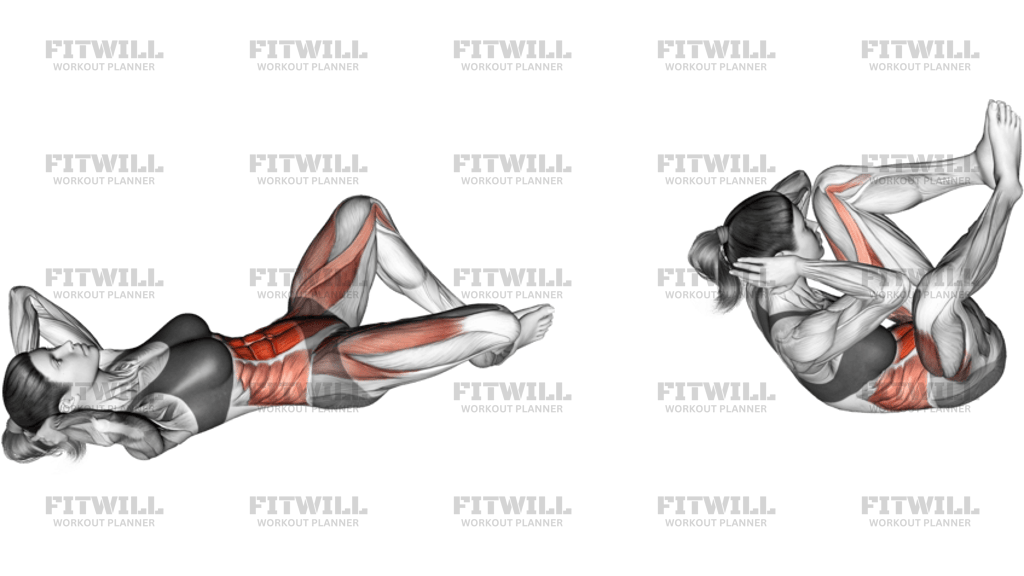
- Exhale, curl your shoulder blades off the floor, and rotate one shoulder toward the opposite knee.
- Keep the chin slightly tucked and let your eyes follow the twist without pulling on your neck.
- Lift until your upper back and one shoulder clearly leave the floor, then pause briefly at the top.
- Lower slowly in the same arc until your shoulders and upper back return to the floor under control.
- Reset your brace before the next rep and alternate sides or follow the programmed side pattern.
Tips & Tricks
- Keep your hands light at the sides of the head; if you pull on your neck, the twist is too aggressive.
- Think about bringing a shoulder toward the opposite knee, not just swinging the elbows across the body.
- Let the bench support the lower legs, but do not use it to kick or bounce into the next rep.
- If the hip flexors dominate, shorten the range and keep the ribs tucked down through the lift.
- A slow lower is more useful than a fast sit-up; control the last third of the descent especially carefully.
- Keep the twist small enough that your torso still feels like it is curling, not just spinning.
- Exhale through the hardest part of the rep to help the rib cage close and the abs stay engaged.
- Stop the set when your lower back starts arching hard off the floor or your elbows start collapsing inward.
- Choose a rep count that lets every repetition look the same, because fatigue can quickly turn this into momentum work.
Frequently Asked Questions
What does Twist Sit-Up train most?
It mainly trains the abs, with the obliques helping create the twist and the hip flexors assisting during the curl.
Why are my lower legs placed on the bench?
The bench supports the legs so you can focus on controlled trunk flexion and rotation instead of using your feet for momentum.
Should I pull on my head during the twist?
No. Keep the hands light and let the torso lift the shoulders; pulling on the neck usually means the abs are not doing enough of the work.
How far should I come up on each rep?
Lift until the upper back and one shoulder clearly leave the floor, then stop before the movement turns into a jerky sit-up.
Is this exercise good for beginners?
Yes, if the range stays short and controlled. Beginners should focus on a smooth curl and small, clean rotation before chasing volume.
What if I feel it mostly in my hip flexors?
Shorten the rep, keep the ribs down, and reduce how high you sit up so the abs can lead the movement instead of the hips.
Should both shoulders twist at the same time?
No. Rotate enough that one shoulder comes toward the opposite knee while the other side stays controlled, so the torso actually has to work through rotation.
What is the main mistake to avoid?
The biggest mistake is using momentum from the legs or swinging the torso so fast that the twist disappears.