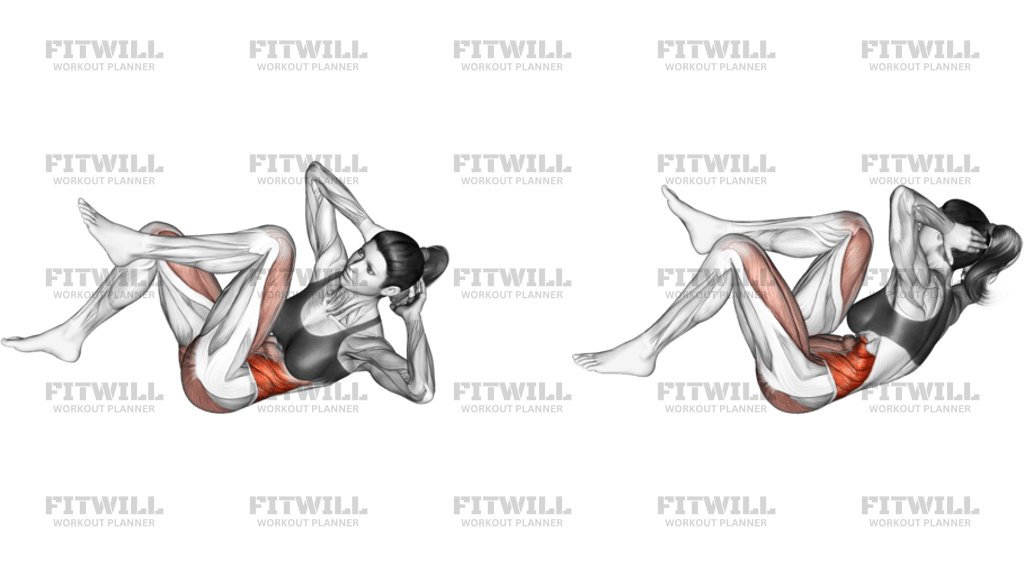
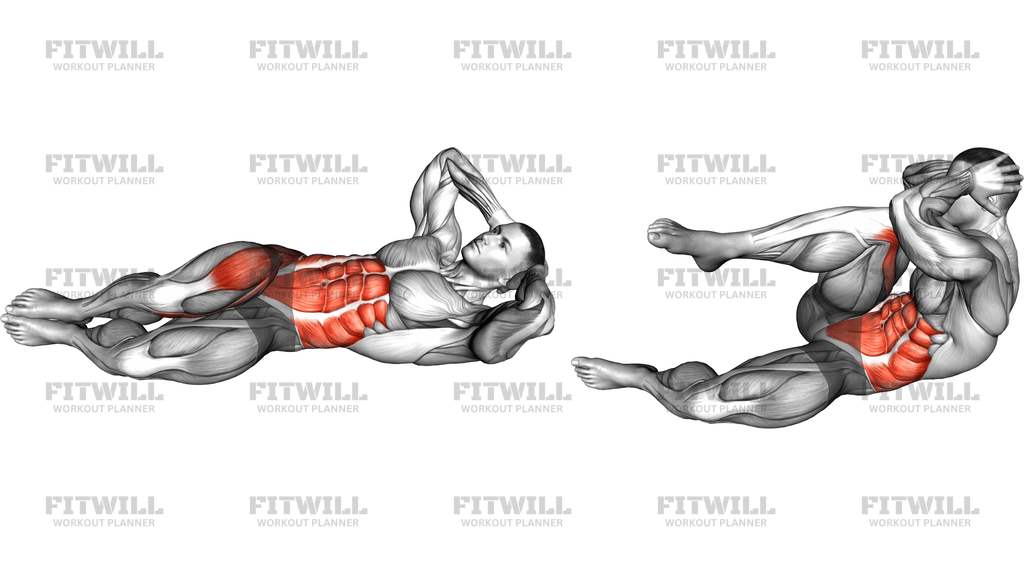
Twisting Crunch
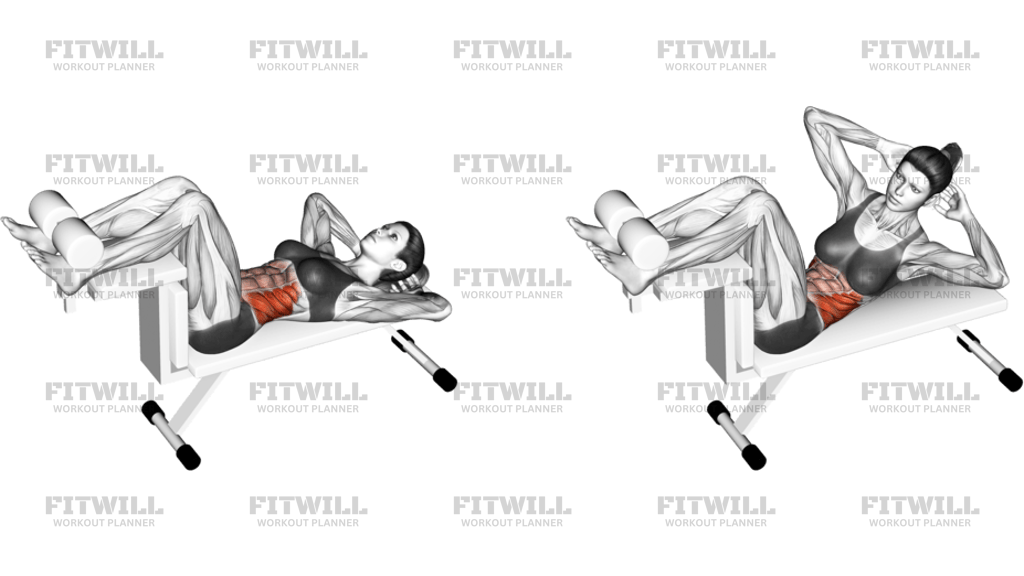
Twisting Crunch is a bodyweight core exercise performed on a decline bench with your feet anchored under the roller pads. The angled setup increases the challenge of the curl and rotation, making each rep more demanding than a flat-floor crunch while still keeping the movement simple and easy to coach. It is aimed at the obliques first, with the rectus abdominis and other trunk stabilizers helping to control the curl and twist.
The setup matters because the decline angle changes how much load the midsection has to manage. Lie back far enough that your head, upper back, and pelvis feel supported, then keep your hands lightly behind your head without pulling on the neck. From there, the exercise is about bringing the rib cage toward the pelvis and adding a small, deliberate rotation through the torso instead of swinging the elbows or hips.
Twisting Crunch works best when the twist stays controlled and comes from the upper torso. If the rotation is rushed, the neck takes over and the waist loses tension; if the range is too large, the low back can arch off the bench. A clean rep usually looks like a short, sharp curl at the top, a brief squeeze through one side of the waist, and a slow return until the shoulders are almost back on the bench.
Because this is a bodyweight movement, it is useful as accessory core work, warm-up activation, or higher-rep trunk training. It can also help lifters who want more targeted oblique work without adding external load. Beginners can use it by shortening the range and keeping the rotation small, while more advanced lifters can slow the lowering phase or hold the top position for a moment to make each rep stricter.
The main safety points are simple: keep the chin relaxed, avoid yanking on the head, and stop the set if the neck or lower back starts doing the work of the abs. Twisting Crunch should feel like a controlled crunch with rotation, not a sit-up with momentum. When the setup is right and the tempo stays deliberate, it is a focused way to train the sides of the waist and the front of the trunk together.
Fitwill
Log Workouts, Track Progress & Build Strength.
Achieve more with Fitwill: explore over 9600 exercises with images and videos, access built-in and custom workouts, perfect for both gym and home sessions, and see real results.
Start your journey. Download today!




Instructions
- Lock your feet under the decline bench pads and lie back with your head near the top of the bench.
- Place your hands lightly behind your head, keep your elbows open, and let your lower back settle against the pad.
- Set your ribs down, brace your trunk, and keep your chin tucked so the neck stays long.
- Curl your shoulders off the bench and rotate one shoulder toward the opposite knee in a short, controlled arc.
- Keep the opposite elbow open and let the rib cage drive the twist instead of pulling with your arms.
- Squeeze the obliques at the top for a brief moment without lifting your hips off the bench.
- Lower yourself slowly until your shoulder blades are almost back on the bench while keeping tension in the waist.
- Alternate sides or repeat the same side as programmed, breathing out on the curl and in on the return.
- At the end of the set, sit up under control and unhook your feet before getting off the bench.
Tips & Tricks
- Keep your hands light behind your head; the decline bench should challenge your abs, not your neck.
- Rotate only as far as you can keep your shoulders lifted and your lower back controlled against the pad.
- If your hips start sliding or popping up, shorten the curl and make the twist smaller.
- Exhale as you crunch and rotate so the waist tightens at the top instead of during the descent.
- Avoid turning this into a full sit-up; the torso should curl, not whip all the way upright.
- Slow the lowering phase to keep tension on the obliques through the full rep.
- Use a shallower decline or a flatter bench if the angle makes you lose control of the top position.
- Stop the set if you feel the pull mostly in the front of the hip flexors or the back of the neck.
Frequently Asked Questions
What muscles does Twisting Crunch work most?
Twisting Crunch primarily targets the obliques, with the rectus abdominis and other trunk stabilizers helping during the curl and rotation.
Is Twisting Crunch on a decline bench good for beginners?
Yes, if beginners keep the twist small and use a slow tempo. A shallower bench angle or shorter range makes the movement easier to control.
How do I keep my neck from hurting during Twisting Crunch?
Keep your hands light behind your head and think about lifting the chest, not pulling the head forward. If needed, cross your arms over your chest until the neck feels comfortable.
Should my elbows touch my knees in Twisting Crunch?
No. The goal is a short, controlled twist through the torso, not forcing a big reach between the elbows and knees.
Why is the decline bench used for Twisting Crunch?
The decline bench increases the challenge by lengthening the lever and making the trunk work harder against gravity. It also keeps the rep honest because momentum shows up quickly.
What is the biggest mistake with the decline bench setup?
Setting the body too high or too low on the bench can make the rep unstable. Your upper back, head, and feet should feel secure before you start twisting.
Can I do Twisting Crunch without a decline bench?
Yes. A flat-floor twisting crunch is a simpler substitution, though it will usually feel easier than the decline-bench version.
How should I breathe during Twisting Crunch?
Exhale as you curl and rotate into the top position, then inhale as you lower back down under control.