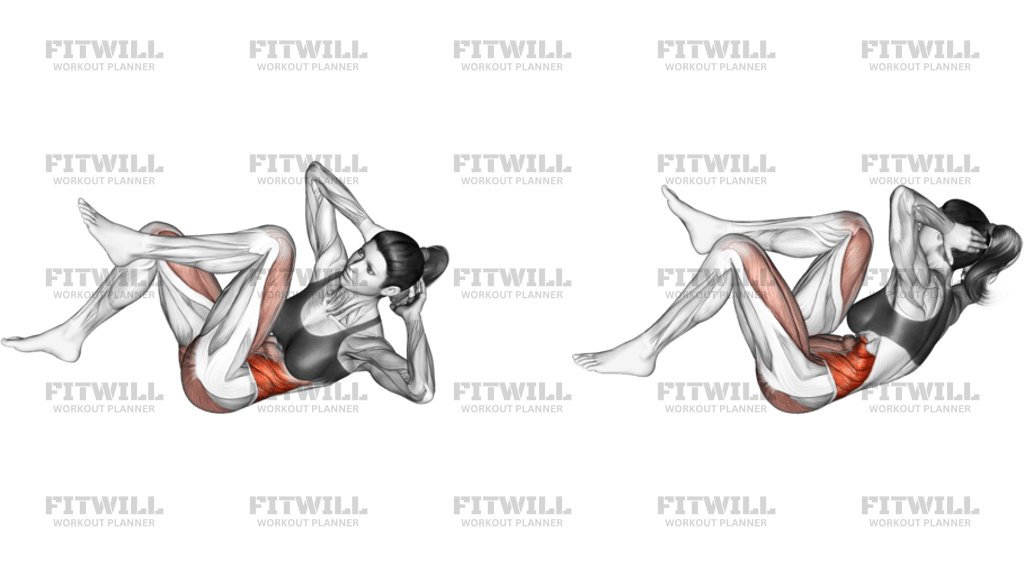
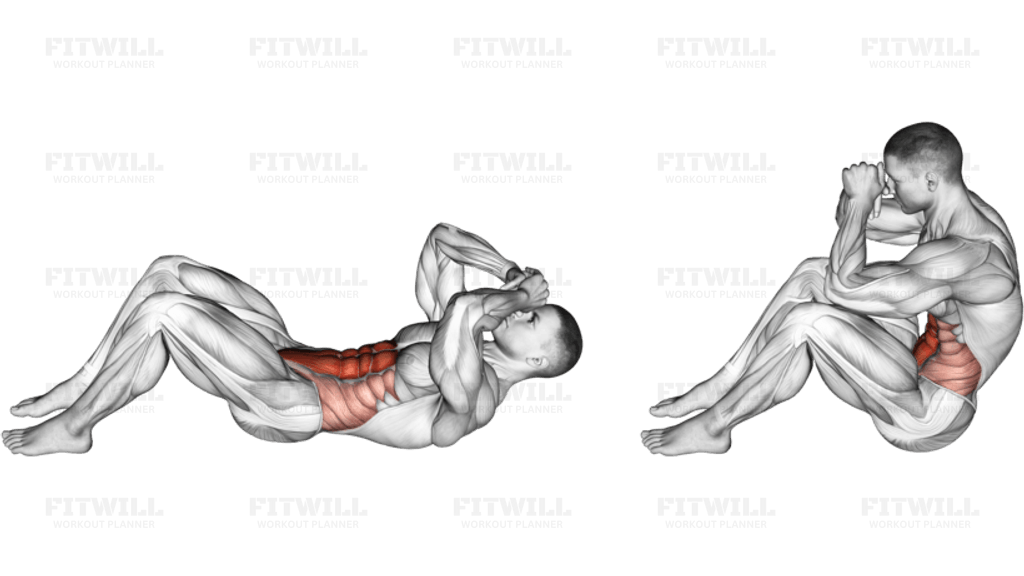
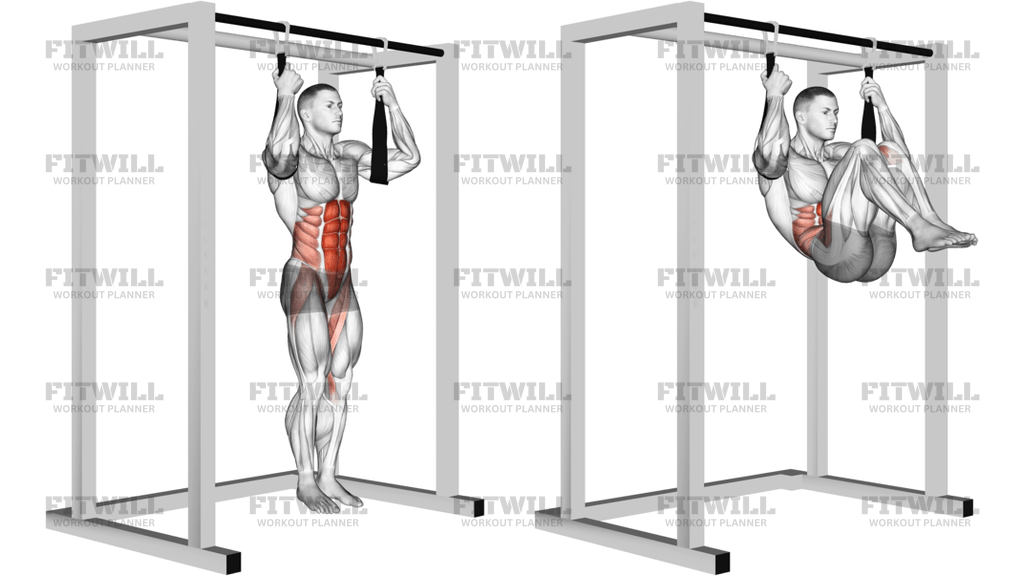
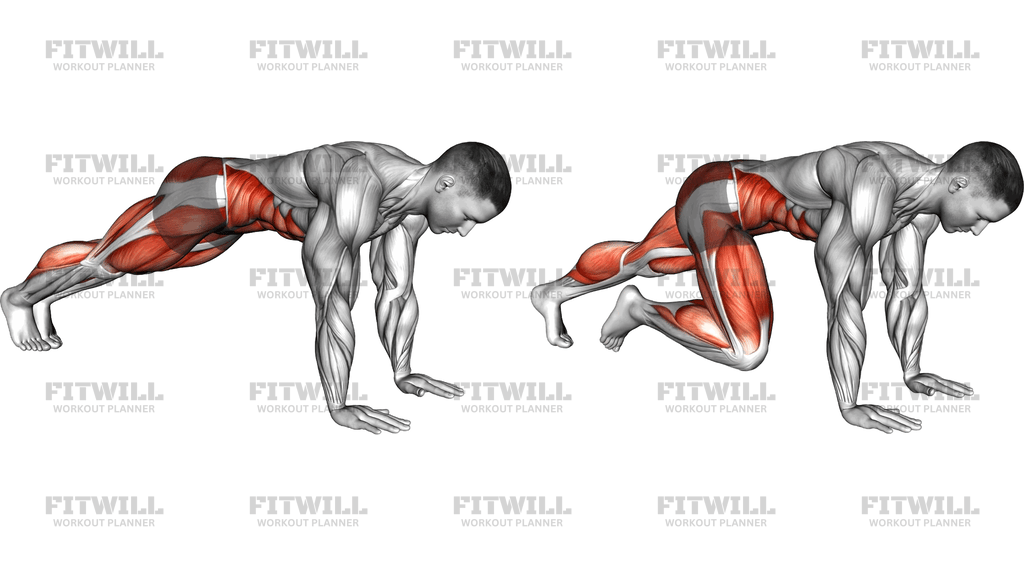
V-Up
The V-Up is a floor-based bodyweight core exercise that asks you to fold the body into a controlled V shape. It trains the rectus abdominis first, with help from the obliques, hip flexors, and deep core muscles that keep the trunk steady as the arms and legs move together. Because the movement is short and explosive at the top, the quality of each rep depends more on control than on speed.
The setup matters because the start position decides whether the repetition comes from the abs or from swinging momentum. Lie flat on a mat with your arms extended overhead and your legs straight, then let your ribs settle and your lower back touch the floor before the first rep. That long starting position creates the leverage challenge that makes the V-Up useful, but it also makes poor positioning easy to notice if the pelvis tips forward or the neck starts pulling.
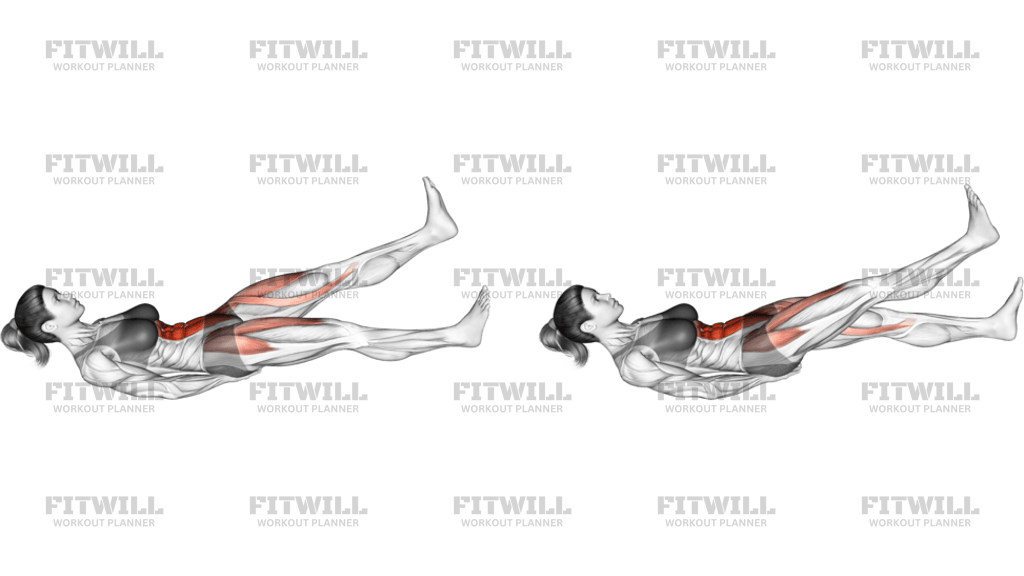
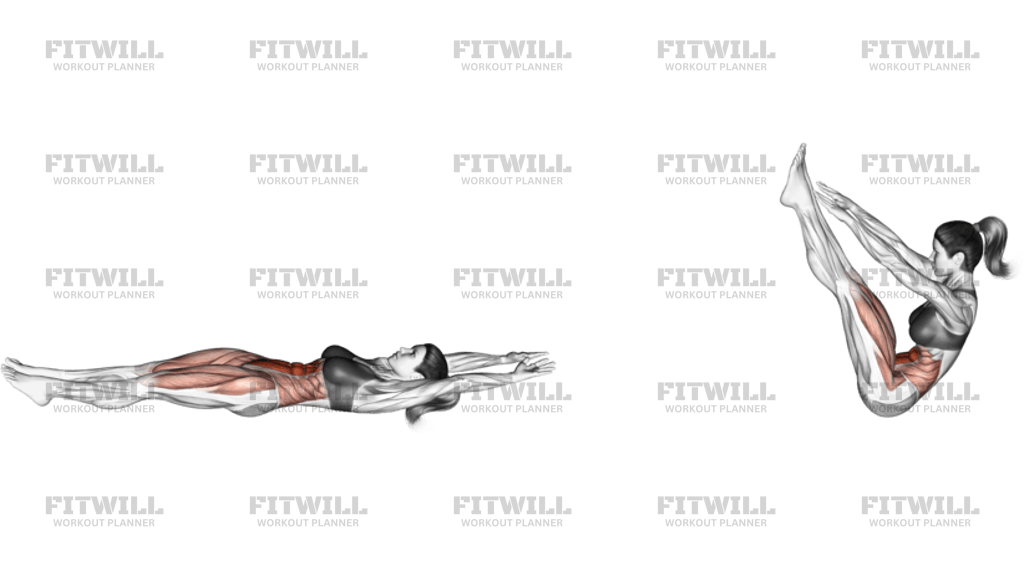
A good V-Up rises as one clean action: the chest lifts, the straight legs come up, and the hands reach toward the shins or toes without jerking. The torso and legs should meet in the middle, not with a bounce, and the descent should be just as controlled as the lift. If your knees bend, your low back arches hard, or your legs drop before your upper body moves, the rep has shifted from abdominal flexion to momentum and hip flexor takeover.
V-Up is useful in core-focused sessions, athletic conditioning, or accessory work after the main lifts. It rewards moderate rep ranges, crisp tempo, and a brief pause at the top rather than endless speed. Keep the neck relaxed, keep the legs together, and shorten the range before you force a sloppy rep. If you feel strain in the lower back, regress the movement before adding volume.
[ Workout Log & Planner ]
Put your next workout in Fitwill
Keep your plan and training log ready when you are.


Instructions
- Lie flat on a mat with your legs straight, feet together, and arms extended overhead.
- Set your lower back and ribs down before you start, and keep your shoulders relaxed against the floor.
- Reach long through the fingertips and toes so the first rep begins from a fully extended position.
- Brace your abs, then lift your head, shoulders, arms, and straight legs at the same time.
- Keep the knees mostly straight as you fold at the hips and bring your torso and legs toward each other.
- Reach your hands toward your shins or toes at the top without throwing your arms forward.
- Pause briefly in the V position, then lower both halves of the body under control.
- Finish each rep with your shoulder blades and legs returning close to the floor without losing tension.
- Exhale as you rise and inhale as you lower, then reset before the next rep.
Tips & Tricks
- If your hamstrings limit the top position, soften the knees slightly instead of forcing a straight-leg reach.
- Keep your chin tucked enough that the neck stays long; do not crane forward to chase the toes.
- The rep should start from the abs, not from a hard leg kick or a swing of the arms.
- Stop the descent when your lower back wants to arch off the floor, even if the legs could go lower.
- A brief pause at the top removes bounce and makes the exercise much harder in a useful way.
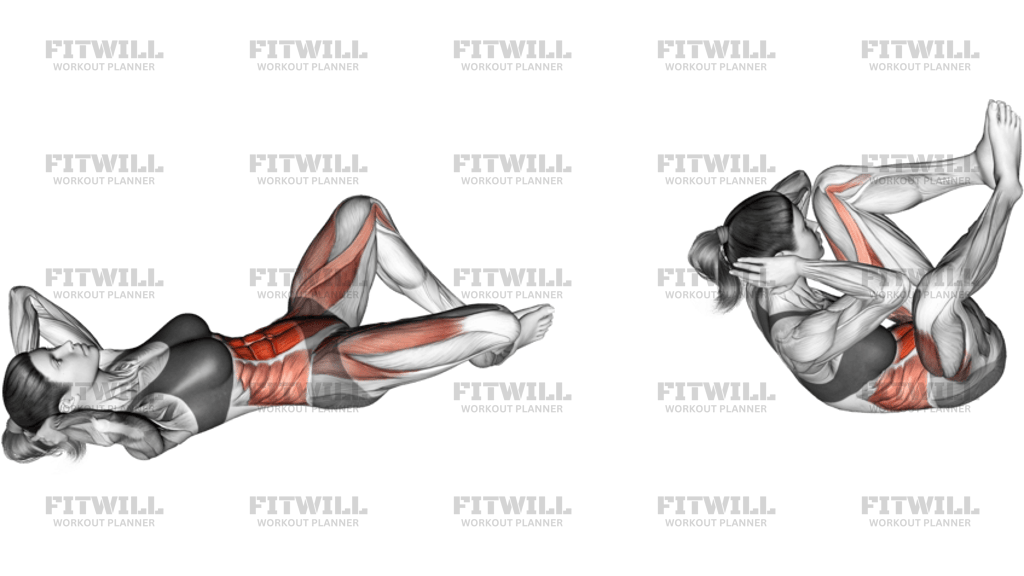
- If the full V-Up is too advanced, use a tuck-up or bent-knee version before chasing more volume.
- Keep the legs together and the feet pointed or neutral; letting the legs drift apart usually turns the rep sloppy.
- Use a slower lowering phase than lifting phase to keep the abs loaded instead of dropping back to the floor.
- Reach toward the shins if touching the toes forces the shoulders to shrug or the hips to snap.
- High reps only work if the last rep looks like the first one; once the torso starts rocking, stop the set.
Frequently Asked Questions
What muscles does V-Up work most?
V-Up primarily works the rectus abdominis, with the obliques and hip flexors helping as you lift the legs and torso together.
Do I need to touch my toes at the top of a V-Up?
No. Reaching toward the shins is enough if touching the toes makes you bend the knees, swing the arms, or lose the hollow body position.
Why do my hip flexors take over on V-Up?
That usually happens when the legs lift before the abs curl the torso. Start each rep by bracing first and keeping the movement smooth instead of snapping the legs upward.
Can beginners do V-Up safely?
Yes, but many beginners need a bent-knee or tuck-up version first. If your lower back arches or your neck strains, shorten the lever until you can control the full rep.
How should my back stay on the floor during V-Up?
Your lower back should touch down at the start of each rep, but it should not arch hard as you lower. Keep the ribs down and stop the descent before the spine loses control.
What is the biggest mistake with V-Up?
The most common mistake is using momentum from the arms or legs instead of folding the body with the abs. The rep should look smooth, not like a quick sit-up plus leg kick.
How can I make V-Up easier?
Bend the knees slightly, reduce the range of motion, or hold the top position for a shorter count. A tuck-up is a good step before returning to the full straight-leg version.
Is V-Up good for athletic core training?
Yes. It trains trunk flexion and body control in a compact, bodyweight format, which makes it useful for conditioning circuits and accessory core work.