Weighted Russian Twist
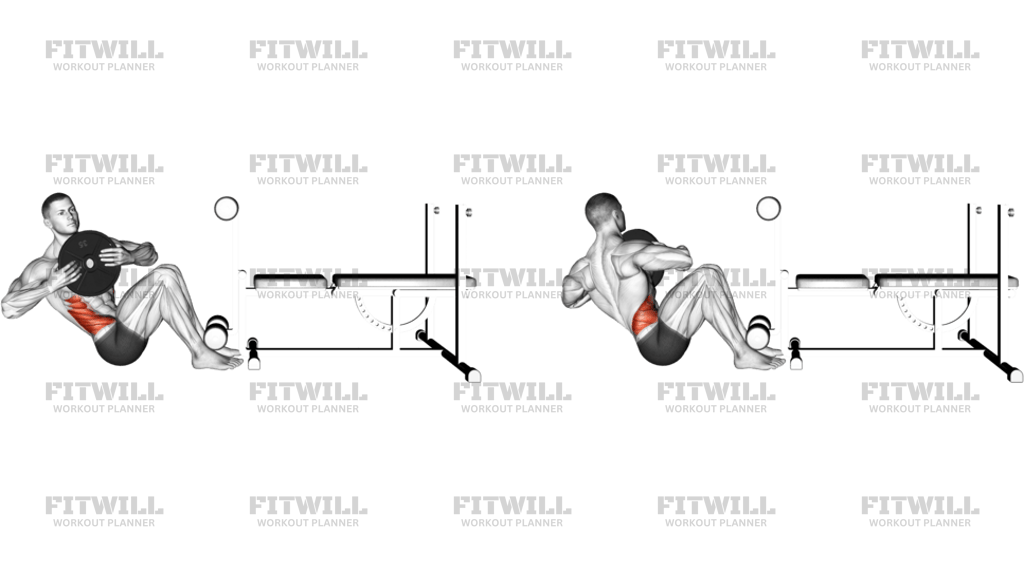
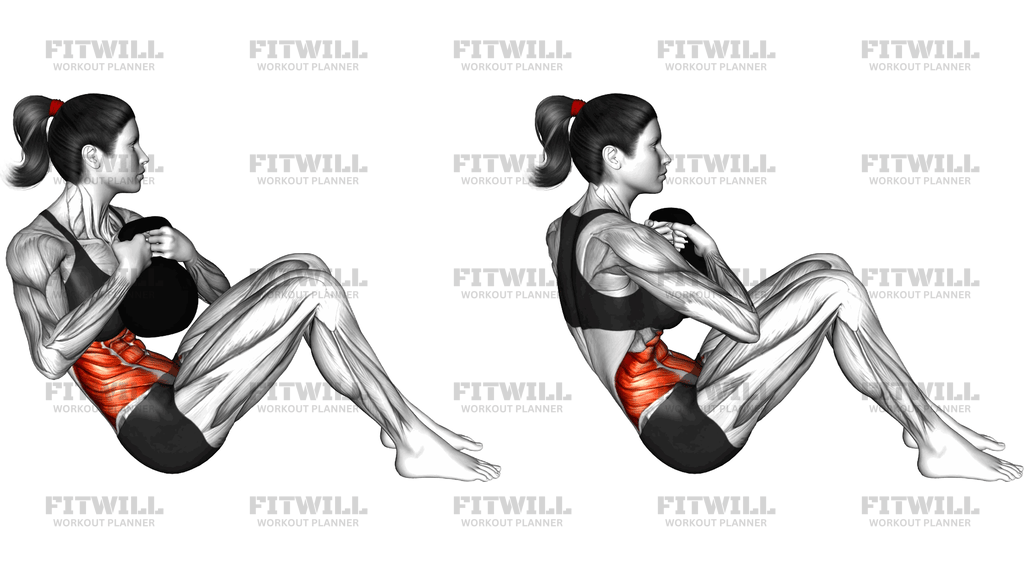
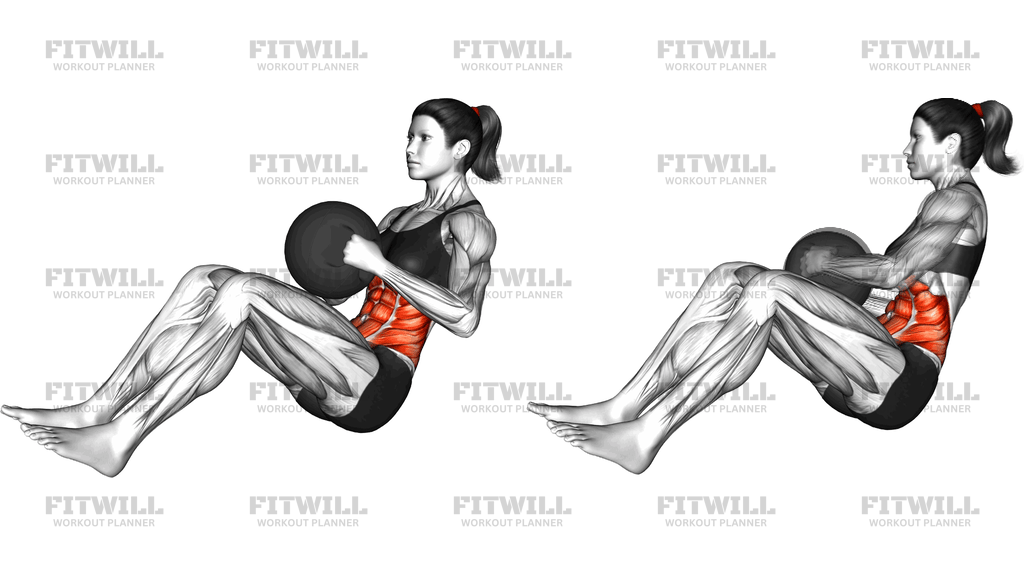
Weighted Russian Twist is a seated rotational core exercise that challenges the obliques while teaching the trunk to stay organized under load. In the image, the lifter sits on the floor with the knees bent, torso reclined, and a plate held close to the chest while the shoulders and ribcage rotate from side to side. That setup matters because the farther the weight drifts from the body, the easier it becomes to cheat with swinging arms, rolling hips, or fast, sloppy reps.
This movement is built for direct oblique work, but it also asks the abs, deep core, and spinal erectors to hold the torso angle steady while the upper body turns. The goal is not to fling the weight across the body. The goal is to rotate the ribcage and shoulders as one controlled unit while the pelvis stays quiet and the low back keeps a comfortable, slightly reclined shape.
A good rep starts from the floor. Sit with bent knees, keep the chest lifted, and lean back until the abdominals are working hard but the spine still feels long. Hold the weight close to the sternum or just in front of the chest, then rotate to one side, pass through center, and rotate to the other side. Each turn should feel deliberate, with the weight moving because the torso moved, not because the arms threw it.
This exercise is easy to overdo if the load is too heavy or the range is too large. A light plate or dumbbell allows cleaner rotation and better control of the reclined position, while a heavier load usually shortens the range and increases the need for bracing. If the lower back arches, the shoulders slump, the neck cranes, or the feet start kicking to create momentum, the set has gone too far and the load or tempo should come down.
Weighted Russian Twist fits well as accessory core work after the main lifts, in a conditioning circuit, or in an abdominal-focused session when you want a simple exercise with a clear rotational demand. Beginners can use it if they keep the movement small and controlled. More advanced lifters can increase the challenge by slowing the tempo, keeping the weight tighter to the body, or slightly increasing the load while preserving the same clean torso path.
[ Workout Log & Planner ]
Put your next workout in Fitwill
Keep your plan and training log ready when you are.


Instructions
- Sit on the floor with your knees bent and your heels planted or lightly hovering, then hold the weight with both hands close to your chest.
- Lean your torso back until your abs are engaged and your spine stays long, not rounded.
- Keep your hips facing forward and your chest lifted so the twist comes from the ribcage and shoulders.
- Rotate your torso to one side until you feel the obliques work, keeping the weight close to your body.
- Pass back through the middle without bouncing, then rotate to the opposite side.
- Exhale as you twist and keep the return smooth and controlled.
- Match both sides evenly so the hips and feet do not start swinging to help the movement.
- Lower the weight to the floor safely when the set is finished.
Tips & Tricks
- Keep the plate, dumbbell, or ball close to your sternum; long arms make the twist much harder to control.
- If your lower back starts to arch, reduce the recline before you reduce the range of motion.
- Think about turning the ribcage over the pelvis instead of just swinging the hands side to side.
- A small, honest twist is better than a big rotation that makes the feet kick or the knees drift.
- Use your heels on the floor if you want more stability; lift the feet only if you can keep the torso steady.
- Choose a load that lets you keep the same torso angle on rep one and rep ten.
- Keep the neck quiet and let the eyes follow the chest instead of craning the chin forward.
- Stop the set when the twist becomes a bounce or the weight starts traveling in an arc.
Frequently Asked Questions
What muscle does Weighted Russian Twist target most?
The obliques are the main target, especially the external obliques that control rotation.
Should my feet stay on the floor during the twist?
They can stay planted for more stability, or hover lightly if you can keep the pelvis from rocking.
How heavy should the weight be?
Use a load that lets you keep the chest up, the torso reclined, and the rotation smooth on both sides.
Is this more of a twisting exercise or a crunching exercise?
It is primarily a twisting exercise. The torso stays slightly reclined, but the main action is rotation through the ribcage.
What is the most common form mistake?
People usually turn it into a fast arm swing and let the hips or feet create the motion instead of the torso.
Can I use a dumbbell or medicine ball instead of a plate?
Yes. Any compact load works as long as you can hold it close and keep the movement controlled.
Is this suitable for beginners?
Yes, if the range stays small and the resistance is light enough to keep the torso from wobbling.
How can I make the exercise harder without just adding weight?
Slow the tempo, pause briefly at each side, or keep the weight tighter to the chest while maintaining the same clean rotation.