Tuck Crunch
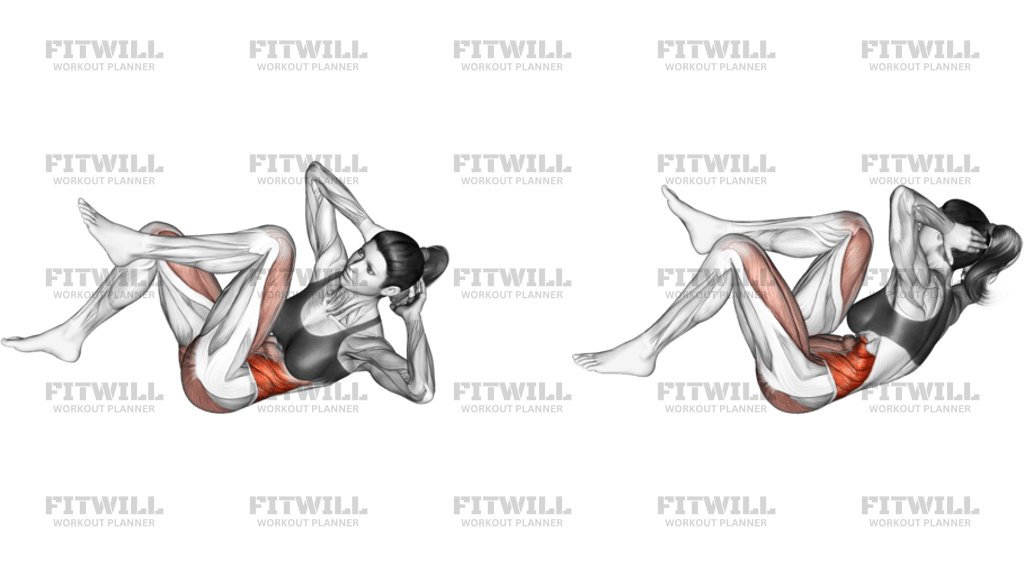
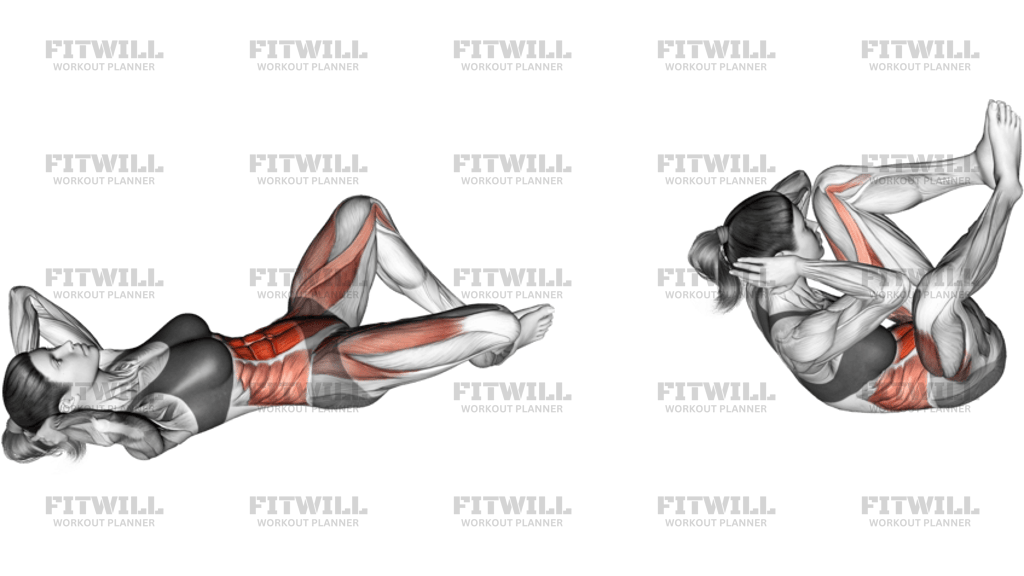
Tuck Crunch is a bodyweight floor crunch performed with the hips and knees held in a tucked tabletop position. That tuck shortens the lever arm, so the abs have to lift the shoulders and upper back without help from swinging legs or a big hip hinge. The result is a compact, controlled trunk-flexion drill that emphasizes the rectus abdominis while the obliques and deep core keep the torso steady.
The tucked setup matters because it changes where the tension goes. With the thighs lifted and knees bent, the lower body stays parked while the rib cage curls toward the pelvis. That makes it easier to keep the low back from arching and helps you feel the abs do the work instead of the hip flexors dominating the rep. The exercise is also useful for teaching people how to crunch hard without yanking the neck or throwing the chest forward.
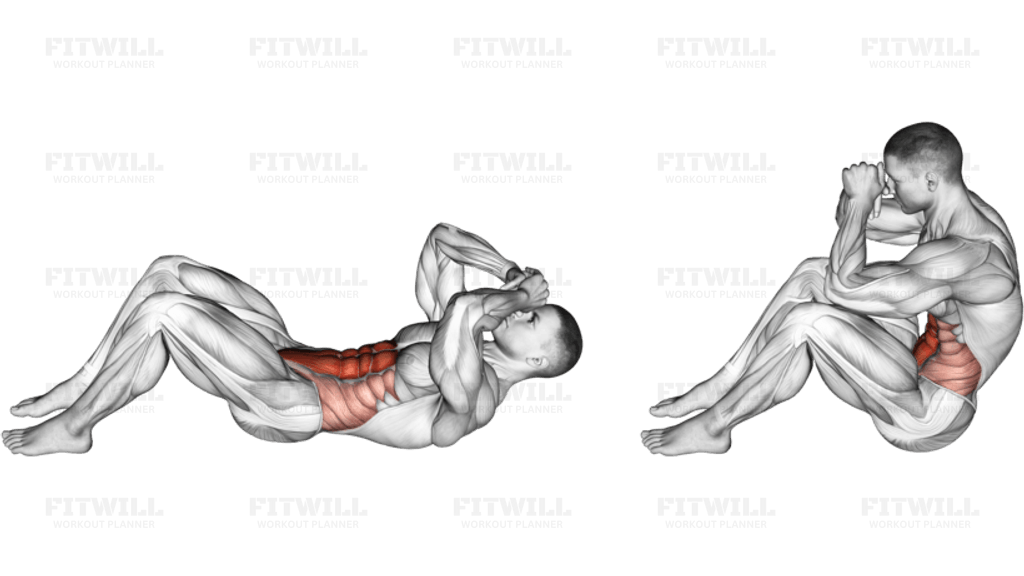
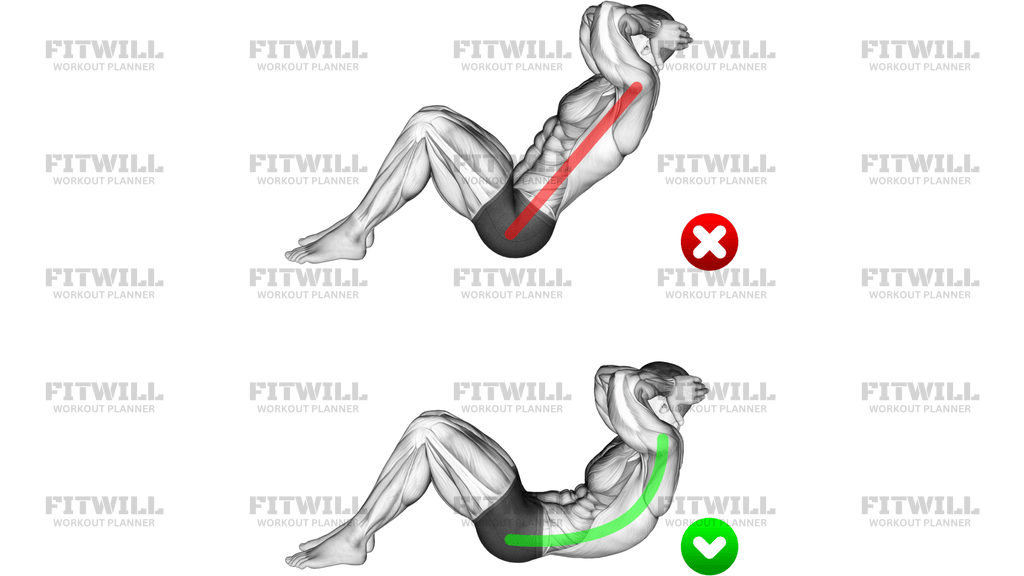
Perform each rep by fixing the pelvis, exhaling as you curl the shoulders up, and stopping when the lower ribs come toward the hips. The movement should be small but deliberate. You are not trying to sit all the way up; you are trying to shorten the distance between the sternum and the pelvis while keeping the thighs quiet and the chin lightly tucked. Control the lowering phase so the torso returns to the floor under tension rather than dropping back.
Tuck Crunch fits well in core blocks, accessory work, or warmups when you want a strict abdominal exercise that does not need equipment. It is especially useful for beginners learning to brace and curl without momentum, and for more advanced lifters who want a cleaner abdominal contraction with less lower-body assistance than a full sit-up.
Keep the neck relaxed, the elbows wide if your hands stay on the chest, and the knees fixed over the hips. If the hip flexors cramp or the low back starts to arch, shorten the range and slow the tempo before adding more reps. Clean execution matters more than height on every rep: the goal is a controlled crunch with the torso, not a frantic leg-and-head toss.
[ Workout Log & Planner ]
Put your next workout in Fitwill
Keep your plan and training log ready when you are.


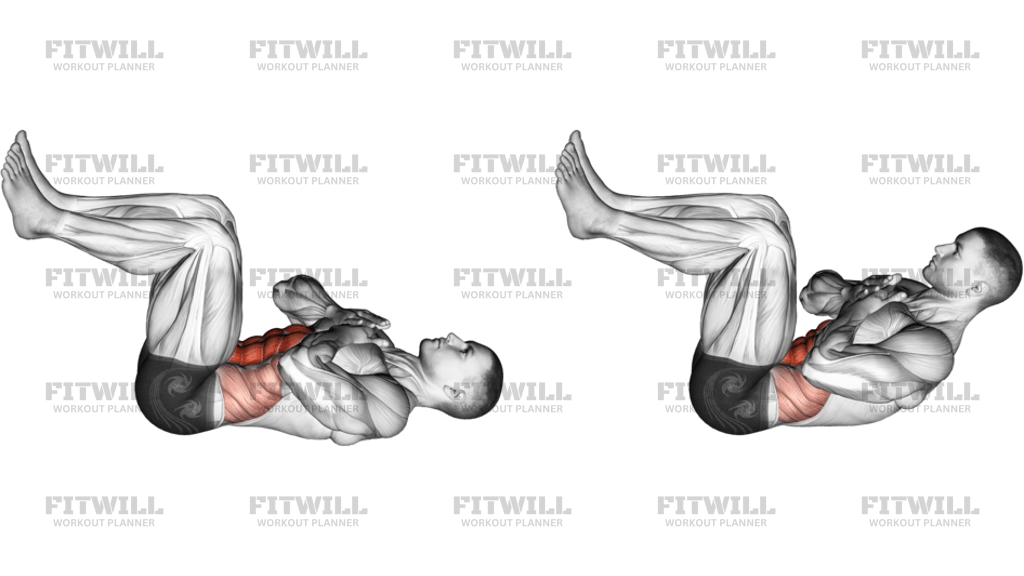
Instructions
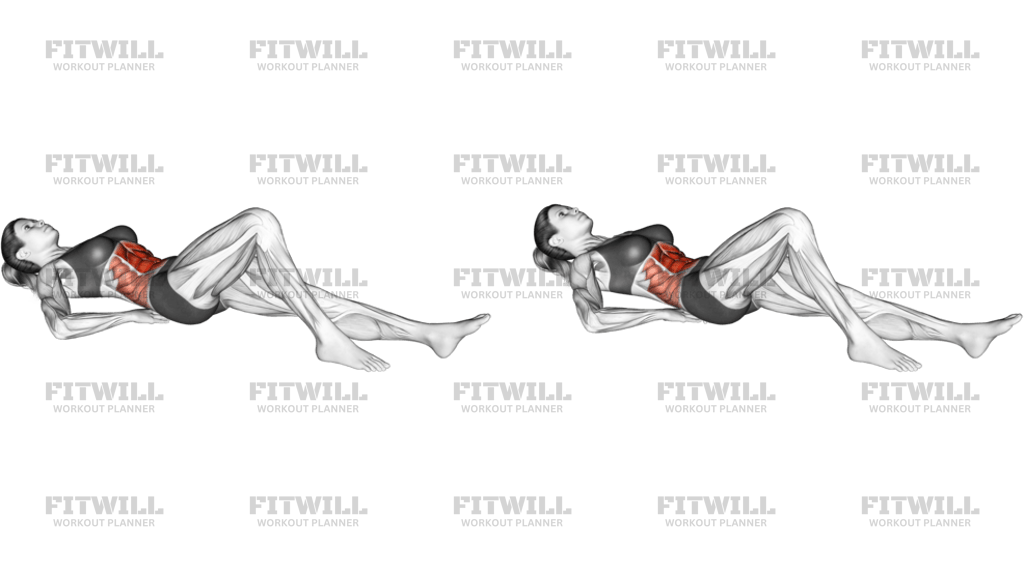
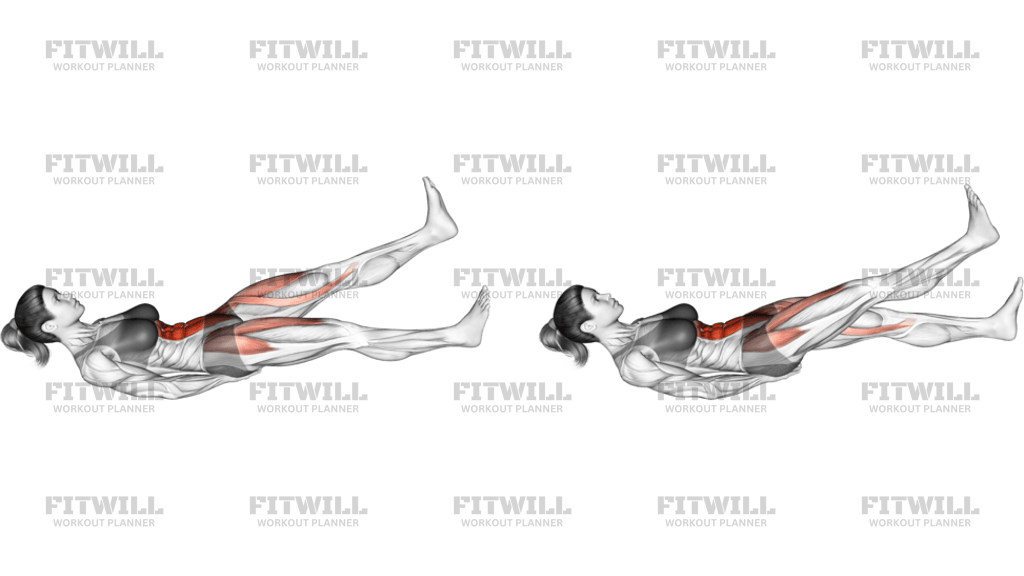
- Lie on your back on the floor and bring your hips and knees into a tucked tabletop position, with your thighs lifted and your shins roughly parallel to the ground.
- Cross your arms over your chest or place your fingertips lightly on your shoulders, and keep your head, upper back, and low back settled against the floor.
- Set your pelvis so the low back stays gently pressed down instead of arched, and keep the knees stacked over the hips throughout the set.
- Exhale, brace, and curl your shoulders off the floor by bringing your rib cage toward your pelvis.
- Lift only as high as you can without pulling on your neck or using a hip swing; the motion should come from the abs, not the legs.
- Pause briefly at the top when your upper back is off the floor and the abs are fully shortened.
- Lower your shoulders back down with control until the shoulder blades touch lightly and the torso stays under tension.
- Reset the breath at the bottom, keep the knees quiet, and repeat for the planned reps.
Tips & Tricks
- Keep the thighs parked in the same tucked angle; if the knees drift, the hip flexors will take over the rep.
- Think about curling the ribs toward the pelvis instead of trying to lift your head toward your knees.
- A small range done cleanly is better than chasing a bigger crunch by yanking on the neck.
- If your low back pops off the floor, shorten the range and re-check the pelvic tuck before continuing.
- Let the exhale start the rep so the abs tighten before the shoulders leave the floor.
- Keep the chin lightly tucked and avoid pushing the head forward at the top.
- Slow the lowering phase to keep tension on the abs instead of dropping out of each rep.
- If the hip flexors cramp, reduce the number of reps per set and hold the legs still with more deliberate control.
Frequently Asked Questions
What does the tucked leg position change in a Tuck Crunch?
It shortens the lever so the abs have to curl the torso without much help from leg swing or a big hip movement.
Where should my knees and feet be during the rep?
Keep the knees bent and lifted in a tabletop-style tuck, with the thighs steady and the lower body not changing shape.
How far should I crunch up from the floor?
Only until the shoulder blades are clearly off the floor and the ribs move toward the pelvis; this is a short, strict crunch.
Should I hold my hands behind my head?
No, the image shows the hands crossed on the chest, which helps avoid pulling on the neck.
Why do my hip flexors feel this exercise?
The tucked leg position keeps the hip flexors active for stability, but the abs should still drive the curl. If the hip flexors dominate, reduce the range and slow the lowering phase.
Is Tuck Crunch good for beginners?
Yes. The tucked position makes the crunch more controlled than a full sit-up, as long as the neck stays relaxed and the rep stays small.
What are the most common mistakes on the floor version?
Letting the low back arch, swinging the knees, pulling on the head, and trying to sit all the way up are the usual errors.
How can I make the set harder without changing exercises?
Use a slower lowering phase, pause longer at the top, or increase reps while keeping the tucked position and torso path strict.