Reverse Crunch
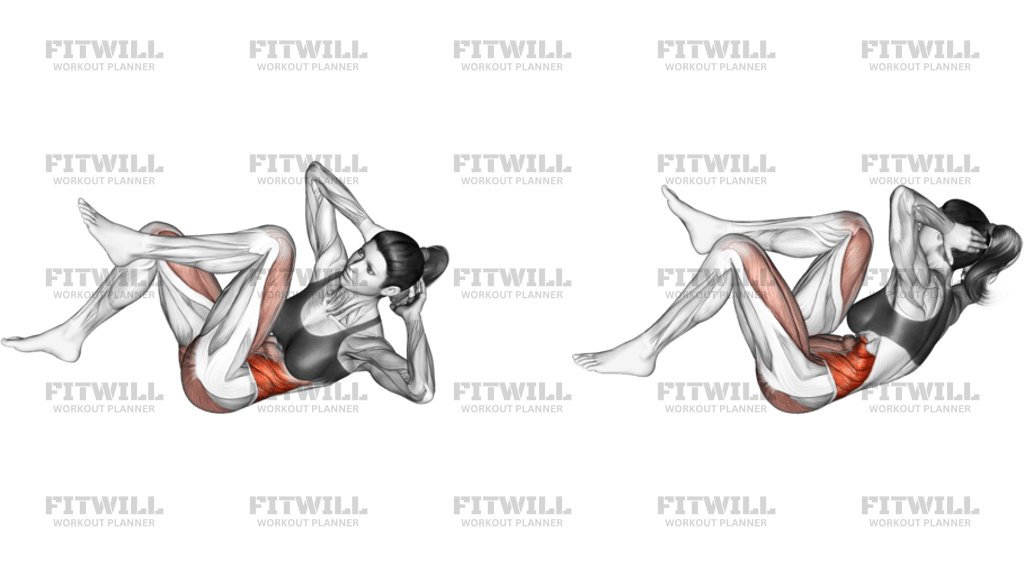
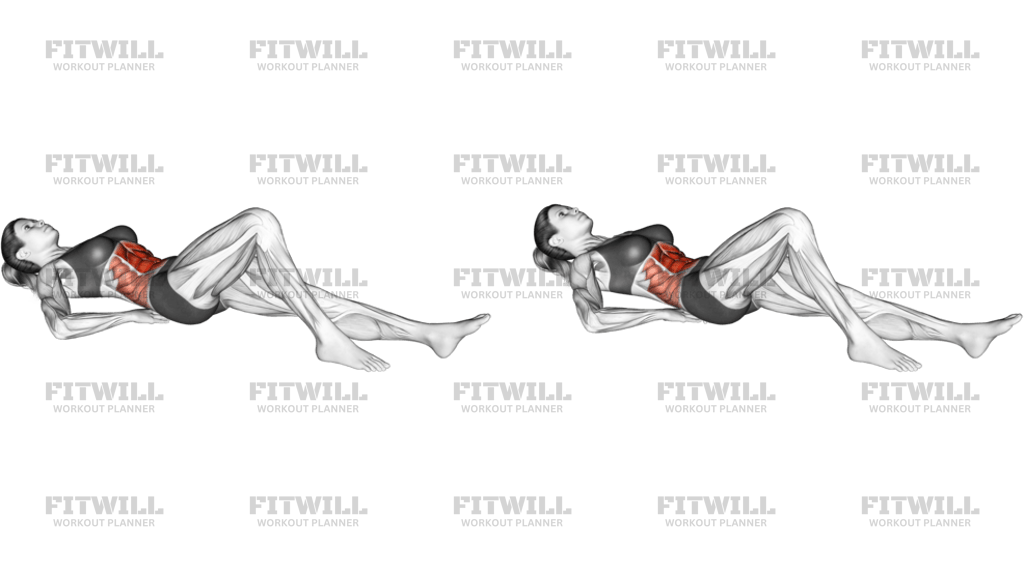
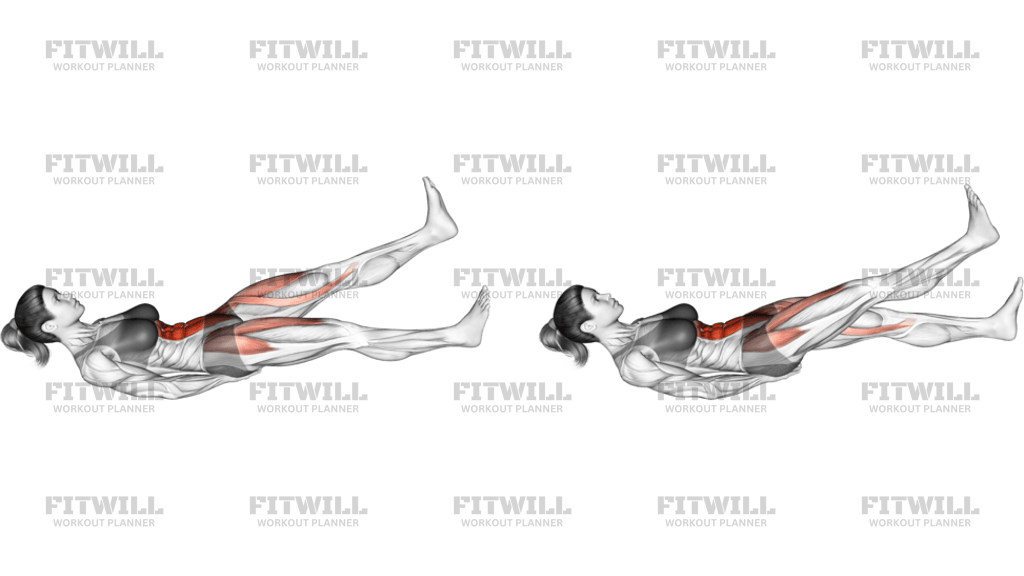
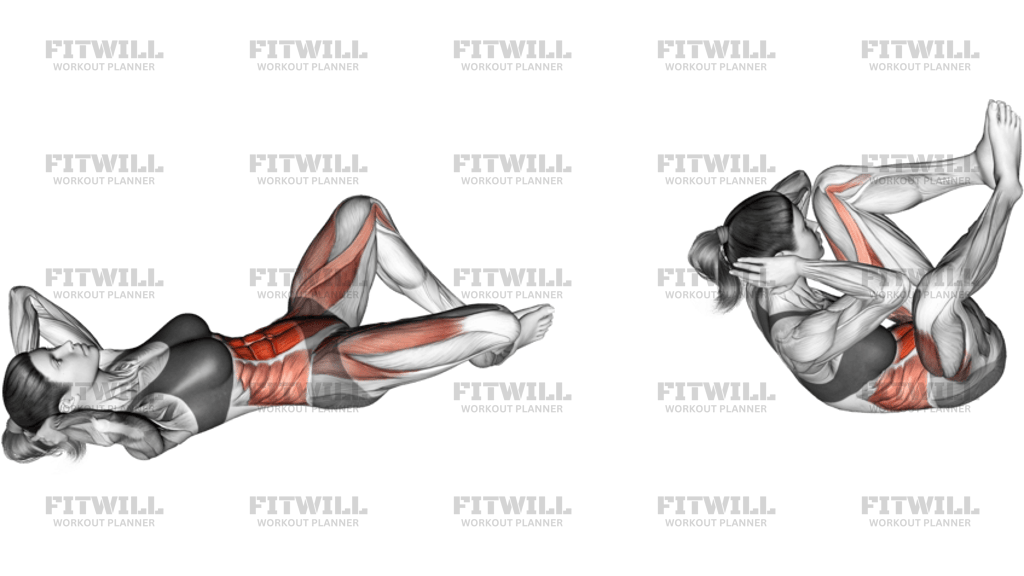
Reverse Crunch is a floor-based abdominal exercise built around a posterior pelvic tilt and a short, controlled curl of the hips off the floor. In this version, you lie on your back with your arms out to the sides for balance, hips and knees bent, and lower legs lifted so the thighs stay roughly perpendicular to the floor. That setup matters because the exercise is not about swinging the legs or throwing the knees upward; it is about shortening the distance between the pelvis and ribcage so the abs do the work.
The main training emphasis is the rectus abdominis, with the obliques and deep core muscles helping you keep the trunk from arching as the hips curl. The hip flexors assist because the legs are lifted, but if they dominate the movement the exercise turns into a leg lift instead of a true reverse crunch. A good rep feels like the tailbone gently peels upward, the lower back gets lighter on the floor, and the abdomen stays braced without the neck or shoulders trying to help.
The setup is simple, but the quality is easy to lose if you rush. Keep the head and shoulders relaxed on the floor, press the palms down if you need more stability, and start with the knees stacked over the hips before you initiate the curl. From there, exhale as you draw the knees toward the chest and lift the pelvis a few inches, then pause briefly at the top before lowering with control. The lower back should return to the floor under control instead of dropping open and bouncing between reps.
Reverse Crunch is useful as a core-strengthener, an accessory exercise after compound lifts, or a lower-back-friendly abdominal option when you want less spinal flexion than a full sit-up. It is also a practical regression for people who struggle with hanging leg raises or long-lever abdominal work. Because the motion is small and precise, load selection is really about execution quality: if the pelvis stops moving and the legs start swinging, the set is too hard or the tempo is too fast. Keep the rep strict, repeatable, and centered on the abs rather than on momentum.
[ Workout Log & Planner ]
Put your next workout in Fitwill
Keep your plan and training log ready when you are.


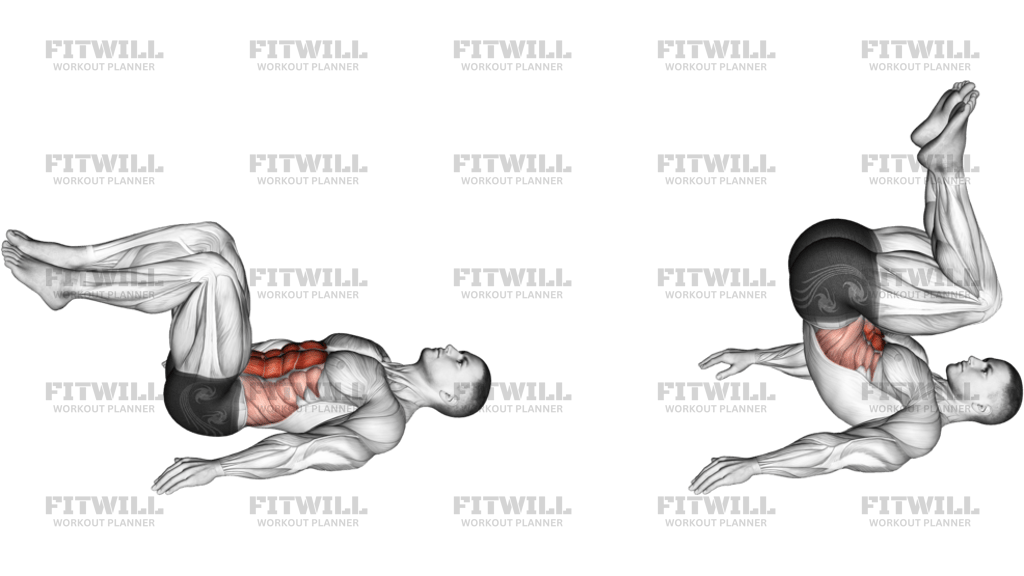
Instructions
- Lie on your back with your arms out to the sides, palms down, and your knees bent about 90 degrees over your hips.
- Keep your lower legs lifted and your feet relaxed so the thighs stay vertical at the start.
- Press the low back gently into the floor and brace your abs before the first rep.
- Exhale and curl your pelvis upward by drawing the knees toward your chest.
- Let the tailbone peel off the floor, but keep the motion small and controlled.
- Pause briefly at the top when the hips are curled and the abs are fully shortened.
- Lower the pelvis back to the floor under control until the low back settles again.
- Reset the brace, keep the neck relaxed, and repeat for the planned reps.
Tips & Tricks
- Think about curling the tailbone up, not swinging the thighs toward your face.
- If your knees travel a lot but the pelvis barely moves, the hip flexors are taking over.
- Keep your hands pressed lightly into the floor if you need help preventing rocking.
- A short pause at the top makes the abs work harder without needing more speed.
- Lower slowly enough that the low back returns to the floor with control.
- Stop the rep before your legs start to straighten or your lower back arches.
- If you feel the neck or shoulders tensing, relax the head and shorten the range.
- Use a bent-knee position you can keep stable for the whole set; straighter legs make the exercise harder.
Frequently Asked Questions
What does Reverse Crunch train most?
It mainly trains the rectus abdominis while the obliques and deep core help control the pelvis.
Why are the arms out to the sides in this version?
The arms act as light support so you can stay stable while the pelvis curls instead of using momentum.
Should my knees move straight toward my chest?
They should travel toward the chest as the pelvis curls, but the key is the tailbone lifting, not a big knee swing.
What is the most common mistake with this exercise?
The biggest mistake is turning it into a leg lift by swinging the knees without actually peeling the hips off the floor.
How do I know if I am doing it correctly?
You should feel the lower abs shorten and the low back flatten or lift slightly as the pelvis rolls upward.
Is Reverse Crunch easier than a full sit-up?
Yes, it usually places less demand on the hip flexors and spine than a full sit-up or crunch variation with a longer lever.
Can beginners use this exercise?
Yes, it is beginner-friendly if the range stays small and the rep is slow enough to avoid swinging.
How should I breathe during the rep?
Exhale as you curl the pelvis up, then inhale as you lower back down with control.