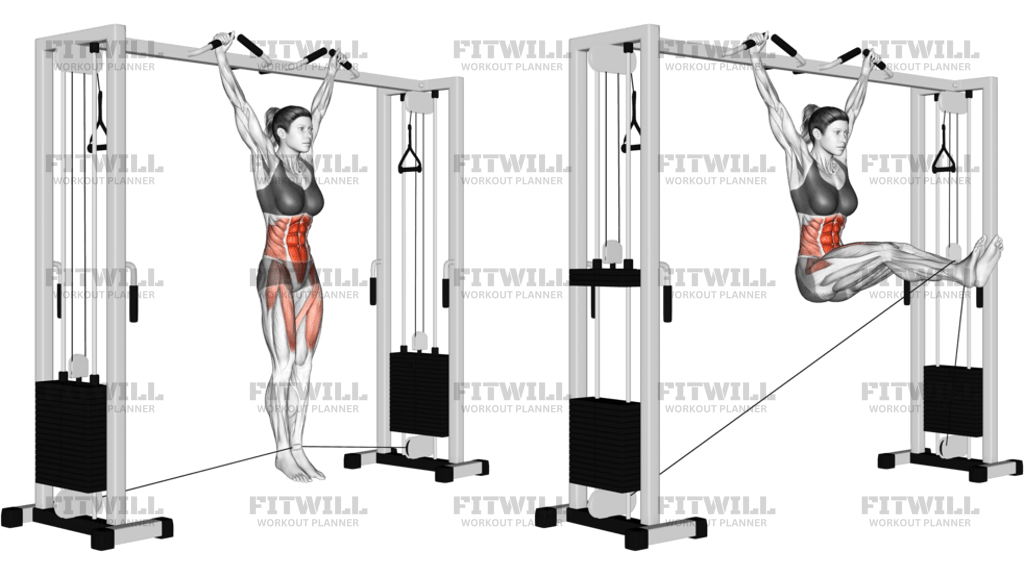
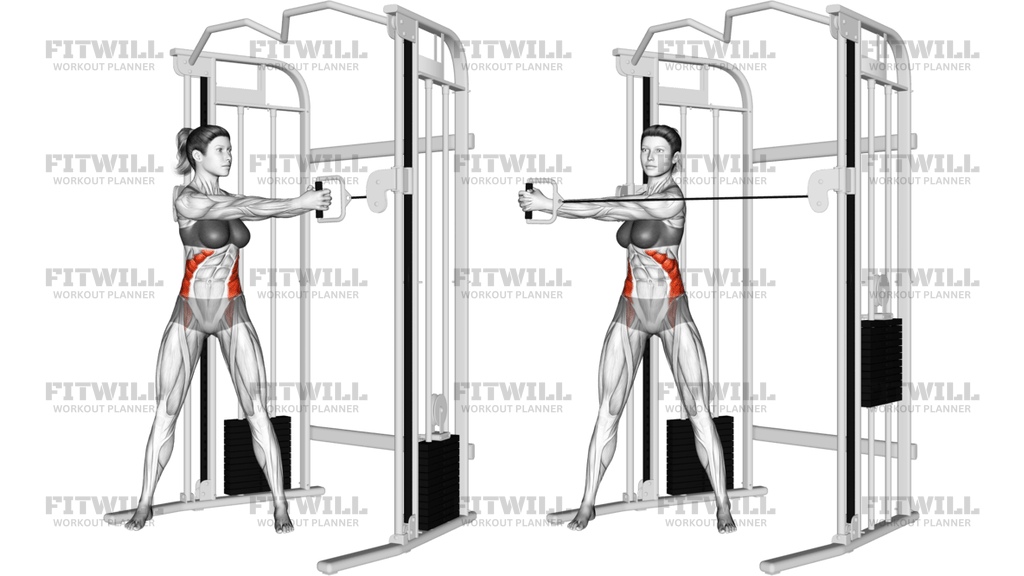
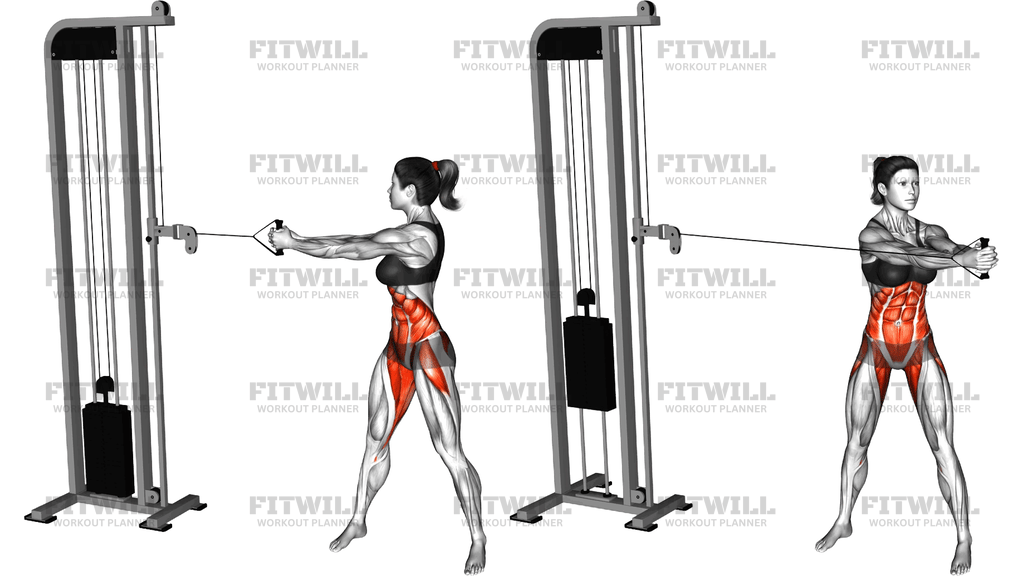
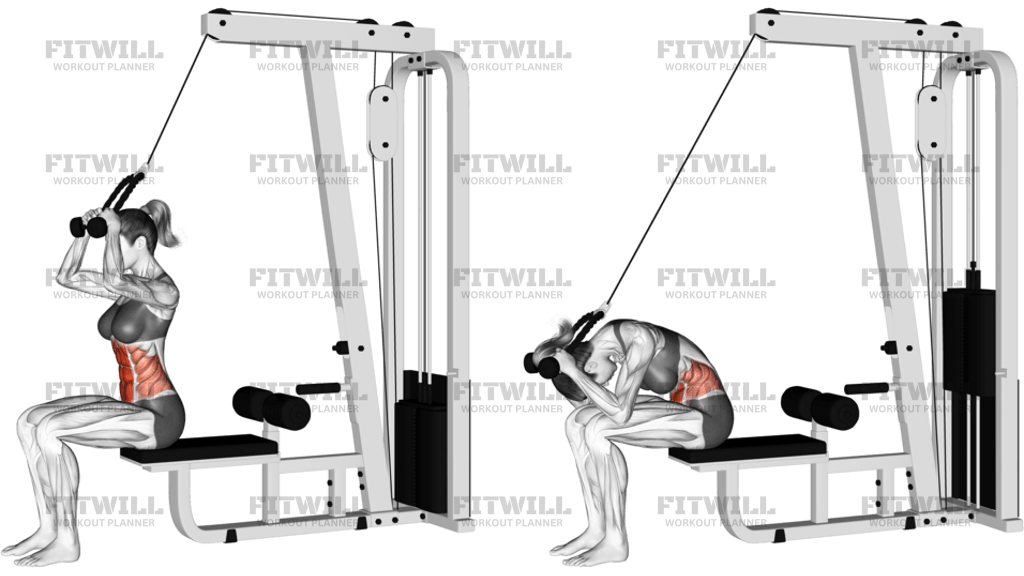
Cable Reverse Crunch
Cable Reverse Crunch is a cable-loaded abdominal exercise that uses a low pulley and ankle or foot attachment to challenge the rectus abdominis through a controlled pelvic curl. The cable keeps tension on the legs while you reverse the motion by drawing the knees in and lifting the tailbone, so the set is about abs-driven spinal and pelvic control rather than swinging the legs.
The primary emphasis is on the abs, with the obliques and deep core muscles helping you keep the torso quiet while the hips fold. The hip flexors assist the motion, but they should not take over the rep. In anatomy terms, the main work centers on the Rectus abdominis, with help from External obliques, Iliopsoas, and Transversus abdominis. That is why the best reps look compact and deliberate instead of large and explosive.
The setup matters because the cable has to stay under tension without yanking you out of position. Lie on your back on the floor, secure the ankles or feet to the cable attachment, and bend the knees so the line of pull stays smooth from the start. Keep your ribs down, pelvis tucked slightly, and hands flat beside you so you can stabilize against the floor while the abs do the work.
Each repetition should begin with an exhale and a small posterior pelvic tilt, then the knees travel toward the chest as the tailbone lifts. The goal is to curl the pelvis up, not just tuck the knees closer. At the top, the lower back should feel rounded and the abs fully shortened; on the way down, resist the cable until the pelvis returns to the floor without losing control or letting the legs swing away.
Cable Reverse Crunch is useful when you want a stricter core accessory than a bodyweight reverse crunch, especially if you need constant tension and repeatable loading. It fits well in an ab block, after compound lifts, or as part of athletic core training. Keep the load moderate, use a short-to-moderate range that stays clean, and stop the set once the hips start to arch or the cable starts pulling you into momentum.
[ Workout Log & Planner ]
Put your next workout in Fitwill
Keep your plan and training log ready when you are.


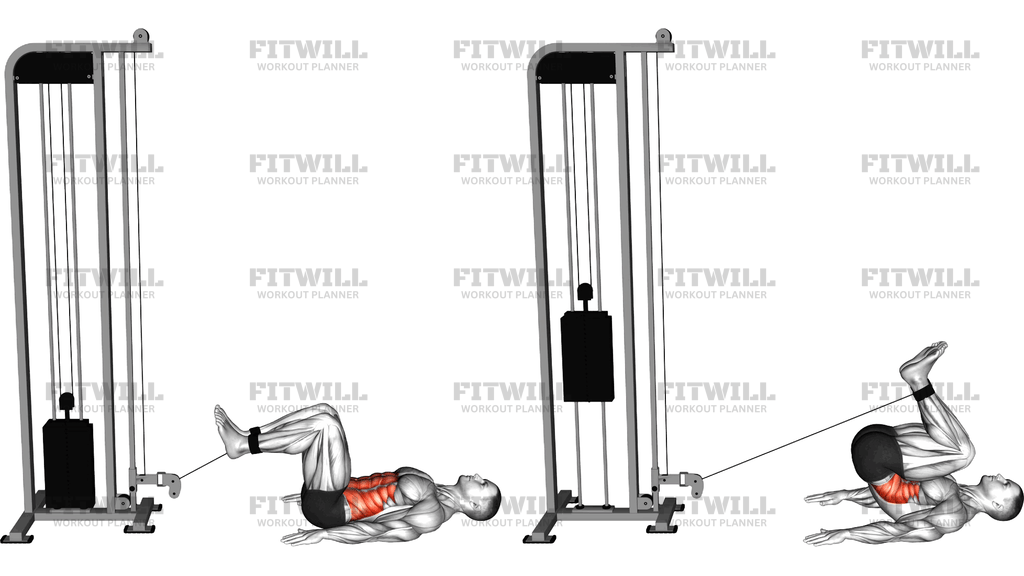
Instructions
- Attach the ankles or feet to a low cable and lie on your back on the floor with the pulley pulling from the side of your feet.
- Bend your knees to about 90 degrees and raise your thighs so the cable has steady tension before you start the rep.
- Set your arms flat on the floor beside you and keep your palms down so your torso stays still.
- Tuck your pelvis slightly and press your lower back toward the floor to lock in the starting position.
- Exhale and curl your tailbone off the floor while you draw your knees toward your chest.
- Keep the movement driven by your abs, not by a swing of the legs or a pull from the hip flexors.
- Pause briefly at the top when your pelvis is fully curled and your abs are tight.
- Lower slowly until your lower back returns to the floor and the cable stays under control.
- Reset the pelvis before the next rep and repeat for the planned number of repetitions.
Tips & Tricks
- Use a light enough load that the cable does not yank your feet apart when you start the set.
- Think about curling your pelvis toward your ribs instead of just pulling your knees closer.
- Keep your shins fairly quiet so the motion comes from the lower abs, not from a leg swing.
- If your hip flexors take over, shorten the range and make the top position a smaller, sharper curl.
- Keep your lower back in contact with the floor on the way down so the return stays controlled.
- Do not let your knees drift outward; keep them stacked so the cable line stays clean.
- Exhale through the curl and inhale as you lower back to the start.
- A slow two- to three-second lowering phase usually keeps the abs working better than a fast drop.
- Stop the set when your pelvis stops curling and the cable begins to pull you into an arch.
Frequently Asked Questions
What does Cable Reverse Crunch target most?
Cable Reverse Crunch mainly targets the rectus abdominis, with the obliques and deep core helping stabilize the torso.
Is Cable Reverse Crunch different from a regular reverse crunch?
Yes. The cable adds constant resistance through the feet or ankles, so the movement stays loaded through the whole curl instead of only at the top.
Do I need ankle straps for Cable Reverse Crunch?
Ankle straps or foot cuffs are the best setup because they keep the cable secure and let you curl the pelvis without fighting the attachment.
Why do I feel Cable Reverse Crunch mostly in my hip flexors?
That usually means you are lifting the knees without curling the pelvis enough. Reduce the range and focus on tucking the tailbone up at the top.
Should my lower back stay on the floor during Cable Reverse Crunch?
It should stay grounded at the start and on the way down. The rep begins when you curl the pelvis up and then returns under control to the floor.
Can beginners do Cable Reverse Crunch safely?
Yes, if the cable load is light and the range is small enough to keep the pelvis controlled instead of swinging the legs.
What is the biggest mistake in Cable Reverse Crunch?
The biggest mistake is turning it into a leg raise. The abs should curl the pelvis; the legs only follow that motion.
How heavy should Cable Reverse Crunch be?
Use a load that lets you pause at the top and lower slowly without losing the pelvic curl or letting the cable snap you back.