Cable Hanging Leg Raise
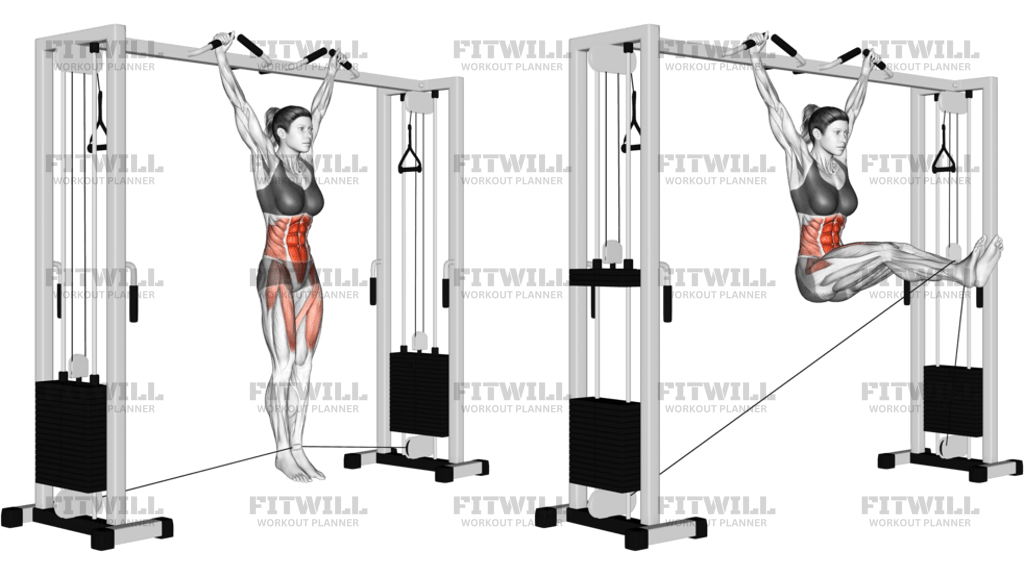
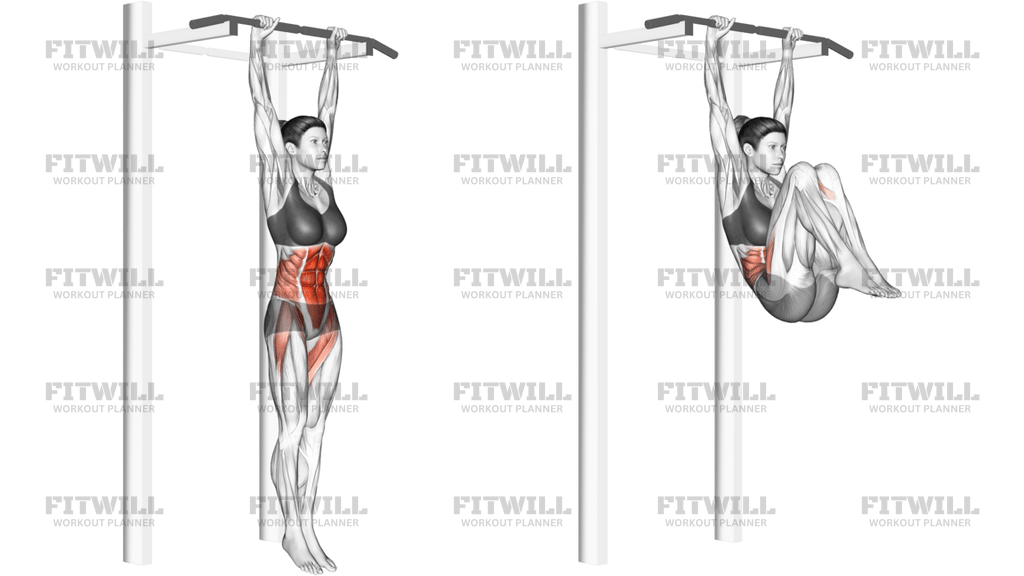
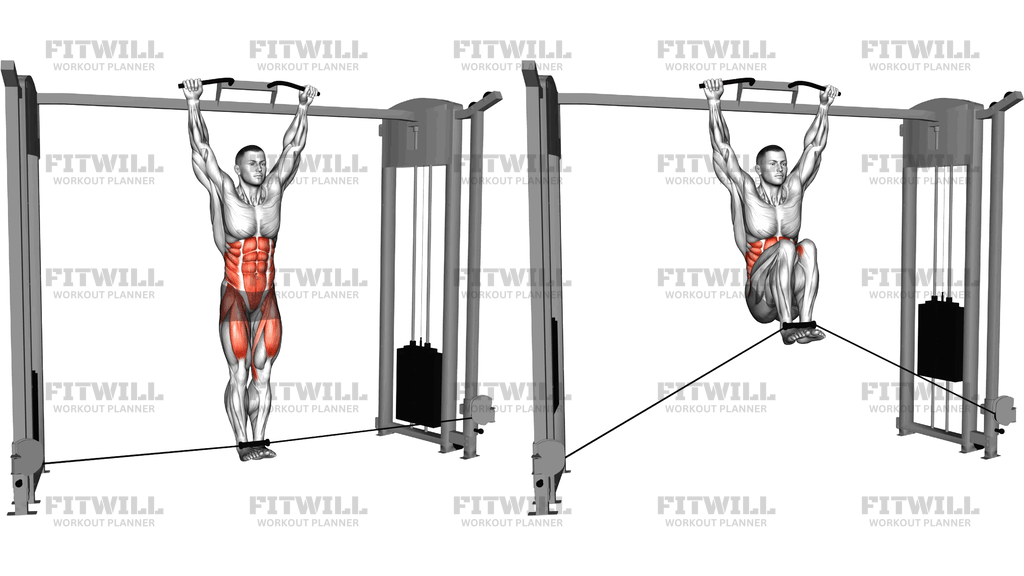
Cable Hanging Leg Raise is a strict hanging core exercise performed from the top handles or crossbar of a cable station. You support your body weight with straight arms, then lift your legs forward with control so the abs work against gravity and the swing stays quiet. It is a demanding but practical drill for building trunk strength, grip endurance, and the ability to keep the pelvis from tipping forward under load.
The main muscles are the rectus abdominis and the hip flexors, with the obliques and deep core muscles helping to keep the torso from twisting or arching. Because the shoulders, lats, and hands must stabilize the hang, setup matters as much as the actual leg lift. A loose grip or an inactive shoulder position usually turns the movement into a swing, which shifts the effort away from the abs.
The cleanest rep starts in a still hang with the rib cage stacked over the pelvis. From there, lift the legs with minimal momentum, keep them together, and finish by curling the pelvis slightly upward rather than only swinging the feet higher. Lower slowly until the body is back under control, and reset before the next rep so each repetition starts from a quiet position.
Cable Hanging Leg Raise is useful in core-focused sessions, athletic accessory work, or as a harder progression after floor leg raises and reverse crunches. Beginners can bend the knees or limit the range until they can keep the body still; advanced lifters can lengthen the lever with straighter legs and slower lowering. The main safety point is to avoid forcing the range if the lower back arches or the shoulders lose control, because the exercise should challenge the abs without turning into a swinging hip-flexor kick.
For programming, this movement fits best after your main lifts or as a focused core finisher, when you can concentrate on each rep instead of chasing fatigue. Keep the set short enough that the hang stays crisp, because once the swing starts, the exercise becomes a momentum drill instead of an abdominal raise. If the cable station is crowded or the handles are awkward, choose a variation that lets you hang cleanly and keep the line of pull under control.
[ Workout Log & Planner ]
Put your next workout in Fitwill
Keep your plan and training log ready when you are.


Instructions
- Stand under the cable station's top handles or straight bar and grip it shoulder-width with both hands.
- Step or jump into a dead hang with arms straight, shoulders active, and feet clear of the floor.
- Keep your legs together, ribs down, and pelvis slightly tucked before you start the rep.
- Exhale and lift your legs forward in one smooth arc, leading with the knees if needed and keeping the torso still.
- Raise until your thighs are near parallel to the floor or as high as you can without swinging or arching your lower back.
- Pause briefly at the top and keep your abs tight instead of kicking higher.
- Lower your legs slowly until you are back in a controlled hang, resisting the pull of momentum.
- Reset the swing before the next rep and repeat for the planned set.
Tips & Tricks
- Use the handles or bar that lets you hang with wrists and shoulders comfortable; a painful grip will limit the set before the abs do.
- Keep the rib cage down and think of curling the pelvis upward, not just lifting the feet.
- If straight legs make your back arch, bend the knees and keep the same torso position.
- A small pause at the bottom between reps is better than letting the body swing.
- Move slowly on the way down; most of the ab work happens when you resist extension.
- Do not shrug into your ears; keep the shoulders packed and the lats lightly engaged.
- Stop the set when your legs start to swing forward from momentum instead of abdominal control.
- If the station rocks or the stack taps, reduce range and clean up the hang before adding reps.
Frequently Asked Questions
What muscle does Cable Hanging Leg Raise target most?
The rectus abdominis does most of the work, with the hip flexors, obliques, and deep core muscles helping to stabilize the hang.
Can beginners perform this exercise?
Yes, but many beginners should start with bent-knee raises or shorter sets until they can keep the hang quiet and the shoulders comfortable.
Is the cable stack supposed to move during Cable Hanging Leg Raise?
No. The cable station is acting as the support frame, and the goal is to move your body without turning the stack into part of the rep.
Should I keep my legs straight or bent on the bar?
Straight legs make the movement harder, but a bent-knee version is fine if it helps you avoid lower-back arching and swinging.
How high should I raise my legs on the cable station?
Raise them as high as you can while keeping the torso still. Thighs near parallel is a good target for many lifters, but control matters more than height.
Why do I swing so much in the hang?
Usually the setup is too loose or the lowering phase is too fast. Reset in a still hang and shorten the range until each rep stays controlled.
What if my grip gives out before my abs do?
Use the most comfortable top handles, shorten the set, or build toward longer hangs. Grip is part of the exercise, but it should not force sloppy reps.
Is Cable Hanging Leg Raise harder than lying leg raises?
Usually yes, because the whole body has to stabilize while hanging. Lying variations are a good stepping stone if you need more control first.