Cable Reverse Crunch
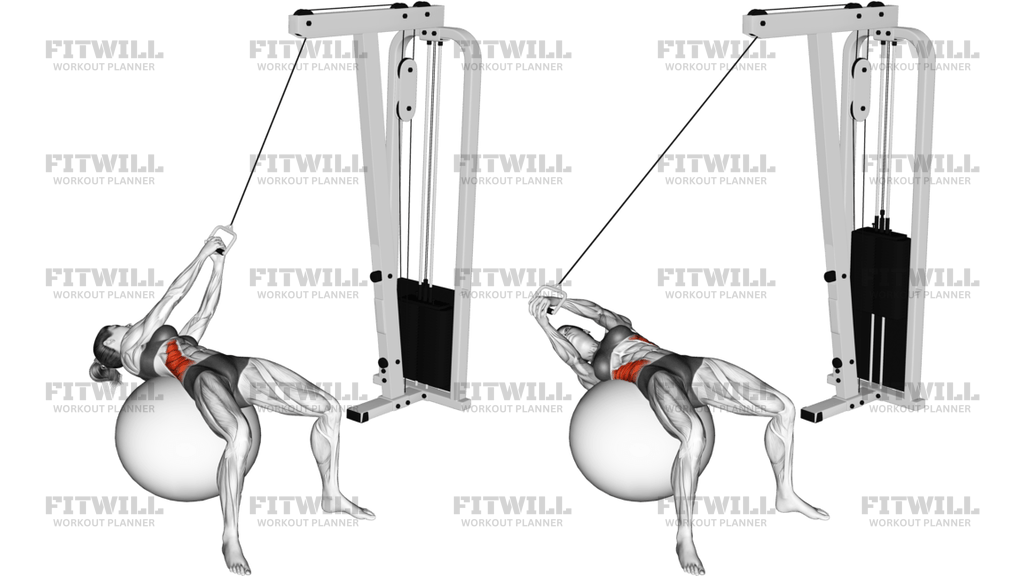
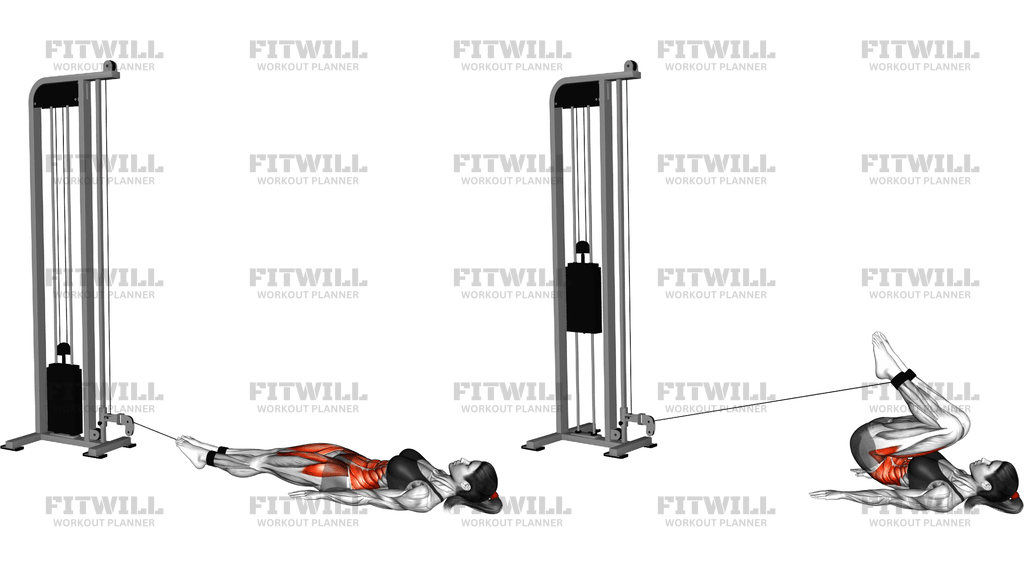
Cable Reverse Crunch is a floor-based abdominal exercise that uses a low cable line to keep tension on the midsection through the entire rep. In the image, the lifter lies on the back with the knees bent, the cable attached to the feet or ankles, and the arms spread for balance while the pelvis curls upward. That setup shifts the work toward the abs and away from a loose leg swing.
The exercise is most useful when you want controlled trunk flexion with constant resistance. Because the cable is always pulling backward, the starting position matters: the cable should already be taut, the knees should be bent, and the lower back should be ready to stay in contact with the floor before the first rep begins. If the setup is too far from the anchor or the cable goes slack, the movement usually turns into a sloppy hip-flexor lift instead of a clean reverse crunch.
At the top of each rep, the goal is not to throw the legs overhead. The real finish comes from curling the pelvis off the floor and bringing the knees toward the chest while the ribs stay down. That small posterior pelvic tilt is what makes the abs do the work. A smooth reverse on the way down is just as important, because the descent keeps the cable loaded and lets you reset without losing tension.
This exercise fits well in core-focused sessions, accessory blocks, or finishers when you want a strict abdominal movement that does not rely on heavy spinal loading. It is also a useful option for lifters who prefer floor work over hanging or machine-based ab training. Moderate or light resistance usually produces the best quality, especially when the rep ends with a clear curl rather than a kick.
For safety and quality, keep the neck relaxed, the shoulders down, and the motion short enough to stay in control. If the lower back arches, the cable goes slack, or the hips start rocking, the set is too heavy or the range is too big. The best reps look deliberate: steady tension, a clear pelvis tuck, and a controlled return to the floor before the next repetition.
[ Workout Log & Planner ]
Put your next workout in Fitwill
Keep your plan and training log ready when you are.


Instructions
- Lie on your back on the floor with the cable attached low behind you and the feet or ankles secured to the attachment.
- Bend the knees to about 90 degrees, spread the arms out for balance, and keep the cable already under light tension.
- Press the shoulders and upper back into the floor so the torso stays quiet before you start the rep.
- Exhale, draw the ribs down, and gently flatten the lower back against the floor.
- Tuck the pelvis so the tailbone begins to curl upward before the knees move closer to the chest.
- Pull the knees toward the chest in a short arc while keeping the knees bent and the cable tension steady.
- Finish the rep when the pelvis lifts and the abs are fully contracted, without kicking the legs or swinging the hips.
- Lower the hips and legs slowly until the lower back returns to the floor, then reset the brace for the next rep.
Tips & Tricks
- Use a light load first; the cable should create tension, not force you to yank the knees upward.
- Keep the knees bent throughout the rep so the motion comes from the pelvis curling, not from straightening the legs.
- Start with the cable already taut; if there is slack at the bottom, the first part of the rep will feel jerky.
- Think about bringing the tailbone toward the ceiling, because that pelvic curl is what makes this a reverse crunch.
- Exhale as you crunch upward so the ribs stay down and the abdominal wall can shorten cleanly.
- Do not let the feet drift far away from the body, or the movement becomes more like a leg raise than a reverse crunch.
- Pause briefly at the top only if you can keep the low back from arching or the hips from rocking.
- Stop the set when the cable starts to pull you out of position, because the lower back is the first place form breaks down.
Frequently Asked Questions
What does Cable Reverse Crunch train most?
It trains the abdominal wall, especially the lower portion of the abs, with the hip flexors and deep core helping stabilize the movement.
Why do I need to lie on the floor for this version?
The floor gives you feedback for the pelvis tuck and helps you tell when the lower back starts to arch, which keeps the rep strict.
Should my knees stay bent the whole time?
Yes. Keeping the knees bent helps turn the exercise into a pelvis curl instead of a straight-leg swing.
What is the biggest mistake with the cable attachment?
Letting the cable go slack at the bottom is the most common problem, because it removes tension and encourages momentum on the next rep.
Can I use an ankle strap instead of a handle attachment?
Yes. A secure ankle strap is usually the cleanest setup, as long as the cable stays attached low and the feet feel stable.
How heavy should I go on this exercise?
Use a load that lets you curl the pelvis and lower back down slowly without kicking, swinging, or losing the floor contact.
How is this different from a regular reverse crunch?
The cable version keeps resistance on the abs through the curl and the return, so the set stays loaded even near the bottom.
Can beginners do Cable Reverse Crunch safely?
Yes, as long as they keep the range short, the load light, and the movement slow enough to control the pelvis curl.