Cable Rope Standing Crunch
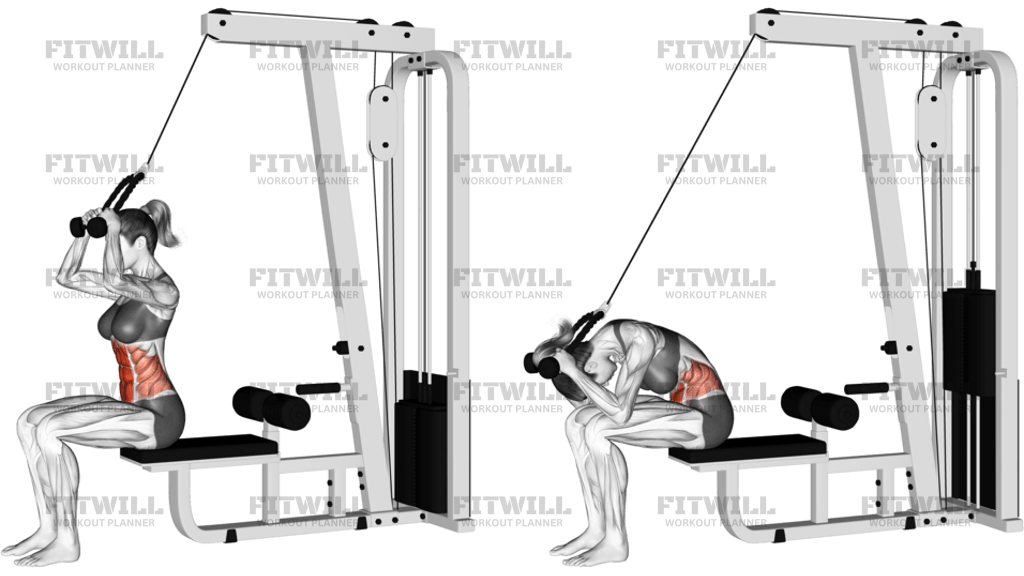
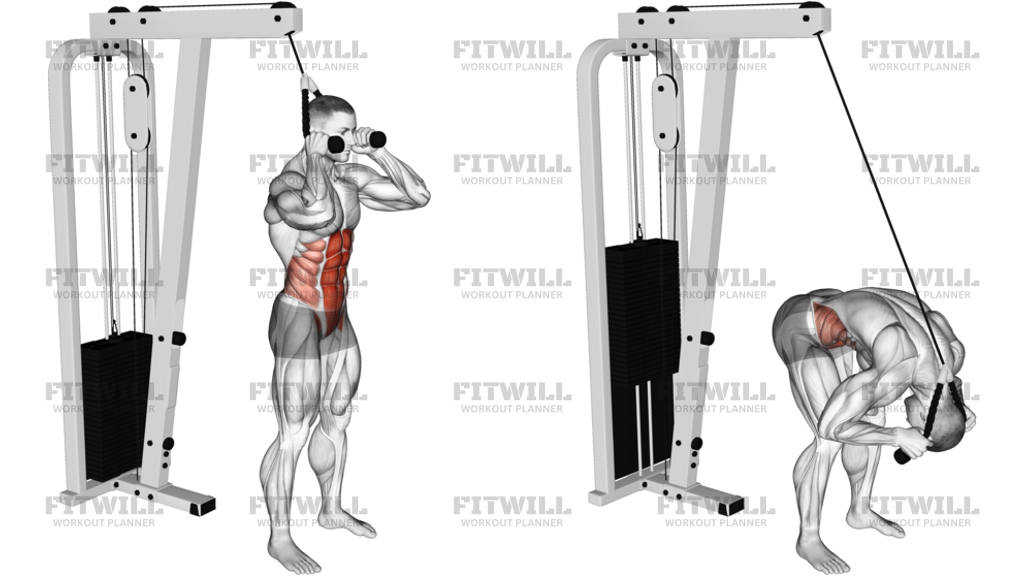
Cable Rope Standing Crunch is a standing cable ab exercise that uses a high pulley and rope attachment to load spinal flexion from the top down. The upright setup makes the movement feel different from floor crunches or kneeling cable crunches because you are controlling the cable while keeping your feet planted and your hips mostly fixed. That combination makes it useful when you want direct ab work without lying down or kneeling on the floor.
The main target is the rectus abdominis, with the obliques helping to keep the torso organized and the deep core working to resist unwanted sway. The hip flexors can assist if the rep turns into a hinge, so the best version of Cable Rope Standing Crunch keeps the ribs and pelvis doing most of the work. When the setup is clean, the cable gives constant tension through the whole rep instead of a loose top and a rushed bottom.
Start by setting the pulley high, holding the rope beside your temples or cheeks, and stepping far enough away that the stack is loaded before you move. Your stance should be stable, usually about hip-width, with soft knees and a slight forward lean only if the cable path requires it. The goal is not to pull the rope with your arms, but to anchor the handle in place while your trunk closes down under control.
As you crunch, think about bringing your ribs toward your pelvis and shortening the front of your torso rather than bending at the hips. Keep the neck neutral, the elbows in roughly the same position, and the shoulders quiet so the abs can do the work. A smooth exhale on the way down helps you brace without locking up, and the return should be slow enough that the stack never slams or loses tension.
Cable Rope Standing Crunch fits well as accessory core work after compound lifts, in a trunk-focused session, or in a higher-rep finisher when you want straightforward ab tension. Use a load that lets you control the rope position, the torso angle, and the return on every rep. If the movement turns into a hip hinge, a neck pull, or a bounce at the bottom, the weight is too heavy or the step-out is too aggressive.
[ Workout Log & Planner ]
Put your next workout in Fitwill
Keep your plan and training log ready when you are.


Instructions
- Set the cable pulley high, clip on a rope attachment, and face away from the stack with the rope ends beside your head.
- Step forward until the cable is taut, then plant your feet about hip-width apart with soft knees and your torso stacked over your hips.
- Bring your hands to the sides of your face, keep your elbows slightly in front of your shoulders, and keep your neck long.
- Brace your abs and exhale before you start the first rep so your torso stays organized against the cable tension.
- Crunch your ribs down toward your pelvis by flexing your spine, letting your upper back round while your hips stay mostly still.
- Keep the rope position steady near your temples and avoid pulling the weight with your arms or flaring your elbows outward.
- Squeeze hard at the bottom for a brief moment without bouncing or letting the stack crash.
- Inhale as you return slowly to the tall start position, keeping tension on the rope the whole way back.
- Reset your stance before the next rep and finish the set only when you can no longer keep the crunch strict.
Tips & Tricks
- Think about folding your sternum toward your belt line instead of trying to touch your elbows to your thighs.
- Keep the rope ends beside your head; if your hands drift forward, the set usually becomes a shoulder-driven pull.
- Use a lighter stack if the cable yanks you into a hip hinge at the start of each rep.
- Let your abs initiate the crunch before your shoulders or arms move downward.
- A short pause at the bottom is more useful than a bigger but sloppy range of motion.
- Keep your chin slightly tucked so the neck does not lead the rep.
- Exhale as the ribs come down, then breathe in on the controlled return to the top.
- Take a small step back if the stack feels slack at the top, or step a little closer if you cannot control the bottom position.
- Stop the set when you start swinging your torso or losing the rope position beside your face.
Frequently Asked Questions
What Muscle Does Cable Rope Standing Crunch Target Most?
The rectus abdominis does most of the work, with the obliques and deep core helping you keep the torso stable.
Is Cable Rope Standing Crunch Beginner-Friendly?
Yes, if you start with a light stack and a short range. The standing setup is simple, but beginners should keep the movement slow so the cable does not pull them forward.
Should My Hips Move During Cable Rope Standing Crunch?
Only a little. The rep should come mostly from spinal flexion, not from driving the hips back and turning it into a hinge.
Why Hold The Rope Beside My Head?
That hand position keeps the cable path comfortable and helps you focus on crunching the torso instead of pulling the weight with your arms.
How Low Should I Crunch On Cable Rope Standing Crunch?
Go only as far as you can keep the motion strict. A strong bottom position is better than forcing your chest toward your thighs and losing tension.
What If I Feel It In My Neck Or Shoulders?
Lighten the load, keep your chin tucked, and stop pulling the rope down with your hands. The neck and shoulders should support the setup, not drive the rep.
Can I Use Cable Rope Standing Crunch After Heavy Lifts?
Yes. It works well as accessory ab work after squats, presses, or deadlifts because it is easy to load and easy to control when fatigue is moderate.
How Do I Make Cable Rope Standing Crunch Harder Without Cheating?
Add a small amount of load, keep the same rope position, and make the return slower instead of standing farther back and turning the set into a sway.