Cable Twist
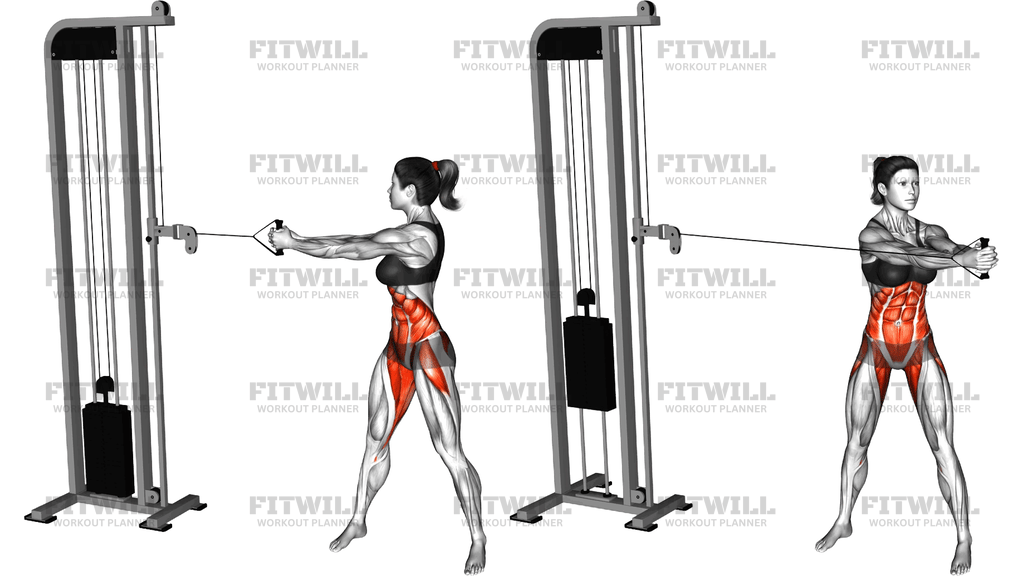
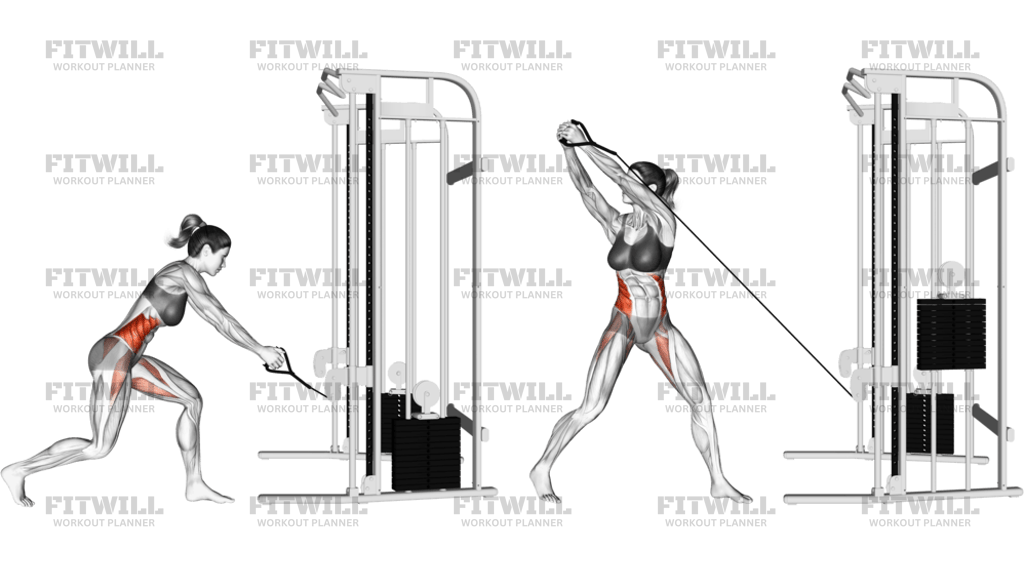
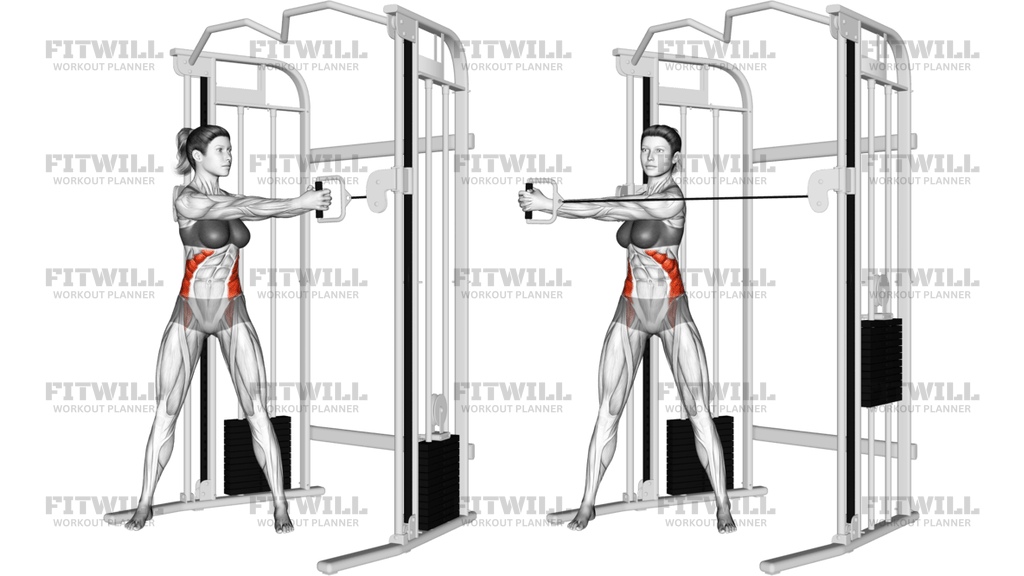
Cable Twist is a standing rotational core exercise that uses a cable machine and handle attachment to train the abs and obliques under constant tension. The cable keeps resistance smooth through the whole rep, so the exercise rewards control, timing, and a stable base more than brute force. In the image, the arms stay long in front of the chest while the torso does the work, which is what makes this movement useful for building trunk strength without turning it into a sloppy arm pull.
The main training emphasis is the waist and core, with the hips helping to stabilize the pelvis as the torso rotates. In anatomy terms, the Rectus Abdominis and External Obliques drive the action, while the Transversus Abdominis and Iliopsoas help brace and control the spine and pelvis. That combination makes Cable Twist especially useful for athletes and lifters who need rotational strength, midsection control, and better force transfer between the lower and upper body.
Setup matters because the cable line, stance width, and arm position decide whether the twist feels clean or unstable. Stand far enough from the stack that the cable is taut at arm's length, then square your chest, soften your knees, and lock in a stance that keeps both feet planted. If the pulley is set around chest height and your hands stay level with the sternum, it is much easier to rotate through the waist without shrugging the shoulders or bending the elbows to cheat the load.
During each repetition, keep the arms long and let the torso turn as one controlled unit instead of yanking with the hands. Rotate through the trunk until you feel the obliques take over, then pause briefly before returning slowly against the cable's pull. The return should be just as deliberate as the turn, because that is where many lifters lose position and start leaning, twisting the knees, or letting the stack snap them back.
Cable Twist fits well in a core block, athletic accessory session, or warmup when you want direct trunk work without needing a floor-based movement. It is usually best with moderate to lighter resistance, crisp reps, and enough range to feel the obliques without losing balance. If your lower back takes over or your shoulders start steering the motion, shorten the range and clean up the setup before adding load.
[ Workout Log & Planner ]
Put your next workout in Fitwill
Keep your plan and training log ready when you are.


Instructions
- Attach a single handle to a cable set around chest height and stand sideways to the stack with your feet slightly wider than shoulder-width.
- Hold the handle with both hands at chest level, walk out until the cable is taut, and keep your arms straight without locking the elbows hard.
- Set your shoulders down, soften your knees, and square your ribs over your pelvis before the first rep.
- Brace your midsection and rotate your torso away from the cable as one unit, letting the handle travel across the front of your chest.
- Keep the hips controlled and the feet planted while the waist and shoulders turn through the working range.
- Pause briefly at the end of the twist without letting the stack pull you farther than you can control.
- Return slowly to the start position, resisting the cable on the way back instead of snapping back to neutral.
- Reset your ribcage and stance before the next repetition, then repeat for the planned set.
Tips & Tricks
- Set the pulley at chest height so the cable line stays level across your torso instead of pulling up or down on the handle.
- If your elbows bend a lot, the arms are taking over; keep them long and let the chest and waist rotate instead.
- Choose a stance wide enough that the cable does not drag you off balance when you reach the end of the twist.
- Turn the ribcage and shoulders together instead of letting the head whip around first.
- Keep the pelvis quiet; if your hips slide or spin aggressively, lighten the load and shorten the range.
- Exhale as you rotate into the hardest part of the rep and inhale as you return under control.
- A small pause at peak rotation makes the obliques work harder and removes momentum from the set.
- If your lower back feels the twist more than your abs, reduce the range and keep the motion higher through the chest and ribs.
Frequently Asked Questions
What muscles does Cable Twist work most?
Cable Twist mainly trains the abs and obliques, with the transverse abdominis and hip stabilizers helping you keep the pelvis steady.
Is Cable Twist a good beginner core exercise?
Yes, as long as the load is light and the rotation stays controlled. Beginners should keep the arms straight, the knees soft, and the range small enough that the torso stays balanced.
How should I set up the handle on Cable Twist?
Set the pulley around chest height and stand far enough away that the cable is taut with your arms straight in front of you. That keeps the line of pull clean and makes the twist come from the torso instead of a reach.
Should my hips rotate during Cable Twist?
They should stay controlled, not frozen. A little natural turn is fine, but if the hips spin wildly, the movement turns into momentum instead of trunk work.
Why keep my arms straight during Cable Twist?
Straight arms keep the handle from becoming a row or press. The cable should challenge your torso while the shoulders and elbows simply transmit the force.
Where should I feel Cable Twist most?
You should feel the effort along the sides of the waist and across the front of the abdomen. If the shoulders or lower back dominate, the load is probably too heavy.
What is the biggest mistake in Cable Twist?
Rushing the return and letting the stack yank you back is the most common error. Lower the weight until you can control both directions.
Can I use Cable Twist for athletic training?
Yes, it is a good accessory for sports that require torso rotation, bracing, and force transfer. Keep the reps crisp rather than turning it into a conditioning drill.