Cable Seated Crunch
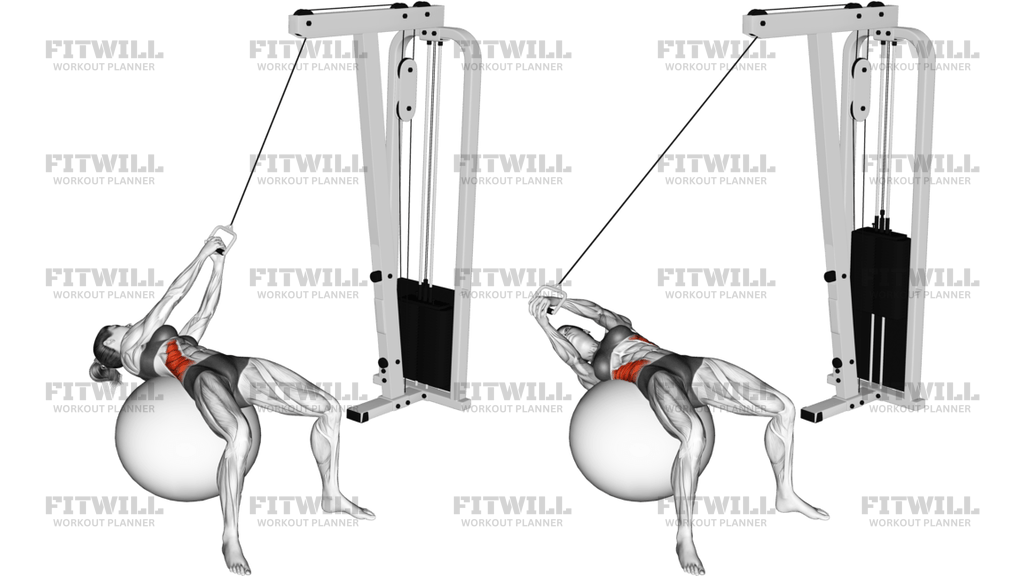
Cable Seated Crunch is a cable-loaded abdominal exercise that uses an overhead rope attachment and a seated, anchored setup to train controlled spinal flexion. The image shows a lifter seated on the bench with the rope beside the head and the torso curling forward over the thighs, which makes this movement very different from a standing cable crunch or a machine crunch. The cable gives the abs constant tension, so the quality of the setup and the path of the crunch matter as much as the load.
This exercise is aimed primarily at the abdominal wall, especially the rectus abdominis, with the obliques, deep core, and hip stabilizers helping keep the torso organized while the spine flexes. When it is done well, the ribs move toward the pelvis, the low back rounds only as much as needed, and the hips stay relatively quiet so the movement comes from the trunk instead of from swinging the shoulders or yanking the handle.
The seated position matters because it lets you lock in a stable base before each rep. Sit tall on the bench, set the cable so the rope pulls from high above you, and hold the ends or handles beside your temples with the elbows angled forward. Keep your feet planted and your lower body anchored against the pad or support so the cable resistance is met by the abs rather than by sliding around on the bench. The start should feel stacked: ribs over pelvis, chin tucked slightly, and neck long.
On each repetition, exhale as you curl the ribcage down toward the thighs and let the sternum travel toward the pelvis. Think about shortening the distance between your ribs and hips instead of pulling your head with your hands. At the bottom, the abs should be fully shortened but the movement should still feel controlled, not forced. Then return slowly until the torso is nearly upright again while keeping tension on the cable. The return is part of the exercise, not a reset.
Cable Seated Crunch is useful when you want a more loadable core movement than floor crunches or basic bracing drills. It fits well in an accessory block, abdominal-focused session, or as a controlled finisher after heavier lifting. Beginners can use it safely if they keep the resistance light and the range honest. The main coaching priorities are smooth breathing, a quiet neck, and a torso that moves as one piece instead of turning the rep into a hip hinge.
[ Workout Log & Planner ]
Put your next workout in Fitwill
Keep your plan and training log ready when you are.


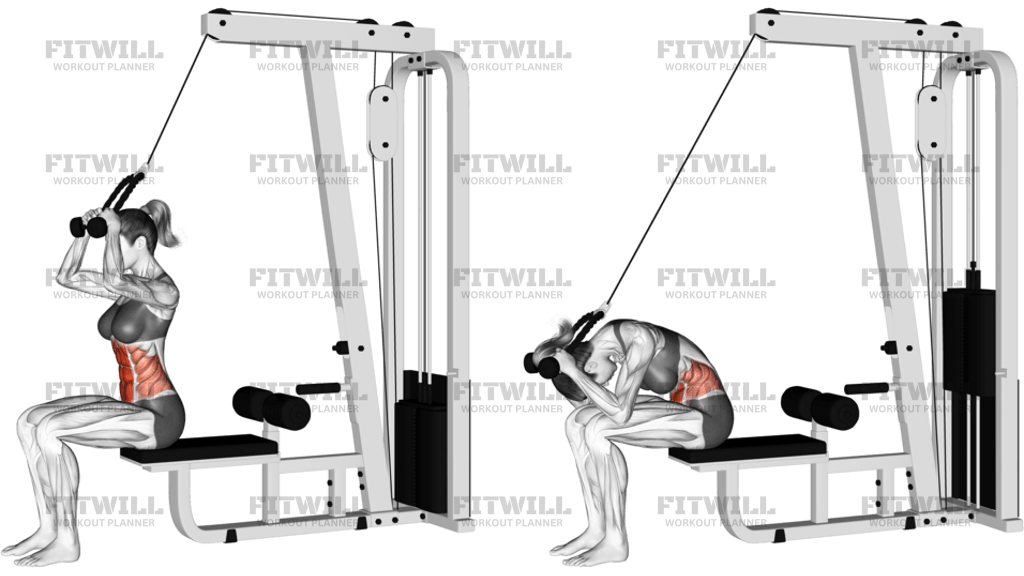
Instructions
- Set the cable pulley high, attach the rope handle, and sit on the bench facing the weight stack with your lower body anchored against the support pad or roller.
- Hold the rope ends beside your temples or cheeks, with your elbows slightly in front of your body instead of flared wide.
- Plant your feet and sit tall so your ribs are stacked over your pelvis before the first rep.
- Inhale to brace, then keep your neck long and your chin lightly tucked.
- Crunch your torso forward by bringing your ribs toward your thighs, letting the spine flex while the hips stay mostly fixed.
- Keep your hands quiet and let the cable stay close to your head rather than pulling the handles with your arms.
- Squeeze the abs briefly at the bottom without jerking or dropping into the rep.
- Exhale as you return slowly to the start, stopping before you lose tension or start leaning back.
- Reset your posture at the top and repeat for the planned reps with the same range and tempo.
Tips & Tricks
- Choose a load that lets you curl the torso down without the rope yanking your shoulders forward.
- Think about bringing the bottom of the ribs toward the pelvis; that cue keeps the work on the abs instead of the arms.
- Keep the elbows slightly forward of the torso so the rope stays stable beside the head.
- Do not turn the movement into a hip hinge by folding at the hips while the trunk stays rigid.
- A small posterior pelvic tilt at the bottom can help you finish the crunch without overpulling the neck.
- Pause for a moment in the shortened position if you want more abdominal tension and less momentum.
- Control the return so the stack never slams and the abs stay under load on the way back up.
- If your neck or jaw tightens, reduce the load and soften the grip on the rope ends.
- Stop the set when the lower back starts taking over or when you can no longer curl the ribs forward cleanly.
Frequently Asked Questions
What muscles does Cable Seated Crunch train most?
It primarily trains the abdominals, especially the rectus abdominis, with the obliques and deep core muscles helping stabilize the torso.
How is this different from a floor crunch?
The cable keeps tension on the abs through the whole rep, so you can load the movement more precisely than with an unweighted crunch.
Should I pull with my hands or arms?
No. Your hands only hold the rope in place while the ribs and trunk do the curling.
How far should I crunch down?
Lower until your ribs move clearly toward your thighs and the abs are fully shortened, but stop before the movement turns into a sloppy collapse.
Why do my hips or hip flexors feel involved?
Because the lower body is anchored and the torso is flexing over the pelvis, the hip area helps stabilize the position even though the abs should still be the main driver.
Can beginners use the seated cable crunch?
Yes. Start with very light resistance and a short, controlled range so you can learn the rib-to-pelvis motion first.
What is the biggest form mistake?
Pulling with the arms or hinging at the hips instead of curling the torso forward is the most common mistake.
How can I progress this exercise?
Add a little load, slow the return, or add a brief pause at the bottom while keeping the crunch clean and repeatable.