Body Muscles Front View
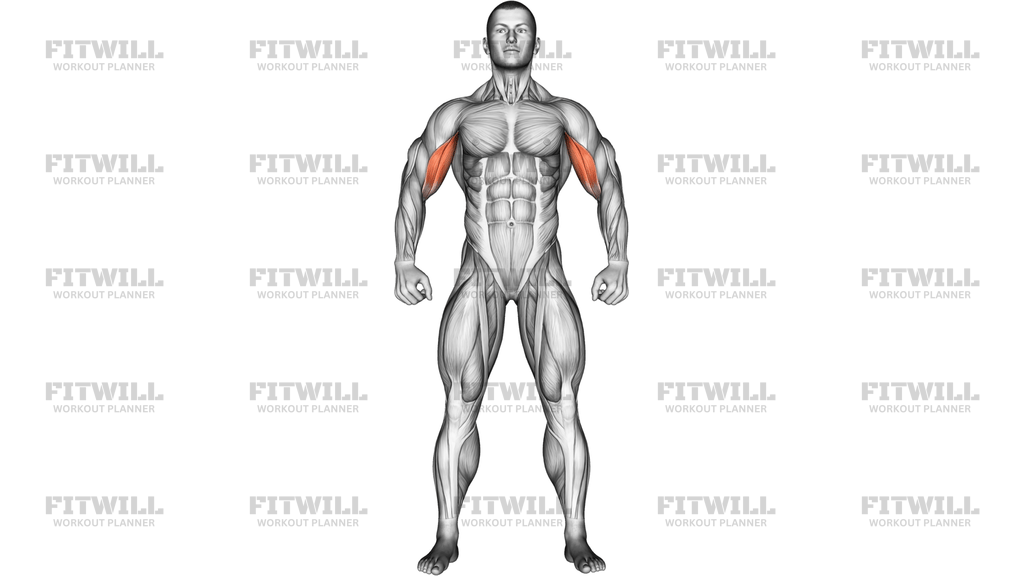
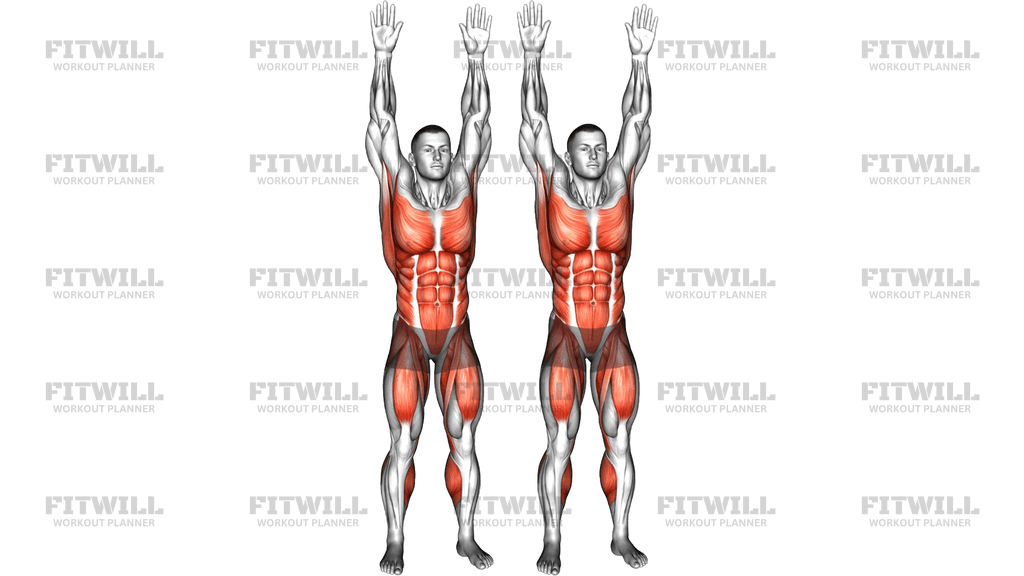
Body Muscles Front View is a standing anatomical reference that shows the front side of the body in a neutral, upright posture. The image is useful for understanding how the major muscles line up from the neck and shoulders down through the chest, arms, trunk, thighs, and calves, with the upper arms highlighted to draw attention to the anterior arm shape and symmetry.
Because this is a front-view muscle illustration rather than a loaded lift, the goal is clarity of posture. A clean stance makes the anatomy easy to read: feet planted evenly, pelvis stacked under the ribs, chest open without flaring, and the head centered over the shoulders. That neutral position helps you compare left and right sides and see how the body presents when nothing is twisting, leaning, or hiding the lines of the muscles.
Use this pose as a visual check, teaching aid, or cue for front-body alignment. It is helpful when you want to identify the chest, front deltoids, upper arms, abdominals, quadriceps, and lower-leg outline without the distraction of movement. In a coaching context, it can also support posture assessment by showing whether the shoulders are level, the arms hang evenly, and the knees track straight ahead.
Even though the image is static, the same quality rules apply as they do in exercise work: keep the stance intentional, avoid shrugging or arching to "show" the body, and breathe normally while holding the position. The best version of this reference looks relaxed and symmetrical, not forced. If you are comparing it with a back view or side view, keep the stance and camera angle consistent so the anatomy is easy to read across views.
[ Workout Log & Planner ]
Put your next workout in Fitwill
Keep your plan and training log ready when you are.


Instructions
- Stand tall facing forward with your feet about hip-width apart and your weight spread evenly through both feet.
- Let your arms hang slightly away from your torso so the chest and upper-arm lines stay visible.
- Keep your head centered over your shoulders and look straight ahead with a neutral neck.
- Stack your ribs over your pelvis so your torso stays upright without leaning back.
- Set your shoulders down and away from your ears before you settle into the pose.
- Keep your knees straight but not locked, with the thighs turned forward and relaxed.
- Breathe calmly while holding the front-view posture and avoid changing the stance from side to side.
- Hold the position for the planned amount of time, then relax the arms and step out of the stance.
Tips & Tricks
- A small gap between the upper arms and the sides of the torso makes the chest and arm contours easier to read.
- Keep both feet pointing forward so the hips and knees stay square to the camera.
- Do not flare the ribs or arch the lower back to exaggerate the torso lines.
- Relax the hands instead of making fists, which can change the look of the forearms and shoulders.
- Keep the chin level; looking up or down changes the neck lines and posture.
- Match the left and right arm position as closely as possible so symmetry is obvious.
- If you are using the pose for anatomy study, stay still long enough to compare the shoulders, chest, abs, and thighs.
- Use the same stance and lighting if you are comparing this front view with another body-muscle reference.
Frequently Asked Questions
What does Body Muscles Front View show?
It shows the body from the front in a neutral anatomical stance, with the front-body muscle lines easy to see.
Is this a loaded exercise or a pose?
It is best treated as a standing anatomy reference or posture pose, not a strength movement.
Which muscles are easiest to see from the front?
The chest, shoulders, upper arms, abdominals, quadriceps, and lower legs are the easiest landmarks to read.
Why are the arms slightly away from the torso?
That small separation helps keep the arm lines visible and prevents the upper arms from hiding the chest.
Do I need any equipment?
No equipment is needed. A neutral standing position is enough for this front-view reference.
Can beginners use this?
Yes. It is beginner-friendly because the focus is on posture, symmetry, and body awareness rather than strength.
What is the biggest posture mistake to avoid?
Do not arch the lower back or shrug the shoulders to make the torso look more muscular; that hides the natural front-view lines.
How is this different from a bodybuilding front pose?
This is a neutral anatomical stance, so the goal is to show clean muscle landmarks and symmetry rather than a flexed presentation.