Resistance Band Hip Thrusts On Knees
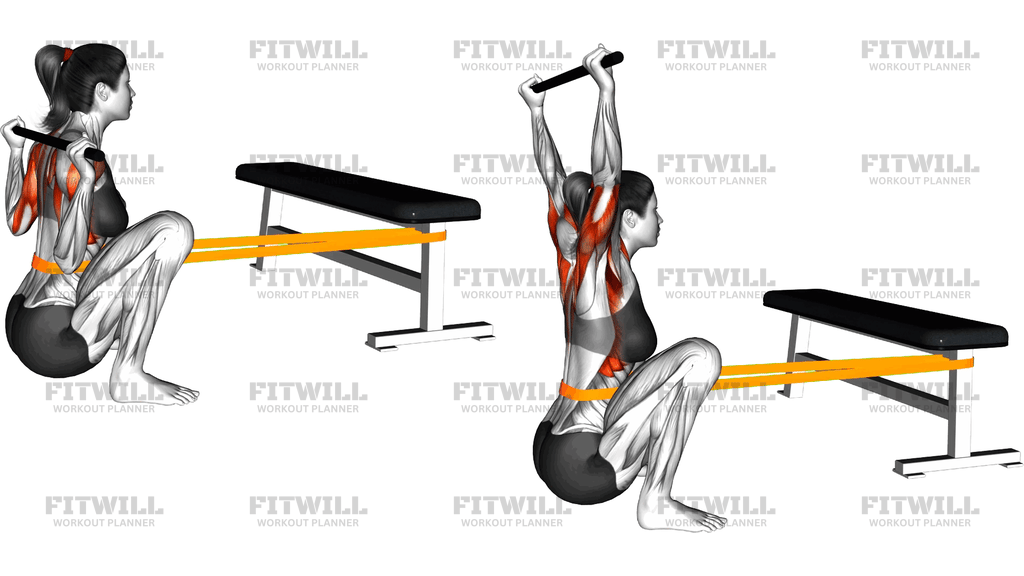
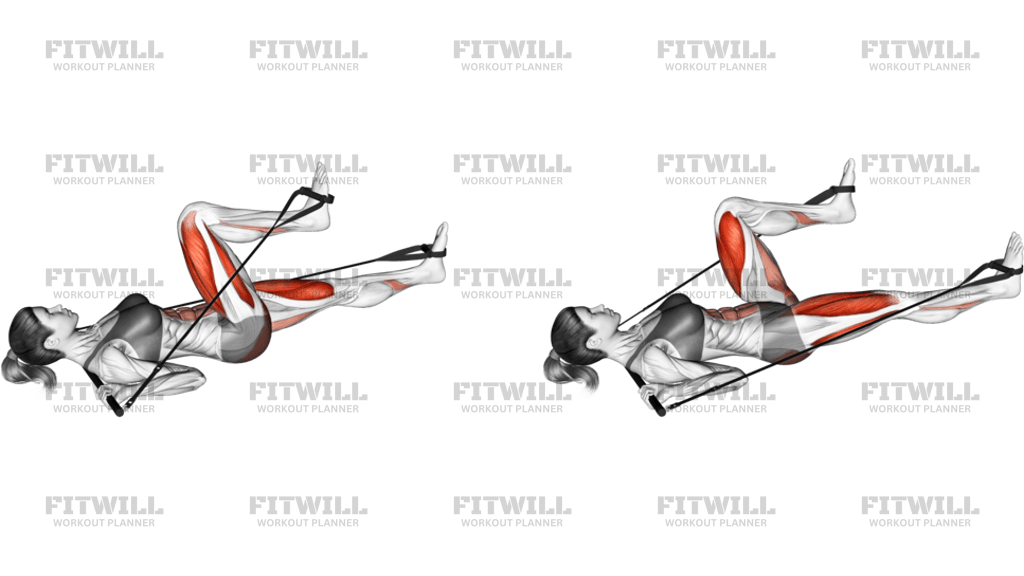
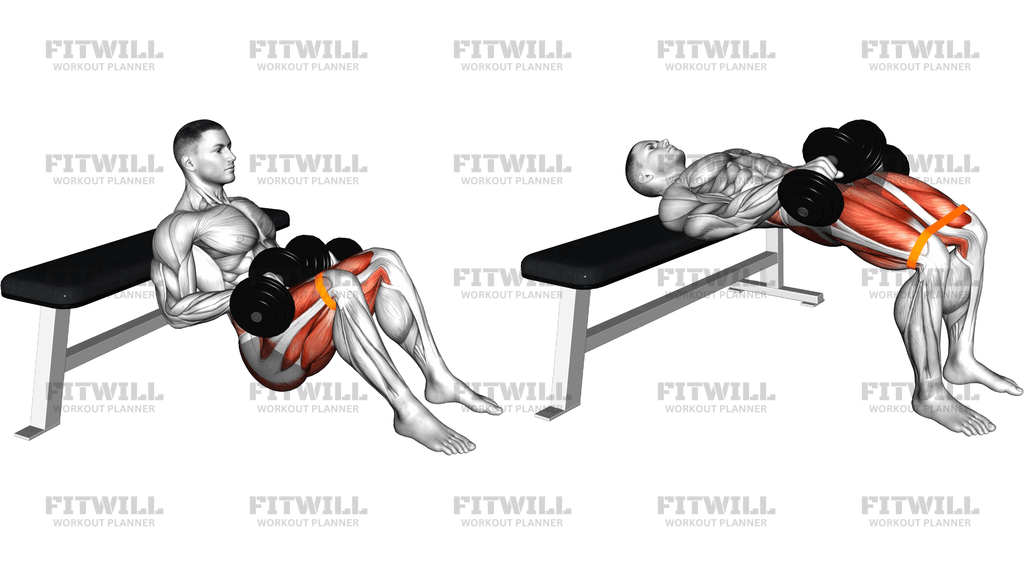
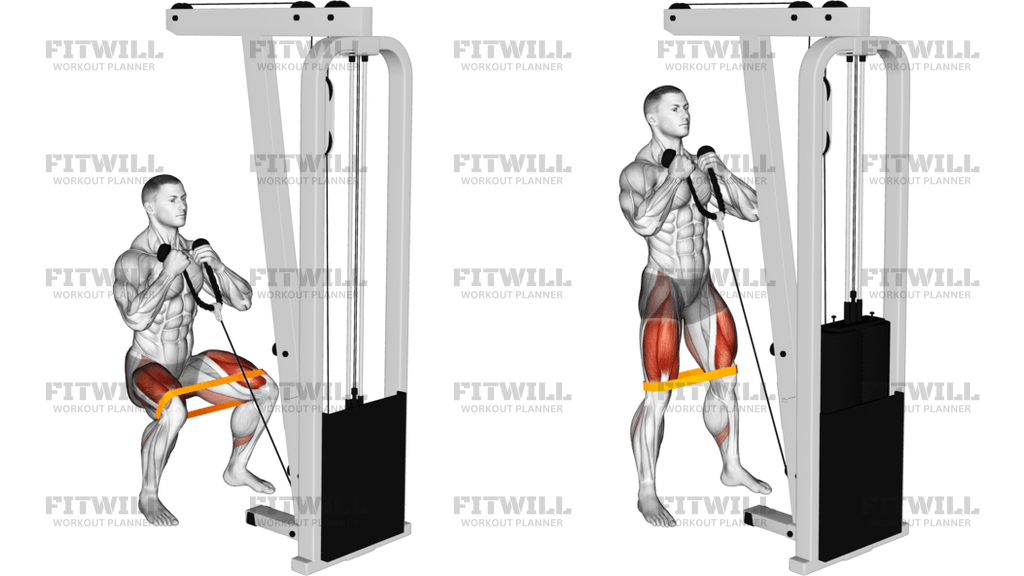
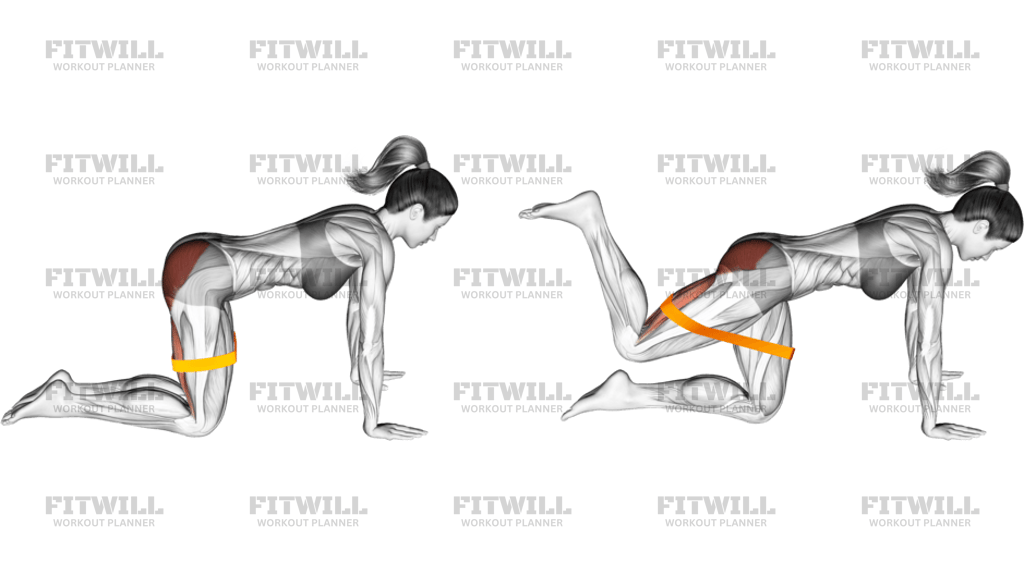
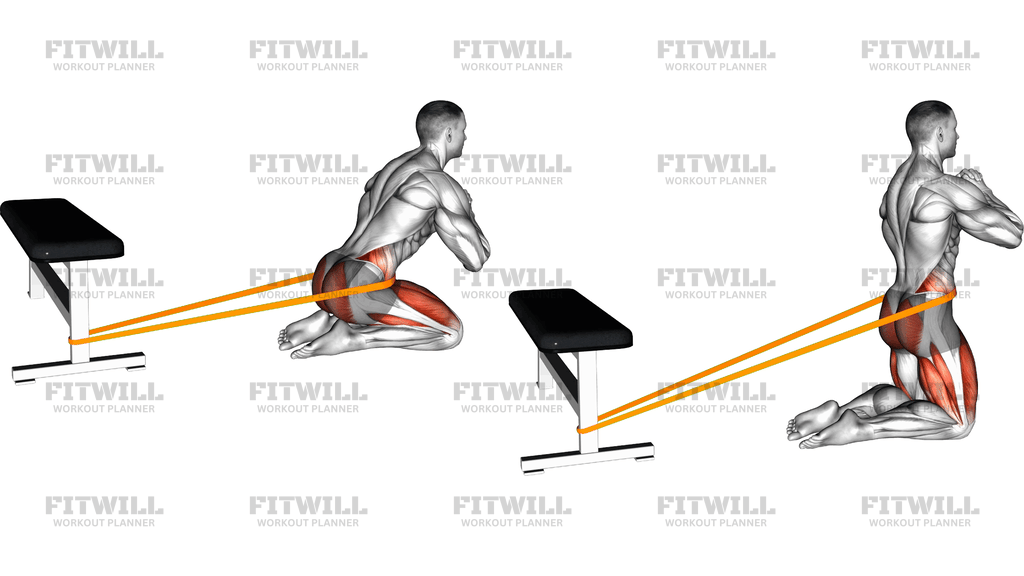
Resistance Band Hip Thrusts On Knees is a kneeling hip-extension drill that loads the glutes through a low anchored band instead of a barbell or machine. In the image, the band is fixed low in front of the lifter and runs across the front of the hips while the knees stay on the floor, which makes the exercise more about driving the pelvis forward than about balancing a load on the torso. That setup is useful when you want a strong glute contraction without needing a bench across the upper back or a heavy external load.
The movement trains the glutes first, with the hamstrings and trunk stabilizers helping to keep the pelvis organized as the hips open and close. Because the lifter begins from a kneeling position, the range is shorter and more controlled than a full hip thrust, so the band tension has to be set carefully. If the band is too light, you will drift through the reps without much resistance. If it is too heavy or anchored too high, the pelvis gets pulled forward before you can stack the ribs and finish the rep cleanly.
Good setup matters more here than in many simple band exercises. The knees should rest on a pad or soft surface, the shins should point back, and the torso should start slightly pitched forward so the band can tension the hips right away. From there, the rep is a controlled hip extension: drive the hips forward, bring the torso tall, and finish by squeezing the glutes rather than leaning back through the lower spine. The return should be just as deliberate, with the hips moving back under control while the band stays taut.
This variation works well as a glute activation drill, an accessory lift, or a warm-up before squats, deadlifts, or other lower-body training. It is also a practical option for beginners because the load is easy to scale and the position makes cheating obvious. Keep the ribs stacked, keep the neck relaxed, and shorten the range if you feel the low back taking over. The best reps look smooth and repeatable, with the hips doing the work and the band providing steady resistance throughout the whole path.
[ Workout Log & Planner ]
Put your next workout in Fitwill
Keep your plan and training log ready when you are.


Instructions
- Anchor the resistance band low in front of you so it pulls straight toward your hips, then place a pad under both knees.
- Kneel a short distance behind the anchor with both knees on the floor, shins resting back, and your torso leaning slightly forward.
- Loop the band across the front of your hips and keep it seated low on the pelvis, not on the low back.
- Set your feet and knees in a comfortable, hip-width position and keep your head and neck neutral.
- Brace your trunk, then drive your hips forward against the band until your torso comes tall in a stacked kneeling position.
- Finish the rep by squeezing the glutes and keeping the ribs down rather than arching through the lower back.
- Hold the top position briefly, then inhale and let the hips travel back under control while the band stays taut.
- Return to the forward-leaning start position and repeat for the planned number of reps with even tension.
Tips & Tricks
- Choose a band that lets you reach full hip extension without being yanked into the top position.
- Keep the band low across the pelvis; if it rides up, the pull usually shifts away from the hips and into the waist.
- Use a thick pad under the knees if the floor pressure makes you shorten the set early.
- Think about driving the belt buckle forward, not throwing your chest backward.
- Do not let the ribs flare at lockout; a shorter range with a clean glute squeeze is better than a big arch.
- A one-second squeeze at the top makes the glutes do more of the work and reduces momentum.
- If your knees drift inward, reset them before the next rep so the hips can extend cleanly.
- Keep the return slow and controlled so the band keeps tension on the glutes through the full cycle.
Frequently Asked Questions
What muscles do Resistance Band Hip Thrusts On Knees work?
They mainly train the glutes, with the hamstrings and deep core muscles helping to keep the hips and ribs organized.
Is Resistance Band Hip Thrusts On Knees beginner friendly?
Yes. The kneeling setup makes the range easy to control, and you can start with a light band until you can finish each rep without arching your back.
Where should the band sit during Resistance Band Hip Thrusts On Knees?
Keep it low across the front of the hips or pelvis, with the anchor fixed in front of you. If it creeps onto the waist, the exercise usually turns into more of a pull than a hip drive.
How high should I come up in Resistance Band Hip Thrusts On Knees?
Drive until your torso is tall and your hips are fully extended, but stop before your lower back takes over. The top should feel like a glute squeeze, not a backward lean.
Why do my knees hurt during Resistance Band Hip Thrusts On Knees?
Usually the floor pressure is too high or the pad is too thin. Add more cushioning, keep the knees hip-width apart, and reduce range if the joint still feels irritated.
Can I use Resistance Band Hip Thrusts On Knees as a warm-up?
Yes. Light band tension and higher reps work well before squats or deadlifts because the exercise wakes up the glutes without much spinal loading.
How is this different from a barbell hip thrust?
This version is more vertical and band-driven, so it emphasizes hip extension and glute tension without balancing a bar across the pelvis or upper back.
What should I do if I feel it mostly in my lower back?
Shorten the range, keep the ribs stacked over the pelvis, and finish with a glute squeeze instead of a back arch. If that does not fix it, reduce the band tension.