Body Muscles Back View
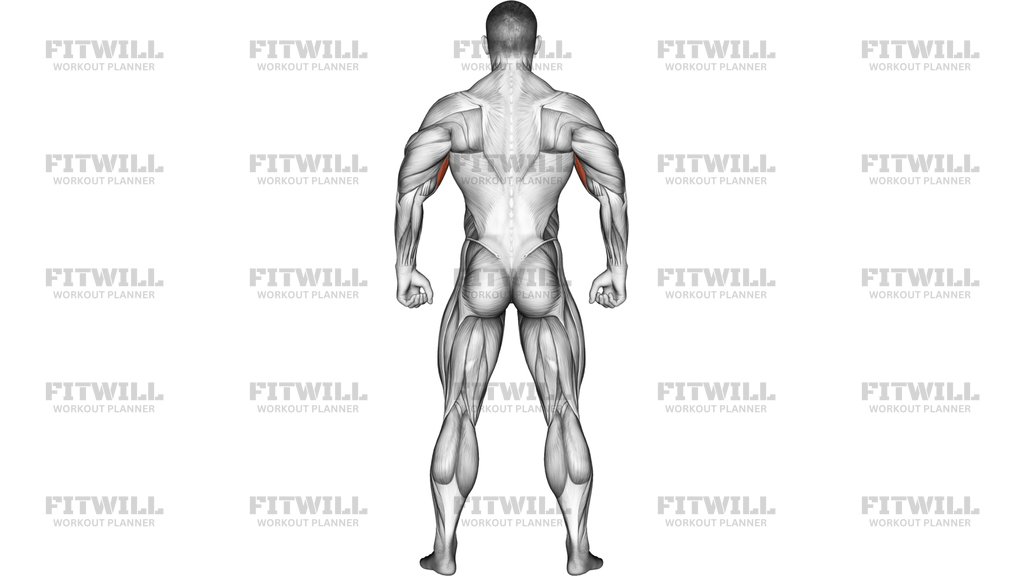
Body Muscles Back View is a static posterior anatomy reference that shows the muscles visible from behind, with the back, shoulders, arms, glutes, and legs mapped in a clean rear-view illustration. It is useful when you need to identify where major back-side muscle groups sit on the body instead of guessing from the front.
The image is especially helpful for understanding how the posterior chain connects from the upper back down through the glutes and calves. In this view, the triceps are highlighted on the back of the upper arms, while the surrounding shoulder, back, and lower-body structures give context for how those muscles sit in relation to each other. That makes the graphic practical for learning anatomy, cueing posture, or explaining which areas are involved in pulling and hip-dominant work.
Because this is a reference image rather than a moving exercise, the main goal is visual accuracy. Read it from head to heel and notice how the spine sits in the center, how the shoulder blades frame the upper back, and how the glutes and hamstrings continue the line of the posterior chain. That rear-view structure is what makes the image useful for coaching and educational content.
Use it when you want to explain back-side muscle involvement, compare front and back anatomy, or point out the difference between prime movers and stabilizers on the posterior body. It works well as a teaching aid for trainers, athletes, and beginners who need a simple way to locate the muscles they are working before they add load or start a movement.
For safety and clarity, remember that the diagram shows anatomy in a neutral standing pose, not a loaded exercise position. The value comes from reading the muscle map correctly and matching it to the lift, drill, or posture you are teaching. If you are using it alongside exercise coaching, keep the visual reference tied to the actual movement pattern so the anatomy stays easy to understand.
[ Workout Log & Planner ]
Put your next workout in Fitwill
Keep your plan and training log ready when you are.


Instructions
- Start with the illustration centered so the back view is fully visible from head to heels.
- Identify the main landmarks first: spine, shoulder blades, upper arms, glutes, hamstrings, and calves.
- Look for the highlighted upper-arm area to see where the triceps sit on the back of the arm.
- Trace the width of the upper back and note how it tapers into the waist and glutes.
- Compare the left and right sides to understand how the posterior muscles mirror each other.
- Use the image to locate the back-side muscles before you cue a pull, hinge, or rowing pattern.
- Match the anatomy on the chart to the same areas on a moving body or exercise video.
- Return to the image whenever you need a quick rear-view reference for muscle location.
Tips & Tricks
- Use the spine line as your anchor when orienting the rest of the posterior body.
- The highlighted triceps sit on the back of the upper arm, not the front shoulder.
- The shoulder blades help show where the upper back starts and how it narrows toward the waist.
- The glutes are the largest visible posterior mass here, so they are a good landmark for hip-dominant work.
- The hamstrings and calves continue the line of the posterior chain down the leg.
- Compare both sides of the body so you do not misread a single muscle as a whole region.
- Use this image as a visual cueing tool for rows, hinges, and other back-side movements.
- If you are teaching beginners, point to one region at a time instead of naming every muscle at once.
Frequently Asked Questions
What does Body Muscles Back View show?
It shows a rear-view anatomy illustration of the body's posterior muscles, including the back, shoulders, arms, glutes, and legs.
Which muscle is highlighted on the upper arm?
The highlighted area is on the triceps region at the back of the upper arm.
Is this a workout exercise or an anatomy reference?
It is an anatomy reference image, not a movement or load-bearing exercise.
Why is the back view useful for coaching?
It makes it easier to show how the spine, shoulders, glutes, and hamstrings line up during pulling and hip-dominant patterns.
Can beginners use this image?
Yes, beginners can use it to learn where the posterior muscles are located before trying a lift or drill.
What parts of the posterior chain are easiest to identify here?
The glutes, hamstrings, calves, upper back, and triceps are easy to pick out from this rear view.
How should I use this illustration with an exercise?
Use it as a reference while coaching the movement so the muscle names and body positions stay connected.
Does this image show muscle function or only location?
It mainly shows location and visual anatomy, not force output or contraction timing.