Body Muscles Back View
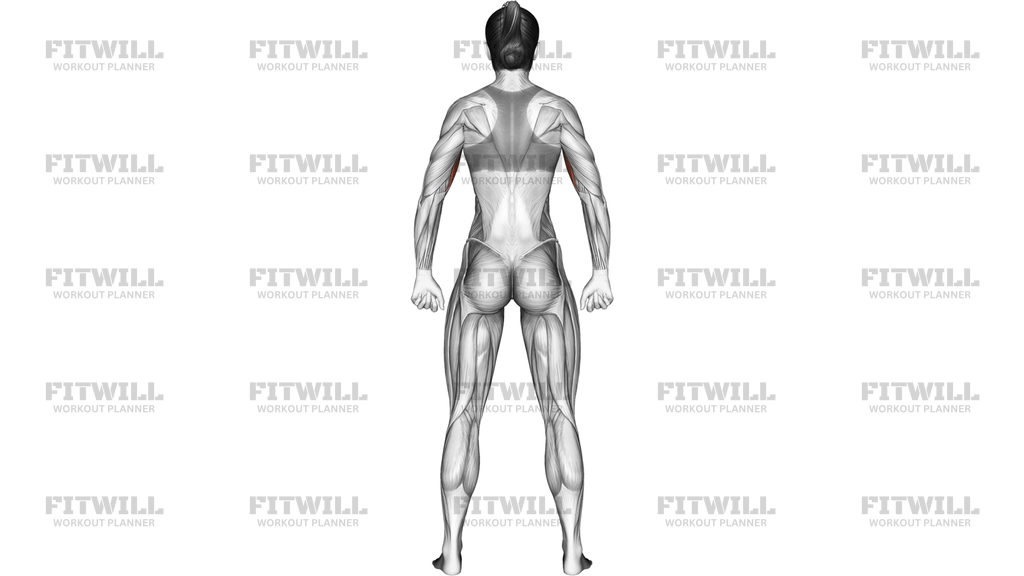
Body Muscles Back View is a rear-facing anatomy reference that highlights the muscles visible from behind, including the upper back, shoulders, arms, glutes, hamstrings, and calves. It is not a dynamic lift or drill; it is a standing posture guide used to study how the posterior chain looks and how the body should line up when viewed from the back.
The image is useful when you want to learn surface anatomy, check left-right balance, or compare which muscles are most visible in a neutral stance. The shoulders sit level, the spine is long and neutral, and the arms hang beside the torso with the hands relaxed. That clean setup makes it easier to read the back, scapulae, glutes, and legs without extra twist or sway.
Use it as a visual reference before training, during coaching, or when explaining posture and muscle groups to beginners. From the back view, the upper trapezius, rear deltoids, latissimus dorsi, spinal erectors, gluteals, hamstrings, and calves are easy to identify. The highlighted upper-arm areas also help show how the triceps sit along the back of the arm.
When teaching with this image, keep the body tall and quiet so the anatomy stays easy to read. Avoid rotating the torso, hiking one shoulder, or letting the rib cage flare. The goal is not to strain into a pose, but to hold a natural, symmetrical stance that clearly shows the posterior chain and the relationship between the shoulders, spine, hips, and legs.
This makes the illustration a practical reference for anatomy study, warm-up cues, posture awareness, and coaching language. It works well for athletes, beginners, and clients who need a simple visual map of the muscles on the back side of the body.
[ Workout Log & Planner ]
Put your next workout in Fitwill
Keep your plan and training log ready when you are.


Instructions
- Stand upright facing away from the viewer or mirror with your feet about hip-width apart and your weight spread evenly between both legs.
- Let your arms hang straight beside your torso with relaxed hands so the back of the shoulders and arms are easy to read.
- Stack your head, rib cage, and pelvis so the spine looks long and neutral from the neck down to the tailbone.
- Keep your chin slightly tucked and your gaze forward if you are using a mirror or recording the position.
- Set the shoulder blades flat without pinching them hard together so the upper back lines stay natural.
- Hold the posture long enough to study the back, glutes, hamstrings, and calves without shifting your balance.
- Keep both hips square and avoid twisting at the waist or leaning to one side while you hold the stance.
- Reset by relaxing the arms and returning to a natural standing posture before repeating the pose.
Tips & Tricks
- Use even lighting if you are studying the anatomy, because shadows can hide the scapulae, spinal line, and arm contours.
- Keep the fists loose so the triceps and forearm lines stay visible instead of tensing up.
- Do not overarch the lower back; a neutral pelvis makes the glutes and hamstrings easier to compare side to side.
- If you are demonstrating posture, keep the chest quiet and avoid flaring the ribs forward.
- Compare shoulder height and waistline symmetry before you hold the stance, especially if one side tends to drift.
- Trace the body from neck to calf in sections when teaching so the posterior muscles are easier to identify.
- Keep the knees soft but straight enough that the calves and hamstrings remain clearly outlined.
- Avoid turning the feet out sharply, because that changes the line of the legs and makes the back view harder to read.
Frequently Asked Questions
What is Body Muscles Back View used for?
It is a back-view anatomy reference for studying posture and the muscles visible from behind.
Does this image train the back muscles directly?
No. It is mainly a visual guide for learning the posterior chain, not a loading exercise.
Which muscles are easiest to identify in the back view?
The upper traps, rear delts, lats, triceps, spinal erectors, glutes, hamstrings, and calves are the easiest to read.
Should I squeeze my shoulder blades together hard?
No. Keep the shoulder blades set naturally so the upper back stays readable without looking forced.
Is this useful for beginners?
Yes. Beginners can use it to learn body landmarks, posture, and the names of the back-side muscles.
Why are the feet kept about hip-width apart?
That stance helps keep the pelvis level and makes the line of the legs easier to compare from side to side.
Can I use this image during coaching?
Yes. It works well for explaining posture, symmetry, and where the posterior muscles sit on the body.
What makes this pose hard to read?
Twisting the torso, shrugging one shoulder, or flaring the ribs changes the back lines and hides the anatomy.