Band Kickback
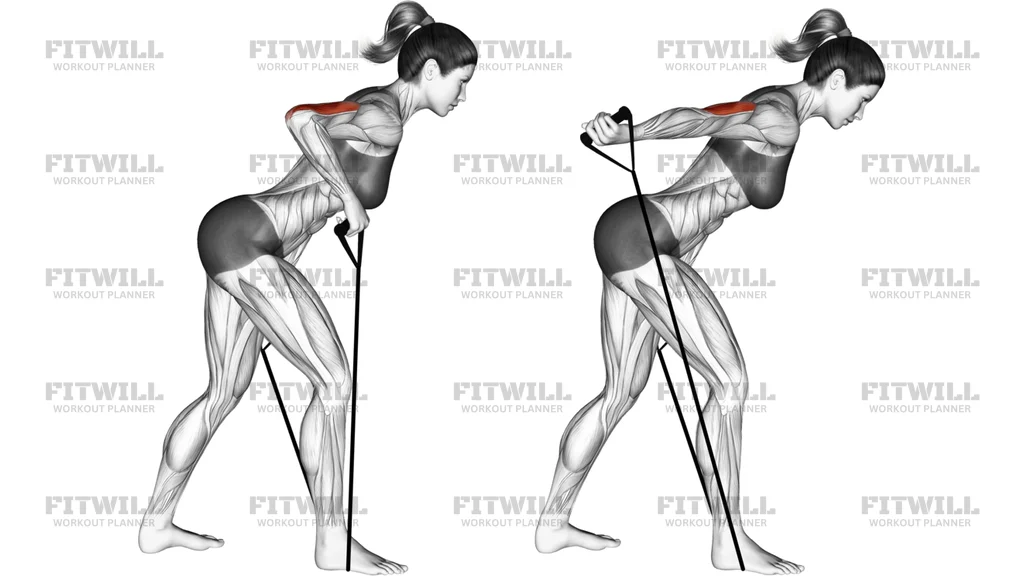
Band Kickback is a bent-over triceps isolation exercise performed with a resistance band anchored under one foot. You hinge at the hips, keep the upper arm close to your torso, and straighten the elbow to send the hand backward until the arm is nearly locked out. The image shows a single-arm version: one foot pins the band to the floor while the working hand pulls the band from the hip area into a full kickback behind the body.
This movement is designed to load elbow extension, so the triceps do most of the work while the shoulders, forearms, and trunk stabilize the hinge. The triceps brachii is the main working muscle, with help from the forearm flexors, anterior deltoid, and rectus abdominis to keep the arm path clean and the torso steady. Because the band increases tension as it stretches, the hardest part of the rep usually happens near the end of the extension, which makes strict position even more important.
The setup matters more here than with many arm exercises. A strong hinge creates room for the arm to travel without the shoulder rolling forward or the back rounding. Keep the ribcage controlled, the neck long, and the elbow fixed so the hand can move while the upper arm stays almost still. If the torso rises or the elbow drifts away from the body, the band tends to turn the rep into a whole-body swing instead of a triceps-focused extension.
Use a stance that feels balanced enough to let you keep steady tension through the full range. A split stance, like the one shown, usually makes it easier to brace and keep the band path consistent. Drive the hand back with the triceps, briefly squeeze near full extension, then return slowly until the elbow bends under control again. The band should stay taut, but the rep should never feel jerky or rushed.
Band Kickback fits well as accessory work when you want joint-friendly triceps volume, warm-up activation, or light-to-moderate hypertrophy work at home or in a gym. It is especially useful when you want to train the lockout portion of the triceps without heavy loading on the elbows or shoulders. Keep the movement pain-free and controlled, and choose a band tension that lets you repeat the same torso angle and elbow path from the first rep to the last.
[ Workout Log & Planner ]
Put your next workout in Fitwill
Keep your plan and training log ready when you are.


Instructions
- Stand in a split stance and place one foot on the band so it is pinned firmly to the floor.
- Hinge forward from the hips until your torso is angled over the front thigh, then keep your back flat and neck neutral.
- Hold the band in the working hand, bend the elbow, and bring the upper arm close to your side.
- Set the non-working hand on your thigh or hip for balance without twisting the torso.
- Brace your midsection and keep the elbow tucked so the upper arm stays nearly still.
- Extend the elbow to kick the hand back behind you until the arm is almost straight.
- Squeeze the triceps briefly at the end of the rep without letting the shoulder roll forward.
- Lower the hand slowly until the elbow returns to the start position and the band stays under control.
- Exhale as you extend and inhale as you come back to the bent-elbow start.
- Repeat for the planned reps, then step off the band carefully before standing up.
Tips & Tricks
- Keep the upper arm parked beside your torso; if the elbow drifts backward, the shoulder starts taking over.
- Choose a band that lets you reach a near-straight elbow without shrugging, leaning, or yanking the handle.
- A soft knee bend and split stance usually make it easier to hold the hinge than standing with both feet even.
- Let the band tension build smoothly on the way down; a fast rebound usually means the triceps lost control.
- Finish the rep with the hand in line with your hip or slightly behind it, not by cranking the shoulder back.
- If your lower back starts to arch, shorten the hinge angle and reset your brace before the next rep.
- Keep the wrist stacked and neutral so the band does not pull the hand into extension or flexion.
- Use a pause at lockout if you want more triceps tension without adding more band resistance.
Frequently Asked Questions
What does the band kickback work most?
It primarily trains the triceps, especially the elbow-extension action that finishes the rep.
Why do I need to hinge forward for this movement?
The hinge gives the working arm room to extend behind the body while keeping the upper arm close to the torso.
Should my upper arm move during the rep?
Only a little is acceptable, but the upper arm should stay almost fixed so the elbow does most of the work.
Where should the band be anchored?
In the version shown, the band is pinned under the same-side foot so you can keep steady tension through the kickback.
Why does the exercise feel hardest near the end?
Band resistance increases as the band stretches, so the triceps usually face the most load as the elbow approaches lockout.
Can I do band kickbacks with one arm at a time?
Yes, the single-arm version is often easier to control because you can focus on one elbow path and one stable hinge.
What is the most common form error?
The biggest mistake is turning the rep into a torso swing instead of keeping the hinge and moving only through elbow extension.
Is this a good triceps exercise for beginners?
Yes, as long as the band is light enough to keep the torso steady and the elbow path strict.