Band Low Chest Fly
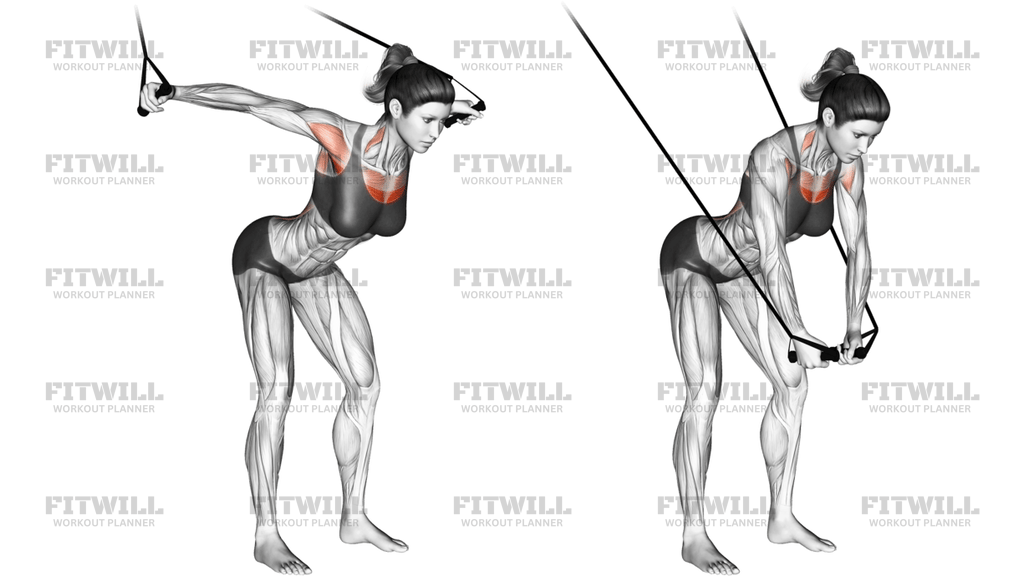
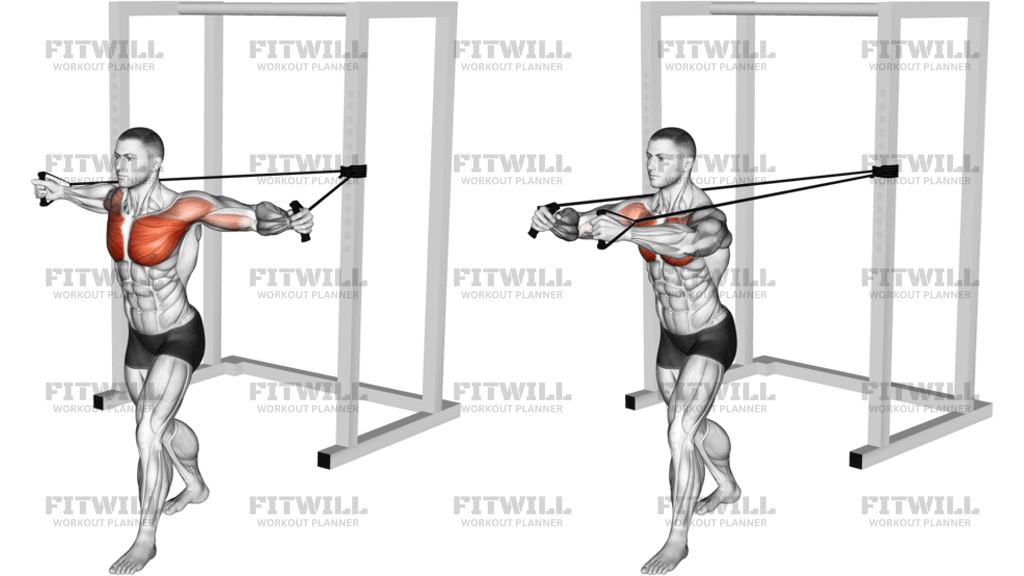
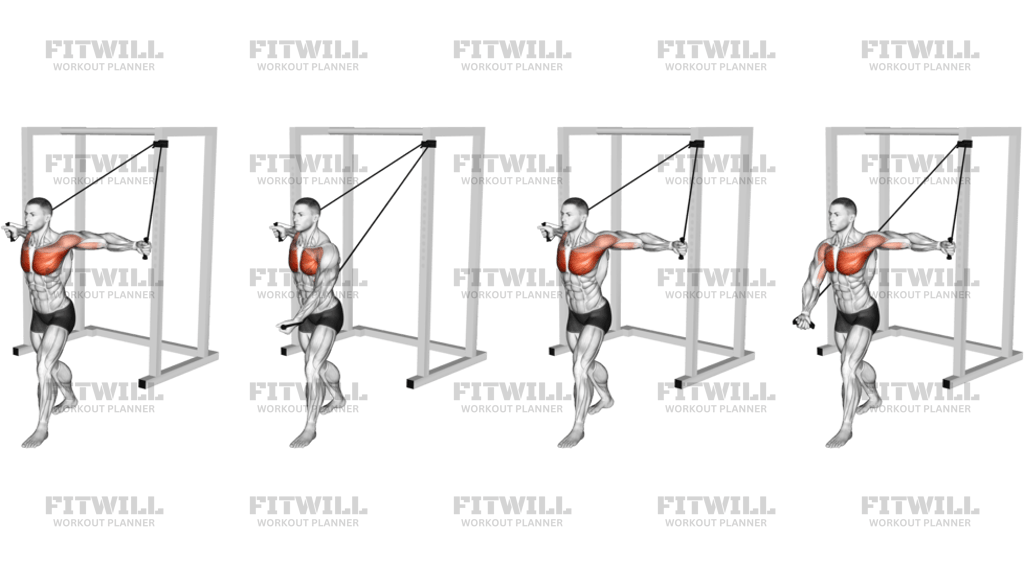
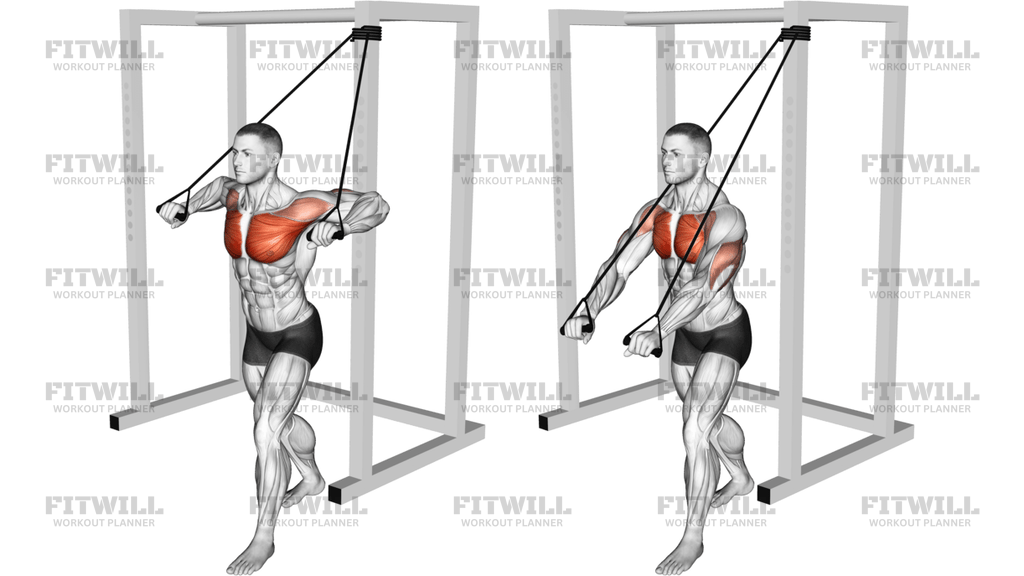
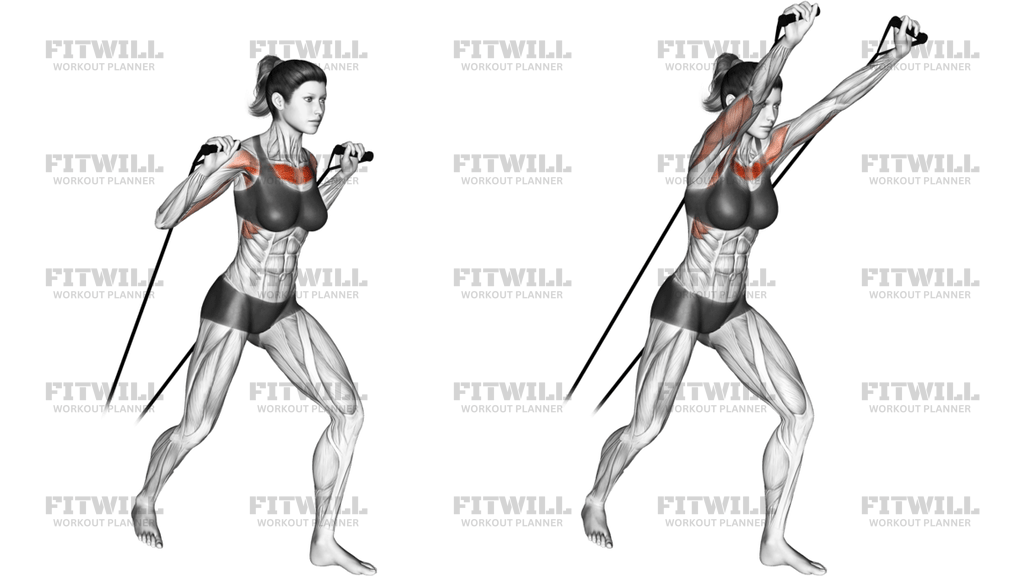
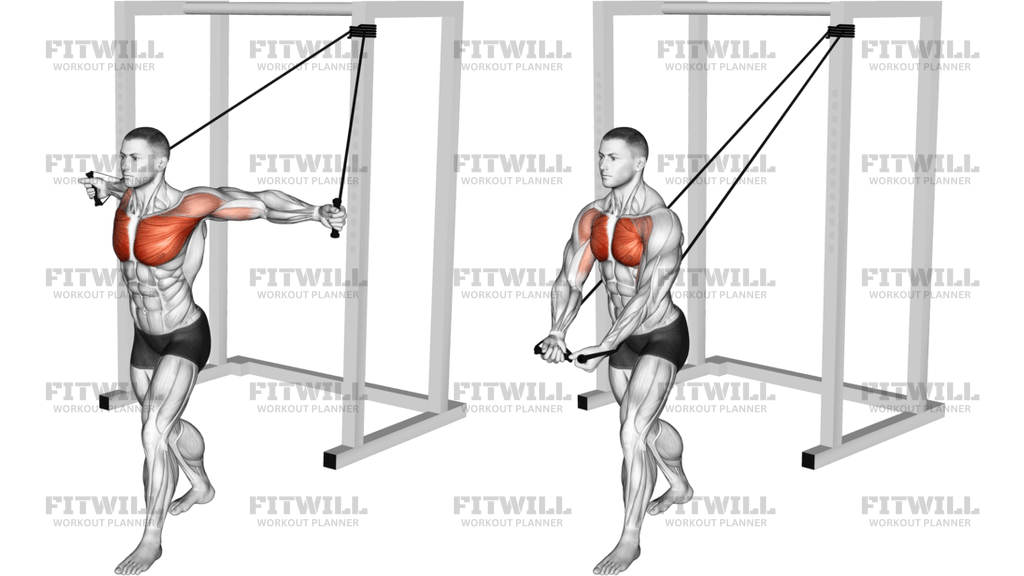
Band Low Chest Fly is a standing band fly built around a high anchor and a downward sweeping arc toward the lower chest. The movement trains the pecs through horizontal adduction with a slight lower-chest bias, while the front shoulders, triceps, and trunk help steady the torso. It is a useful option when you want chest work with smooth resistance and less setup complexity than a bench-based fly.
The setup matters because the band has to pull in the correct line before the first rep starts. Face away from the anchor, step forward far enough to create tension, and settle into a split stance with soft knees and a tall chest. Start with your arms open out to the sides around shoulder height, elbows softly bent, wrists straight, and palms angled slightly inward so the handles or band ends stay quiet in your hands.
Each rep should feel like a controlled hug downward and inward. Sweep your hands toward the lower chest or upper abdomen in a wide arc, pause briefly as the pecs tighten, then let the arms open again under tension. Keep the ribs down and the neck long so the shoulders do not take over. If the movement turns into a press, a shrug, or a torso swing, the band is too heavy or you are standing too close to the anchor.
Band Low Chest Fly fits well as chest accessory work, a warm-up before pressing, or a higher-rep finisher when you want clean tension without needing a bench. It also works well for one side at a time if you want to clean up a left-right imbalance or simply reduce cheating through the torso. Beginners can use it if they keep the range short and the band light enough to move without jerking.
Safety comes from keeping the shoulders organized and the resistance predictable. Stop the return before the front of the shoulder rolls forward or the band yanks you off balance. Exhale on the inward sweep and inhale as the arms open back up. The best reps look smooth, symmetrical, and quiet, with the chest doing the work and the rest of the body staying out of the way.
[ Workout Log & Planner ]
Put your next workout in Fitwill
Keep your plan and training log ready when you are.


Instructions
- Anchor the band high behind you on a rack, post, or sturdy frame, then face away from it.
- Step forward into a split stance with soft knees and a tall chest so the band stays under tension before the first rep.
- Hold the handles with a soft bend in both elbows, arms open out to the sides around shoulder height, and wrists straight.
- Set your shoulder blades lightly back and down, then keep your ribs stacked over your pelvis.
- Sweep both hands down and inward in a wide arc until they meet in front of your lower chest or upper abdomen.
- Squeeze your pecs briefly at the bottom without leaning back, shrugging, or letting the elbows straighten.
- Reverse the path slowly until your arms are open again and the band is still under control.
- Breathe out as you pull the hands together and breathe in as the arms open.
- Reset your stance or step closer or farther from the anchor before the next rep if the tension starts to pull you out of position.
Tips & Tricks
- Use a band tension that lets the open position feel smooth; if the first inch is jerky, the band is too heavy.
- Keep the elbows softly bent from start to finish so the rep stays a fly instead of becoming a press.
- Finish the squeeze low in front of the body, not up near the face, to keep the line of pull on the lower chest.
- A split stance usually keeps the rib cage steadier than standing square to the anchor.
- Keep your wrists straight so the band does not fold your hands backward at the end of the rep.
- Stop the set if the shoulders roll forward before the hands meet; that usually means the band is too strong or the range is too deep.
- Let the arms open under control on the way back instead of snapping wide and losing chest tension.
- If one side finishes early, slow the whole set down and match the weaker side instead of twisting the torso.
- Shorter range is better than letting the chest relax at the bottom or the shoulders take over.
- Use a lighter band for warm-up sets, then move up only if you can keep the same downward sweep and body position.
Frequently Asked Questions
What does Band Low Chest Fly work most?
It mainly targets the pecs, with the front shoulders, triceps, and trunk helping you keep the torso steady.
Why is the band anchored high behind me?
The high anchor creates a downward sweep that biases the lower portion of the chest instead of a flat, straight-across fly.
Should my hands cross at the bottom of Band Low Chest Fly?
They can meet or lightly cross, but the important part is the chest squeeze and control, not how far the hands overlap.
Can beginners do Band Low Chest Fly?
Yes, as long as the band is light and the rep stays smooth without jerking the first few inches.
How bent should my elbows stay?
Keep a small, fixed bend in both elbows so the movement stays a fly and does not turn into a press.
What stance works best for this exercise?
A split stance usually works best because it helps you resist the pull of the band and keep the ribs from flaring.
Why do I feel Band Low Chest Fly mostly in my shoulders?
That usually means the band is too heavy, the range is too deep, or your shoulders are rolling forward at the bottom.
Can I use Band Low Chest Fly before bench pressing?
Yes, it is a good chest warm-up because it grooves the fly path without the heavier loading of a press.
What should I do if the band pulls my arms open too fast?
Step closer to the anchor or switch to a lighter band so you can control the return instead of getting yanked wide.