Band Overhead Triceps Extension
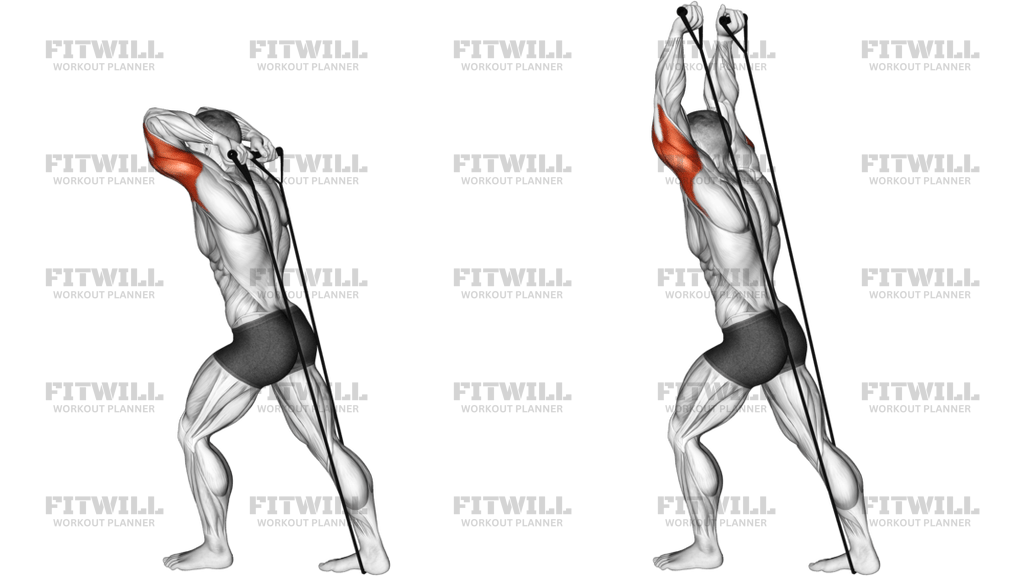
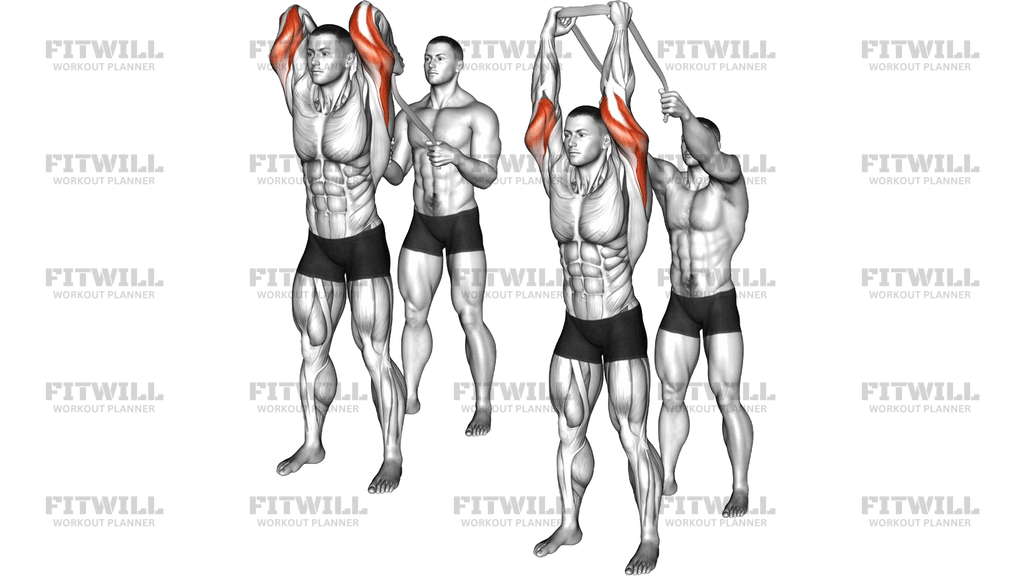
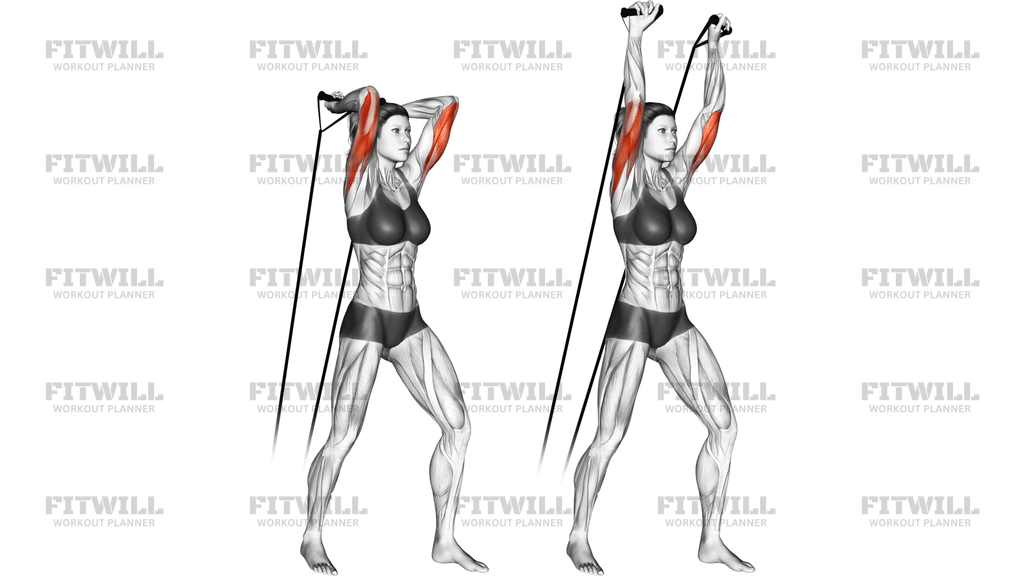
Band Overhead Triceps Extension is a standing overhead isolation exercise that trains the triceps through a long range of elbow flexion and extension. With the band anchored under the feet, the body stays upright while the elbows move from a bent position beside or just behind the head to a fully extended lockout overhead. That setup makes the exercise simple to load, easy to adjust, and useful for learning how to keep tension on the arms without turning the movement into a backbend or shoulder press.
The main training effect is on the triceps, especially when you lower the hands behind the head and then extend back to the top with control. The long head of the triceps is challenged strongly in this overhead position because the shoulder stays flexed while the elbow opens and closes. The forearms help hold the band, the shoulders keep the arms fixed overhead, and the core prevents the ribs from flaring as the resistance increases.
The starting position matters a lot. Stand on the middle of the band, take a stance that feels balanced, and bring the handles or band ends up behind your head with the elbows pointing forward and slightly in. Keep your chest tall and your ribs stacked over your pelvis so the lift stays in the arms instead of turning into a low-back arch. A small staggered stance is fine if it helps you stay stable, but the feet should stay planted and the weight should not shift side to side.
Each repetition should feel smooth and deliberate. Begin with the elbows bent and the band under steady tension, press the hands upward until the arms are straight, then lower the band back behind the head without letting the elbows drift wide. The path should be vertical and controlled, with the upper arms staying mostly fixed while the forearms move. Exhale as you extend, inhale as you lower, and stop the set if the torso starts to sway or the shoulders take over the motion.
This movement fits well as accessory work after bigger pressing exercises, or as a targeted arm exercise when you want triceps volume without heavy joint stress. It is especially useful when you want an easy-to-transport band option for home training or travel. Keep the range pain-free, pick a band that lets you finish every rep with the elbows tracking cleanly, and treat the top position as a strong squeeze rather than a violent snap into lockout.
[ Workout Log & Planner ]
Put your next workout in Fitwill
Keep your plan and training log ready when you are.


Instructions
- Stand on the middle of the band with feet about hip-width apart and hold the ends or handles overhead.
- Bring the hands behind your head so the elbows bend and point forward, keeping the chest tall and ribs down.
- Set a stable stance before you start; use a slight stagger if needed, but keep both feet planted.
- Press the hands straight up until the elbows fully extend and the arms finish over the shoulders.
- Keep the upper arms mostly in place while only the elbows open and close.
- Lower the band back behind your head with control until you feel a strong triceps stretch.
- Exhale as you extend, then inhale as you return to the bent-elbow position.
- Stop the rep if the lower back arches, the elbows flare far outward, or the band loses tension.
- Repeat for the planned number of repetitions, then step off the band carefully to reset.
Tips & Tricks
- Set the band length by how much slack is under your feet; a shorter stance makes the top position harder.
- Keep your elbows aimed forward instead of letting them drift wide, which shifts the work away from the triceps.
- Do not turn the rep into a standing press; the shoulders should stabilize while the elbows do the moving.
- Keep your ribs stacked over your pelvis so the band tension does not pull you into a low-back arch.
- A smooth lowering phase matters here; let the band pull you down slowly instead of dropping into the bottom.
- If the band rubs on the back of your head or neck, reposition the hands slightly farther back and narrow the elbow angle.
- Use a band that lets you reach full lockout without shrugging or leaning forward to finish the rep.
- A staggered stance can help if the band is strong, but the front knee should not drift or bounce to create force.
- Finish each rep with a brief squeeze at the top rather than snapping the elbows hard into lockout.
Frequently Asked Questions
What does the Band Overhead Triceps Extension train most?
It mainly targets the triceps, with the long head getting a lot of work because the arms stay overhead.
Where should the band sit at the start?
Stand on the middle of the band so it is secure under your feet, then bring the ends or handles behind your head before you press.
Should my elbows stay fixed in place?
They should stay mostly pointed forward and fairly close together, but a small amount of natural movement is normal as you extend and lower.
Why am I feeling this in my shoulders too?
The shoulders hold the arms overhead, so some stabilizing work is normal. The main effort should still come from elbow extension, not shoulder pressing.
Is a staggered stance okay for this exercise?
Yes. A staggered stance can improve balance and help you control heavier band tension as long as the feet stay planted.
What is the most common form mistake?
Letting the ribs flare and leaning back to finish the rep is the most common problem. That turns the movement into a back-arched compensation instead of a triceps extension.
Can beginners use this movement?
Yes. It is beginner-friendly when the band is light enough to keep the elbows aligned and the torso still.
How do I make the exercise harder without changing the movement?
Use a stronger band, stand more narrowly on the band, or slow the lowering phase while keeping the same overhead path.
Should I lock out hard at the top?
Reach a controlled straight-arm finish, but avoid snapping the elbows aggressively. A clean squeeze is better than a violent lockout.