Band Standing Chest Press
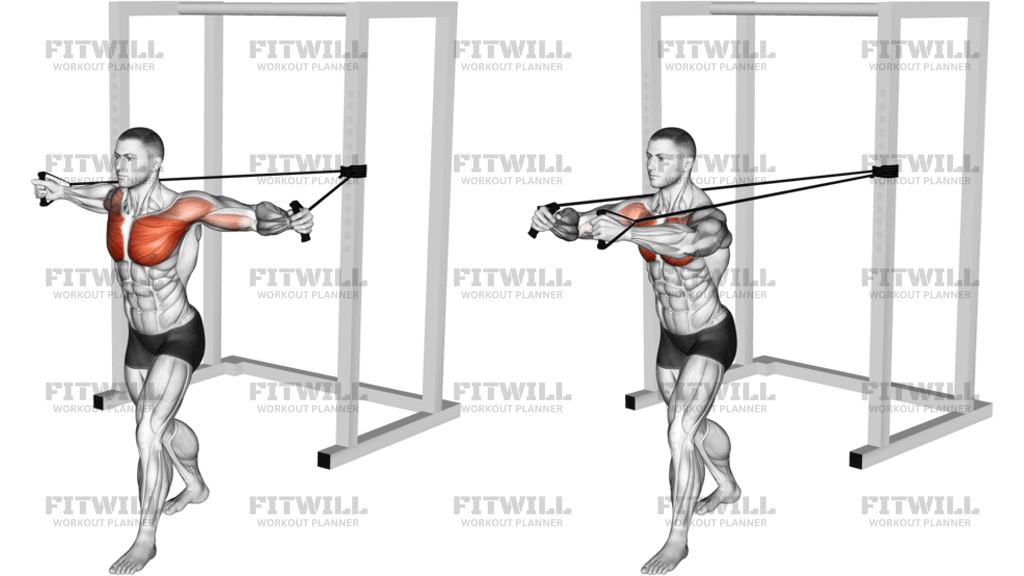
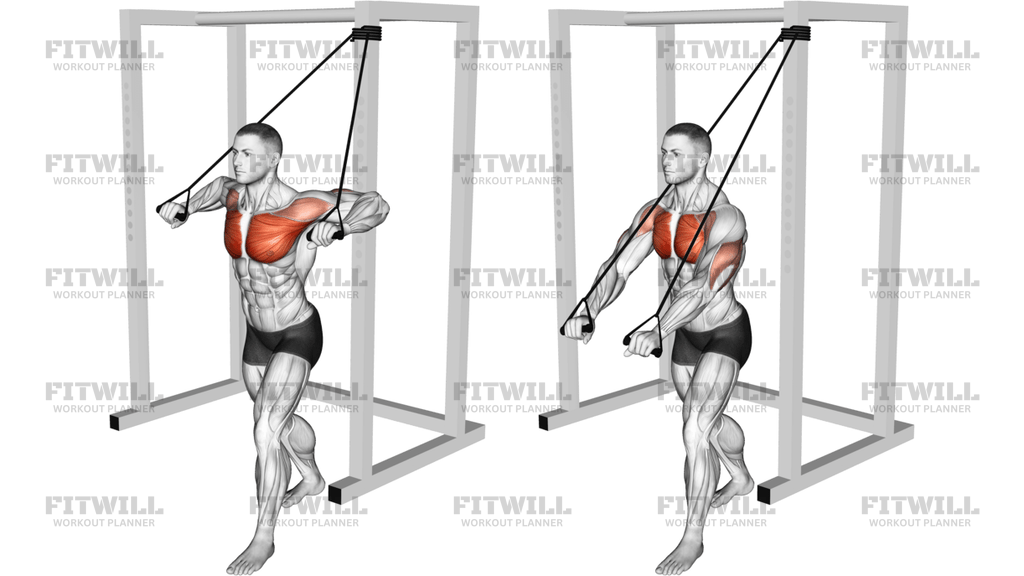
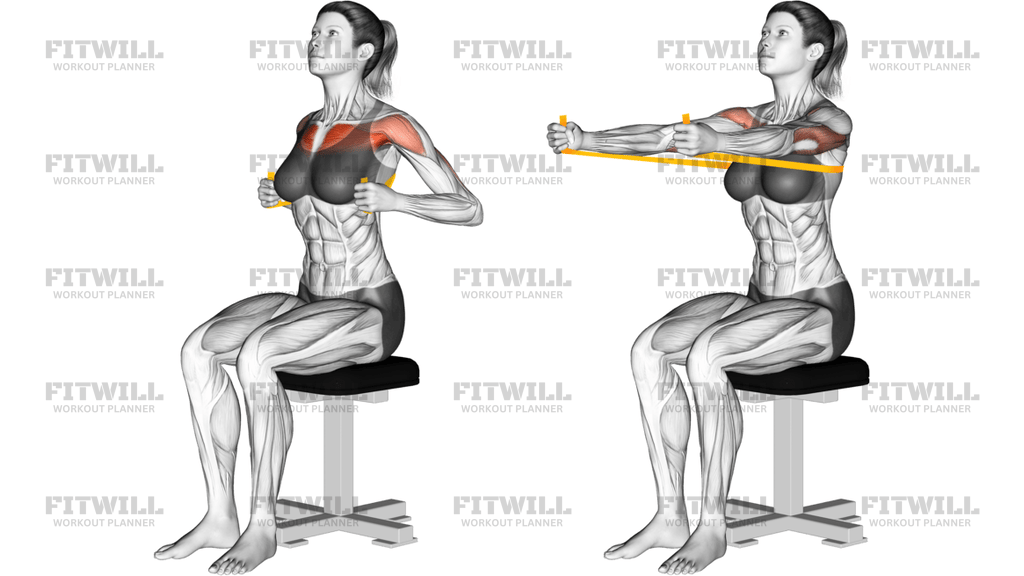
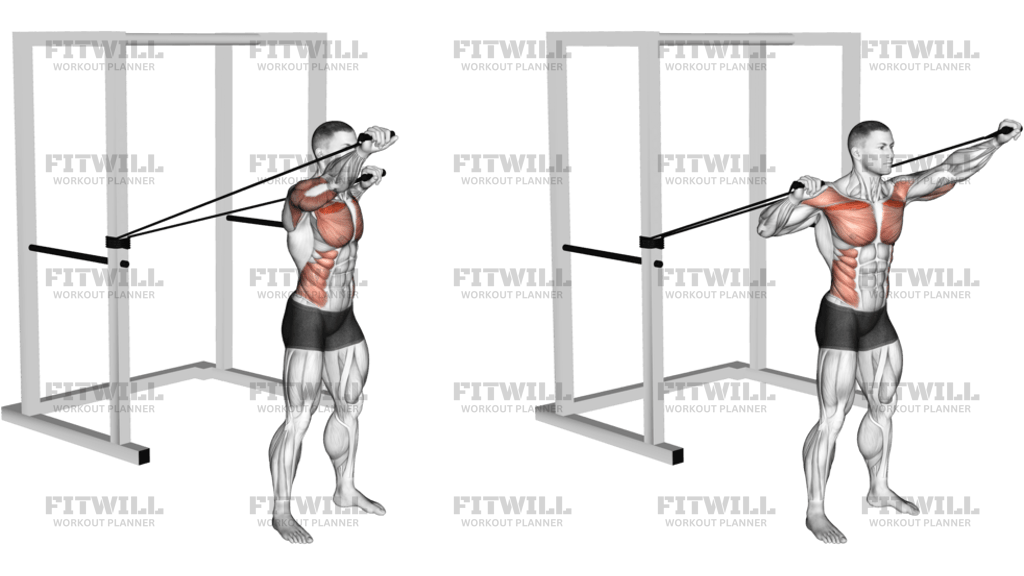
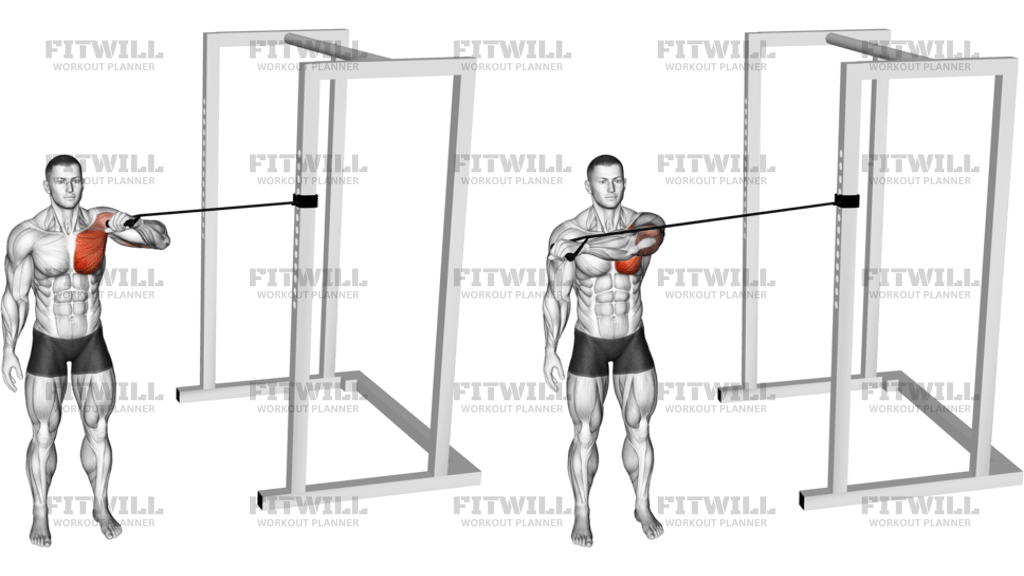
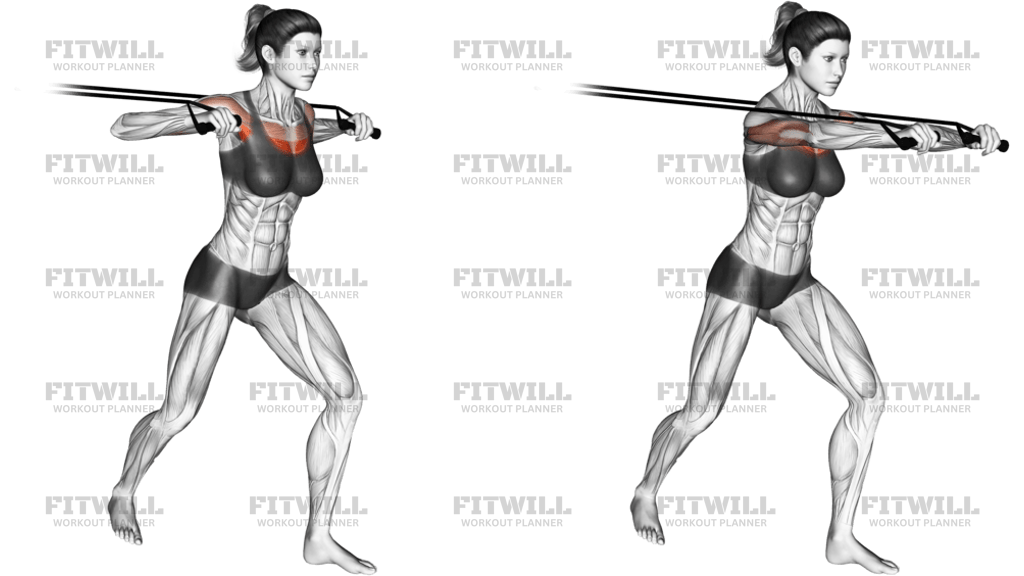
Band Standing Chest Press is a standing horizontal press performed with a resistance band anchored behind you at about chest height. The image shows a staggered stance and both handles driven forward from the chest, which makes this a useful chest exercise when you want constant tension without lying on a bench or loading a machine.
The exercise primarily trains the pectoralis major through shoulder flexion and horizontal adduction, while the anterior deltoids and triceps help finish the press and keep the elbows tracking smoothly. Because the band is pulling you backward the whole time, your core, glutes, and front foot work isometrically to keep your torso from drifting or rotating.
Setup matters more here than with many presses. If the anchor is too low, the line of pull turns the movement into a decline pattern; if it is too high, the shoulders take over and the chest loses its best pressing line. Aim for the handles to start beside the mid-chest, palms neutral or slightly pronated, elbows a little below shoulder height, and ribs stacked over the pelvis instead of flared forward.
Press by squeezing the handles forward and slightly inward until the arms are almost straight without locking hard at the elbows. Keep the shoulders down and forward reach controlled rather than aggressive, so the chest stays loaded instead of the upper traps dominating. On the way back, let the elbows travel only as far as you can control while keeping the band tight and the shoulder blades from collapsing forward.
This is a practical option for home workouts, warm-ups, higher-rep hypertrophy work, or finishers when you want chest tension without heavy joint compression. It is also beginner-friendly if the band tension is modest and the stance is stable, but it works best when the rep tempo stays deliberate. The safest version is the one that lets you press cleanly, breathe rhythmically, and stop before the band yanks your torso out of position.
[ Workout Log & Planner ]
Put your next workout in Fitwill
Keep your plan and training log ready when you are.


Instructions
- Anchor the band behind you at chest height and hold the handles at the sides of your chest with your elbows slightly below shoulder level.
- Take a staggered stance so one foot is forward and the other foot is back, then stack your ribs over your pelvis.
- Set your shoulders down and slightly back, and keep your wrists straight before the first press.
- Brace lightly through your midsection so the band cannot pull your torso forward.
- Press both handles forward in a straight line, allowing the hands to move slightly inward as the elbows extend.
- Finish with your arms nearly straight and your chest active, without snapping the elbows hard into lockout.
- Pause briefly in the pressed position while keeping the band under tension and the shoulders quiet.
- Return the handles to chest level with control until the chest is loaded again and the elbows are back in the starting angle.
Tips & Tricks
- Match the anchor height to the middle of your chest so the press line stays horizontal and the chest can contribute fully.
- Use a staggered stance instead of standing square if the band pulls you off balance on the return.
- Keep the elbows slightly tucked rather than flared wide to reduce shoulder stress and keep tension on the pecs.
- Do not let your front rib cage pop up at lockout; a small forward reach is fine, but lumbar arching is not.
- Let the shoulder blades move naturally, but do not overpin them together before every rep or the press will feel cramped.
- Lower the band slowly so the return phase stays loaded instead of snapping the handles back to your chest.
- Use a grip that keeps the wrists straight; bent wrists often show up when the band is too heavy.
- Exhale as you press forward and inhale as the handles come back to the chest.
Frequently Asked Questions
What muscle does Band Standing Chest Press target most?
The pectoralis major is the main mover, with the front delts and triceps helping finish each press.
Why is the band anchored behind me instead of in front?
An anchor behind you lets the band resist the press the same way a cable chest press would, so the chest stays loaded through the whole range.
Why does the image show a split stance?
The staggered stance helps you resist the backward pull of the band and keeps your torso from rocking forward on each rep.
How low should my elbows be at the start?
Set them slightly below shoulder height, roughly in line with the middle of the chest, so the press feels natural and shoulder-friendly.
How far should I press the handles forward?
Press until your arms are nearly straight and the chest is fully contracted, but stop before you lock out aggressively or shrug your shoulders.
Can I do this one arm at a time?
Yes. A single-arm version is useful if you want to challenge torso stability or correct side-to-side differences, as long as you keep the ribs square.
What should I avoid if my shoulders feel pinchy?
Reduce the band tension, keep the elbows a little closer to the body, and avoid letting the shoulders roll forward at the end of the press.
How do I make this exercise harder?
Use a thicker band, step farther from the anchor, or slow the return so the chest has to control more tension.