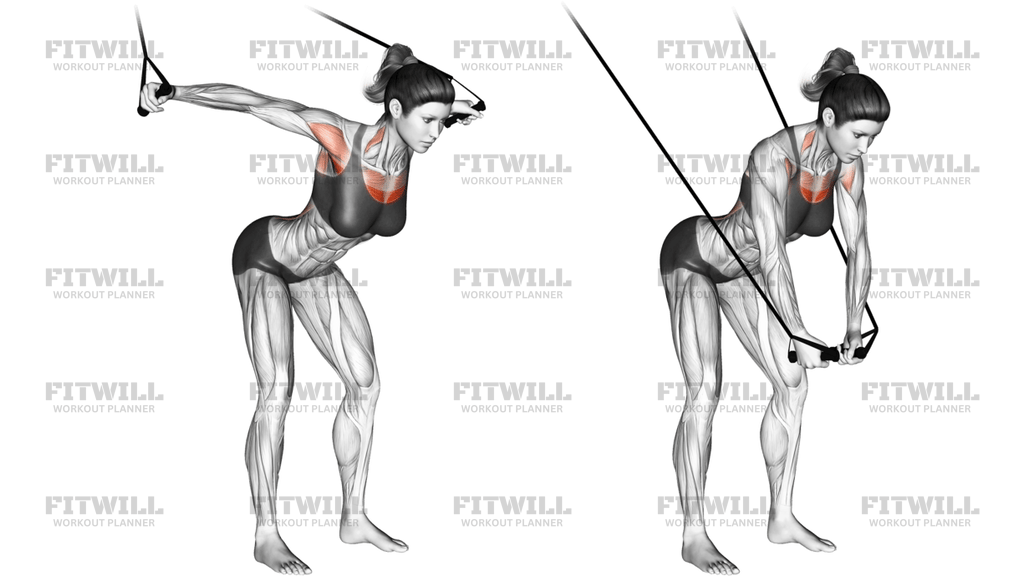
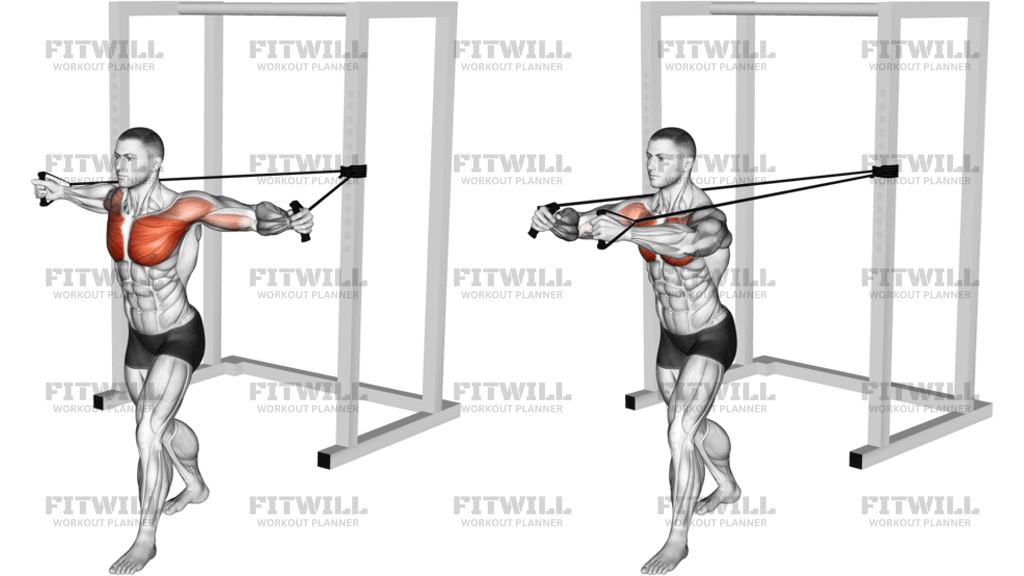
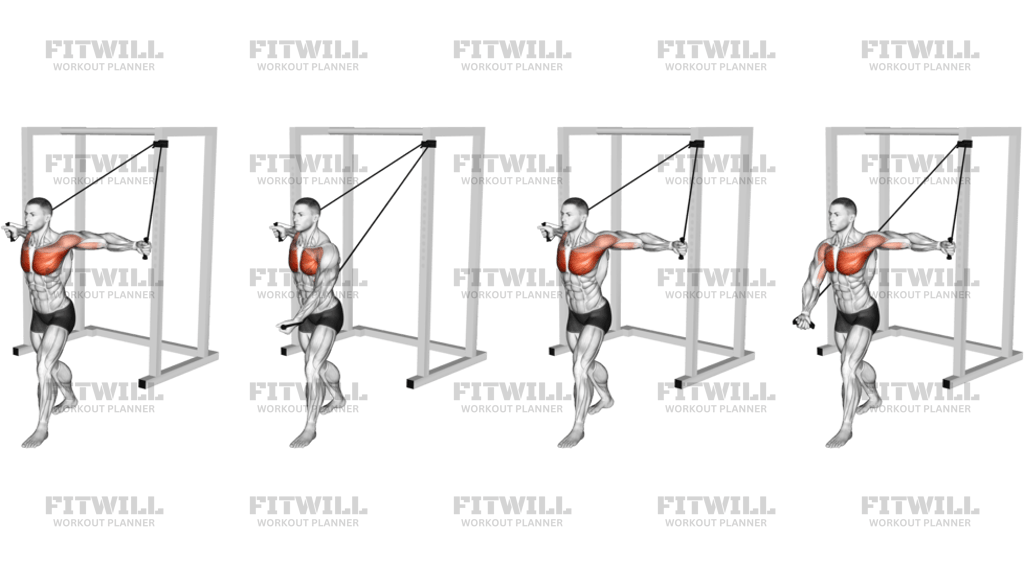
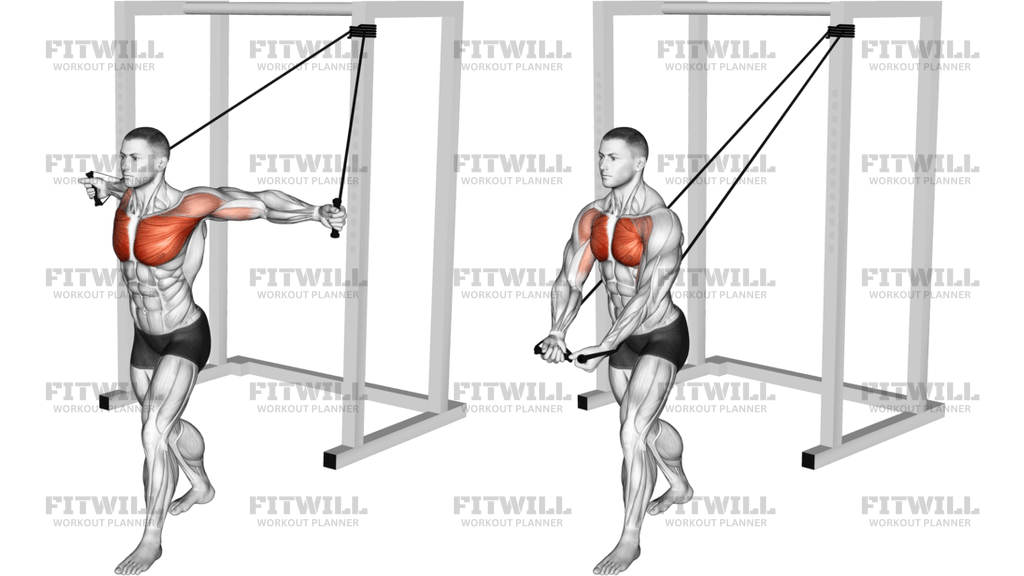
Band Alternate Incline Chest Press With Twist
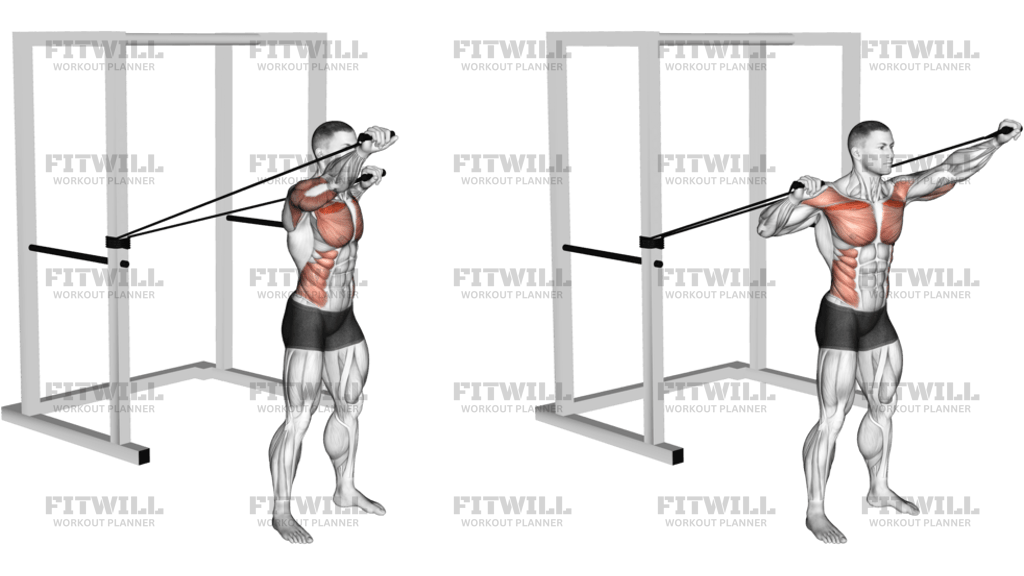
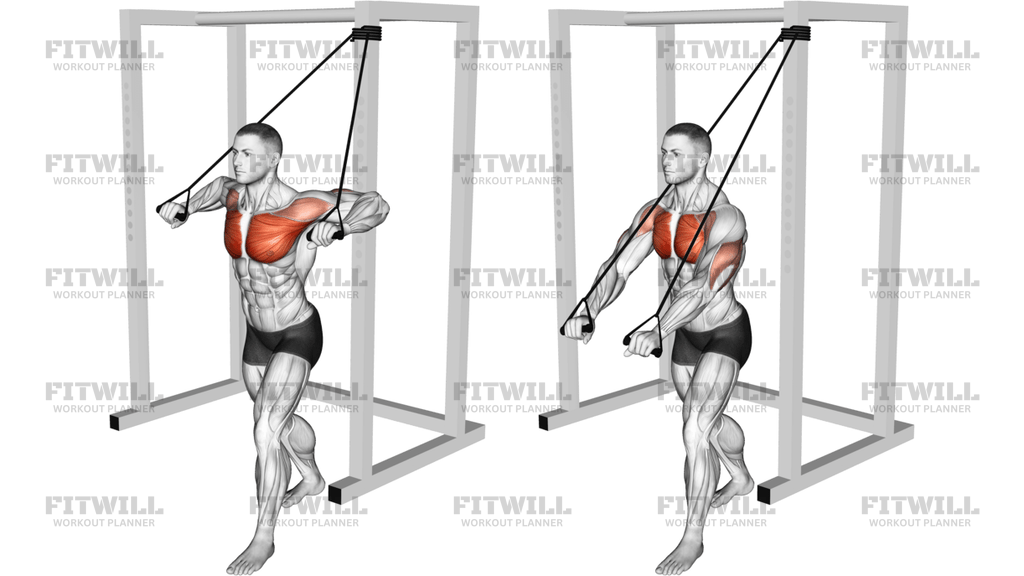
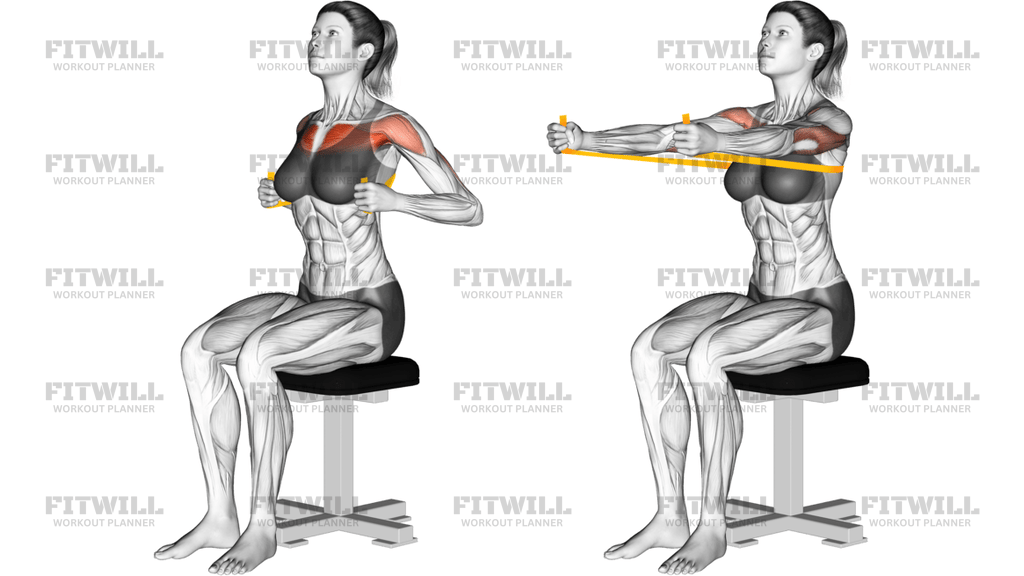
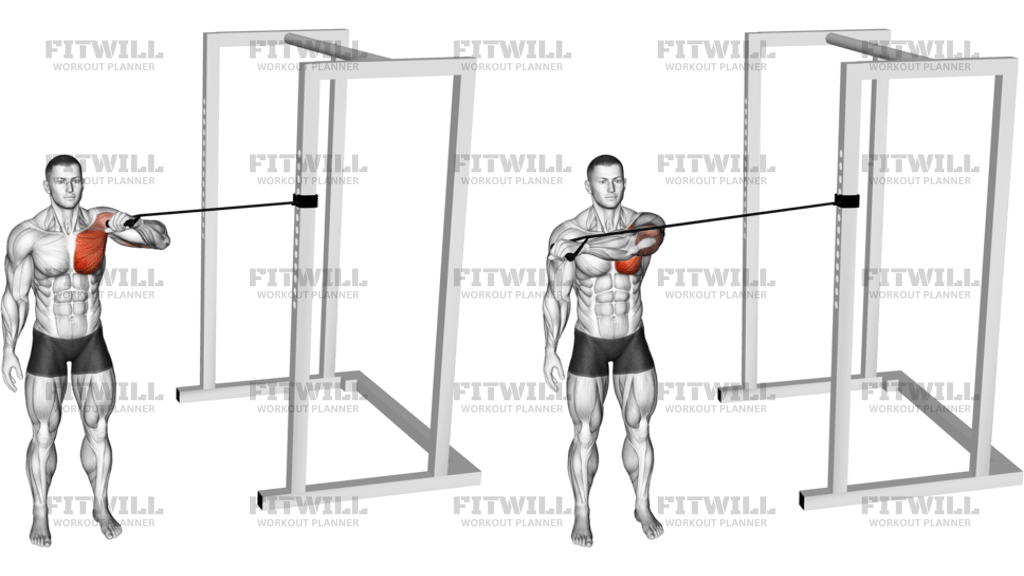
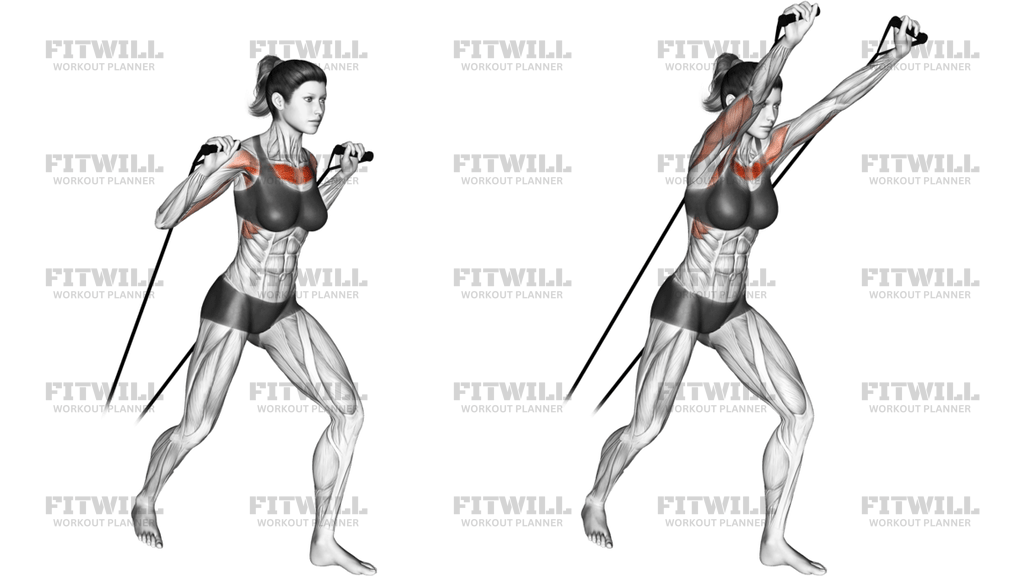
Band Alternate Incline Chest Press With Twist is a standing band press that combines an incline pressing angle with a small torso rotation. The band is anchored high behind you, so each rep starts with the handle near the upper chest and finishes with the arm pressed up and slightly forward along the line of the band. That angle shifts the work toward the upper chest and front shoulder while the trunk stays active to keep your ribcage from spinning away from control.
The exercise is useful when you want chest-focused pressing without a bench or heavy external load. It trains the pecs, front delts, triceps, and the muscles that resist and guide rotation through the torso. Because the band gets harder as it stretches, the end range usually feels the most demanding, which makes clean setup important: if you stand too close to the anchor, the press can feel cramped; if you stand too far away, you may lose tension before the lockout.
The alternating pattern means you press one side at a time instead of driving both arms together. That lets you feel one side working, reset the shoulder position between reps, and keep the twist controlled rather than exaggerated. The non-working hand usually stays near the upper chest or shoulder line to help you keep your torso stacked while the working arm travels up and out along the incline path.
A good rep is smooth from the start. Keep the working wrist stacked over the forearm, press the handle forward and upward, and let the chest finish the rep instead of shrugging the shoulder toward your ear. At the top, avoid over-rotating through the low back; the twist should come mostly from the ribcage and upper trunk. Return slowly until the band is under control again, then switch sides with the same stance and posture.
This movement fits well in chest accessories, athletic warmups, or conditioning blocks where you want pressing volume with less joint stress than a heavy barbell press. It is also a practical choice for home training because a band and a solid anchor are enough. Keep the reps honest, use a tension level that lets you control the rotation, and stop the set when the shoulder starts to roll forward or the torso begins to swing.
[ Workout Log & Planner ]
Put your next workout in Fitwill
Keep your plan and training log ready when you are.


Instructions
- Anchor the band high behind you at about face to forehead height and stand facing away from the anchor with a slight staggered stance for balance.
- Hold one handle at the same-side upper chest or shoulder line, keep the working elbow bent, and let the band sit just behind the pressing shoulder.
- Set the opposite hand near your upper chest or front shoulder so you can keep the ribcage stacked and avoid twisting too far.
- Brace your trunk, keep your ribs down, and start with the pressing shoulder set away from your ear.
- Press the handle forward and slightly upward along the incline line until the arm is nearly straight without locking out hard.
- Let the torso rotate only as much as needed to follow the press, then keep the twist smooth instead of turning it into a full-body spin.
- Pause briefly at the top with the chest lifted and the shoulder still controlled, not shrugged forward.
- Lower the handle back to the start under control until the band tension eases but does not disappear.
- Finish the rep on one side, reset your ribcage and stance, then alternate to the other side for the next rep.
Tips & Tricks
- Keep the anchor high enough that the press finishes on an incline path, not straight out from the chest.
- If the band pulls your shoulder forward at the start, step a little closer to the anchor and reset your stance.
- Do not let the twist come from your lower back; the ribs should rotate a little while the pelvis stays mostly still.
- Press with the chest leading the handle, not with the hand drifting up and forward on its own.
- Keep the non-working hand near the chest to help you feel when the torso starts to over-rotate.
- A narrower stance makes the anti-rotation demand harder; a staggered stance gives more balance if you start to sway.
- Use a slower lowering phase if the band snaps you back to the start or the shoulder feels unstable.
- Choose band tension that lets you finish each rep without shrugging or losing the press angle.
- Stop the set when the elbow drops behind the torso or the chest starts to collapse on the return.
Frequently Asked Questions
What muscles does Band Alternate Incline Chest Press With Twist work most?
It mainly trains the upper chest, with the front shoulders, triceps, and core helping control the press and twist.
Where should I anchor the band for Band Alternate Incline Chest Press With Twist?
Anchor it high behind you, roughly at face to forehead height, so the press travels up and forward instead of straight across your chest.
How much should my torso twist during each rep?
Only enough to follow the press. The twist should be small and controlled, with your pelvis staying mostly square while the ribcage rotates.
Should my shoulder shrug at the top of Band Alternate Incline Chest Press With Twist?
No. Reach through the press without letting the shoulder ride up toward your ear, or the upper traps will take over.
Is Band Alternate Incline Chest Press With Twist beginner friendly?
Yes, if you use light tension and keep the rotation small. Beginners usually do best with a stable staggered stance and a slow return.
What is the biggest form mistake with this press?
People usually turn it into a full-body twist or press too low. Keep the handle on the incline path and let the chest drive the movement.
Can I do Band Alternate Incline Chest Press With Twist instead of a bench press?
It can replace bench pressing in a home or conditioning session, but it is better as a chest accessory than as a pure strength substitute for a heavy barbell press.
Why does the band feel hardest near the finish?
Bands get more tension as they stretch, so the lockout and upper range are usually the most demanding part of this exercise.