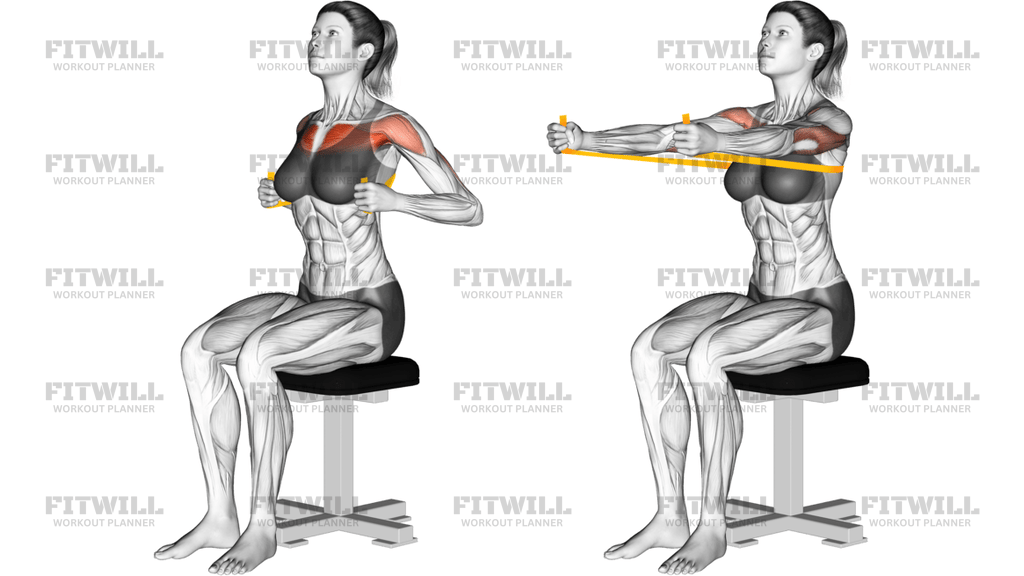
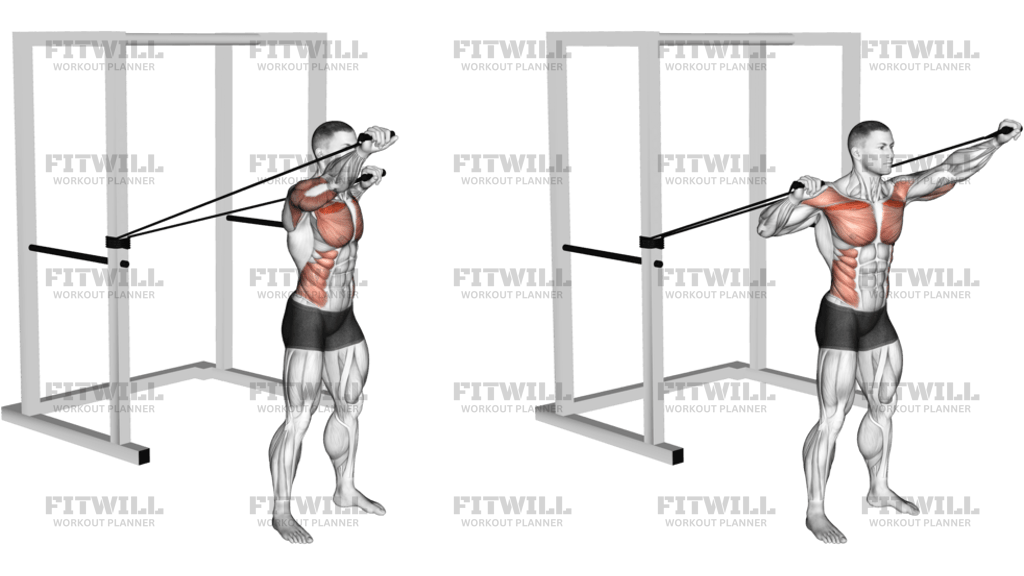
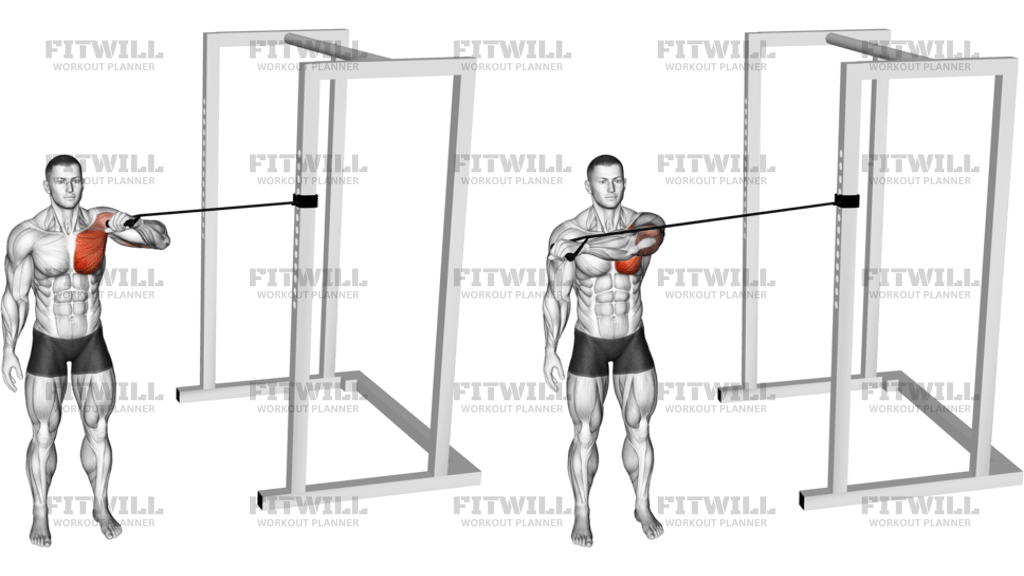
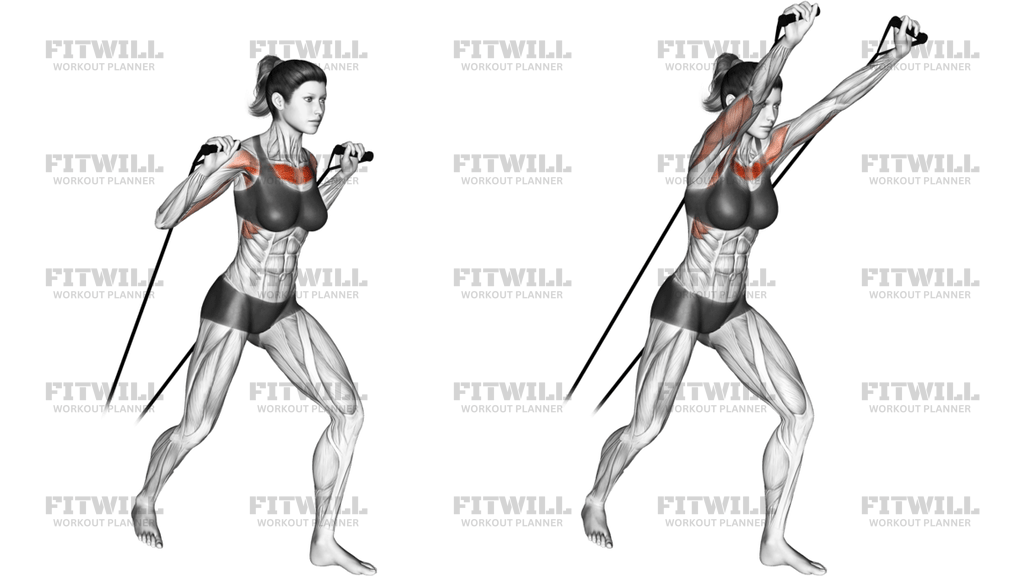
Band Chest Fly
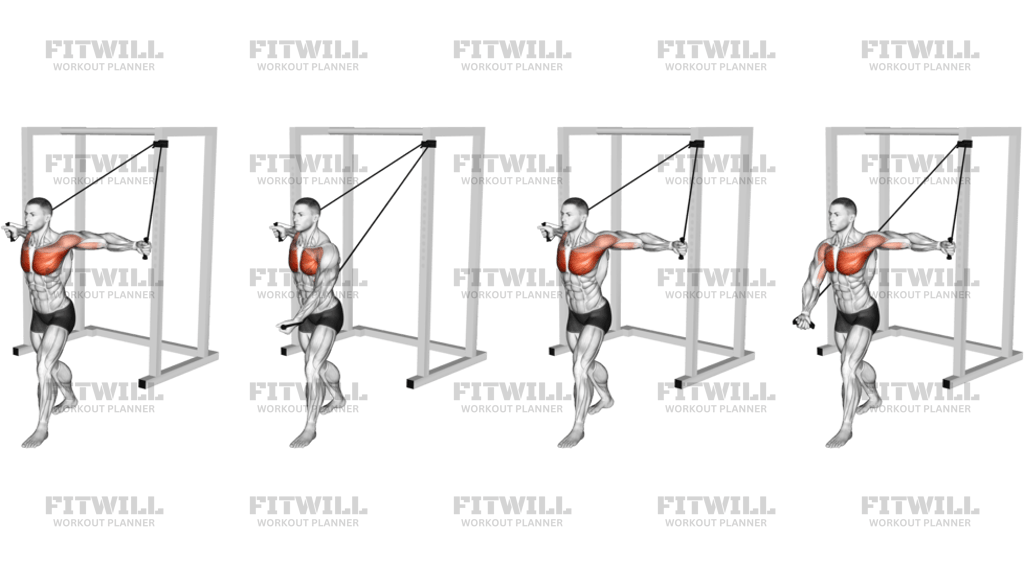
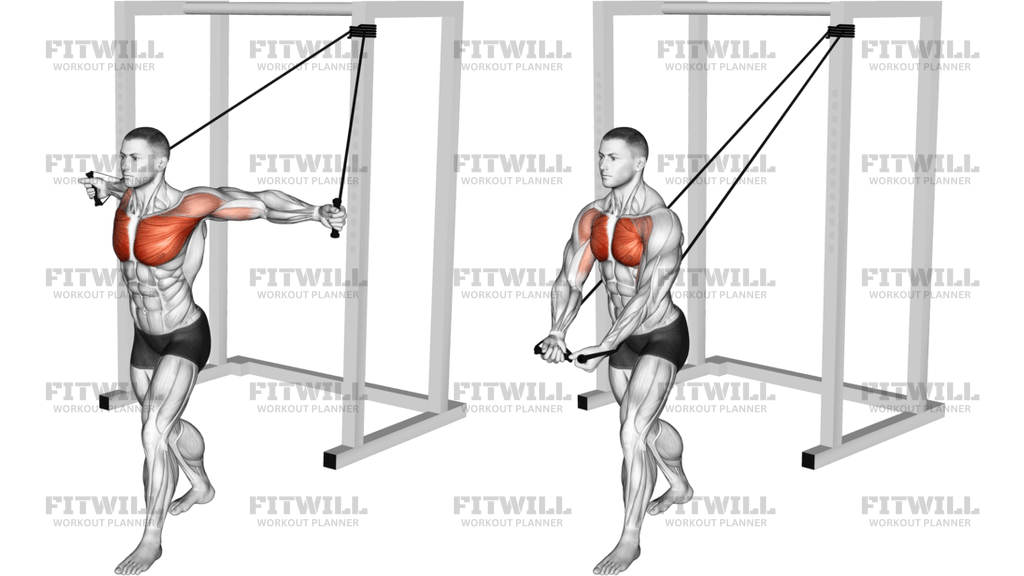
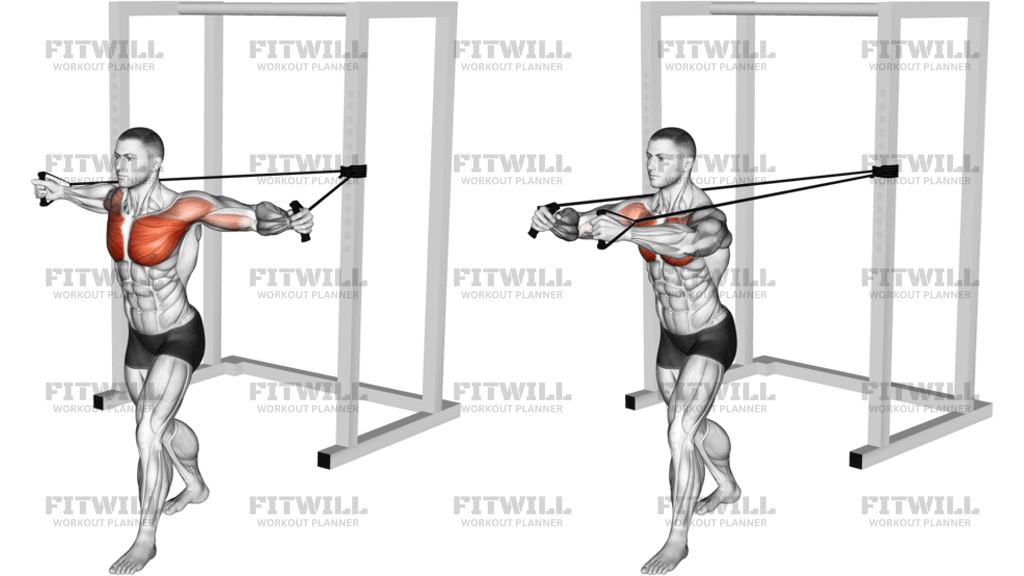
Band Chest Fly is a standing chest isolation movement that brings the arms together in a wide horizontal arc to train the pecs under constant tension. The exercise is useful when you want the chest to do the work without the heavy loading or joint stress of a press. In this version, the band or handle anchor sits behind you at about chest height, so the resistance line stays aligned with the pec fibers instead of drifting into a shoulder-dominant angle.
The setup matters because the band chest fly is easy to turn into a shrug, a press, or an unstable torso twist if your stance is sloppy. Stand centered between the anchors, use a staggered stance for balance, keep a soft bend in the knees, and hold a slight bend in the elbows before the first rep. Your chest should stay lifted, ribs stacked, and shoulders set down rather than pinched hard back. That posture gives the pecs room to shorten and lengthen without the front of the shoulder taking over.
Each repetition starts with the arms open and slightly behind the line of the torso, then the hands sweep forward in a smooth arc until they meet in front of the middle of the chest. The elbows should keep nearly the same angle the whole time so the movement comes from shoulder horizontal adduction, not from changing into a press. Squeeze briefly at the front, then return slowly until the chest feels stretched but the shoulders stay controlled and the lower back does not arch.
Band Chest Fly fits well as accessory chest work, a warm-up before pressing, or a higher-rep finisher when you want to build tension and control rather than maximal load. It is also a practical option when a bench or machine fly is not available, since the band allows a smooth resistance curve and a long tension path. Use a range you can control from the open stretch to the front squeeze, and stop a set if the shoulders roll forward, the torso sways, or the handles start to travel in a pressing pattern instead of a fly.
[ Workout Log & Planner ]
Put your next workout in Fitwill
Keep your plan and training log ready when you are.


Instructions
- Set the band or cable handles at chest height behind you and stand centered between the anchors in a split stance, one foot slightly forward.
- Grip a handle in each hand with a soft bend in the elbows, then step forward until the band has tension before the first rep.
- Lift your chest, keep a small bend in both knees, and brace your midsection so your ribs stay stacked over your pelvis.
- Open your arms wide in line with your shoulders and slightly behind your torso, feeling a stretch across the chest without shrugging.
- Exhale and sweep both hands forward in a wide arc until they meet in front of the middle of your chest.
- Keep the elbow angle nearly fixed so the rep comes from the shoulders and pecs rather than from straightening the arms.
- Squeeze the chest briefly at the front, but stop before your shoulders roll forward or your lower back arches.
- Return slowly to the open position until you feel a controlled stretch across the chest, then pause before the next rep.
Tips & Tricks
- Keep the anchor point around nipple to shoulder height so the fly tracks across the chest instead of drifting up toward the neck.
- Use a split stance and a small forward lean to keep tension on the pecs without letting your torso sway.
- Think about wrapping your upper arms around a barrel; that cue helps you keep a smooth chest fly arc instead of pressing forward.
- Stop the backward stretch when the chest is long but the front of the shoulder still feels quiet.
- If the handles meet in front, keep the wrists neutral and avoid smashing the fists together at the finish.
- Choose a resistance that lets you control the return for two to three seconds.
- Keep the shoulders down and lightly back at the start, but do not pin them hard together or you will lose the stretch.
- If one side takes over, square your hips and reset your stance before the next set.
Frequently Asked Questions
What muscle does Band Chest Fly target most?
The pecs are the main target, especially when the hands sweep across the midline under control.
Can beginners perform this exercise?
Yes. Beginners usually do best with light band tension, a short controlled range, and a steady split stance.
Should my elbows stay bent the whole time?
Yes. Keep only a slight bend and hold that angle nearly fixed so the movement stays a fly instead of turning into a press.
How far back should my arms go?
Go back only until you feel the chest lengthen and the shoulders stay down. If the front of the shoulder pinches, shorten the range.
Why do I feel this in my front shoulders?
Usually the elbows are too high, the band is too heavy, or the shoulders are rolling forward at the finish. Lower the tension and keep the arc at chest height.
Is a band chest fly different from a cable fly?
The movement pattern is very similar. Bands usually increase tension more toward the finish, while cables keep the resistance steadier through the rep.
When should I use it in a workout?
Use it after pressing work, as a chest accessory, or as a lighter warm-up before benching or push-up variations.
What is the most common form mistake?
Letting the arms turn into a press or letting the torso rock forward to fake a bigger squeeze.