Lying Isometric Knee Flexion
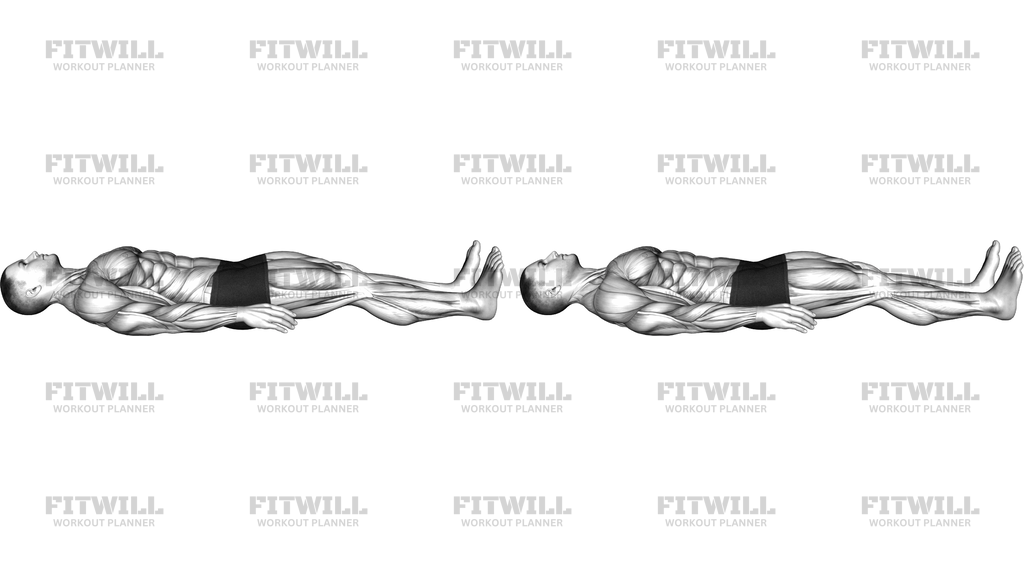
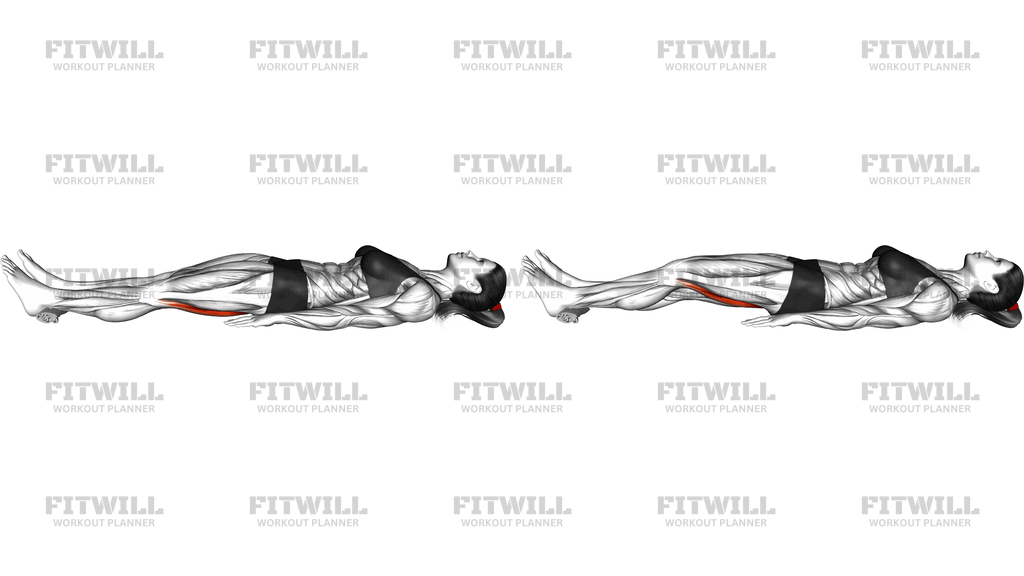
The Lying Isometric Knee Flexion is a low-load, static exercise for the back of the thigh. You lie on your back with one leg extended and a rolled towel placed under the ankle, then press the heel down into the floor without letting the leg actually move. The effort is entirely isometric: the knee tries to bend, but the ground blocks it, so the hamstring muscles contract against fixed resistance while the joint angle stays the same.
This setup makes the exercise a favorite in early-stage knee and hamstring conditioning, and it is commonly used after periods of rest or reduced activity when dynamic loading is not yet appropriate. Because the knee does not travel through a range of motion, the tissues around the joint experience compressive rather than shearing forces, which most people tolerate well. The highlighted muscle in the demonstration, running along the outer and lower part of the thigh toward the back of the knee, is the distal hamstring, and this is exactly where the contraction should be felt.
The rolled towel under the ankle is not decoration. It lifts the lower leg a few centimeters off the floor so the heel can press downward into a small gap, giving the hamstring something to push against. Without the roll, the calf and the back of the knee would rest flat on the ground and the pressing action would lose its leverage. Adjust the towel thickness so the leg sits slightly elevated but the knee stays in comfortable, near-full extension.
Execution is simple but easy to rush. Lie tall through the back of the knee, brace the thigh lightly, then build the downward heel press over two or three seconds until you reach a firm but not maximal contraction. Hold for the prescribed time, typically five to ten seconds, then release gradually rather than letting the effort snap off. The quadriceps on the front of the thigh should stay relaxed; if you feel the kneecap gripping or the front of the thigh engaging, you are co-contracting instead of isolating the hamstrings.
People most often reach for this movement during return-to-training phases for the knee or hamstring, in warm-ups before sprinting or heavy lower-body lifting, or as a standalone hamstring activation drill on days when dynamic leg work is not scheduled. It pairs naturally with straight-leg raises and quad sets as part of a floor-based lower-limb routine.
As for safety, the main points are modest effort and clean positioning. The press should be firm but submaximal, pain-free at the back of the knee, and performed with the rest of the body quiet, including relaxed shoulders and steady breathing. If the hamstring cramps, which can happen when the muscle is unaccustomed to isometric work, shorten the holds, reduce the intensity, and gently stretch the muscle between sets.
[ Workout Log & Planner ]
Put your next workout in Fitwill
Keep your plan and training log ready when you are.


Instructions
- Lie on your back on a firm surface with both legs extended and your arms resting comfortably at your sides.
- Place a rolled towel under the ankle of the working leg so the calf and heel are lifted slightly clear of the floor.
- Point your kneecap toward the ceiling and lengthen the leg so the back of the knee feels open, not locked.
- Take a breath in, then begin pressing your heel down toward the floor, as if trying to bend the knee into the ground.
- Build the pressure over two to three seconds until the hamstring contraction is firm, but keep the effort well below maximum.
- Hold the press for five to ten seconds. The leg must not visibly move, and the heel should not slide or lift.
- Breathe steadily throughout the hold rather than holding your breath.
- Release the pressure slowly over two to three seconds and let the leg rest in the same position.
- Complete the planned repetitions, then switch the towel under the other ankle and repeat on the opposite leg.
Tips & Tricks
- If you feel nothing in the hamstring, the towel is probably too thick or the heel has no gap to press into; reduce the roll height until the lower leg sits just off the floor.
- Watch for the kneecap tensing or the quad gripping during the press — that co-contraction steals work from the hamstring, so soften the front of the thigh and restart at a lower intensity.
- A cramping hamstring mid-hold usually means the effort is too high or you are coming in too fast; build pressure more gradually and cap holds at five seconds until the muscle adapts.
- Keep the opposite leg genuinely relaxed and flat. Lifting or bracing the non-working leg signals you are straining through the trunk instead of isolating the press.
- Do not let the heel creep sideways or slide along the floor; if it moves, the contraction is no longer isometric, so reset the foot position and press straight down.
- Intensity should feel like a seven out of ten at most. Pushing to a true maximal squeeze offers little extra benefit and raises the chance of post-session soreness.
- If the back of the knee feels pinched rather than the thigh working, soften the knee slightly from full extension and re-lengthen the leg before pressing again.
- Exhale gently as you build the press and keep the jaw, neck, and shoulders loose — this drill should look calm from the outside.
Frequently Asked Questions
Which muscles does the Lying Isometric Knee Flexion work?
The hamstrings on the back of the thigh are the primary movers, with the contraction felt strongly in the lower hamstring near the knee. The gastrocnemius contributes a small amount because it also crosses the knee joint.
Why is a rolled towel placed under the ankle?
The towel lifts the calf and heel slightly off the floor so the heel has space to press downward. Without it, the leg rests flat and the pressing action loses its leverage against the ground.
Is the Lying Isometric Knee Flexion suitable for beginners?
Yes, it is one of the simplest lower-body isometrics to learn because the position is easy and the joint does not move. Beginners should start with light presses and short five-second holds.
How hard should I press during the hold?
Aim for a firm contraction around seven out of ten in effort, not a maximal squeeze. The leg must stay completely still, so if you feel the body tensing or the heel shifting, reduce the intensity.
Why does my hamstring cramp when I do this exercise?
Cramping is common when the hamstring is new to isometric work or when you apply pressure too quickly. Build the contraction over two to three seconds, shorten the holds, and stretch the muscle gently between sets.
Should my quadriceps stay relaxed during the press?
Ideally yes. If the front of the thigh grips and the kneecap tenses, you are co-contracting, which reduces hamstring isolation — restart at a lower effort with the thigh deliberately soft.
How long should I hold each repetition of the Lying Isometric Knee Flexion?
Five to ten seconds per hold works well for most people, with several repetitions per set. Increase total time under tension before increasing the intensity of each individual press.
Can I do this exercise if the back of my knee feels uncomfortable?
Mild muscular effort is expected, but pinching or sharp discomfort at the knee joint is not. Soften the knee slightly from full extension, check the towel height, and stop if the discomfort persists.
What can I use instead of a rolled towel?
Any small, soft roll such as a cushion or foam pad works, as long as it lifts the ankle just enough for the heel to press into the floor. Keep the roll low so the knee stays near straight.