Low Lunge Stretch
The Low Lunge Stretch is a kneeling hip mobility drill where one leg steps forward into a deep lunge while the opposite knee rests on the floor. In this version, the hands rest on a low block or step platform beside the front foot, which takes load off the wrists and helps you keep an upright torso while the hips sink forward. The result is a strong, controlled stretch through the front of the rear hip and thigh, with the front leg's glutes and hamstrings working to stabilize the position.
This stretch targets the hip flexors, especially the iliopsoas and rectus femoris of the trailing leg. These muscles spend long hours in a shortened position if you sit much of the day, which is one reason tight front-of-hip feeling and restricted stride length are so common. Pushing the hips gently forward while the rear knee stays planted puts that tissue into a long, sustained stretch rather than a quick pull.
The Low Lunge Stretch fits well into warm-ups before squats, running, or any lower-body session, and it works equally well in cool-downs or evening mobility routines. Runners, cyclists, and lifters all tend to accumulate stiffness in this exact area, so it is one of the most broadly useful static positions you can learn.
Setup matters more than it looks. The front shin should stay close to vertical, the rear knee should sit directly under or slightly behind the hip, and the torso should stay tall rather than collapsed. If the front knee drifts past the toes or the lower back arches to fake extra range, you lose the stretch on the hip and add unnecessary strain to the spine and front-of-knee.
To perform it well, kneel and step one foot forward, place your hands on the block for support, and walk the hips forward and slightly down until you feel a clear stretch across the front of the rear hip and thigh. Keep the glute of the rear leg gently engaged, tuck the tailbone slightly, and breathe slowly while holding 20 to 45 seconds per side. The support hand position lets you adjust depth moment to moment, which makes this a comfortable option even if floor-based lunges feel cramped.
Practically, keep the intensity at a 4 to 6 out of 10 stretch, never a sharp or pinching sensation. If the rear kneecap feels uncomfortable, pad it with a folded towel or mat, and if the front of the hip pinches, reduce how far the hips travel forward and re-tuck the pelvis before going deeper.
[ Workout Log & Planner ]
Put your next workout in Fitwill
Keep your plan and training log ready when you are.


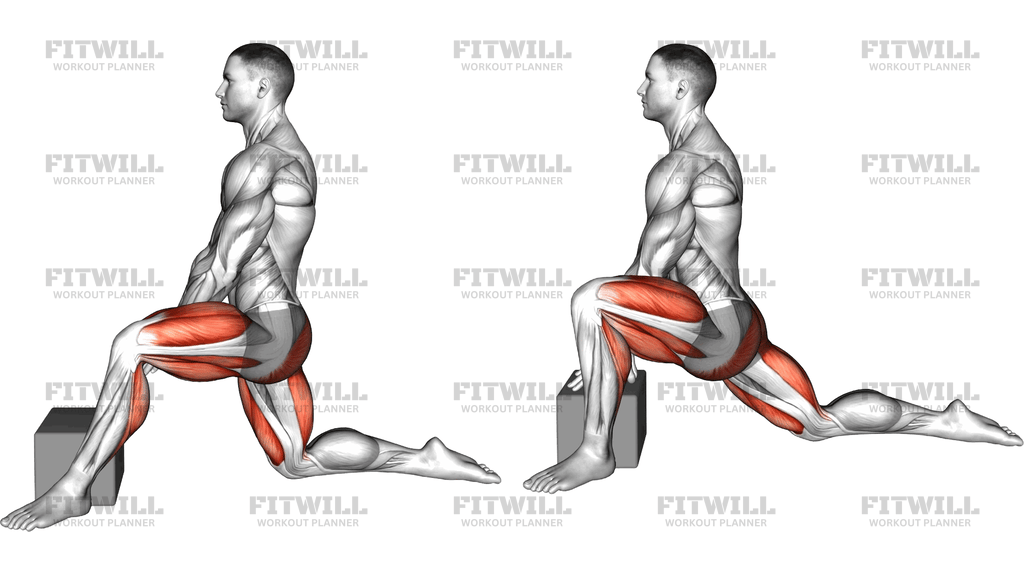
Instructions
- Kneel on the floor with both knees down, then step your right foot forward so the right knee stacks roughly over the ankle and the shin stays vertical.
- Slide the left knee back a few inches so it sits directly under or slightly behind the left hip, with the left foot extended and the top of the foot resting on the floor.
- Place both hands on a low block or step platform on either side of the front foot so your torso is supported and your shoulders stay relaxed.
- Tuck the tailbone slightly and squeeze the glute of the rear leg to set the pelvis in a neutral, slightly posterior position before going deeper.
- Press the hips slowly forward and down, keeping the front shin vertical, until you feel a steady stretch across the front of the rear hip and thigh.
- Keep the torso tall and the chest open; the stretch should come from the hip, not from arching the lower back.
- Hold the end position for 20 to 45 seconds, breathing slowly and letting the hips settle a little deeper on each exhale if the sensation allows.
- To release, push gently through the hands on the block, shift the hips back until tension eases, then bring the rear knee forward.
- Return to kneeling, reset your position, and repeat on the other side, aiming for one to three holds per side.
Tips & Tricks
- If the front of the rear hip pinches instead of stretching, you are probably arching the lower back. Re-tuck the tailbone and squeeze the rear glute before pressing the hips forward again.
- Keep the front knee over the ankle. When the knee travels well past the toes, the hips drop but the stretch quality drops with it and the front knee takes extra pressure.
- Pad the rear knee with a folded towel or mat if hard flooring makes the position uncomfortable; discomfort there will make you hold tension instead of releasing it.
- Actively squeeze the glute of the trailing leg rather than just relaxing into the stretch. This deepens the hip flexor stretch and protects the lower back at the same time.
- Keep weight distributed through the hands on the block so the torso stays light and upright; sinking your chest down turns this into a groin stretch and loses the hip flexor focus.
- Keep the rear foot relaxed with the top of the foot flat on the floor. Curling the toes under changes the knee angle and shortens the quad stretch you are trying to create.
- Breathe out slowly as the hips move forward. Holding your breath tends to guard the hip flexors and stops the tissue from letting go.
- Balance the time on each side. Most people have one tighter hip, and repeating the tighter side only reinforces the imbalance.
Frequently Asked Questions
Which muscles does the Low Lunge Stretch target?
It primarily stretches the hip flexors of the rear leg, mainly the iliopsoas and rectus femoris, with secondary stretch through the quads. The glutes of both legs and the trunk stabilizers work to hold the position.
Why use a block for the hands instead of the floor?
Resting the hands on a low block raises the support surface, which reduces wrist and shoulder load and makes it easier to keep the torso tall. A taller torso is what keeps the stretch on the hip flexors instead of the spine compensating.
Is the Low Lunge Stretch suitable for beginners?
Yes, as long as the range stays moderate. Beginners should shorten the stance slightly, keep the hands on the block, and hold 20 to 30 seconds per side without forcing the hips forward.
Should my rear knee be directly under my hip or further back?
Start with the rear knee roughly under the hip and slide it back only a few inches as needed. Sliding it too far back turns the position into a deep split and makes the quad and knee take over from the hip.
My lower back arches when I push my hips forward. How do I fix it?
Tuck the tailbone first, squeeze the glute of the rear leg, and only then move the hips forward. You will get less apparent range, but the stretch will land on the hip flexor instead of the lumbar spine.
How long should I hold the Low Lunge Stretch?
Twenty to forty-five seconds per side works well, and one to three rounds per side is enough. After training or on tighter days, lean toward the longer holds.
Can I do this stretch before squats or running?
Yes, it is a common warm-up choice for anything that needs hip extension. Keep the holds on the shorter side and follow with a few dynamic movements so you do not go into the session feeling overly loose.
The top of my rear foot or kneecap hurts. Is that normal?
Discomfort there is a surface issue, not a stretch signal. Pad the knee with a folded towel or mat, and make sure the foot is resting flat rather than bearing weight on the toes.
What can I use instead of a block if I do not have one?
A low step, a sturdy stack of books, or even hands on the front thigh all work. The goal is simply to support the torso high enough that your shoulders and wrists stay relaxed.