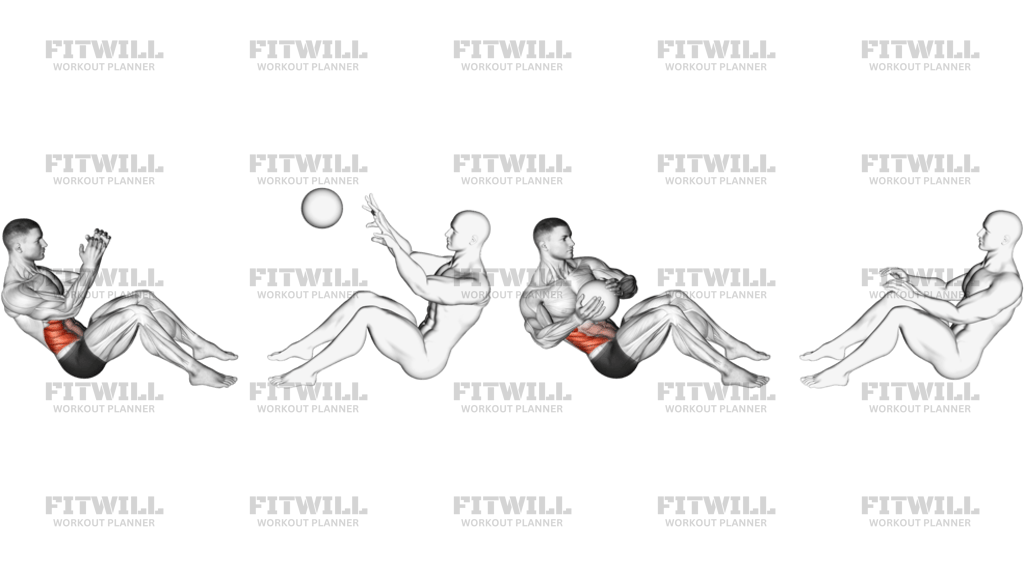
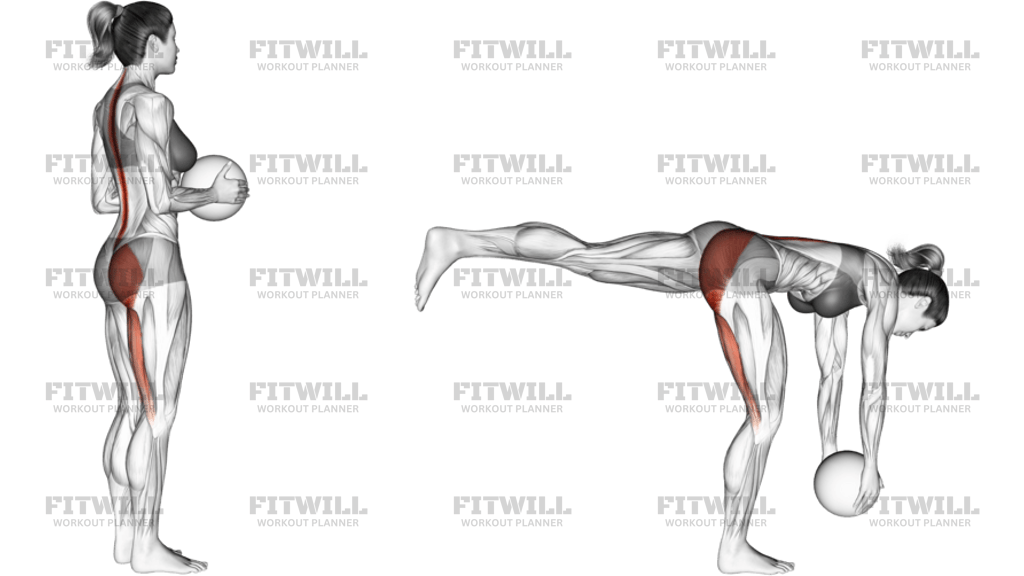
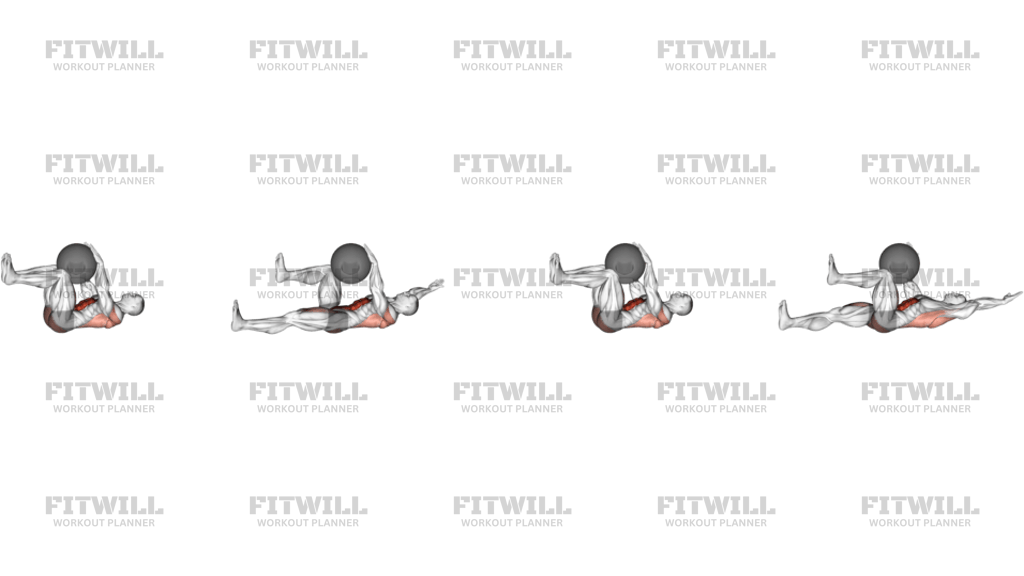
Medicine Ball Single Leg Balance Throw
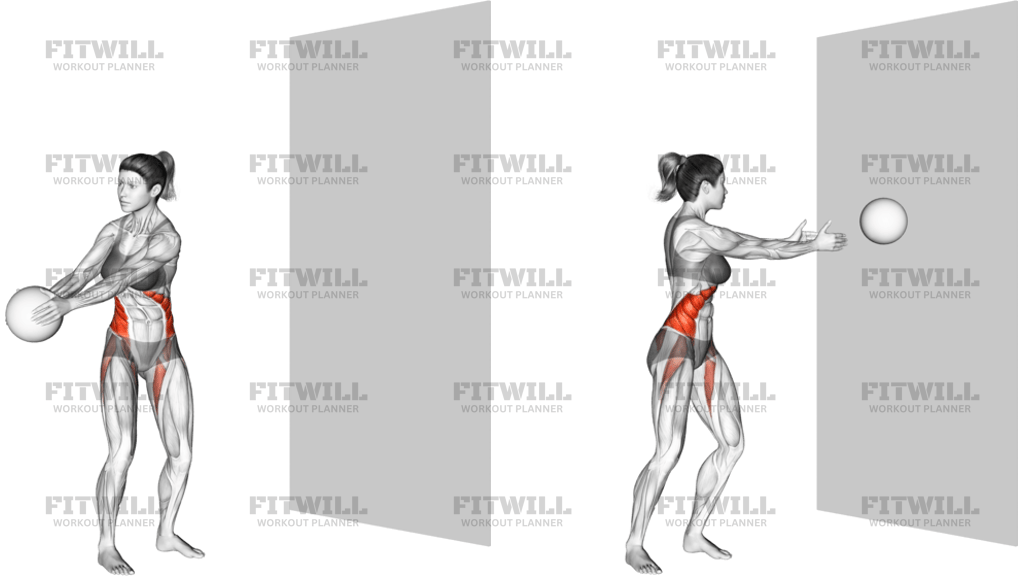
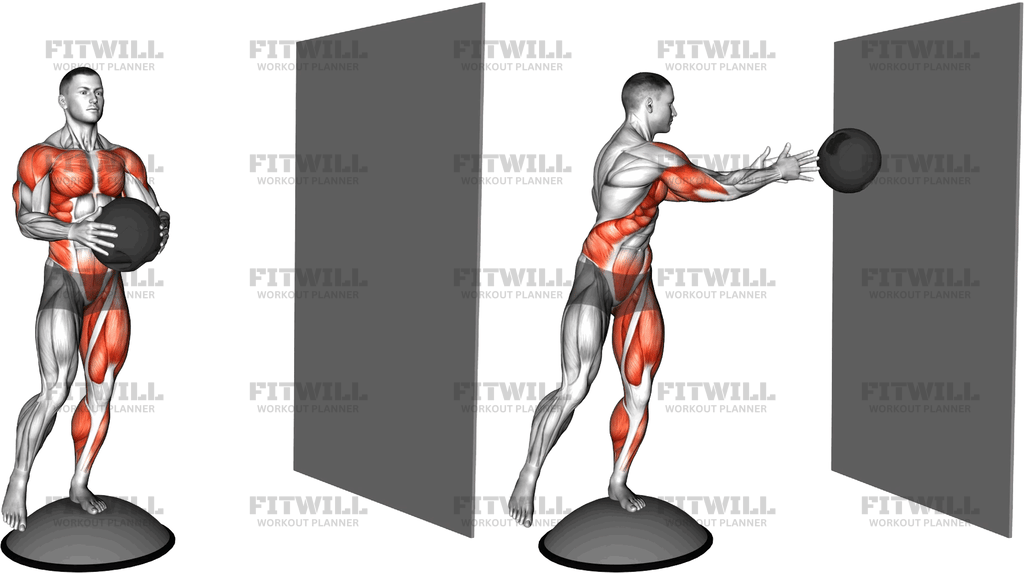
The Medicine Ball Single Leg Balance Throw combines two demands that are rarely trained together: explosive upper-body pressing and single-leg stability on an unstable surface. You stand on one leg on a Bosu ball or similar dome trainer, hold a medicine ball at chest height, and throw a chest pass into a wall, then absorb the rebound without losing your balance. The moment the ball leaves your hands, your body has to fight the backward push of the throw, and when it comes back, you have to decelerate it while staying stacked over one foot.
This movement is a genuine full-body coordination challenge. The chest, front shoulders, and triceps drive the pass, but the real work happens from the waist down and through the trunk. The deep core and obliques brace against the rotational and backward forces of the throw, while the glutes, quads, and calves of the standing leg constantly make small corrections to keep you centered on the dome. Ankle stabilizers get a particularly dense training stimulus here, since the soft, curved surface forces continuous micro-adjustments that a flat floor never demands.
The setup matters more than in most medicine ball drills. Your distance from the wall controls the difficulty of the catch, and the height of the dome determines how much balance challenge you take on. Start conservative: a moderate distance from the wall, a light ball, and the dome flipped to the flatter side if you have the option. If your balance breaks down on every rep, the throwing action degrades into a desperate lunge, and you stop training the qualities this exercise exists for.
To execute it well, think of your standing leg as a rooted post. Grip the dome with your toes, keep a soft bend in the knee, and set your hips level before you even pick the ball up. The throw itself should be a crisp, two-handed chest pass - extend the arms fully toward your target on the wall, exhale as you release, and keep your torso tall rather than leaning back. As the ball rebounds, catch it at chest height with soft elbows and let the impact travel down into your braced trunk and standing leg instead of jerking your arms and shoulders.
This drill earns its place in warm-ups for throwing and racket sports, in lower-body rehab progressions once basic single-leg balance is solid, and in general athletic training where anti-falling skill matters. It is also a useful core exercise in its own right: because the load moves dynamically and unpredictably off the wall, your trunk has to react rather than simply hold a static position, which transfers better to sport than a plain plank ever will.
Treat this as a quality movement, not a conditioning grinder. Stop the set when your balance starts to wobble noticeably or your catch gets sloppy - practicing the failure pattern teaches your body to fall off the dome, which is the opposite of what you want.
[ Workout Log & Planner ]
Put your next workout in Fitwill
Keep your plan and training log ready when you are.


Instructions
- Place a Bosu ball dome-side up about one to two meters from a sturdy wall, and pick a medicine ball you can throw and catch cleanly for 8-10 reps.
- Step onto the dome with one foot centered on the top of the dome, then lift your other foot off so you are balancing on the single leg with a soft bend in the standing knee.
- Hold the medicine ball with both hands at chest height, elbows tucked slightly in, and squeeze the ball as if trying to crush it.
- Set your hips level and brace your core as if preparing for a light push from the front.
- Exhale and throw a two-handed chest pass into the wall, fully extending your arms toward a target at chest height while keeping your torso upright.
- Keep your weight centered over the standing foot as the ball leaves your hands; resist the backward push of the throw instead of rocking back onto your heel.
- Catch the rebound at chest height with soft elbows and hands ready, letting the impact settle into your braced trunk and standing leg.
- Pause for a second on the dome with the ball held at your chest to re-establish balance before the next throw.
- Breathe out on the throw and in during the catch and reset.
- Complete all reps on one leg, then step down carefully, shake out your ankles, and switch to the other leg.
Tips & Tricks
- If you fall off the dome on nearly every throw, the ball is too heavy or you are standing too close to the wall - the rebound comes back faster than you can organize a catch.
- Spread your toes and actively grip the top of the dome; most balance failures in this exercise start at the foot, not the hip.
- Do not lean your torso backward as you throw. The ball pushing into your hands plus a backward lean is what sends people off the back of the dome.
- Pick a specific target spot on the wall at chest height. Throwing at a fixed target keeps the pass straight and stops the ball from rebounding off at an angle you cannot catch.
- Keep the non-standing leg lifted and quiet - swinging it around to rescue your balance is a sign the standing leg is doing too little and the exercise is beyond your current control.
- Catch with your hands and forearms, not your chest. Letting the ball crash into your torso knocks your center of mass backward and ruins the balance position.
- Your standing knee should stay pointing forward over your foot; if it caves inward when the ball hits your hands, consciously drive the knee out and squeeze the glute on the standing side.
- Reset fully between reps early on. A two-second pause to re-center teaches the balance skill far better than rushing into the next throw while wobbling.
- Do this drill early in a workout while your nervous system is fresh; performing it fatigued turns a stability exercise into a fall-recovery exercise.
Frequently Asked Questions
What muscles does the Medicine Ball Single Leg Balance Throw work?
The throw itself uses the chest, front shoulders, and triceps, while the deep core and obliques brace against the force of the pass and rebound. The standing leg works hard through the glutes, quads, calves, and ankle stabilizers to keep you centered on the dome.
Can beginners do the Medicine Ball Single Leg Balance Throw?
Yes, but it should be scaled down. Start by balancing on one leg on the floor while pressing a light ball against a wall, then move to the dome with a very light medicine ball and a short distance from the wall.
How far from the wall should I stand?
Start about one to two meters away so the rebound is easy to track and catch. Increase the distance only once you can complete all reps without stepping off the dome, because a longer throw means a faster, harder rebound.
Should I catch the ball every rep or let it drop?
Catching the rebound is the point of the exercise - the deceleration and balance demands live in the catch. If the rebound is too hot to control, move closer to the wall or use a lighter ball rather than skipping the catch.
What is the most common mistake in this exercise?
Leaning the torso backward during the throw and getting knocked off the back of the dome. Brace the core, keep the chest tall, and let the arms extend without the rest of the body drifting.
Can I do the Medicine Ball Single Leg Balance Throw without a Bosu ball?
Yes. Perform it standing on one leg on the floor, or on a folded exercise mat or balance pad for a milder stability challenge. The throwing and catching mechanics stay exactly the same.
How heavy should the medicine ball be?
Choose a ball in the 2-5 kg range that you can throw crisply and catch softly without your form changing. If the ball forces you to lean back or collapse your posture to throw it, it is too heavy for this drill.
Is it safe for my knees and ankles?
For healthy joints it is generally well tolerated because the load is a light medicine ball rather than external weight, but the dome does demand active ankle and knee control. If you have a recent ankle sprain or knee injury, build single-leg balance on a firm surface first and get clearance from a professional.
How many reps and sets should I do?
Two to three sets of 6-10 controlled throws per leg works well. Prioritize clean catches and steady balance over volume - end the set when your wobble becomes hard to correct.
Where does this exercise fit into a workout?
Use it near the start of a session as an activation and coordination drill, or as a stand-alone core and stability exercise on lower-body or athletic training days. Avoid placing it at the end of a fatiguing leg workout when your balance is compromised.