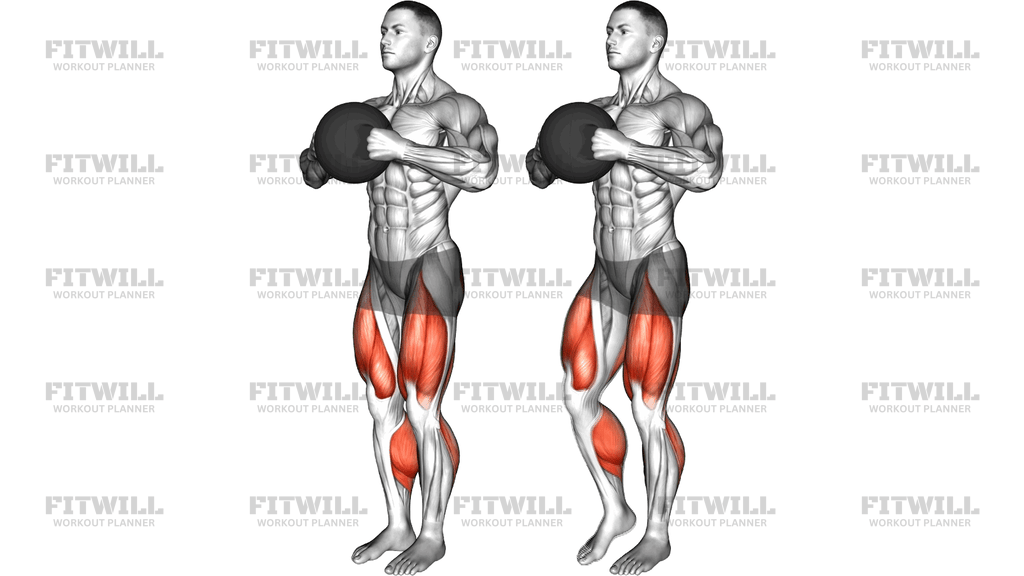
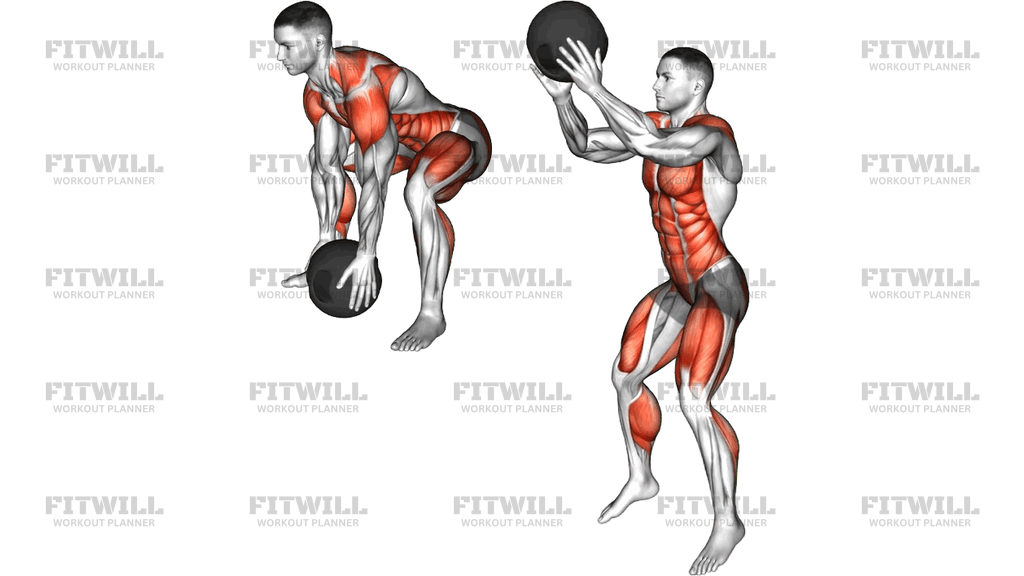
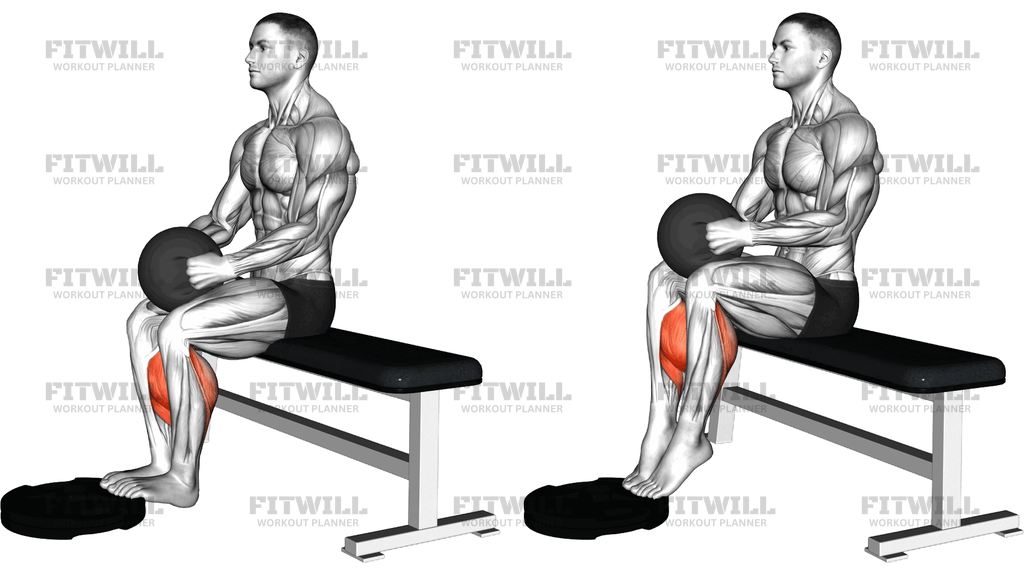
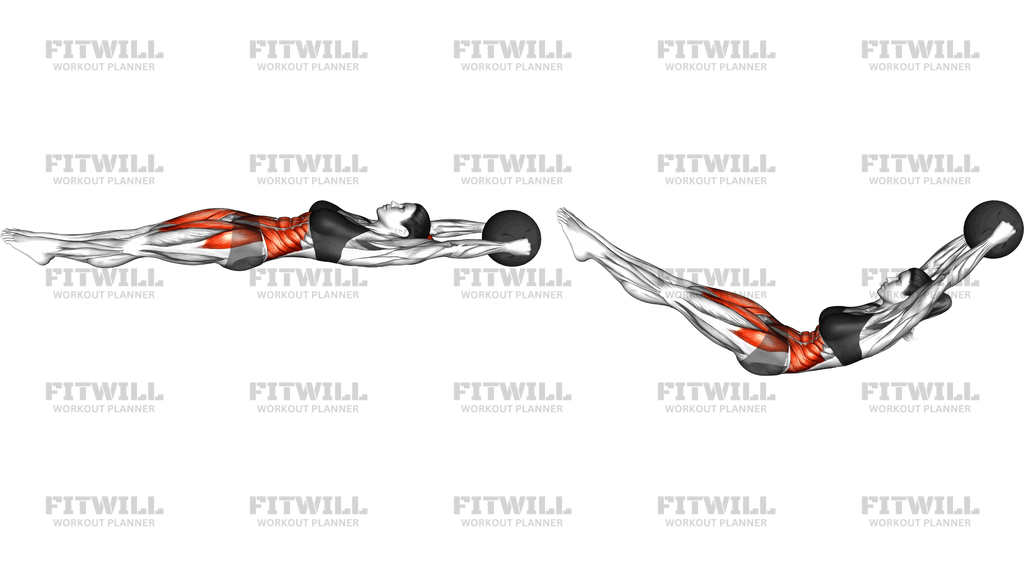
Medicine Ball Step Down
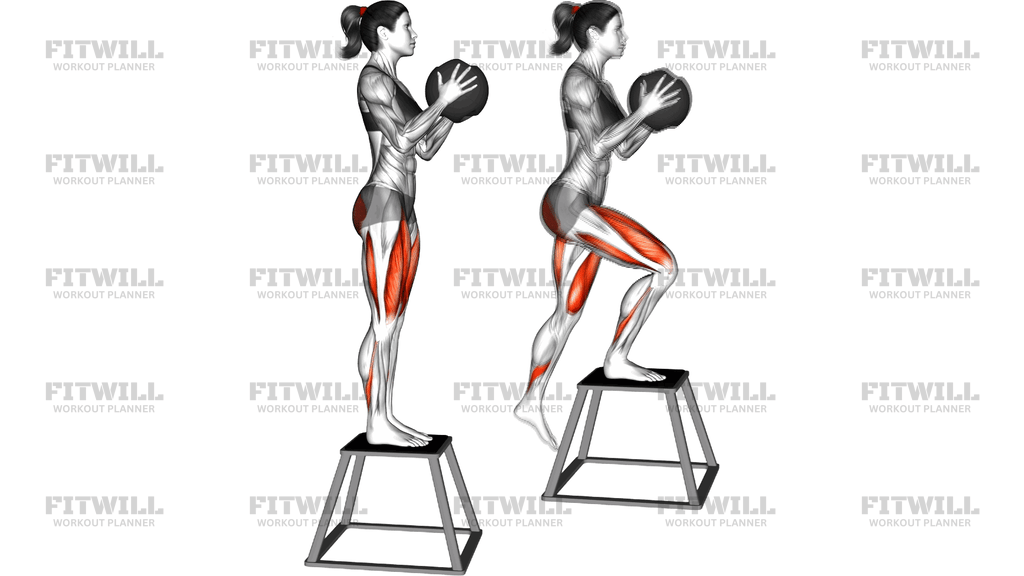
The Medicine Ball Step Down is a single-leg lower body exercise that reverses the usual step-up pattern. Instead of driving up onto a box, you start standing on top of a step platform or sturdy box, holding a medicine ball at chest height, and slowly lower one foot to the floor before pressing back up to the starting position. This eccentric emphasis makes it surprisingly demanding for an exercise that uses no external load beyond the ball.
Because you are lowering yourself on one leg, the working quadriceps, glutes, and hamstrings on the top leg control the entire descent. The calf complex on the standing leg also works hard to keep your ankle steady, while the core braces to hold the medicine ball still and stop your torso from twisting or collapsing toward the unsupported side. That anti-rotation and anti-side-bend demand is one of the main reasons to keep the ball at your chest rather than letting your arms do whatever is comfortable.
Step downs are especially useful for building the kind of single-leg control that carries over to running, hiking downhill, climbing stairs, and sports that require deceleration. The eccentric phase of a step down closely mimics how your legs absorb force when you walk down stairs or land from a jump, which is why coaches often use it with runners and field sport athletes. It is also a common exercise in knee-focused conditioning programs because it trains the thigh muscles through a controlled range without the impact of jumping.
The setup matters more than most people expect. Choose a box height that lets your working leg lower your foot to the floor without your heel lifting or your knee diving inward — for many people that means starting with a platform around knee height or slightly lower. Stand tall near the edge, ball held at your chest with both hands, and keep your full foot on the platform. If the box is too tall, your form will break down on the very first repetition.
To execute the movement well, shift your weight fully onto the top leg, hinge slightly forward from the hips, and reach the free foot down to touch the floor with your toes, keeping most of your body weight on the platform. From there, push through the standing leg to rise back up until your knee is straight at the top. The free foot should only kiss the floor — if you bounce or load the bottom leg, you have turned it into a partial step-up and lost much of the benefit.
Use the Medicine Ball Step Down as an accessory lift after your main squats or hinges, or as a standalone single-leg session when you want volume without heavy loading. Two to four sets of six to ten controlled reps per side is a solid working range. If balance is the limiting factor, practice near a wall or rack you can touch for support, and progress the box height or ball weight only when you can lower smoothly without your knee caving inward or your hips swaying side to side.
[ Workout Log & Planner ]
Put your next workout in Fitwill
Keep your plan and training log ready when you are.


Instructions
- Stand on top of a step platform or sturdy box with both feet fully on the surface, close to the front edge, holding a medicine ball with both hands at chest height.
- Pick the leg you will train and shift your weight completely over that foot; let the other foot hang just off the edge of the platform.
- Brace your core, pull your shoulders back, and look straight ahead so the medicine ball stays centered in front of your chest rather than drifting to one side.
- Hinge slightly at the hips and bend the knee of your working leg to begin lowering your body in a slow, controlled descent.
- Reach your free foot down and tap the ball of the foot on the floor beside the box, keeping almost all of your weight on the top leg.
- At the bottom, your working knee should be bent but tracking over your mid-foot, with your torso leaning forward only a few degrees.
- Press through the whole foot on the platform — big toe, little toe, and heel — to extend the knee and hip and return to a tall standing position on the box.
- Exhale as you press back up; inhale slowly through the descent while keeping your chest lifted.
- Complete all repetitions on one side, then step off safely and reset your stance before switching legs.
- If you lose balance mid-rep, place the free foot fully on the floor, step back onto the box with both feet, and restart the set from the top.
Tips & Tricks
- The most common mistake is pushing off the floor with the bottom foot to get back up. Keep the floor contact to a light toe tap — the top leg should do all the work on the way down and the way up.
- If your knee collapses inward as you descend, imagine spreading the floor with your standing foot and drive your knee toward your second toe. This usually cleans up instantly.
- Start with a lower box than you think you need. If your heel lifts or you have to lurch forward to reach the floor, the platform is too high for your current control.
- Hold the medicine ball firmly against your sternum rather than letting it float at arm's length. A ball drifting away from your chest pulls you forward and stresses your lower back.
- Slow the lowering phase down deliberately — aim for two to three seconds down. The eccentric control is the whole point of this exercise, not a style preference.
- Keep your hips level. When one leg works alone, the opposite hip tends to drop; think about pulling the hip of the free leg up toward your ribs as you lower.
- Breathe out on the way up instead of holding your breath through the whole rep, especially once you add a heavier ball.
- Place the box next to a wall or squat rack if you wobble. Lightly touching a support with one hand beats falling, and your balance will improve quickly anyway.
- Progress by adding reps first, then ball weight, then box height — in that order. Jumping straight to a tall box with a heavy ball is where form falls apart.
Frequently Asked Questions
Which muscles does the Medicine Ball Step Down work the most?
The quadriceps and glutes of the standing leg do the primary work, especially during the controlled lowering phase. Your hamstrings, calves, and core assist with stability, and holding the ball at your chest adds a small but constant demand on the trunk.
How is the Medicine Ball Step Down different from a step-up?
A step-up drives you up onto a box, while the step down starts on top and controls the descent. The step down places far more emphasis on the eccentric phase and on single-leg deceleration, which most people find harder even with a lighter load.
How tall should the box or step platform be?
Choose a height you can lower from while keeping your heel down, your knee tracking over your mid-foot, and your torso upright. Around knee height or slightly lower is a good starting point, and you can progress to a taller platform as your control improves.
Can beginners do the Medicine Ball Step Down?
Yes, beginners can start with a low step, a light medicine ball, and a hand on a wall for balance. Once ten smooth repetitions per side feel easy without touching the support, gradually increase the height or the ball weight.
Why should the free foot only tap the floor instead of resting on it?
If you load the bottom leg to push back up, the exercise becomes a partial step-up and the working leg loses its eccentric challenge. Keep the floor contact to a light toe tap so the top leg controls the entire movement.
What should I do if my knee hurts during the Medicine Ball Step Down?
First check that your knee is tracking over your mid-foot and that the box is not too tall for your current strength. If discomfort continues at a lower height with a slower tempo, stop and have the movement reviewed by a qualified professional.
How heavy should the medicine ball be?
The ball is mainly a trunk and posture challenge, so most people do well with a moderate weight they can hold at the chest without the shoulders rounding or the ball pulling them forward. Leg strength, not ball weight, should limit the exercise.
Can I substitute another exercise if I do not have a medicine ball?
Yes — a dumbbell, kettlebell, or even a weight plate held at the chest works the same way. The key is keeping the load at chest height so the single-leg step down pattern and the trunk demand stay intact.
How many sets and reps should I do?
Two to four sets of six to ten controlled repetitions per leg fits most strength and stability goals. Prioritize a slow, quiet descent over total volume — if your foot slams the floor, the reps are too fast.