Assisted Motion Russian Twist
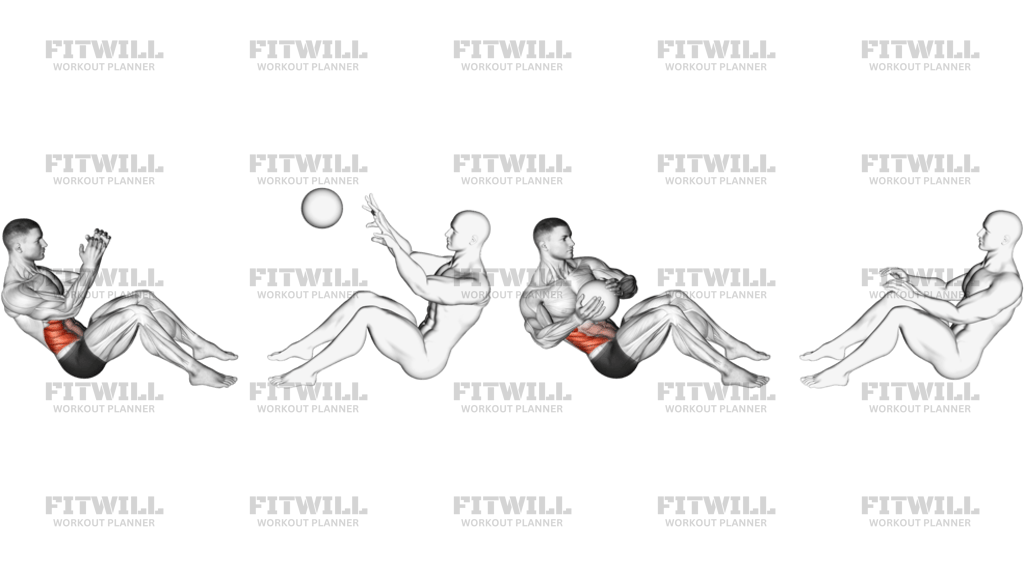
Assisted Motion Russian Twist is a partner-assisted medicine-ball core exercise that trains controlled rotation through the waist. You sit with the knees bent, lean back slightly, and rotate the torso as a partner guides, receives, or returns the ball. The assistance adds timing and direction to the movement, but the rotation should still come from your trunk rather than your arms alone.
The exercise primarily targets the obliques, with the abs and hip flexors helping stabilize the seated position. A good rep keeps the ribs and shoulders turning together while the hips stay steady. The medicine ball gives the hands a clear path, but the goal is not to swing the ball as far as possible; it is to rotate with control and return through the center without collapsing the lower back.
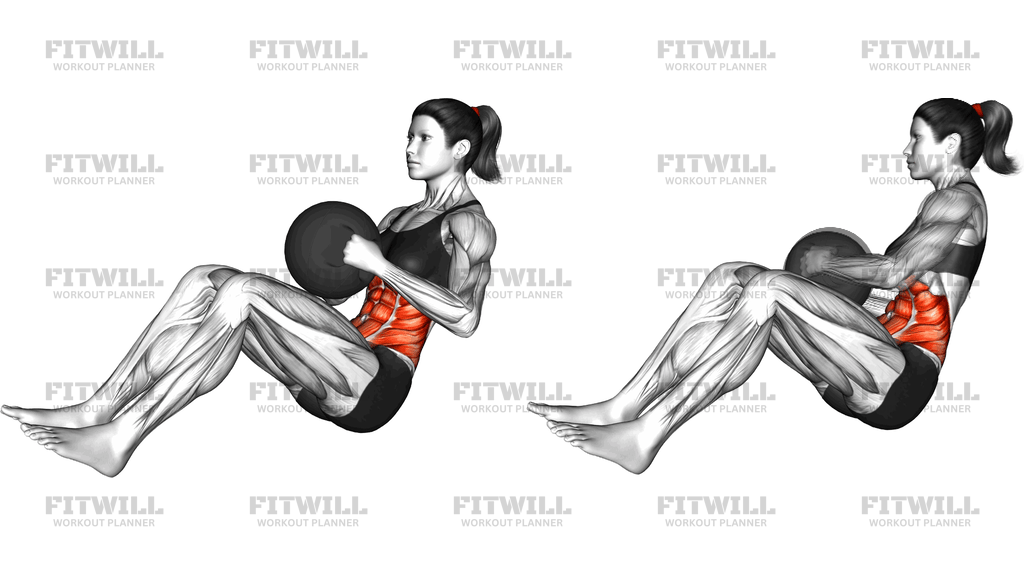
Set up seated on the floor with the knees bent and feet planted unless you have enough control to lift them. Hold the medicine ball close to the chest or slightly in front of the torso, lean back just enough to feel the abs engage, and keep the spine tall. Your partner should be positioned where they can guide or receive the ball without forcing you into a range you cannot control.
Rotate toward one side, pass or follow the ball as needed, then return through the center before rotating to the other side. Keep the ball close enough that the shoulders stay relaxed and the movement remains a torso rotation. If the partner assistance makes you rush, slow the exchange and reduce the range.
Assisted Motion Russian Twist works well in core circuits, partner sessions, athletic warmups, and medicine-ball conditioning blocks. Use a light ball first so the trunk, not the arms or lower back, controls the motion. To progress, increase the pause, range, or ball weight only after both directions feel smooth and balanced.
Common mistakes include rounding the spine, leaning too far back, letting the knees sway, or throwing the ball with the arms while the torso barely rotates. Keep the hips quiet, breathe out as you turn, and maintain the same range to both sides. Stop the set if you feel the lower back taking over or if the partner rhythm pulls you out of position.
[ Workout Log & Planner ]
Put your next workout in Fitwill
Keep your plan and training log ready when you are.


Instructions
- Sit with your knees bent and hold a medicine ball in front of your torso.
- Lean back slightly while keeping your chest lifted.
- Brace your abs and keep your hips steady.
- Rotate your torso to one side as your partner guides or receives the ball.
- Return through the center with control.
- Rotate to the other side without letting your lower back collapse.
- Keep the ball close enough that your shoulders stay relaxed.
- Continue alternating sides for the planned reps.
Tips & Tricks
- Rotate from your torso instead of just moving your hands.
- Keep your spine tall and avoid rounding forward.
- Use a light medicine ball while learning the motion.
- Move smoothly rather than bouncing side to side.
- Keep your feet down if balance is difficult.
- Exhale gently as you rotate.
- Keep the medicine ball close enough to your body that your shoulders do not tense or reach ahead of your ribs.
- Coordinate with your partner so the pass or guided motion does not pull you past your controlled rotation.
Frequently Asked Questions
What muscles does the Assisted Motion Russian Twist work?
It primarily works the obliques, with the abs helping stabilize the trunk.
Do I need a partner?
This assisted version uses a partner, but you can perform regular medicine-ball Russian twists alone.
Should my feet be lifted?
Feet can stay on the floor for better control. Lifting them makes the exercise harder.
Is a heavy medicine ball better for Assisted Motion Russian Twist?
Not always. A lighter ball often allows cleaner rotation and better control.
Why do I feel this in my lower back?
You may be leaning too far back or rounding your spine. Sit taller and reduce the range.
What does the partner do in Assisted Motion Russian Twist?
The partner guides, receives, or returns the medicine ball so you rotate with a clear target. They should not pull you into a deeper twist than you can control.
How far should I rotate with the medicine ball?
Rotate until your ribs and shoulders turn together while your hips stay steady. Stop before your lower back rounds or your knees sway.
Should I hold the medicine ball close or far away?
Keep it close to your torso at first. Holding it farther away increases the lever and can make the exercise harder on the shoulders and lower back.