Band Squat
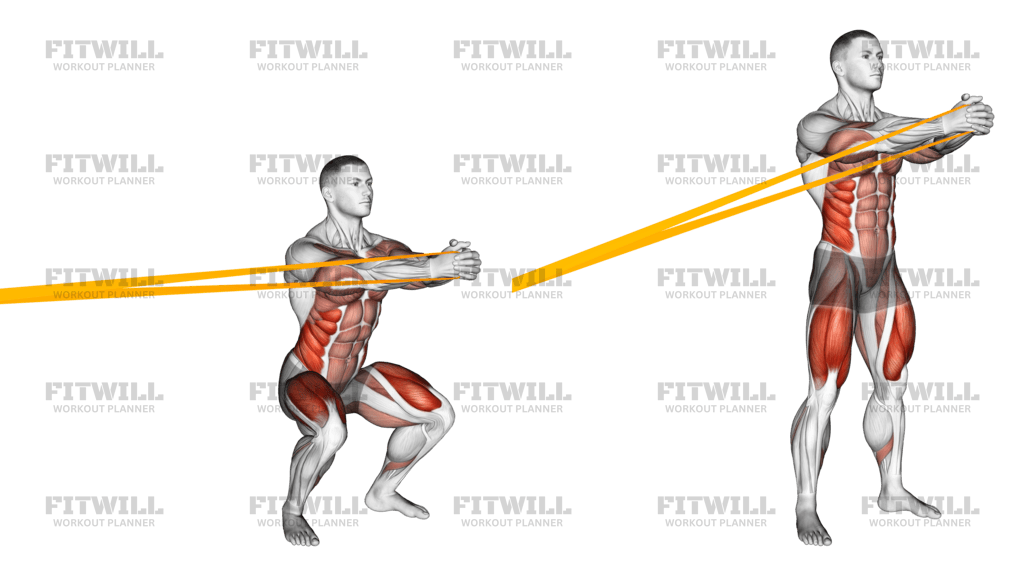
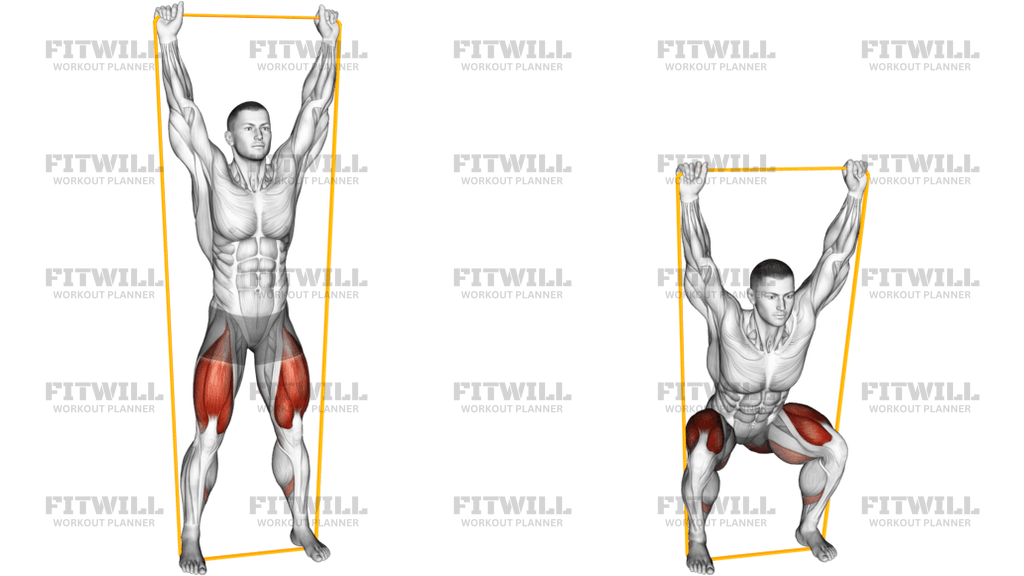
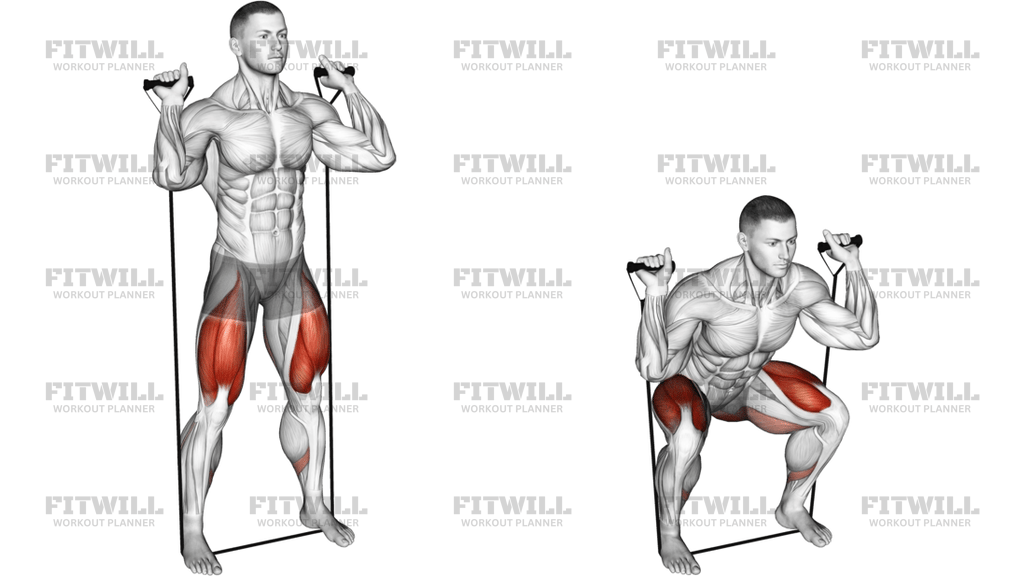
Band Squat is a standing squat variation that uses a resistance band for continuous tension through the entire rep. With the band anchored under both feet and held at shoulder height, the load increases as you stand up, which makes the top half of the movement feel especially demanding on the glutes and thighs.
This exercise is useful when you want a simple lower-body pattern that still trains the legs, hips, and trunk together. The glutes do most of the work on the way up, while the hamstrings, core, and lower back help keep the torso organized and the knees tracking well. In anatomy terms, the main emphasis is on the gluteus maximus, with support from the biceps femoris, rectus abdominis, and erector spinae.
The setup matters because the band path changes how the squat feels. Stand on the middle of the band with feet about shoulder-width apart, then bring the handles or band ends up to shoulder level so the band stays taut before you descend. A stable stance, tall chest, and neutral head position make it easier to sit between your hips instead of folding forward and turning the rep into a back-dominant hinge.
On each repetition, send the hips back a little, bend the knees, and lower under control until your thighs reach a depth you can keep balanced. Keep the knees pressing in line with the toes, then drive through the midfoot and heels to stand. As you rise, the band should stretch smoothly without jerking your shoulders upward, and your ribs should stay stacked over your pelvis instead of flaring.
Band Squat works well as a warm-up, accessory lift, or home-gym lower-body exercise because it is easy to scale with band thickness and stance width. Use a lighter band if you need to keep the chest upright and the heels planted, or a stronger band if you can keep the same squat path without collapsing inward at the knees. The goal is a repeatable squat that loads the glutes at the top, keeps tension on the legs, and finishes with a controlled return to the start position.
[ Workout Log & Planner ]
Put your next workout in Fitwill
Keep your plan and training log ready when you are.


Instructions
- Stand on the middle of the band with your feet about shoulder-width apart and the band centered under both arches.
- Hold the handles or band ends at shoulder height with your palms facing in and your wrists stacked over your forearms.
- Set your feet slightly turned out, lift your chest, and keep your ribs stacked over your pelvis before you start the first rep.
- Sit your hips back and bend your knees to lower into the squat, keeping your weight over the midfoot and heels.
- Let your knees track in line with your toes as you descend, and keep the band steady at shoulder height.
- Lower until your thighs reach a depth you can hold without your heels lifting or your torso collapsing forward.
- Drive through your heels and midfoot to stand back up, squeezing your glutes as the band stretches and tension peaks.
- Finish tall without leaning backward, then reset your breath and posture before the next rep.
- Repeat for the planned number of repetitions, then step off the band with control.
Tips & Tricks
- Choose a band that lets you reach squat depth without the handles yanking your shoulders upward on the ascent.
- Keep the band under the middle of each foot; if it slips toward the toes, the squat usually turns unstable.
- Think about sitting between your heels instead of folding at the waist, especially if your torso starts tipping forward.
- Press the knees out in line with the toes so the legs do not cave inward as the band tension rises.
- Keep your elbows slightly in front of your ribs so the handles stay anchored near the shoulders instead of drifting forward.
- If the top of the rep feels too easy, slow the stand-up phase rather than adding a band that ruins your squat depth.
- Avoid bouncing out of the bottom; a brief pause makes the glutes and thighs do the work instead of momentum.
- Use a narrower stance if your hips pinch, or a slightly wider stance if you need more room to sit down between your legs.
- Stop the set when your heels start lifting or your chest starts collapsing, because that is usually the first sign the band is too strong.
Frequently Asked Questions
What muscles does Band Squat work most?
Band Squat mainly targets the glutes and thighs, with the hamstrings and core helping keep the body stable as you stand.
Is Band Squat a good beginner lower-body exercise?
Yes. A light band and a comfortable squat depth make it beginner-friendly, especially because the resistance is easy to scale by changing band tension.
Where should I hold the band during Band Squat?
Hold the handles or ends at shoulder height with your wrists neutral. That keeps the band path stable and prevents your shoulders from drifting forward as you squat.
How deep should I squat with the band?
Descend as far as you can while keeping your heels down, your knees tracking over your toes, and your chest from folding. Depth is only useful if you can keep that position.
Why does the top of Band Squat feel harder?
Because the band stretches more as you stand, the resistance increases near lockout. That makes the glutes work harder through the end of the rep.
What is the most common mistake in Band Squat?
Letting the knees cave in or letting the chest tip too far forward are the biggest issues. Both usually mean the band is too strong or the stance is too narrow.
Can I do Band Squat instead of a barbell squat?
Yes, if you want a lighter, home-friendly option or a warm-up pattern. It will not load the movement exactly like a barbell, but it is excellent for squatting mechanics and glute tension.
How can I make Band Squat harder without changing the band?
Use a slower lowering phase, pause briefly at the bottom, or stand a little wider so the band has more distance to stretch as you rise.