Heel Glute Bridge
Heel Glute Bridge is a floor bridge variation that puts the emphasis on driving through the heels instead of pushing through the whole foot. That small setup change shifts the work toward the glutes and hamstrings while keeping the exercise simple, low impact, and easy to repeat with clean form. It is a useful option for warm-ups, activation work, beginner strength training, and accessory sets when you want hip extension without standing balance or spinal loading.
The setup matters more than the size of the bridge. Lie on your back with your knees bent, feet about hip-width apart, and your heels planted so you can feel steady pressure through them. Your arms stay relaxed by your sides for balance, your head rests on the floor, and your ribs stay down instead of flaring. When the heels are the main contact point, the lift usually feels more like glutes and hamstrings working together and less like a lower-back arch.
Each repetition should rise in one smooth path. Press the heels into the floor, squeeze the glutes, and lift the hips until your body forms a straight line from shoulders to knees. The top position should feel strong and organized, not exaggerated. If the hips keep rising after that line is reached, the extra motion usually comes from the lumbar spine rather than the hips. Lower under control until the pelvis is just above the floor, reset your breath, and repeat.
A short pause at the top can make the exercise more effective for activation or glute endurance, but the pause should never turn into a hard backbend. Keep the neck relaxed, keep the knees tracking in line with the feet, and let the heels stay heavy so the feet do not roll forward. If you want more challenge later, the same pattern can be progressed with a mini-band, a single-leg version, or a light load across the hips, but the heel pressure and rib control should stay the same.
Heel Glute Bridge is especially useful when someone needs a cleaner bridge pattern before moving to heavier hip thrusts or more complex lower-body work. It is also a good choice when standing exercises are limited by balance, fatigue, or joint irritation elsewhere in the body. Stop the set if the low back takes over, the hips twist, or the hamstrings cramp hard enough that you lose the glute squeeze. The goal is repeatable hip extension with a stable torso and a controlled return to the floor.
[ Workout Log & Planner ]
Put your next workout in Fitwill
Keep your plan and training log ready when you are.


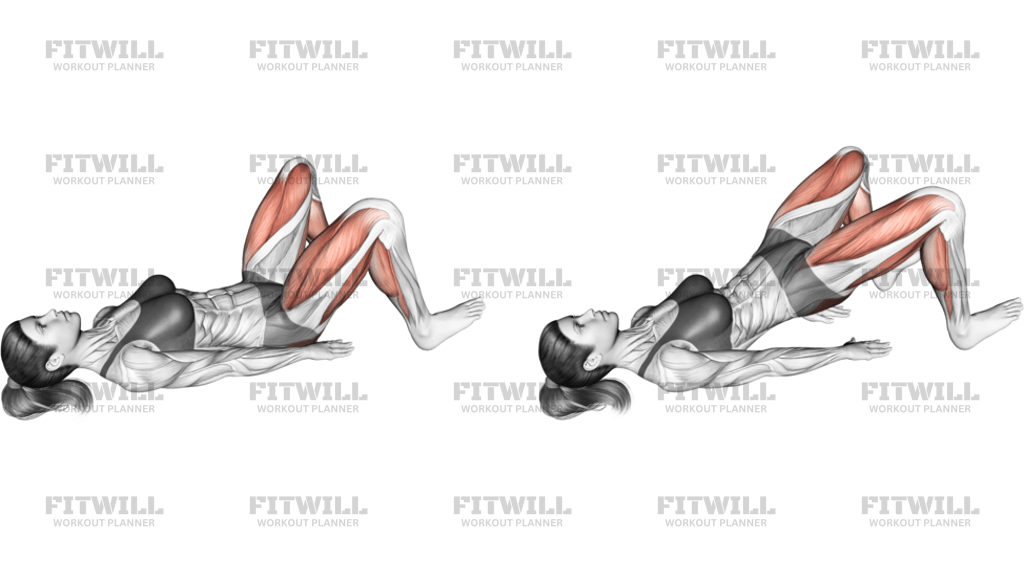
Instructions
- Lie on your back with your knees bent, heels on the floor about hip-width apart, and your feet close enough that your shins are roughly vertical.
- Place your arms along your sides with your palms down so you can stay balanced without using your hands to push.
- Keep your head and upper back relaxed on the floor, then draw your ribs down and set your pelvis in a neutral position.
- Press your heels into the floor and lightly lift your toes if that helps you keep pressure off the forefoot.
- Exhale, brace your abdomen, and drive your hips upward in a smooth line instead of jerking them off the floor.
- Finish the lift when your shoulders, hips, and knees form a straight line and your glutes are doing the work, not your low back.
- Pause briefly at the top while keeping the ribs down and the knees tracking over the feet.
- Lower the hips under control until they are just above the floor, reset your breath, and repeat for the planned reps.
Tips & Tricks
- Use the heel pressure as your cue: if you feel yourself rolling onto the toes, reset the feet before the next rep.
- Keep the hips from rising higher than a straight line from shoulders to knees; extra height usually means lumbar extension, not more glute work.
- If your hamstrings cramp, move the heels a few inches farther from the butt and make the first few reps smaller and slower.
- A short hold at the top helps the glutes fire, but long pauses usually turn the set into a lower-back endurance drill.
- Let the knees stay in line with the second or third toe; if they cave in or flare out, reduce the effort and clean up the setup first.
- Keep your chin relaxed and your neck long so the upper body stays quiet while the hips move.
- Lower slowly enough that you can feel the tension stay in the posterior chain, not drop suddenly when the hips touch down.
- If you add a band or a load across the hips, keep the heel drive and rib position identical before increasing resistance.
Frequently Asked Questions
What does Heel Glute Bridge train most?
It mainly trains glute extension with help from the hamstrings and deep core stabilizers.
Why emphasize the heels instead of the whole foot?
Heel pressure helps keep the movement centered on hip extension and makes it easier to feel the glutes working without pushing through the quads.
Should my toes stay on the floor during the bridge?
They can stay light or slightly lifted if that helps you keep pressure through the heels; the key is not to drive the rep from the forefoot.
How high should my hips go?
Lift until your shoulders, hips, and knees form one straight line. Going higher usually turns the top of the rep into a lower-back arch.
I feel this mostly in my hamstrings. Is that normal?
Some hamstring work is normal, but the glutes should still be the main effort. If the hamstrings cramp, move the heels slightly farther away and reduce the range for a few reps.
What should I do if I feel it in my lower back?
Shorten the range, keep the ribs down, and make sure you are pressing through the heels rather than throwing the hips upward.
Is Heel Glute Bridge good for beginners?
Yes. It is one of the easier ways to learn hip extension because you are on the floor and can control the position rep by rep.
How can I make this exercise harder?
Add a brief pause at the top, place a band above the knees, use a single-leg version, or add a light plate across the hips once your form stays consistent.