Resistance Band Walk
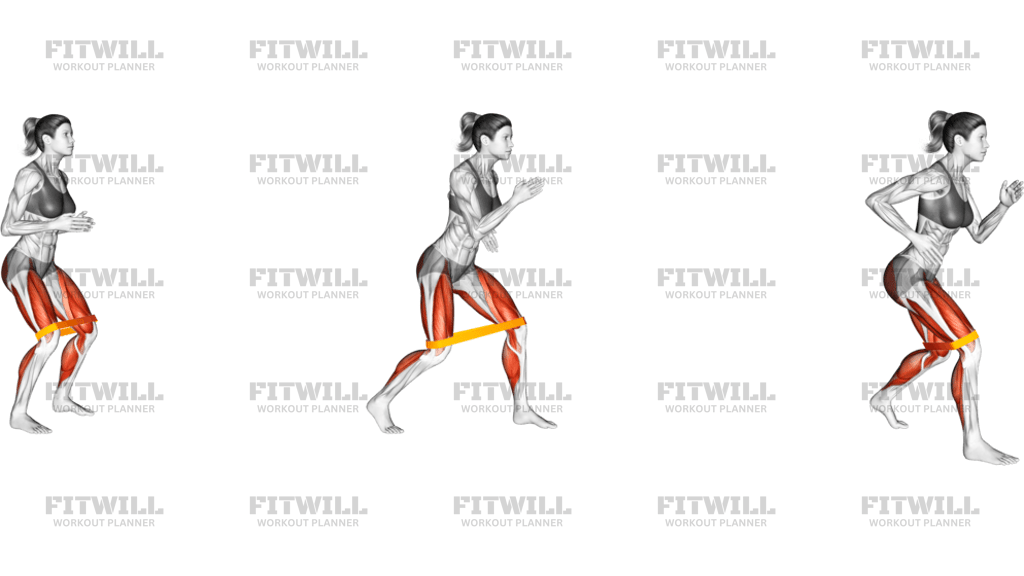
Resistance Band Walk is a lower-body control drill that keeps constant tension on the thighs while you move in a shallow athletic stance. It is commonly used to wake up the hips before squats, deadlifts, lunges, runs, or change-of-direction work, and it also fits well as accessory training when you want cleaner knee tracking and better lateral stability.
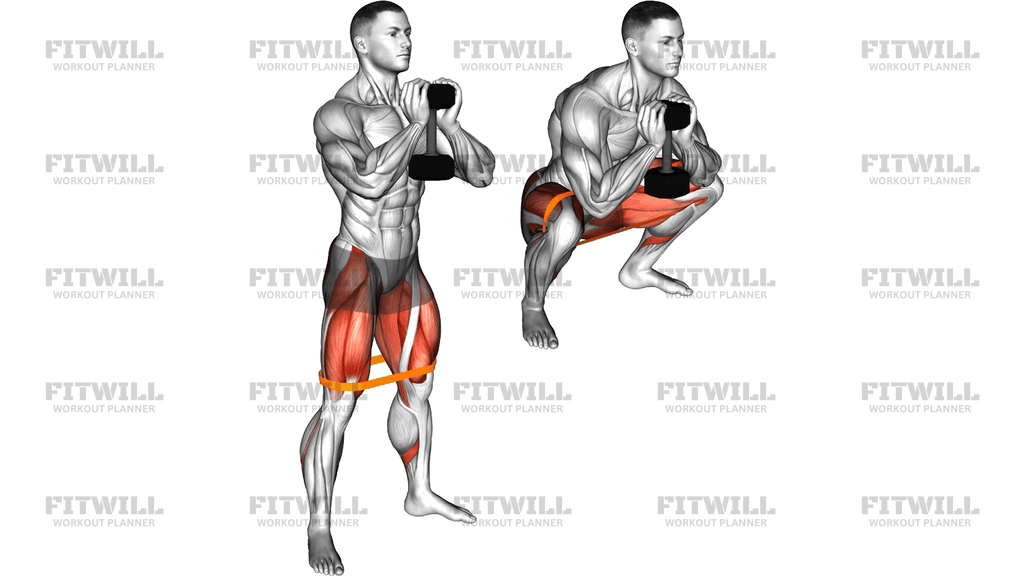
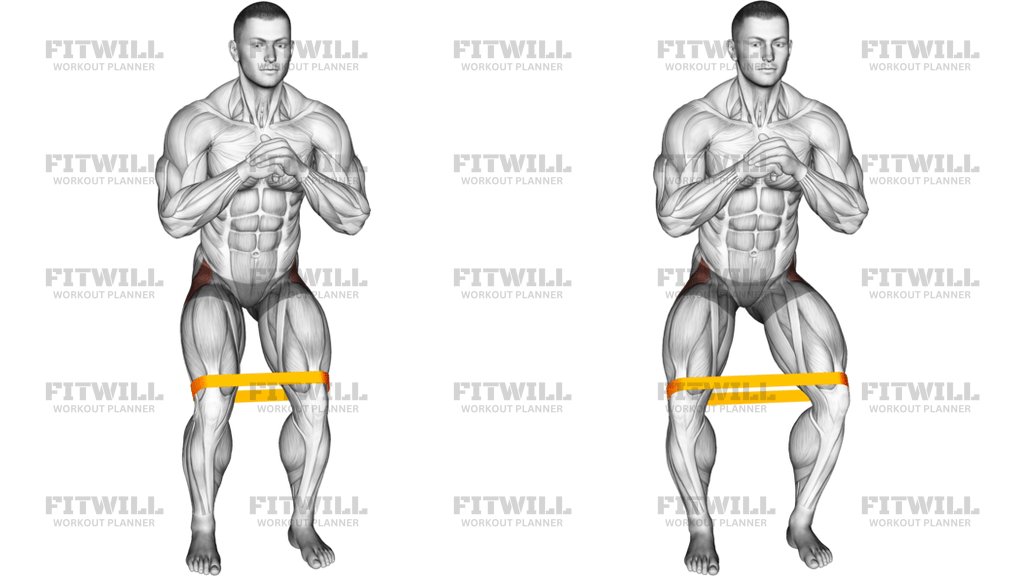
The usual setup is a resistance band looped around the thighs just above the knees, feet about hip-width apart, and knees slightly bent. Stay tall through the torso, keep the ribs stacked over the pelvis, and maintain a soft quarter-squat rather than dropping into a deep squat. The goal is not to take big steps or travel fast. The goal is to keep the band under steady tension so the outer hips and thighs have to control every shift of body weight.
Each step should be short, deliberate, and quiet. Press the knees gently out into the band before you move, then step sideways while keeping the pelvis level and the torso from rocking. Bring the trailing foot in only enough to reset your stance without letting the band go slack. If the feet turn out, the knees collapse inward, or the upper body starts to sway, the drill stops being a useful hip-strength exercise and becomes a balance compensation drill.
This movement is useful because it is easy to scale and easy to feel. Light bands and short sets work well for warmups and rehab-style prep, while stronger tension and longer carries of steps make it a demanding accessory. It is especially practical for lifters and runners who need more consistent hip engagement, stronger outer-thigh control, and less knee collapse under load. Use just enough resistance to keep clean mechanics, and end the set as soon as posture or knee tracking starts to break down.
[ Workout Log & Planner ]
Put your next workout in Fitwill
Keep your plan and training log ready when you are.


Instructions
- Loop the resistance band around both thighs just above the knees, then stand with feet about hip-width apart.
- Sink into a shallow quarter-squat and keep your chest tall, ribs stacked over the pelvis, and eyes forward.
- Press both knees gently out into the band before you take the first step so the band is already under tension.
- Keep your feet mostly parallel and your weight balanced through the midfoot and heel.
- Step one foot sideways with a short, controlled step while staying low in the squat.
- Bring the trailing foot in only enough to reestablish your stance; do not let the band go slack.
- Keep the pelvis level and the torso quiet as you continue stepping in the same direction.
- Reverse direction only after you finish the planned distance, then stand up and reset between sets.
- Breathe steadily throughout the set and exhale as each step lands.
Tips & Tricks
- A light band that you can keep stretched is usually better than a heavy band that forces the torso to lean.
- Shorter steps keep more tension on the outer hips and make the drill more useful than exaggerated side lunges.
- If the knees drift inward as you step, reduce the band tension or the step length before adding more load.
- Keep the squat shallow; dropping too low often shifts the work away from the hips and into compensation patterns.
- Let the feet point mostly forward instead of flaring aggressively outward, which can reduce the banded hip challenge.
- Move at a slow, deliberate pace so each foot placement is quiet and controlled.
- If the band twists or rolls, reset it flat above the knees before continuing.
- Stop the set when the pelvis starts to sway, the heels lift, or the knees stop tracking cleanly.
Frequently Asked Questions
What muscles does Resistance Band Walk work most?
It mainly challenges the outer hips and thighs, especially the hip abductors and glute medius, with the quads and deep stabilizers helping keep the stance organized.
Where should the band sit for this exercise?
The usual setup is just above the knees. That placement gives enough lateral resistance to train control without forcing an extreme range of motion.
Should I stay in a squat the whole time?
Stay in a shallow athletic squat, not a deep sit. A small bend in the hips and knees is enough to keep tension where you want it.
What is the biggest mistake to avoid?
The most common problem is taking huge steps and letting the torso sway. That usually turns the drill into a balance exercise instead of a hip-control exercise.
Can beginners do Resistance Band Walk?
Yes. Beginners should start with a light band, short steps, and a narrow quarter-squat until the knees stay stable and the band stays under control.
Is this a warm-up or a strength exercise?
It can be both. Light tension and short sets work well in warm-ups, while stronger bands and longer step sequences make it a harder accessory movement.
How do I make the walk harder without losing form?
Use a slightly stronger band, slow the stepping rhythm, or increase the number of controlled steps before you change the stance or depth.
What should I feel if I am doing it correctly?
You should feel steady work in the outer hips and thighs, with the stance muscles constantly preventing the knees from collapsing inward.