Dumbbell Single Arm Z Press
The Dumbbell Single Arm Z Press is an overhead press performed from the floor with your legs extended straight in front of you. With no bench back or upright torso support to lean against, your entire trunk has to hold itself vertical while one arm drives a dumbbell from shoulder height to a full lockout overhead. The free hand often rests against your abdomen as a tactile reminder to keep the ribs stacked over the pelvis, which is exactly the position this exercise is designed to challenge.
This movement is one of the most honest tests of pressing strength you can do. Because you cannot arch back, flare the ribcage, or use leg drive, every rep depends purely on shoulder strength and trunk control. It trains the front and side shoulders and triceps as the primary pressers, while the deep core, abs, and hip flexors work hard to keep you seated tall with legs held out. Lifters who feel their lower back take over during regular standing or seated presses often find the Z Press exposes and corrects that habit quickly.
The setup is what makes the exercise special. Sitting flat on the floor with legs extended removes all help from a backrest, forcing your torso to stay upright under load. That position demands genuine mobility through the shoulders and thoracic spine, since a stiff upper back will pull you forward or backward as soon as the dumbbell goes overhead. Athletes in pressing sports, overhead lifters, and anyone building a resilient midsection benefit from this, but the floor-seated position also makes it a useful diagnostic: if you cannot sit tall and press smoothly, you have found a gap worth training.
Execution should be slow and deliberate rather than explosive. Start with a light dumbbell, brace the trunk as if preparing for a light punch, and press the weight up and slightly back so it finishes over the top of the shoulder, not out in front. Lower under control back to the shoulder and repeat. Expect to use far less weight here than in a standing press, often half or less, and that is normal. The constraint is the point.
The single-arm version adds an anti-rotation demand that a two-arm press does not. As the loaded arm travels up, your obliques and deep core must resist the pull toward one side. Keep rest periods moderate, stay strict with torso position, and stop the set the moment your posture breaks. Quality reps in this movement transfer directly to stronger, safer pressing in every other overhead variation.
[ Workout Log & Planner ]
Put your next workout in Fitwill
Keep your plan and training log ready when you are.


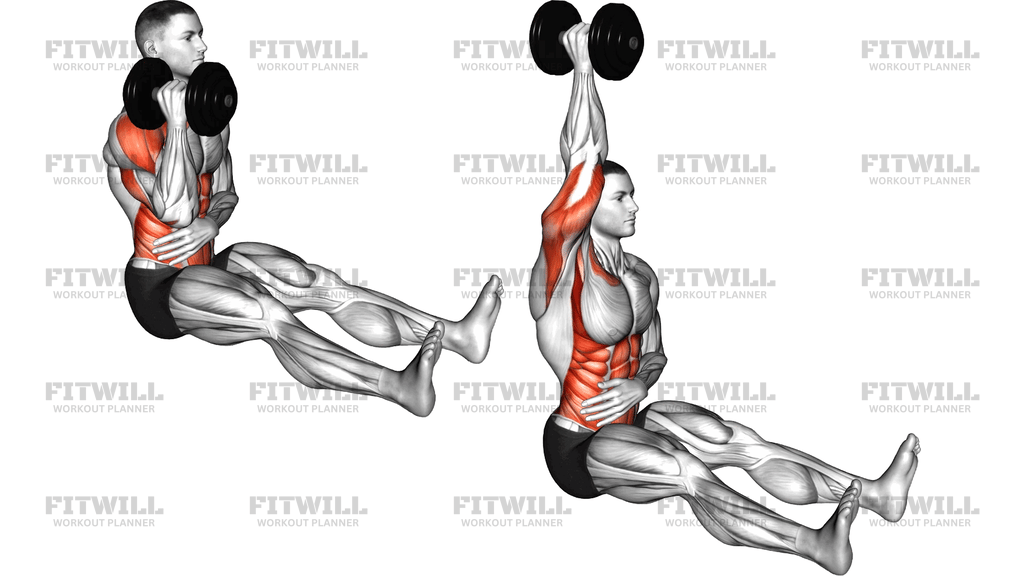
Instructions
- Sit flat on the floor with your legs extended straight in front of you, hip-width apart, and your knees fully straight.
- Place one dumbbell on top of your working thigh, then grip it with a neutral grip and clean it up to your shoulder so the elbow is down and the weight rests just outside the shoulder.
- Rest your free hand against your abdomen to feel your breathing and brace, and sit as tall as possible with your ribs stacked directly over your hips.
- Inhale into your belly, tighten your abs and glutes, and press your heels and hamstrings into the floor to anchor your lower body.
- Press the dumbbell straight up and slightly back, keeping your torso vertical, until your arm is fully extended with the weight balanced over your shoulder.
- Hold the lockout for a brief moment with your bicep near your ear and your shoulder blade supporting the weight.
- Lower the dumbbell under control back to your shoulder, resisting the weight on the way down rather than letting it drop.
- Exhale at the top of each press and inhale as the dumbbell descends, keeping your trunk rigid throughout the set.
- Complete all reps on one arm, then switch the dumbbell to the other hand and match the rep count on the second side.
- When finished, lower the dumbbell to the floor in front of you rather than dropping it from the seated position.
Tips & Tricks
- The most common failure is leaning back as the dumbbell goes up, which turns the Z Press into a chest-angled incline press. If your torso tips backward, reduce the weight until you can press without movement at the hips.
- If your heels lift or your hamstrings cramp, bend your knees very slightly or sit on a low step plate to reduce tension while you build the position.
- Keep the pressing path close to your body. Letting the dumbbell drift forward puts strain on the shoulder joint and pulls your chest down with it.
- Do not let your free arm flail for balance. Press it gently against your abdomen so it helps you feel whether your ribs are flaring.
- Shrug the loaded shoulder up at lockout rather than leaving it depressed, so the dumbbell sits on a stable shoulder blade instead of hanging off the joint.
- If one side twists noticeably more than the other, spend extra sets on the weaker side first while you are fresh.
- Tight hamstrings and lower back stiffness are the usual reason the seated position feels impossible. A brief warm-up of hip hinges and cat-cow before starting makes the posture far easier to hold.
- Progress by adding reps before adding weight. Going from eight to ten clean reps is worth more than adding five pounds and losing your vertical torso.
Frequently Asked Questions
What muscles does the Dumbbell Single Arm Z Press work?
The front and side shoulders and the triceps do the pressing, while the abs, deep core, and hip flexors work continuously to keep your torso upright with legs extended. The upper back stabilizes the shoulder blade throughout the lockout.
Why is the Z Press done sitting on the floor with legs straight?
Sitting flat on the floor removes any backrest or leg drive, so you cannot arch back or push through your feet to help the press. This forces the shoulders to do the work and the trunk to hold a strict vertical position.
Is the Dumbbell Single Arm Z Press good for beginners?
It can be, but only with a very light dumbbell and realistic expectations. Beginners should start with a weight far lighter than their standing press and focus purely on sitting tall and pressing smoothly for higher reps.
Why can I use so much less weight on the Z Press than a standing press?
In a standing press your legs, hips, and a slight backward lean all contribute to the lift. The Z Press removes those helpers, so the load is limited by your shoulder strength and trunk stability alone, which usually means a much lighter dumbbell.
Should my legs stay straight during the Dumbbell Single Arm Z Press?
Yes, the classic position keeps the knees straight and legs extended forward, which anchors the hips and raises the core demand. If your hamstrings are too tight to sit tall, a small knee bend or a slight elevation under your hips is a reasonable starting modification.
My lower back rounds when I sit on the floor. What should I do?
Tight hamstrings and hips are usually pulling your pelvis backward. Sit on a thin plate or folded towel to tilt your pelvis slightly forward, and work on hip mobility separately before loading the position.
What can I substitute if I do not have a dumbbell?
A kettlebell in the rack position works well and adds a wrist stability challenge, or you can perform the same floor-seated press with a barbell for the two-arm version. A resistance band anchored under your hips also works for higher-rep practice.
How many sets and reps should I do for the Dumbbell Single Arm Z Press?
Three to four sets of six to ten reps per arm works well for strength with strict posture. Because form breaks down fast under fatigue, stop the set as soon as you feel yourself leaning back or twisting.
Is it safe for the shoulders and lower back?
When performed with an upright torso and a controlled pressing path, the Z Press is a joint-friendly overhead variation because the strict position discourages the backward lean that often irritates the lower back. Use a light weight, keep the dumbbell stacked over your shoulder at lockout, and avoid the exercise if pressing overhead currently causes discomfort.