Dumbbell Front Raise Shoulders Press Combo
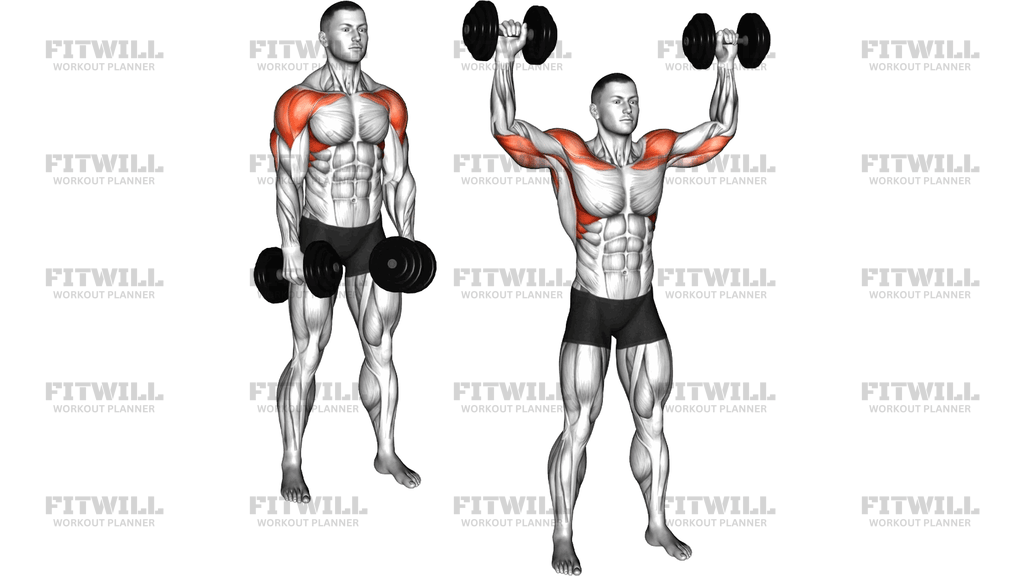
The Dumbbell Front Raise Shoulders Press Combo is a two-part shoulder movement that chains a front raise with an overhead press in one continuous rep. You start standing with a dumbbell in each hand at your sides, raise both dumbbells straight out in front of you to shoulder height, and from that position press them up until your arms are locked out overhead. Then you reverse the whole path: lower the dumbbells back to shoulder height under control, and finally bring them down to your thighs to finish the rep.
The main work falls on the front delts, which handle both the raise and the bottom half of the press. Because the press starts from a raised position rather than from shoulder level, your front delts never get a rest point during the set, and the upper chest and side delts assist through the middle range. The triceps take over to lock out the press, and your upper traps and serratus help stabilize the shoulder blades as the dumbbells travel overhead.
This combo suits lifters who want more shoulder work out of a single movement without piling on isolation exercises. It is a good fit for busy sessions, finisher sets, or anyone whose front delts respond better to sustained tension than to single-joint raises. Because you can load it progressively with different dumbbell weights, it scales from beginners learning overhead control to more experienced lifters chasing volume.
Setup matters here more than in a plain raise, because a sloppy starting posture gets magnified once the dumbbells go overhead. Stand with feet about hip-width apart, a soft bend in the knees, ribs stacked over the pelvis, and shoulder blades pulled gently back. If you lean back as you press or swing the dumbbells up from your thighs, the front delts stop doing the work and your lower back starts absorbing load it does not need.
Execute the rep in two clean phases: a straight-arm raise to shoulder height with the palms facing down or slightly inward, then a press where the elbows bend and the dumbbells travel up and slightly inward until they nearly meet over your head. Avoid clanging the dumbbells together at the top. On the way down, fight the pull of gravity through both phases instead of dropping the weight from overhead to your thighs.
The most common use cases are shoulder-focused hypertrophy days, at-home dumbbell training where exercise variety is limited, and conditioning circuits where one smooth movement covering a large range is more practical than two separate ones. Keep the weight moderate; this movement exposes weak links in overhead control quickly, and a weight you can press cleanly for quality reps will always beat a heavier one you have to heave.
[ Workout Log & Planner ]
Put your next workout in Fitwill
Keep your plan and training log ready when you are.


Instructions
- Stand upright with a dumbbell in each hand, arms hanging at your sides, palms facing your thighs, and feet set hip-width apart with a slight bend in the knees.
- Brace your abdominal muscles, pull your shoulder blades gently back and down, and keep your ribs stacked over your hips so your torso stays upright for the whole set.
- Raise both dumbbells straight out in front of your body with a slight elbow bend, leading with your hands until the dumbbells reach shoulder height and your arms are roughly parallel to the floor.
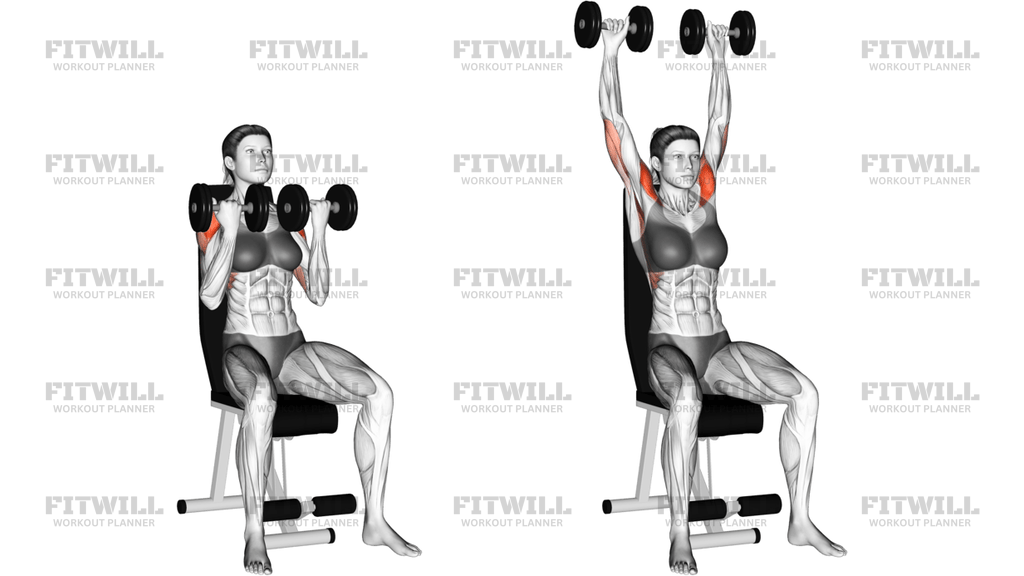
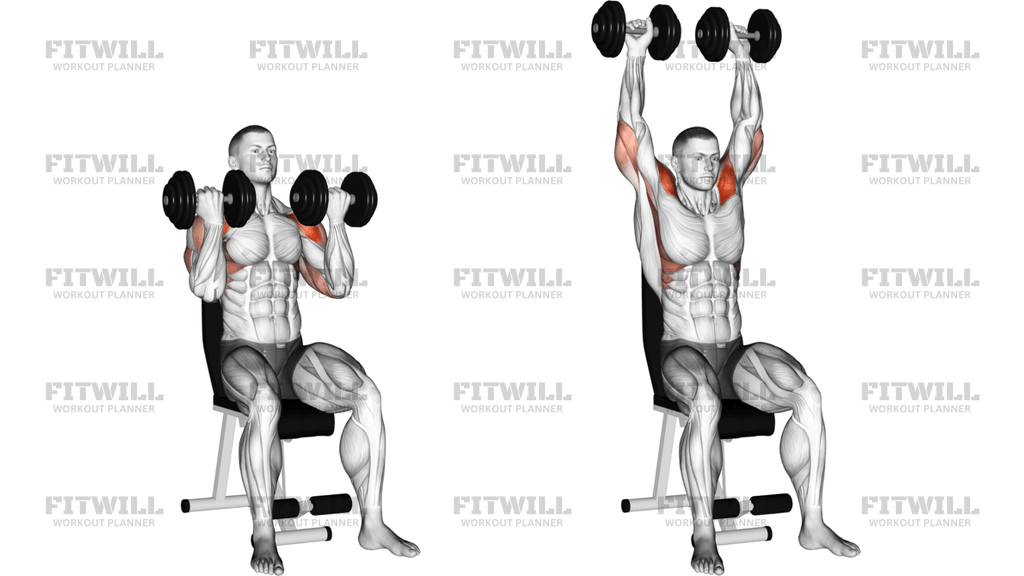
- Pause briefly at shoulder height, then bend your elbows and press the dumbbells up and slightly inward until your arms are fully extended overhead with the weights nearly touching.
- At the top, keep your biceps close to your ears and avoid shrugging your shoulders up toward your neck.
- Lower the dumbbells under control by bending your elbows until they return to the shoulder-height position from the raise.
- From shoulder height, lower your straightened arms in front of you with the same slight elbow bend until the dumbbells are back at your thighs.
- Exhale as you raise and press, and inhale slowly as you lower through both phases.
- Reset your posture between reps if you feel your lower back arching or your shoulders rolling forward, and stop the set when you can no longer press without leaning back.
Tips & Tricks
- The most common failure point is turning the raise into a swing off the thighs; if the dumbbells pick up momentum before shoulder height, use lighter weights and deliberately pause for a beat at the top of the raise.
- Leaning the torso back during the press is a sign the weight is too heavy or your core is switching off; film yourself from the side once to check that your torso angle does not change from start to finish.
- Keep the two phases distinct in your head: straight arms up to shoulder height, then elbows bend for the press. Blending them turns the rep into one jerky curl-like motion.
- Do not let the dumbbells clink together overhead; stopping just short keeps tension on the front delts instead of letting the weights rest on each other at lockout.
- Grip the dumbbells firmly but do not crush the handles; an over-tight grip tends to recruit the forearms and upper traps and pulls your shoulders up toward your ears.
- If your front delts fatigue before your triceps can finish the press, switch to alternating arms or reduce the weight so the pressing half does not become a struggle.
- Your knees should stay softly bent the entire time; locking them out with a heavy load overhead makes it harder to brace and can strain the lower back.
- Tempo is your friend on the way down: take about two seconds to go from overhead to shoulder height and another two from shoulder height to your thighs rather than letting gravity do the work.
Frequently Asked Questions
Which muscles does the Dumbbell Front Raise Shoulders Press Combo work?
The front delts are the primary muscle, working through both the raise and the press. The upper chest, side delts, and triceps assist, while the traps and core stabilize the torso and shoulder blades.
Is the Dumbbell Front Raise Shoulders Press Combo good for beginners?
Yes, as long as the weight is light enough to press overhead without leaning back. Beginners often benefit from practicing the front raise and the overhead press separately for a week or two before combining them.
Why does the press start from shoulder height instead of from my shoulders?
Starting the press from the raised position is what makes this a combo rather than two separate exercises. It removes the rest point at the bottom, so your front delts stay under continuous tension through the entire rep.
Should my palms face down or face each other during the raise portion?
Either works, but a palms-down or slightly inward grip best matches the front-raise portion shown and keeps the emphasis on the front delts. Rotating the palms to face forward as you press overhead feels natural for most lifters.
My lower back hurts when I press overhead. What should I fix?
You are most likely arching your lower back to help push the dumbbells up. Tighten your abs before each rep, soften your knees, and reduce the weight until you can press with your torso completely upright.
How heavy should the dumbbells be for this exercise?
Choose a weight you can raise cleanly to shoulder height and press for all your planned reps without swinging or leaning back. Because the raise isolates the front delts first, most lifters need noticeably less weight here than for a standard dumbbell overhead press.
Can I do the Dumbbell Front Raise Shoulders Press Combo seated instead of standing?
You can, and a seated version on a bench with a backrest reduces any temptation to lean back. The standing version, however, also trains core stability, which is part of what makes the movement useful.
What can I substitute if I only have one dumbbell?
Perform the full raise-and-press sequence with one dumbbell held in both hands or alternate arms rep by rep. Alternating arms adds a mild anti-rotation demand for your core.
How do I know when the weight is too heavy?
If you have to swing the dumbbells off your thighs to start the raise, drop your head forward to press, or lean your torso back at any point, the load has exceeded what you can control. Drop down a weight increment and rebuild the rep quality first.
Where should this exercise fit in my shoulder workout?
It works well as a primary front-delt movement early in a shoulder session, or as a finisher later in the workout when a moderate weight and higher reps let you accumulate volume without heavy joint stress.