Band Standing Crunch
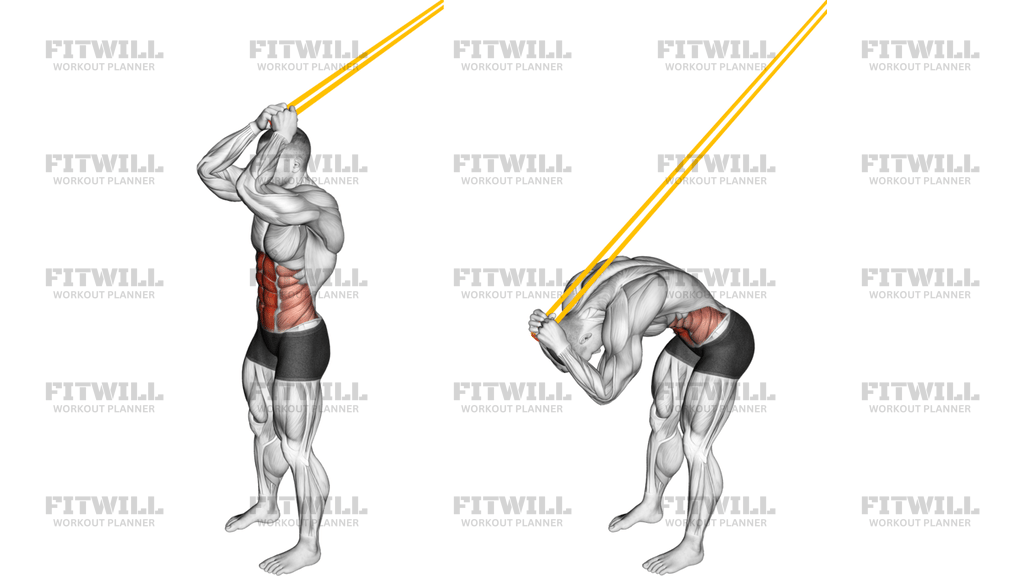
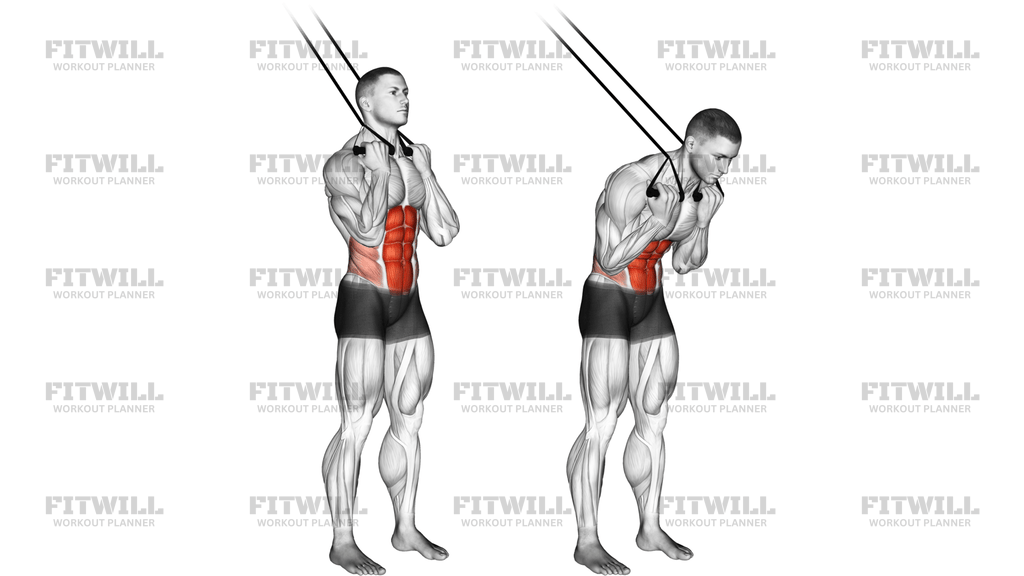
Band Standing Crunch is a standing trunk-flexion exercise that loads the rectus abdominis through a long, controlled range of motion. The band keeps tension on the abs from the start of the rep to the finish, so the movement is less about swinging the torso and more about shortening the ribs toward the pelvis with clean, repeatable control.
This exercise is useful when you want the abdominals to work in a standing position instead of on the floor. It challenges the front of the torso, with the obliques, deep core, and hip flexors contributing to posture and stability. Because the band pulls you back toward the starting position, the setup matters: if the anchor point or stance is sloppy, the work shifts away from the abs and into the shoulders, hips, or lower back.
A good rep starts tall. Stand in a stable stance, keep the knees soft, and hold the band near the sides of the head or upper chest so the arms stay quiet. As you crunch, think about bringing the rib cage down rather than folding at the hips. The torso should round under control, the pelvis should stay mostly stacked under you, and the neck should stay relaxed so the band does not pull your head forward.
The bottom position should feel like a strong abdominal contraction, not a collapse. Pause briefly, then return to standing with the same steady control on the way up. That eccentric phase is part of the training effect, so do not let the band yank you open or let the lower back arch excessively as you finish the rep.
Band Standing Crunch fits well in core-focused sessions, warmups, accessory blocks, and conditioning circuits where you want direct abdominal work without needing heavy equipment. It is a practical option for beginners if the band is light and the range stays clean, and it is also easy to progress by stepping farther from the anchor or using a stronger band while keeping the same strict torso path.
[ Workout Log & Planner ]
Put your next workout in Fitwill
Keep your plan and training log ready when you are.


Instructions
- Clip or anchor the band high and stand facing away from the anchor so the band pulls you back into the starting position.
- Stand with feet about hip-width apart, knees softly bent, and your weight evenly balanced from heel to forefoot.
- Hold the band beside your temples or at the upper chest with bent elbows so your arms stay relaxed and do not drive the rep.
- Step forward until the band has light tension and you can stand tall with your ribs stacked over your pelvis.
- Brace your abs, keep your chin slightly tucked, and avoid arching your lower back before the first rep.
- Exhale and crunch by bringing your rib cage down toward your pelvis while keeping the hips mostly in place.
- Lower until your abs are fully shortened and your torso has curled forward without jerking the shoulders or neck.
- Pause briefly at the bottom, then inhale and return to the tall starting position under control.
- Reset your posture between reps and repeat for the planned number of repetitions.
Tips & Tricks
- Keep the elbows quiet. If your arms are pulling hard, the band is too heavy or your hands are too far from your torso.
- Think about moving the ribs, not the hips. A hip hinge turns this into a standing good-morning pattern instead of an abdominal crunch.
- Let the spine flex smoothly instead of collapsing. The rep should look like a controlled curl, not a sudden snap forward.
- Choose a band tension that lets you reach full crunch position without shrugging the shoulders or shortening the neck.
- Keep the knees soft so the legs stay stable while the torso flexes.
- Exhale through the crunch to help the abs finish the shortening phase without holding your breath too long.
- Control the return phase because the band will try to pull you upright faster than your abs should open.
- Stop the set if your lower back starts to arch hard at the top or if you have to bounce through the last few reps.
- To make the movement harder, step farther from the anchor or use a stronger band before you add sloppy range.
Frequently Asked Questions
What muscles does Band Standing Crunch work most?
It primarily trains the rectus abdominis, with the obliques, deep core, and hip flexors helping stabilize the torso.
Where should the band be set up for this exercise?
A high anchor works best so the band pulls you back while you stand facing away from it and crunch forward under tension.
Should I hold the band at my head or chest?
Either position can work, but the hands should stay quiet and the elbows should not turn the rep into an arm pull.
How deep should the standing crunch be?
Crunch until the ribs are clearly down and the abs are fully shortened, but stop before the hips start folding or the neck tenses up.
What is the most common mistake with the band?
People often lean back, swing the torso, or let the band yank them upright instead of controlling the return.
Is this a good beginner abdominal exercise?
Yes, if the band is light and the stance is stable. Beginners usually do best with a smaller range and slower tempo.
How can I make Band Standing Crunch harder?
Step farther from the anchor, use a stronger band, or add a short pause at the bottom while keeping the torso path strict.
Can I replace floor crunches with this movement?
Yes. It is a good standing alternative when you want continuous resistance and less floor-based setup.
Should I feel this in my lower back or hips?
No. Some hip flexor involvement is normal, but the main effort should stay in the front of the abdomen.