Band Reverse Crunch
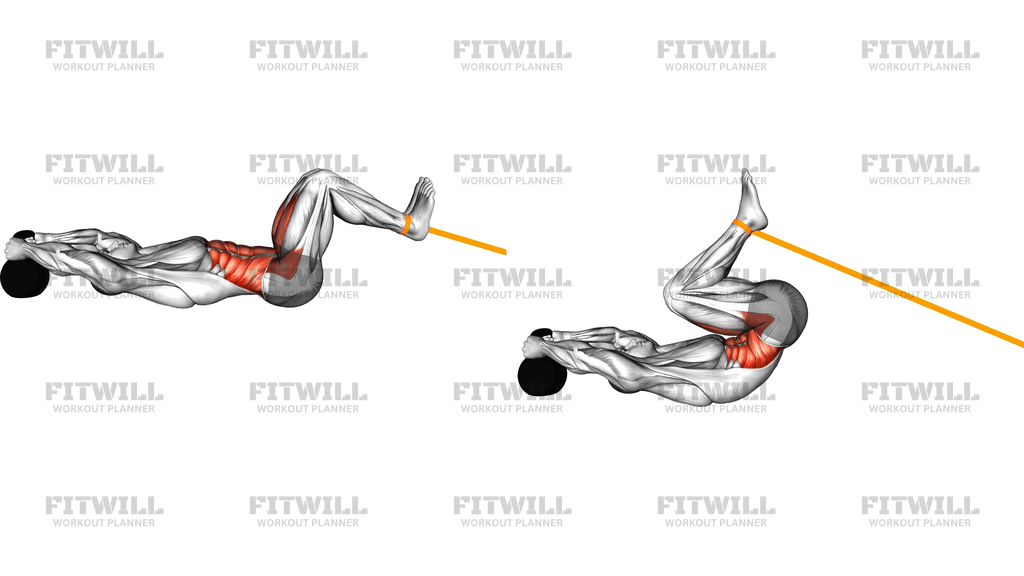
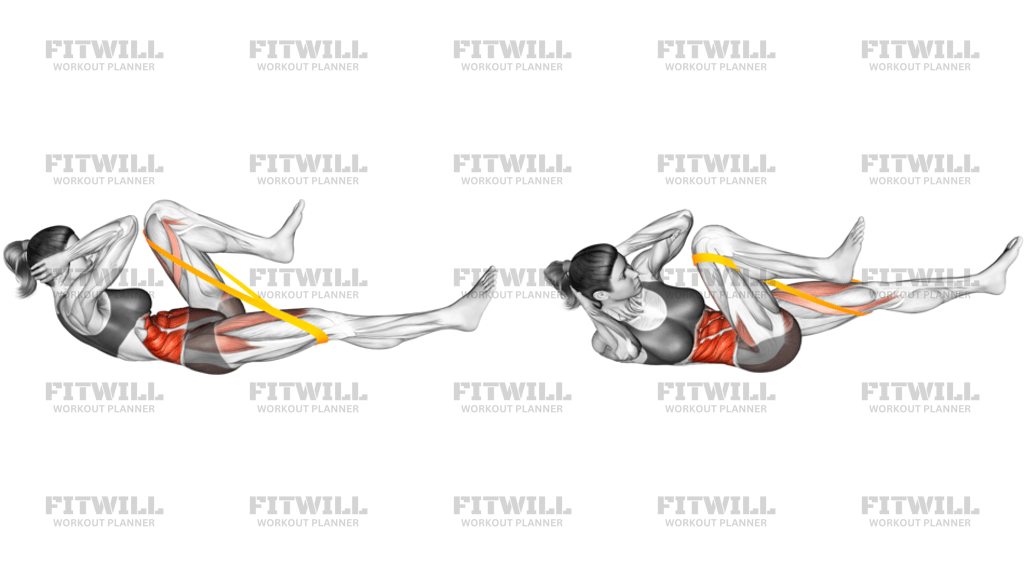
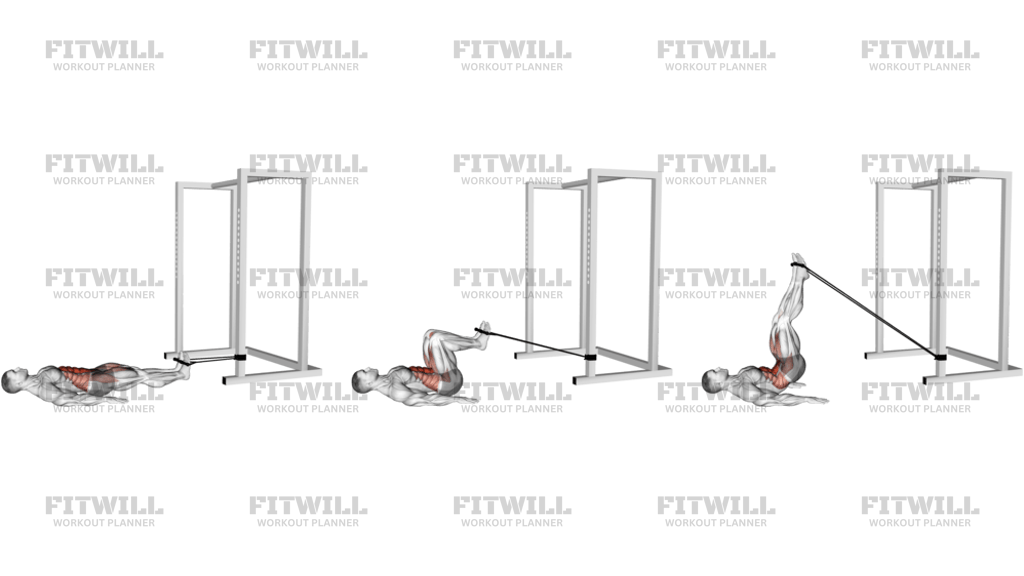
Band Reverse Crunch is a floor-based ab exercise that adds band resistance to a classic reverse crunch pattern. You lie on your back with the band anchored low in front of you, looped around the feet, then curl the pelvis toward the ribs so the lower abdomen has to work against the band the whole way. The setup matters because the anchor point, band length, and foot position determine whether the rep feels like a smooth abdominal curl or a sloppy leg swing.
The main job goes to the rectus abdominis, especially the lower fibers that help posteriorly tilt the pelvis and lift the hips slightly off the floor. The obliques and transversus abdominis help keep the torso braced and stop the rib cage from flaring. Hip flexors still assist, but if they take over too early, the movement turns into a knee drive instead of an ab curl. A good band reverse crunch should feel compact, deliberate, and centered through the midsection.
Set the band low and close enough that you have tension before you start the first rep. Lie flat, keep the shoulders heavy on the floor, and bend the knees so the feet stay secure in the band while the shins are roughly parallel to the floor at the start. From there, exhale, pull the knees in, and roll the pelvis upward so the tailbone lifts slightly instead of just swinging the thighs toward your chest. The best reps finish with a small but clear curl through the lower spine and a hard squeeze through the abs.
The return phase is just as important as the lift. Lower slowly until the low back comes back to the floor and the band is still under control, not snapping you into extension. If the band is too heavy, or the anchor is too far away, the movement becomes hard to control and the lower back may arch. Reduce resistance, shorten the range, or reset the anchor before forcing sloppy reps. This exercise fits well in core work, accessory training, warm-ups, and finishers where quality tension matters more than load.
Use it when you want a simple setup that still challenges trunk control, pelvic mechanics, and abdominal endurance. It is also a useful option for beginners because the floor gives clear feedback on position and the band resistance is easy to scale. Keep the motion tight, breathe out on the curl, and stop the set when the hips stop lifting cleanly or the legs start doing the work for the abs.
[ Workout Log & Planner ]
Put your next workout in Fitwill
Keep your plan and training log ready when you are.


Instructions
- Lie on your back on the floor with a low anchor in front of you and loop the band around both feet so it is snug across the arches or midfoot.
- Bend your knees and bring your thighs up until the shins are roughly parallel to the floor, keeping the band under light tension before the first rep.
- Set your shoulders and upper back on the floor, place your arms by your sides, and tuck the chin slightly so the neck stays long.
- Exhale and brace your abs as if you are zipping the ribs toward the pelvis.
- Draw the knees toward your chest while curling the tailbone off the floor; let the pelvis roll up instead of just swinging the legs.
- Pause briefly at the top when the hips have curled and the lower abs are fully squeezed.
- Lower slowly until the low back returns to the floor and the band tension is still controlled.
- Reset the legs without losing the band position, then repeat for the planned reps.
Tips & Tricks
- Keep the anchor low and close enough that the band is already pulling before the first rep; too much slack makes the crunch jerky.
- Think about curling the pelvis, not throwing the knees toward your face.
- If the hips do not leave the floor at all, shorten the range and focus on a stronger posterior pelvic tilt.
- Keep your ribs down as the knees come in so the abs, not the hip flexors, drive the finish.
- Lower under control for two to four seconds to keep tension on the band instead of letting it snap you back.
- Maintain a soft bend in the knees and keep the feet together so the band does not shift or twist.
- If your lower back arches on the way down, use a lighter band or move the anchor closer.
- Stop the set when the legs start swinging faster than the pelvis can curl.
Frequently Asked Questions
What muscles do band reverse crunches work?
They primarily train the rectus abdominis, with help from the obliques and deep core muscles that keep the torso from flaring.
Why use a band instead of a bodyweight reverse crunch?
The band adds resistance as you curl the knees in, so the top half of the rep stays challenging instead of becoming easy near the finish.
Where should the band and anchor sit?
The anchor should be low and stable in front of you, and the band should stay secure around both feet or arches throughout the rep.
Should my hips leave the floor?
Yes, but only slightly. The goal is a small pelvic curl, not a big swing that turns the exercise into momentum work.
What usually goes wrong with this movement?
The most common mistake is letting the thighs do all the work while the lower back arches instead of curling.
Is this exercise suitable for beginners?
Yes, as long as the band is light and the range is short enough to keep the curl controlled from start to finish.
How do I know the band is too heavy?
If the band yanks your feet back down, the knees cannot stay smooth, or the low back pops off the floor uncontrollably, the resistance is too high.
How can I make band reverse crunches harder?
Use a stronger band, slow the lowering phase, or add a brief pause at the top while keeping the pelvis curled.