Resistance Band Kneeling Ab Crunch
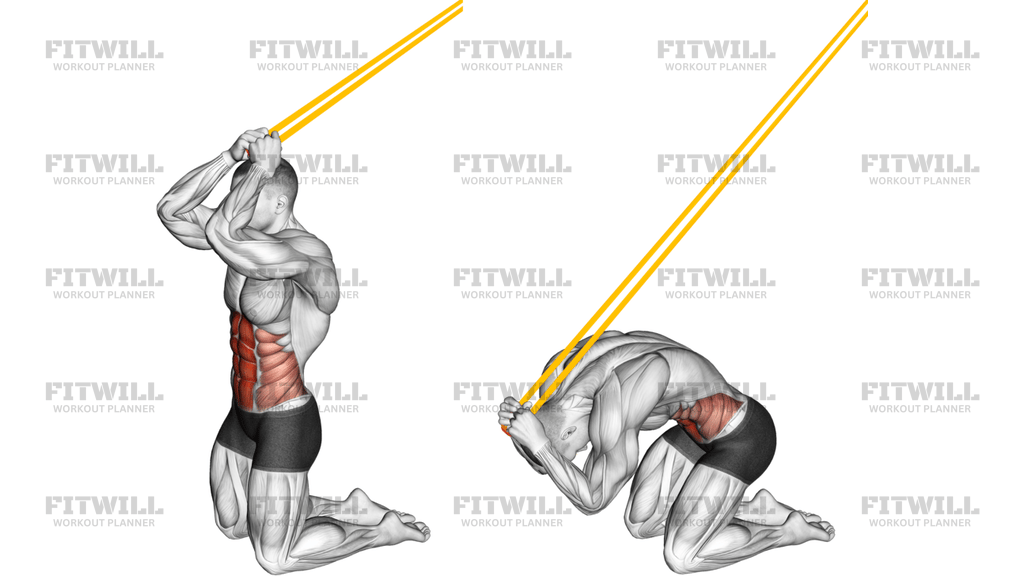
Resistance Band Kneeling Ab Crunch is a kneeling spinal-flexion exercise that loads the abs through a high-anchored band. The movement is aimed at the rectus abdominis, with the obliques and transverse abdominis helping control the curl and keep the torso stacked. Because the band pulls from overhead, the exercise rewards a clean setup: if the knees, hips, ribs, and hands are out of position, the rep quickly turns into a hip-hinge or a neck-led pull instead of an abdominal crunch.
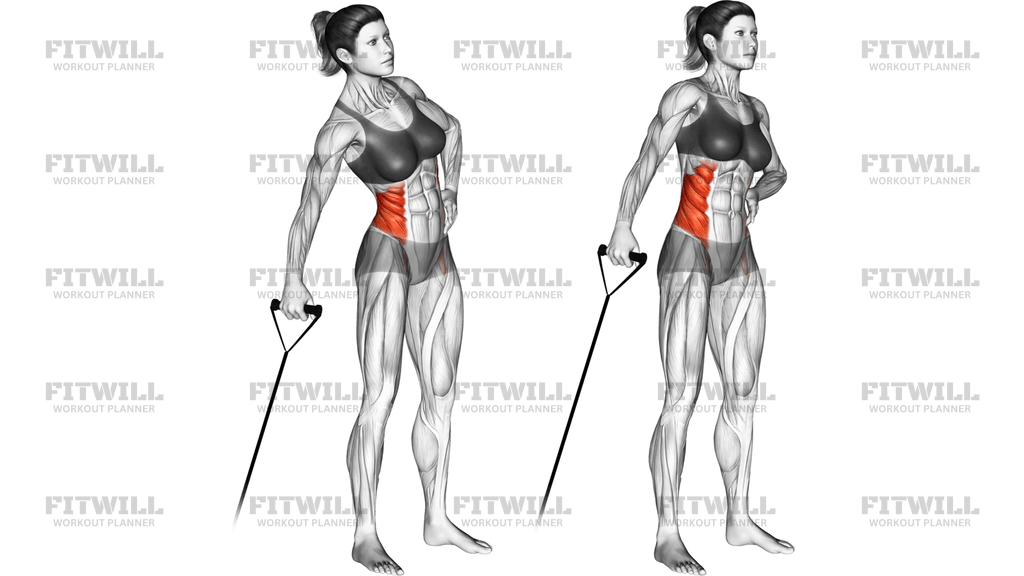
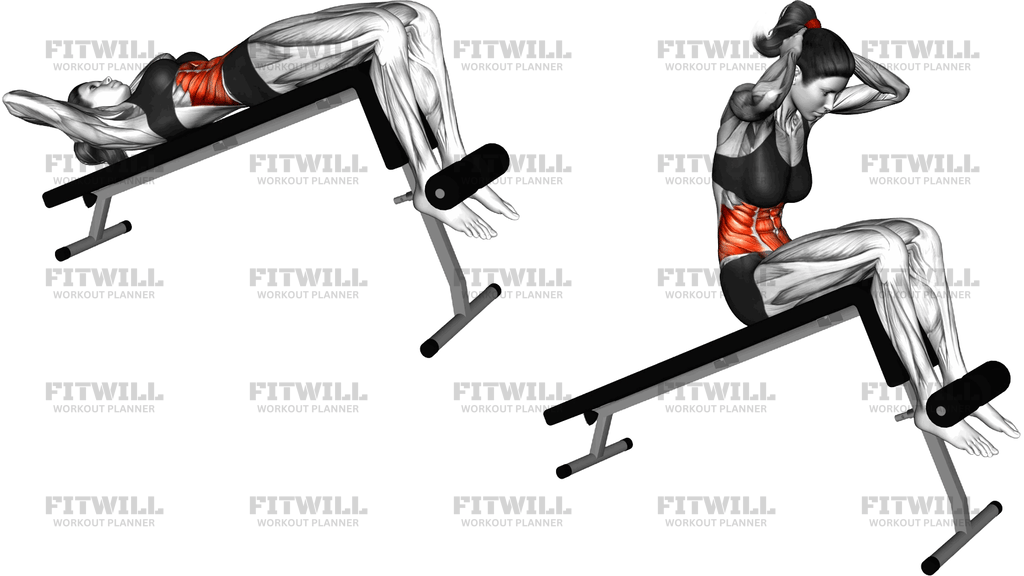
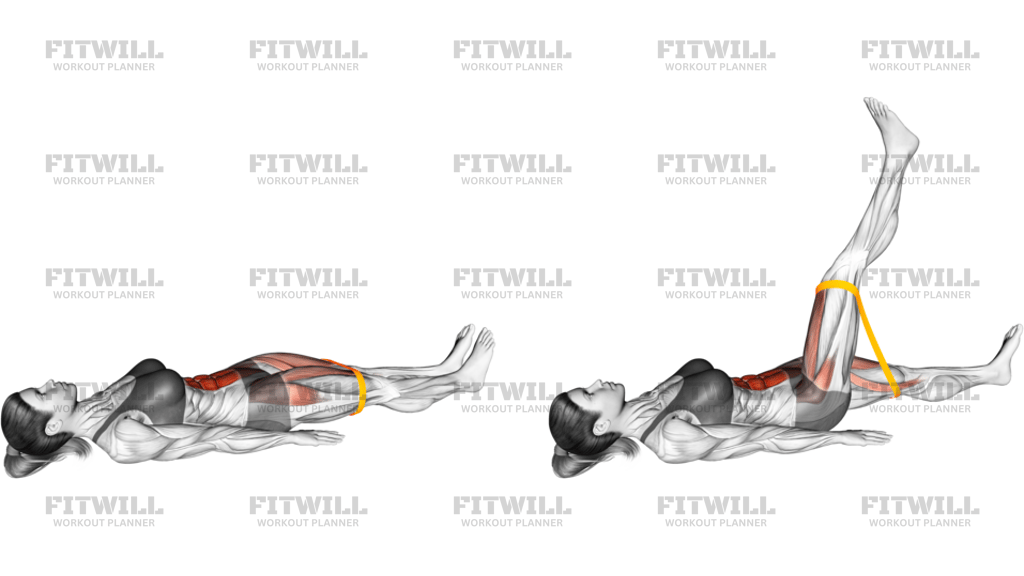
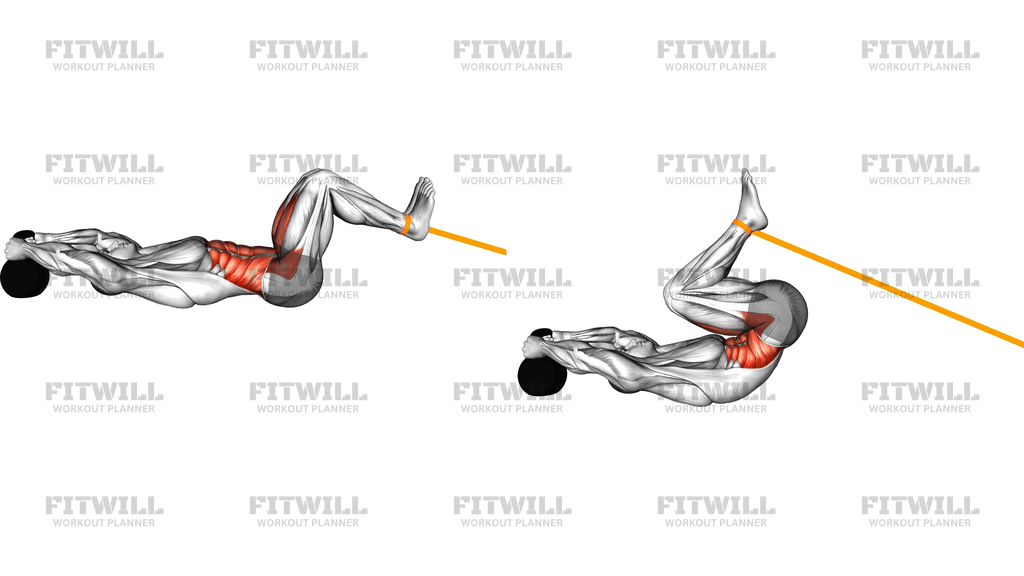
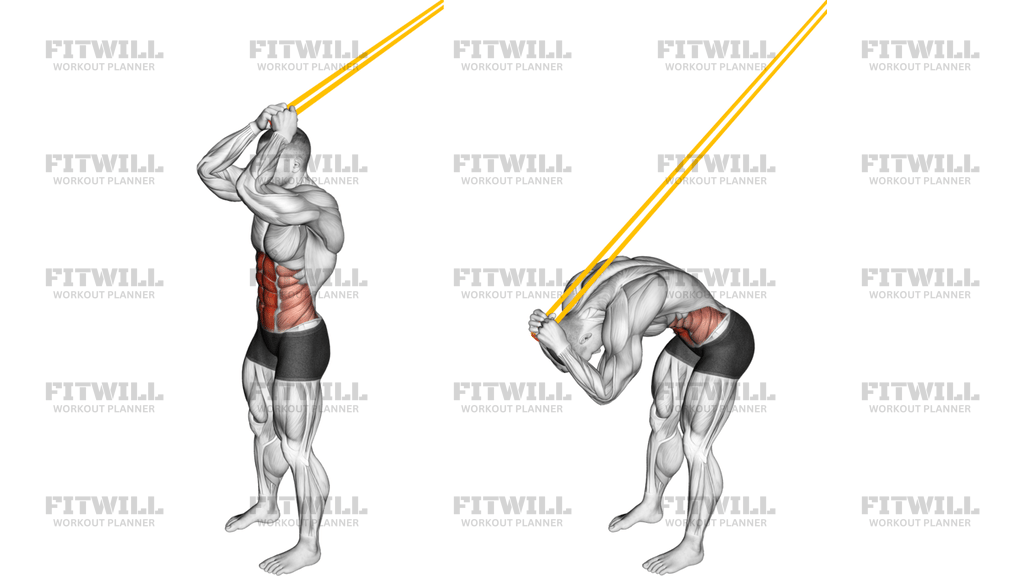
The image shows a kneeling position with the band anchored high and the hands held close to the head. That setup matters. Your knees should stay planted on the floor or mat, your hips should stay over your knees, and your ribs should stay stacked over your pelvis at the start. From there, the goal is to curl the rib cage down toward the pelvis while keeping the arms quiet and the neck long. The band should add resistance to the abdominal contraction, not become something you yank with your arms.
Use a range that lets you feel the abs shorten without losing the kneeling posture. The best reps are smooth: exhale as you crunch down, pause briefly in the shortened position, then return under control until you are tall again without dumping into your low back. If the band is too heavy or the anchor is too close, the body will start to fold at the hips or pull with the shoulders. If that happens, reduce tension and rebuild the rep around the trunk.
This is a useful accessory for core training, warm-ups, and finishers when you want direct abdominal work without a machine. It can also fit well in circuits because the kneeling position limits cheating and forces deliberate control. Beginners can use it if the band is light and the motion stays small and clean. Advanced lifters can progress it by stepping farther from the anchor or slowing the return, but the same rule applies: the abs should drive the curl, and the torso should stay organized from start to finish.
[ Workout Log & Planner ]
Put your next workout in Fitwill
Keep your plan and training log ready when you are.


Instructions
- Kneel on a mat facing the high anchor, with your shins on the floor and your knees about hip-width apart.
- Hold the band ends beside your temples or upper forehead, with your elbows slightly in front of your shoulders.
- Step back or scoot until the band is taut and your torso starts tall without losing balance.
- Stack your ribs over your pelvis and keep your hips directly above your knees.
- Exhale and curl your sternum toward your pelvis, letting your spine round while your elbows travel down and forward.
- Keep your hands close to your head and avoid pulling the band with your arms.
- Pause briefly when your abs are fully shortened and your torso is at the bottom of the crunch.
- Inhale as you return slowly to the tall kneeling start under control, keeping tension on the band.
- Reset your posture before the next rep and repeat for the planned set.
Tips & Tricks
- Set the anchor high enough that the band pulls down through the whole rep; if tension disappears at the top, move farther back.
- Think ribs to pelvis, not chin to chest, so the abs do the curling instead of your neck.
- Keep the elbows slightly forward of the shoulders; flaring them back turns the movement into an upper-body brace.
- Squeeze the glutes lightly to keep the hips parked over the knees and reduce unwanted hip flexor takeover.
- Use a shorter range if your low back starts to arch or your torso collapses at the bottom.
- Choose a lighter band than you would for a standing crunch, because the kneeling position removes a lot of body English.
- Pause at the bottom for a beat so the abs stay loaded instead of bouncing out of the rep.
- Let the band pull you back up slowly; if it snaps your hands overhead, the resistance is too heavy.
Frequently Asked Questions
What muscles do Resistance Band Kneeling Ab Crunches work?
The main target is the rectus abdominis, with the obliques and transverse abdominis helping control the curl and stabilize the torso.
Where should the band be anchored?
Use a high anchor so the band pulls down from above your head while you kneel facing the attachment point.
How should I hold the band?
Keep the ends beside your temples or upper forehead, with your elbows slightly forward and your hands quiet throughout the rep.
Why do I feel this in my neck?
Usually the hands are pulling the head forward or the chin is being tucked too hard. Keep the neck long and let the rib cage curl instead.
Should my hips move during the crunch?
They should stay stacked over your knees. If the hips drift back or hinge, shorten the range and lighten the band.
Is this exercise suitable for beginners?
Yes, if the band is light and the motion stays small and controlled. Beginners should prioritize posture and a smooth return.
How is this different from a cable crunch?
The band gives a similar kneeling crunch pattern, but the resistance changes more as the band stretches, so the setup distance matters a lot.
When should I use this in a workout?
It works well as accessory core training, a finisher, or a controlled warm-up drill when you want direct abdominal flexion.