Resistance Band Reverse Crunch Version 2
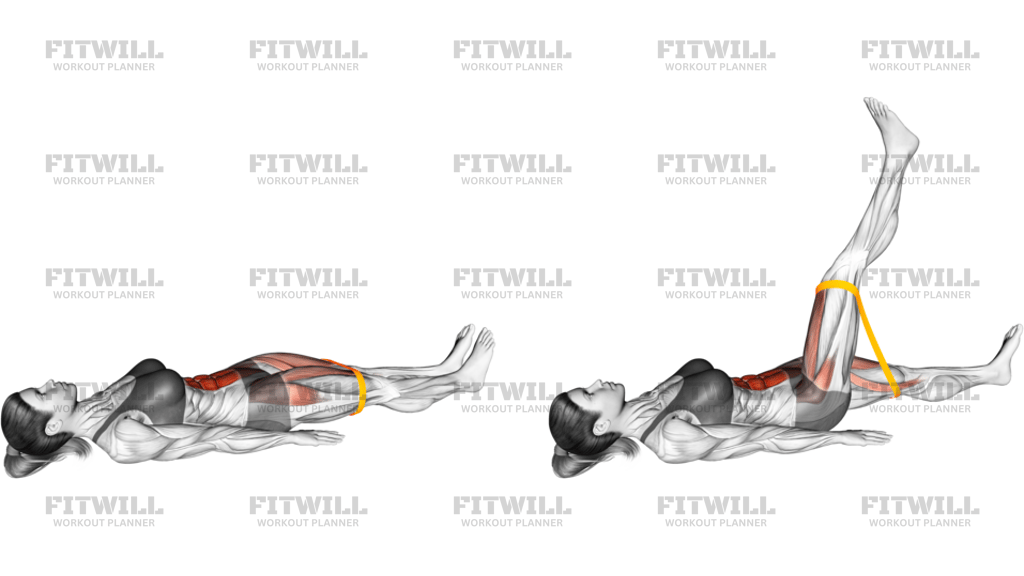
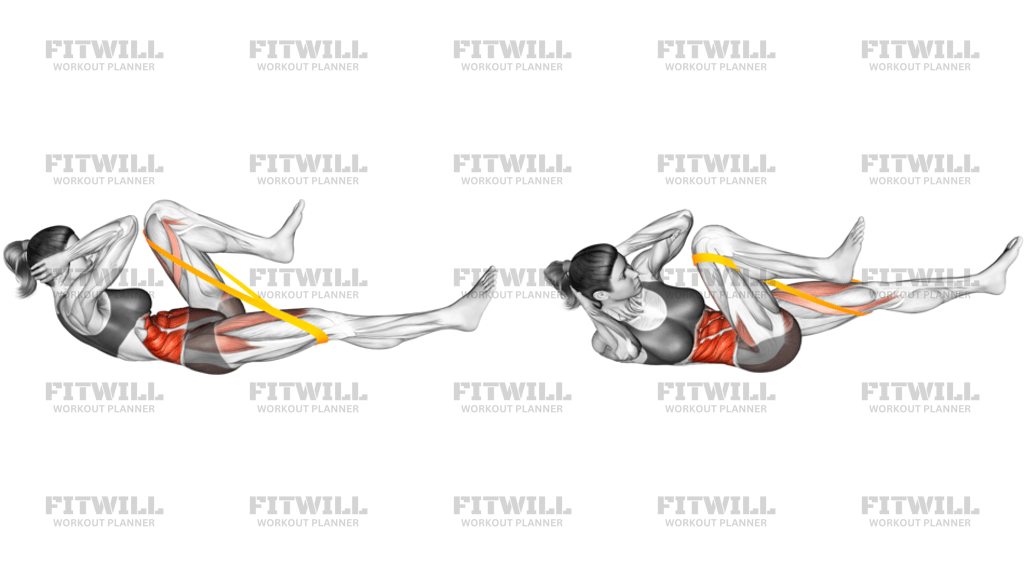
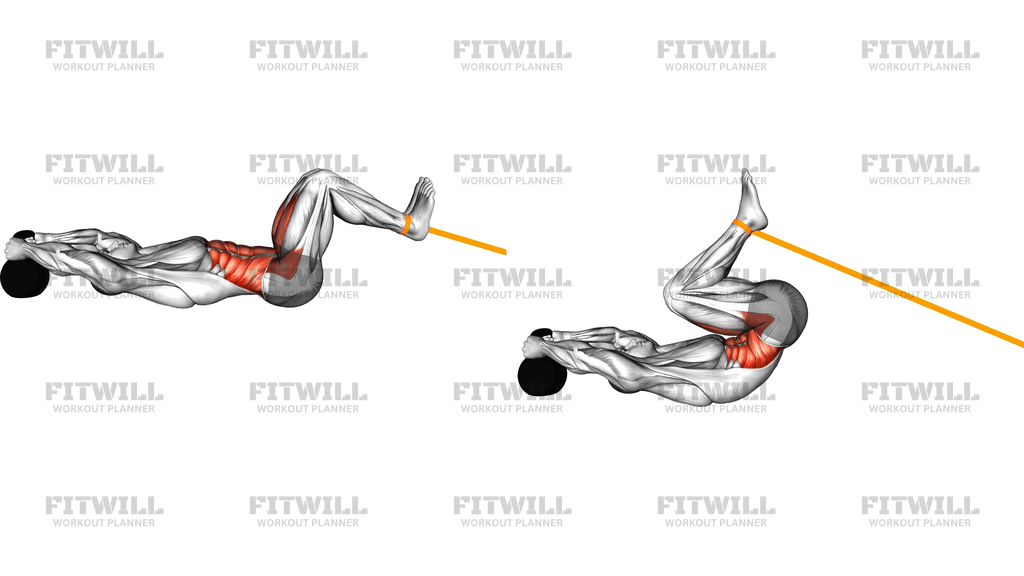
Resistance Band Reverse Crunch Version 2 is a floor-based core exercise that combines the reverse-crunch pattern with band tension to make the lower abdominals work harder through the curl. In the setup shown, you lie on your back with the band looped around the feet or ankles and the other end anchored low and slightly off to one side, so the line of pull stays taut while your torso stays flat on the floor. The body position matters because this is not a swinging leg raise; it is a controlled posterior pelvic tilt and curl.
The exercise primarily trains the rectus abdominis, with the obliques and deep core muscles helping keep the rib cage down and the pelvis from twisting as the knees travel in. The hip flexors assist, but they should not dominate the repetition. When the movement is done well, you feel the abs shorten to bring the knees closer to the chest and lift the tailbone slightly off the floor, then lengthen under control as the legs return.
The band changes the feel of a standard reverse crunch by adding continuous tension through the lower body. That makes setup quality important: if the band is too loose, the reps lose resistance; if the anchor is too high or the pelvis starts to arch, the hips take over. Keep the shoulders heavy, the neck relaxed, and the lower back in contact with the floor until the curl begins. The goal is a smooth tuck, not a hard kick or a jerking swing.
Use this movement as an accessory core drill, a warmup for trunk control, or a focused ab finisher when you want a bodyweight pattern with extra resistance. It fits best in moderate rep ranges with clean technique and a controlled lowering phase. Beginners can use a lighter band and a shorter range of motion, while more advanced lifters can increase tension or slow the return without losing the pelvis-first curl pattern.
Safety comes from staying honest about the range you can control. If the lower back lifts aggressively, the hips shoot up, or the band starts pulling you out of position, reduce tension and shorten the range. The best reps feel deliberate, smooth, and repeatable from the first rep to the last.
[ Workout Log & Planner ]
Put your next workout in Fitwill
Keep your plan and training log ready when you are.


Instructions
- Lie on your back with the band looped around your feet or ankles and the other end anchored low so the band stays taut as your legs move.
- Extend your arms overhead on the floor for balance, then bend your knees so your thighs are close to perpendicular to the floor and your shins are parallel.
- Press your lower back gently into the floor, keep your ribs down, and set your neck long before the first rep.
- Exhale and tuck your pelvis as you draw your knees toward your chest, letting the band guide the feet upward rather than swinging them.
- Curl your hips just enough for the tailbone to peel off the floor while keeping the movement controlled and centered.
- Pause for a brief squeeze at the top without losing tension in the band or letting the knees drift side to side.
- Inhale and slowly lower the hips and knees back toward the start until your lower back is ready to stay flat again.
- Reset the brace before the next rep and keep the same band tension and path for every repetition.
Tips & Tricks
- Anchor the band low enough that it pulls along the same line on every rep; a changing angle usually means the hips will twist.
- Think about curling your pelvis up first, not throwing your knees toward your face.
- Keep your arms quiet on the floor so they do not help create momentum.
- If your hip flexors take over, shorten the range and slow the lowering phase.
- A small, clean curl is better than lifting the legs higher while the lower back arches.
- Keep your shoulders relaxed and your chin slightly tucked so the neck does not strain while you brace.
- Use band tension that still lets you return under control; if the band snaps you back, it is too heavy or too far stretched.
- Stop the set when the pelvis stops curling smoothly and the movement turns into a leg swing.
Frequently Asked Questions
What muscles does Resistance Band Reverse Crunch Version 2 target most?
The main emphasis is on the rectus abdominis, with the obliques and deep core muscles helping control the curl.
Where should the band be anchored for this reverse crunch variation?
The band should be anchored low and slightly off to the side so it stays under tension as you curl and lower.
Should the movement start with my knees already bent?
Yes. Start with the knees bent and the shins roughly parallel so you can focus on the pelvic curl instead of a leg swing.
What is the most common mistake with the band version?
Letting the hips rock or arching the lower back to chase a bigger range is the most common problem.
What should I feel at the top of the rep?
You should feel a strong ab curl and a slight lift of the pelvis, not a hard pull in the hip flexors.
Can beginners do this exercise?
Yes, but they should use lighter band tension and a shorter range until they can control the tuck without momentum.
How is this different from a regular reverse crunch?
The band adds constant resistance through the legs, so the abs have to control both the curl and the return more deliberately.
How do I progress this movement safely?
Increase band tension gradually, pause a little longer at the top, or slow the lowering phase while keeping the pelvis controlled.