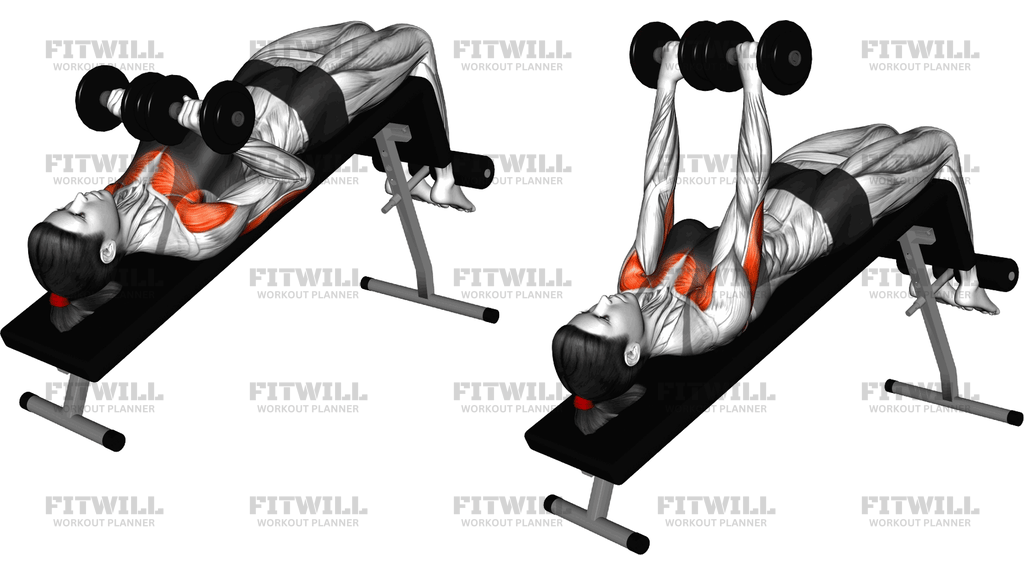
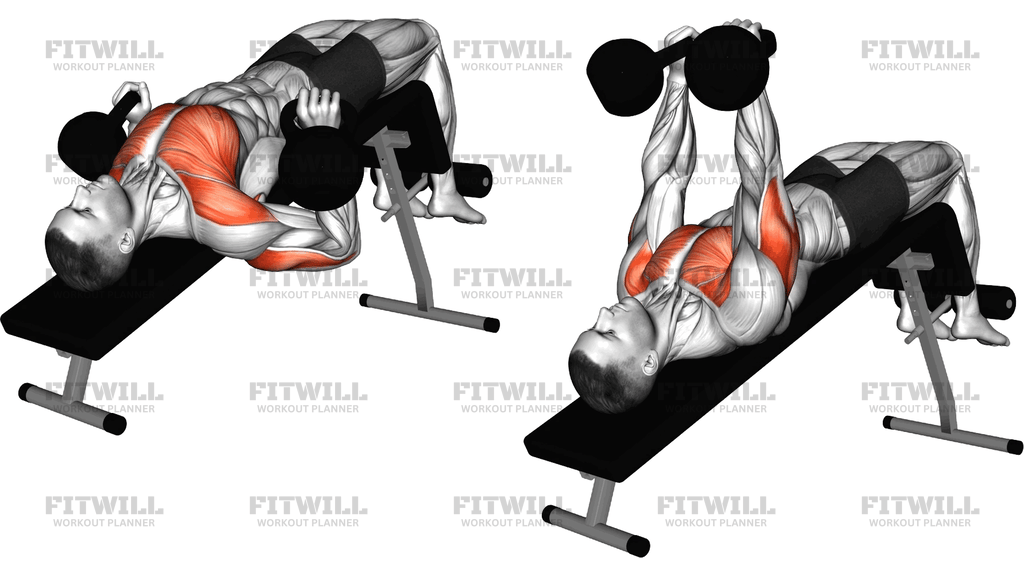
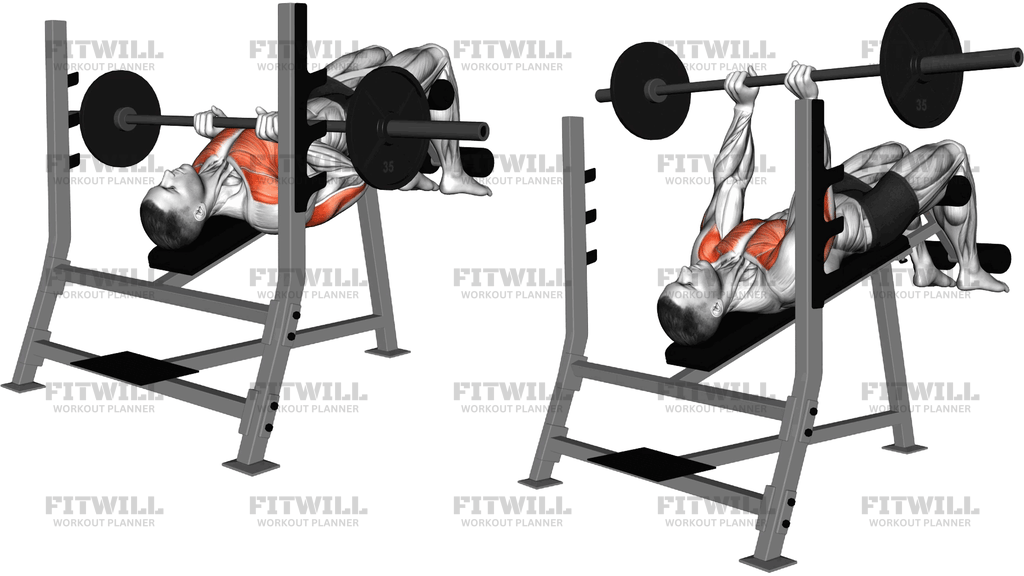
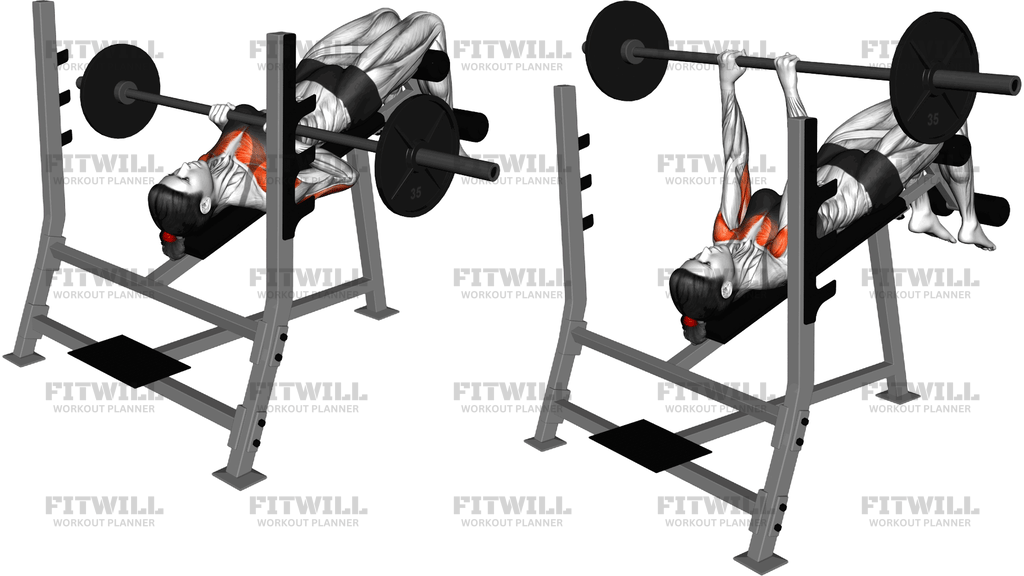
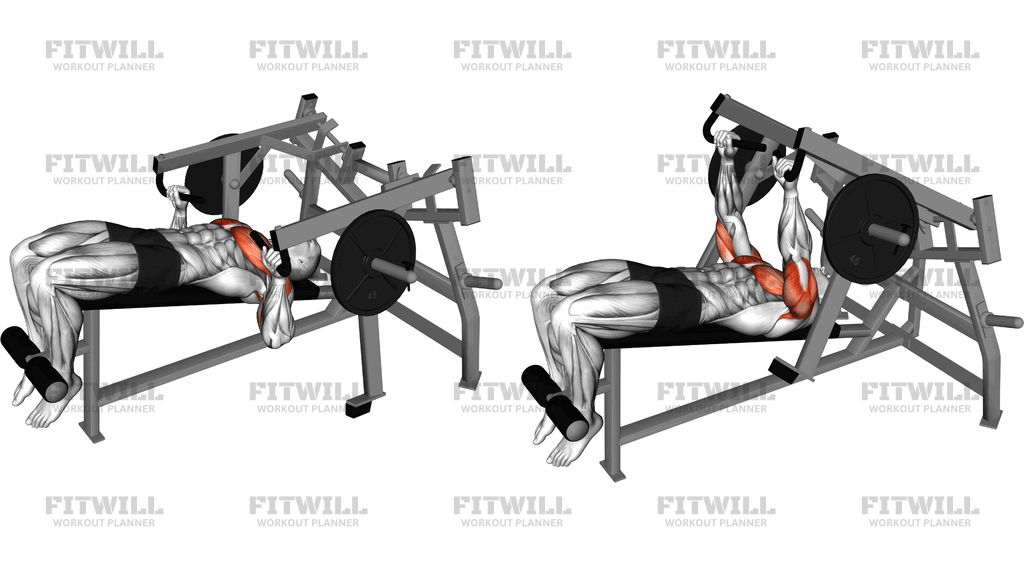
Landmine Decline Single Arm Chest Press
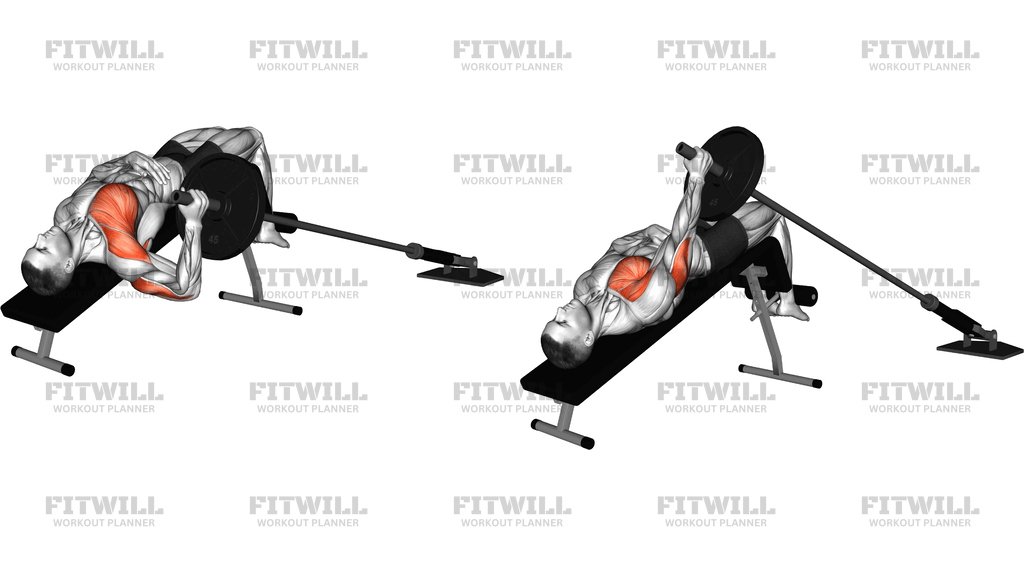
The Landmine Decline Single Arm Chest Press is a unilateral pressing exercise performed lying head-down on a decline bench with one hand on the loaded sleeve of a barbell set into a landmine attachment or a secured corner. Because the bar pivots at the floor end, the weight travels on a natural arc rather than a fixed vertical path, which feels smoother on the shoulder joint than many straight-bar presses while still letting you load the chest heavily.
The decline angle shifts emphasis toward the sternal, or lower, fibers of the pectoralis major, and pressing with one arm at a time exposes and corrects left-to-right strength differences that a barbell hide. You will also feel your trunk working: with only one side loaded, your obliques and deep core have to brace constantly to stop you from rotating off the bench, making this a sneaky-effective anti-rotation exercise as well.
Setup matters more here than in most presses. The bench must be positioned so the bar's path runs over the middle of your chest, your feet must be locked under the bench's ankle pads for stability, and the plate should sit on the sleeve at a height you can safely lift into position. Get any of these wrong and the press pulls you sideways or starts from an awkward height.
To execute it well, press the sleeve up until the arm is nearly straight over your lower chest, then lower with control until your elbow drops just below bench level, feeling a stretch across the pec without letting the shoulder roll forward. The arc should drift slightly toward your feet as you lower, following the pivot of the bar, not straight down toward your face.
This movement suits intermediate lifters who want chest volume without barbell shoulder stress, anyone addressing a weaker side, and home-gym or commercial lifters working with a single landmine station. It also works well as a finisher after heavier two-arm pressing when fatigue makes bilateral barbell work risky.
Keep loads moderate while you learn the arc, and never train this one to failure on the side where the plate could drift toward your head. Set the bar down to the floor-side position between sets rather than letting it hover overhead.
[ Workout Log & Planner ]
Put your next workout in Fitwill
Keep your plan and training log ready when you are.


Instructions
- Set one end of a barbell into a landmine attachment or wedge it securely into a corner, and load plates onto the free end.
- Place a decline bench so that, when you lie head-down with your feet anchored under the ankle pads, the bar's path runs over the middle to lower portion of your chest.
- Sit onto the bench, hook your feet under the pads, lie back, and press the loaded sleeve up to arm's length with your working hand, gripping the sleeve just inside the collar with your palm facing forward.
- Position your free hand across your abdomen or on the bench for balance, and brace your trunk so your shoulders and hips stay square to the ceiling.
- Lower the sleeve in a smooth arc toward your lower chest, letting the elbow bend out to roughly 45 degrees until it drops just below the level of the bench.
- Pause briefly at the bottom with a light stretch across the chest, keeping the plate stacked over the elbow.
- Drive the sleeve back up along the same arc, pressing until the arm is nearly straight over your lower chest without locking the elbow hard.
- Exhale as you press up and inhale as you lower the weight.
- Complete all repetitions on one side, then carefully sit the sleeve down toward the bench or floor-side position before switching arms.
- Reset your grip, foot position, and brace before starting the second arm so both sides work from the same setup.
Tips & Tricks
- Do a few practice reps with only a small plate before adding load; the landmine arc feels unfamiliar at first and the low position changes quickly as the bar angles steepen.
- If the press pulls you toward the loaded side, your obliques are losing the fight. Lighten the weight and focus on driving the non-working shoulder into the bench.
- Do not let the elbow flare fully out to the side or jam tight against your ribs; about 45 degrees keeps the shoulder in a strong pressing position on the decline angle.
- Lowering the sleeve too close to your head or neck is the most common error on a decline setup. Track the sleeve toward your lower chest, not your upper chest or chin.
- Keep your feet firmly hooked under the ankle pads the whole set. Sliding feet let your hips shift, which rotates your torso and turns the press into a crooked, unstable grind.
- Grip the sleeve close to where the plates sit so your wrist stays stacked; holding the very end of the sleeve lets the bar tip sideways under load.
- Because the bar pivots at the base, the bottom position is slightly easier than the top on this lift. Move with control on the way down anyway, since momentum at the stretch is where shoulders get irritated.
- Avoid bouncing the sleeve off the bottom. Touch lightly and press immediately with intent instead of using the stretch reflex to heave heavy plates up.
- If your head hangs back with the neck strained on the decline pad, slide down slightly so more of your skull is supported, and keep the chin softly tucked.
Frequently Asked Questions
Which muscles does the Landmine Decline Single Arm Chest Press work?
The primary target is the lower chest, specifically the sternal fibers of the pectoralis major, due to the decline angle. The triceps and front shoulders assist the press, while the obliques and deep core work hard to keep your torso from rotating under the one-sided load.
Why press one arm at a time on a decline bench instead of using a barbell?
The single-arm setup lets each side of the chest work independently, which helps close strength gaps between left and right. The landmine's pivoting bar also follows a more joint-friendly arc, and your trunk gets extra anti-rotation work that a two-arm press does not provide.
Is the Landmine Decline Single Arm Chest Press suitable for beginners?
It can be, but only with a light load and a properly secured bar. Beginners should first be comfortable on a decline bench and understand how to safely position and lower the sleeve, since the head-down angle makes handling the bar less forgiving than a flat bench press.
Where should the bench be positioned relative to the landmine bar?
Place the bench so the bar's arc passes over the middle to lower part of your chest when you lie head-down. If the bench is too far toward the anchor end, the sleeve will sit too high and press at a poor angle; too far away and you will struggle to reach the starting position.
How do I get the bar into position at the start of the set?
Sit on the bench with your feet hooked under the pads, pull the sleeve up to your chest, then lie back and press it to arm's length. If the loaded end is too heavy to lift comfortably, reduce the plates rather than wrenching it up from an awkward angle.
What is the most common mistake with this exercise?
Letting the torso rotate toward the working arm as fatigue sets in, usually because the weight is too heavy for the core to stabilize. The fix is to lighten the load, square your shoulders to the ceiling, and think about pressing the non-working shoulder down into the bench.
How deep should I lower the sleeve on the Landmine Decline Single Arm Chest Press?
Lower until your elbow drops just below the level of the bench and you feel a mild stretch across the chest. Going deeper on a decline angle forces the shoulder into a vulnerable position, so stop the descent when the stretch is comfortable and controlled.
What can I substitute if I do not have a landmine setup?
A single-arm dumbbell press on a decline bench is the closest alternative, though it lacks the bar's pivoting arc. A cable press from a low position while lying on a decline bench is another option that keeps constant tension on the lower chest.
Is it safe to train close to failure on this movement?
Leave one or two repetitions in reserve. When you fail on a decline landmine press, the sleeve can drift toward your head or pull you off the bench, so it is safer to end the set while you still control the bar and sit it down deliberately afterward.
How does the decline angle change the exercise compared to a flat landmine press?
Lying head-down tilts your torso so the press line targets the lower portion of the chest more directly than a flat or incline version. It also demands more from your feet and trunk anchoring, since gravity and the bar's pull both work to slide you down the bench.