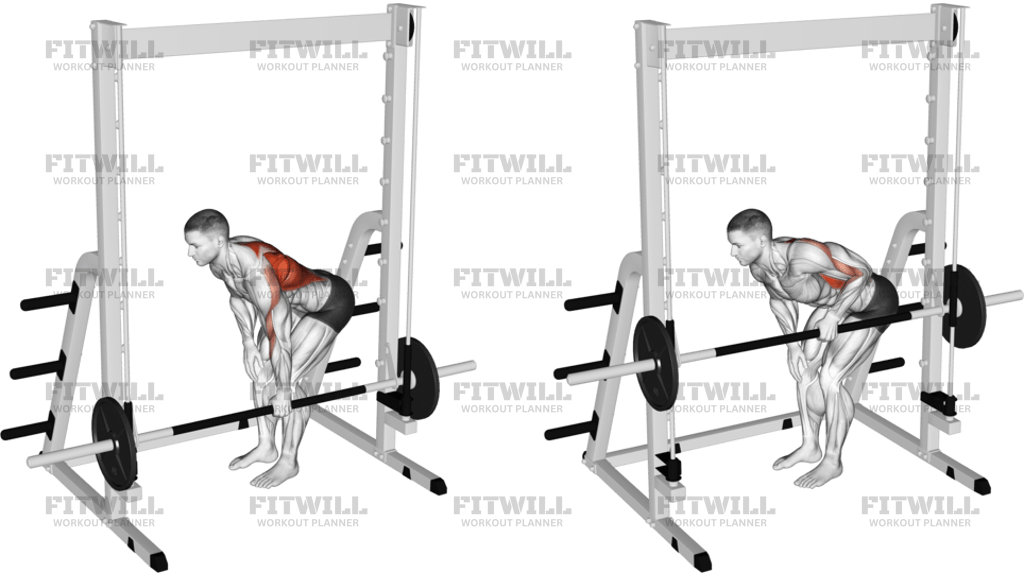
Smith Bent Over Pronated Grip Row
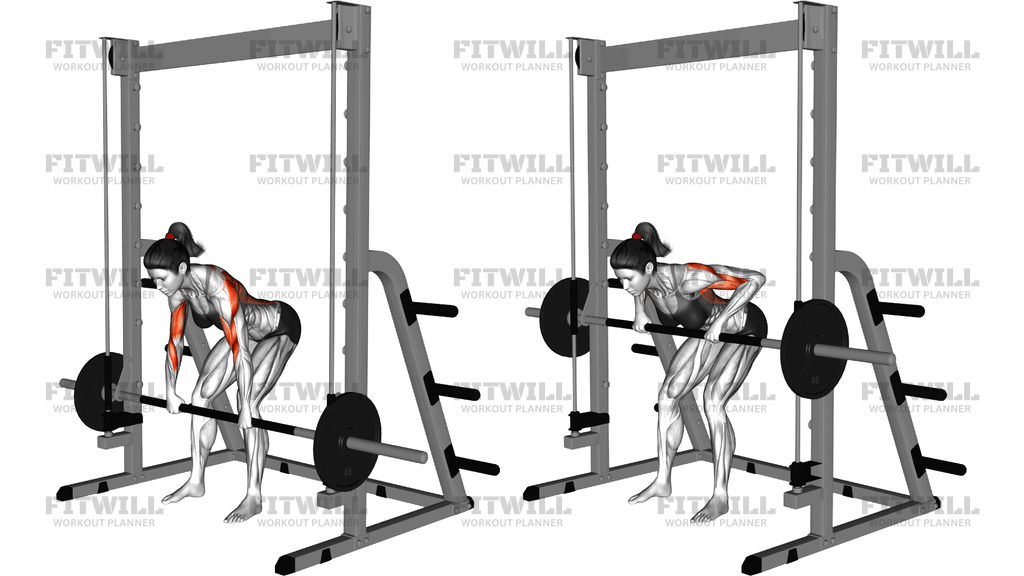
The Smith Bent Over Pronated Grip Row is a horizontal rowing exercise performed inside a Smith machine, where you hinge forward at the hips and pull the fixed barbell up toward your lower chest or upper stomach with an overhand grip. Because the bar travels on the machine's vertical rails, the path is locked in place, which lets you concentrate on squeezing the back muscles instead of stabilizing the weight in every direction.
This exercise primarily works the muscles of the upper and mid back, including the lats, rhomboids, and mid traps, with the rear shoulders and biceps assisting on each pull. The bent-over position also asks the lower back, glutes, and hamstrings to hold your torso angle steady, so you get some isometric work through the posterior chain even though the row itself targets the upper body.
The Smith machine setup is the main advantage here. A free-weight bent-over row requires you to balance the bar while fatigued, which is often the point where form breaks down and the lower back takes over. With the bar guided on its rails, you can push your hips back, set a solid hinge, and focus entirely on driving the elbows back and pulling the bar to the torso. This makes the movement a good choice for lifters learning the rowing pattern, for higher-rep back training, and for anyone who wants to train the back hard without exposing the lower spine to the same balance demands of a free barbell.
Setup matters more than most people expect. The height of the bar stop, your foot position relative to the bar, and how far you hinge all change which muscles do the work. Stand so the bar tracks close to your shins and thighs, hinge to roughly a 45-degree torso angle or slightly lower, and keep the knees softly bent. Grip the bar slightly wider than shoulder width with palms facing away from you, which naturally biases the upper back and rear shoulders a little more than an underhand grip would.
To execute the row well, brace the trunk before every rep, then pull the bar up by driving the elbows back and slightly out until it reaches your upper abdomen or lower chest. Pause briefly at the top to feel the shoulder blades pull together, then lower the bar under control until the arms are extended but the shoulders stay engaged. Avoid jerking the torso upward as the rep gets hard; if you have to rock the weight up, the set is telling you the load is too heavy.
You will see this exercise used as a main back builder in Smith machine-focused programs, as an accessory after heavier deadlifts or free-weight rows, or as a teaching tool for beginners who need to feel the difference between rowing with the back and rowing with the arms. Keep the reps controlled, keep the hinge honest from the first rep to the last, and reset your brace between sets rather than grinding through reps with a rounded back.
[ Workout Log & Planner ]
Put your next workout in Fitwill
Keep your plan and training log ready when you are.


Instructions
- Set the Smith machine bar stops around mid-thigh height and load the bar evenly on both sides.
- Stand facing the machine with your feet about hip width apart, positioned so the bar hangs close to your shins and thighs.
- Grasp the bar with an overhand, pronated grip slightly wider than shoulder width, then unlock the bar from the hooks.
- Push your hips back and hinge forward until your torso is at roughly a 45-degree angle to the floor, with knees softly bent and back flat.
- Let the bar hang with arms extended, pull your shoulders down away from your ears, and brace your core before starting the first rep.
- Row the bar up toward your upper abdomen or lower chest by driving your elbows back and slightly out, keeping the bar close to your body.
- Squeeze your shoulder blades together at the top for a brief pause without shrugging the weights up.
- Lower the bar slowly along the same vertical path until your arms are fully extended, keeping light tension in the lats at the bottom.
- Exhale as you pull the bar up and inhale as you lower it, keeping your breathing steady throughout the set.
- After your final rep, re-rack the bar by rotating it forward into the hooks before releasing your grip and standing up.
Tips & Tricks
- If your torso rises with every rep, the weight is too heavy or you are pulling with momentum; drop the load and hinge back to the same angle on each rep.
- A common mistake with the pronated grip is letting the wrists fold back at the top; keep the knuckles in line with the forearm so the pull stays in the elbows and back.
- Pulling the bar to your chest instead of your upper abdomen shifts work toward the rear shoulders and upper traps; pick the contact point that matches the muscles you want to emphasize.
- Keep a small bend in the knees for the whole set. Locking the knees out while hinged puts extra strain on the hamstrings and lower back.
- Do not let the shoulder blades shrug up at the top of the row; finish each rep by drawing them back and down toward your spine.
- Because the Smith bar is fixed, your stance cannot compensate mid-set, so take a moment before each set to confirm your feet and hinge angle are identical.
- Stop the set if your lower back starts rounding or aching; the hinge position should feel isometric and steady, not loaded through the spine.
- Chalk or lifting straps can help once grip fatigue cuts your back sets short, but work on grip strength before relying on straps for every session.
- Tempo work fits this exercise well: try a two-second pause at the top of each row to reinforce the squeeze before increasing the weight.
Frequently Asked Questions
Which muscles does the Smith Bent Over Pronated Grip Row work?
It primarily targets the back muscles, especially the lats, rhomboids, and mid traps, with the rear shoulders and biceps assisting each pull. The lower back, glutes, and hamstrings work isometrically to hold the bent-over position.
Why use a pronated grip instead of an underhand grip on this row?
The overhand grip tends to place slightly more emphasis on the upper back and rear shoulders, while an underhand grip shifts more work to the lats and biceps. Both are valid; choose based on which area you want to prioritize.
Is the Smith Bent Over Pronated Grip Row good for beginners?
Yes, it is one of the friendlier ways to learn the rowing pattern because the fixed bar path removes the balance demand of a free barbell. Beginners should still start light and practice the hip hinge before adding meaningful load.
How far should I bend over during the Smith Bent Over Pronated Grip Row?
Aim for a torso angle of roughly 45 degrees or slightly lower, achieved by hinging at the hips rather than rounding the spine. The exact angle matters less than keeping it consistent from the first rep to the last.
Why does my lower back get tired during this exercise?
The bent-over position loads the lower back isometrically, so some fatigue is normal, but sharp discomfort or rounding means your hinge is failing. Reduce the weight, brace harder before each rep, or raise your torso slightly.
Can I substitute the Smith Bent Over Pronated Grip Row with a barbell row?
Yes, a barbell bent-over row is the closest free-weight substitute, though it requires more balance and stabilizer strength. A chest-supported row is another option if you want to remove the lower back from the equation entirely.
Where should the bar touch at the top of the row?
Pull the bar to your upper abdomen or lower chest, keeping it close to your body throughout. Pulling higher toward the chest shifts emphasis toward the rear shoulders and upper traps.
How should I set my feet in the Smith machine for this row?
Stand with feet about hip width apart and position yourself so the bar tracks close to your shins and thighs. Because the bar cannot move forward or backward, your stance decides the pulling path, so set it deliberately.
How many sets and reps should I do of the Smith Bent Over Pronated Grip Row?
For general back development, three to four sets of 8 to 12 reps with controlled form works well. Because the machine reduces stabilization demands, it also suits higher-rep sets of 12 to 15 when you want extra back volume.
Do I need to re-rack the bar after every set?
Yes, always rotate the bar back into the hooks and confirm it is seated before letting go. The Smith bar cannot drift, but releasing a loaded bar mid-set can still drop it onto your feet or legs.