Dumbbell Half Kneeling Thor Lift
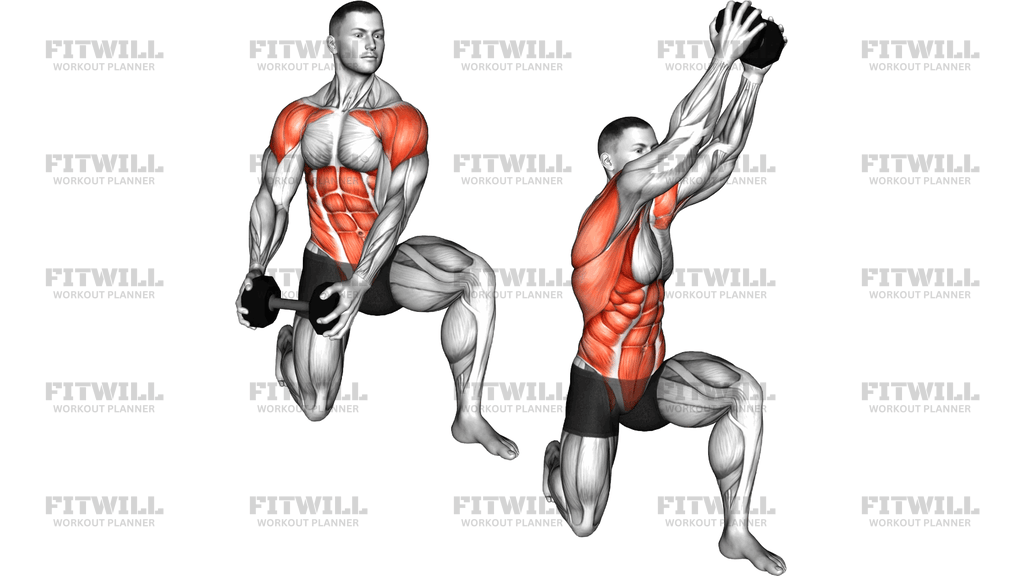
The Dumbbell Half Kneeling Thor Lift is a rotational core exercise performed from a half-kneeling stance, with one knee down and the opposite foot planted forward. You hold a single dumbbell with both hands, start hinged forward with the weight hanging down beside your front foot, and drive through your trunk to lift the dumbbell diagonally up and across your body until your arms extend toward the opposite side at roughly chest to shoulder height. The half-kneeling base removes the legs from the equation, forcing the obliques and deep trunk muscles to do the rotating while the hips stay square.
This setup matters more than people expect. With both knees on the floor or both feet planted, it is easy to cheat rotation by twisting from the ankles or swinging the hips. The half-kneel locks the lower body in place: the front leg stabilizes, the down-knee hip has to resist collapsing, and the rotation has to come from the thoracic spine and trunk. That is why the exercise carries "thor" in its name — it deliberately drives rotation through the mid-back rather than cranking on the lumbar spine.
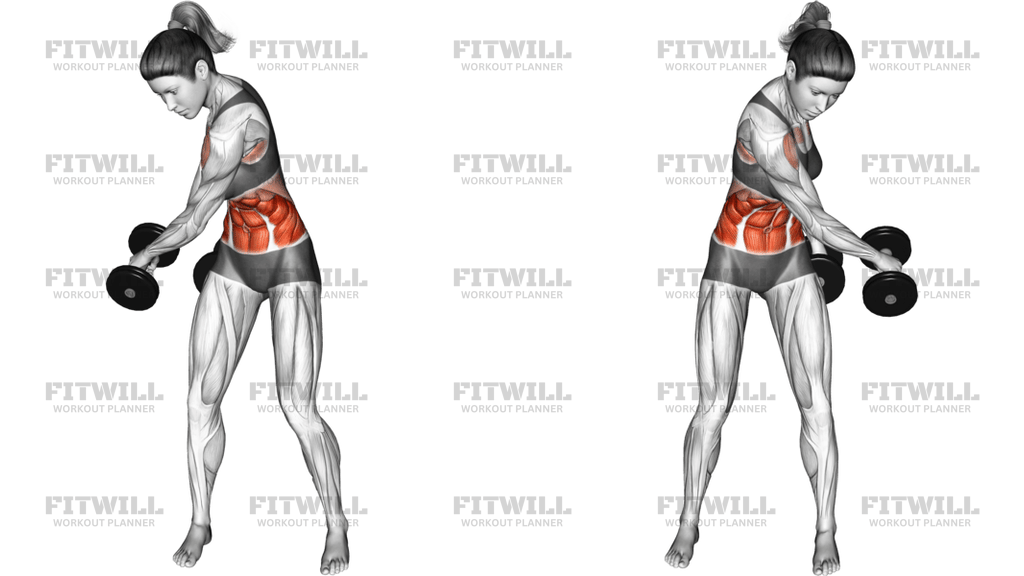
The primary muscles worked are the obliques on the side doing the lifting, with strong support from the deep core, the glute of the down-knee leg, and the muscles of the lower and upper back that keep the spine organized as the weight travels. The highlighted areas in the movement are the side of the trunk and the abdominals, which is exactly where you should feel the effort concentrated.
This exercise suits lifters who want controlled rotational strength without heavy loading, athletes who swing, throw, or strike, and anyone rebuilding mid-back rotation after spending long hours sitting. It is also a common choice in rehab-adjacent and general training programs because the half-kneeling position doubles as a hip flexor stretch and a balance challenge at the same time.
To execute it well, keep the movement slow enough that the dumbbell never gains momentum. The lift should feel like your trunk is pulling the weight along an arc, not like your arms are throwing it. If you feel it in your lower back instead of your sides, the weight is probably too heavy or your torso is collapsing forward as you lift. Start with a light dumbbell, master the path on one side, then match it on the other.
Because the down knee carries load throughout, cushion it with a mat or pad, and switch which knee is down between sets so both sides of your trunk and hips get equal work.
[ Workout Log & Planner ]
Put your next workout in Fitwill
Keep your plan and training log ready when you are.


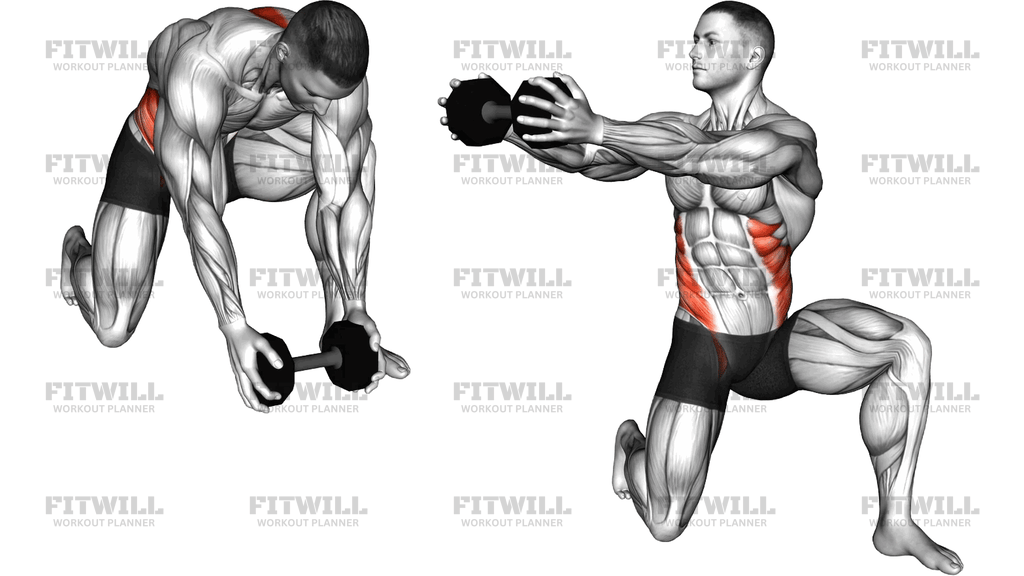
Instructions
- Place a mat or pad on the floor and kneel into a half-kneeling stance: right knee down, left foot planted flat in front with the left knee bent about 90 degrees.
- Hold one dumbbell horizontally with both hands, fingers interlaced around each end, and hinge forward from the hips until the dumbbell hangs down beside the inside of your front foot.
- Keep your hips facing straight ahead and brace your trunk as if preparing to absorb a light push to the side.
- Exhale and pull the dumbbell up and across your body along a diagonal arc, rotating through your mid-back and trunk rather than swinging with your arms.
- Finish with your arms extended forward and slightly up toward the side of your front leg, chest rotated, and your eyes following the dumbbell.
- Pause briefly at the top without letting your hips twist off their square position.
- Inhale and lower the dumbbell slowly back down the same diagonal path until it returns beside your front foot, re-hinging at the hips.
- Complete all repetitions on one side, then switch so the opposite knee is down and the dumbbell lifts toward the other side.
- Reset your brace and hip position at the bottom of each rep before starting the next lift.
Tips & Tricks
- The most common fault is letting the front heel lift or the hips rotate toward the working side — press the front foot flat and think about keeping both hip points pointed forward the entire time.
- If your lower back takes over, the dumbbell is usually too heavy; drop the load until the tension sits in the side of your trunk.
- Do not turn this into an arm raise. The hands travel because the torso rotates — if your shoulders fatigue before your obliques, slow the tempo down.
- Pad the down knee properly. Discomfort there will subtly shift your weight and change the rotation angle mid-set.
- Follow the dumbbell with your eyes. Head movement helps the thoracic spine reach its full rotation instead of stopping early.
- Avoid hunching your shoulders up toward your ears as the weight rises; keep the shoulder blades settled so the mid-back does the work.
- A useful self-check: your down knee should stay planted and heavy, not drifting or hovering, throughout every rep.
- If the diagonal path feels jammed at the top, you are likely rotating from the lumbar spine; reduce the range slightly and work within a smooth arc before extending it.
- Do equal reps on both sides even if one direction feels weaker — rotational differences between sides are normal but should not be widened by training.
Frequently Asked Questions
What muscles does the Dumbbell Half Kneeling Thor Lift work?
The obliques are the primary movers, with significant help from the deep core muscles that stabilize the trunk. The glute of the down-knee leg and the muscles of the lower and upper back work isometrically to hold the half-kneeling base steady.
Why is the exercise done from a half-kneeling position instead of standing?
The half-kneel locks out the hips and ankles, so the rotation has to come from the trunk and mid-back rather than from twisting the lower body. It also trains stability in the down-knee hip at the same time.
Is the Dumbbell Half Kneeling Thor Lift suitable for beginners?
Yes, provided the weight is light and the tempo is controlled. Beginners often benefit most from it because the position makes cheating difficult and gives clear feedback when the rotation comes from the wrong place.
How heavy should the dumbbell be for this exercise?
Choose a weight you can lift smoothly through the entire diagonal arc without swinging or losing your square hip position. Most people need far less load here than in standard pressing or rowing work.
Should I do both sides in the Dumbbell Half Kneeling Thor Lift?
Yes. Complete your set with one knee down and the dumbbell lifting toward one side, then switch so the opposite knee is down and the rotation reverses. This keeps the trunk and hips balanced.
What is the most common mistake in this movement?
Rotating from the lower back and letting the hips twist instead of moving through the mid-back. Keeping both hip points facing forward while the chest rotates is the key correction.
Can I perform the Dumbbell Half Kneeling Thor Lift without a dumbbell?
You can substitute a medicine ball, a weight plate, or a cable handle, and the pattern also works unloaded with just the hands clasped. The half-kneeling diagonal lift itself is what defines the movement.
Where should I feel the effort during the lift?
The tension should concentrate along the side of your trunk and abdomen on the lifting side. If you primarily feel your arms, shoulders, or lower back, revisit your brace and reduce the weight.
Do I need anything under my down knee?
A mat or folded towel is strongly recommended, since the knee bears weight for the whole set and hard floors can make you unconsciously shift position to avoid pressure.