Dumbbell Single Arm Row (Bird Dog Stance On Bench)
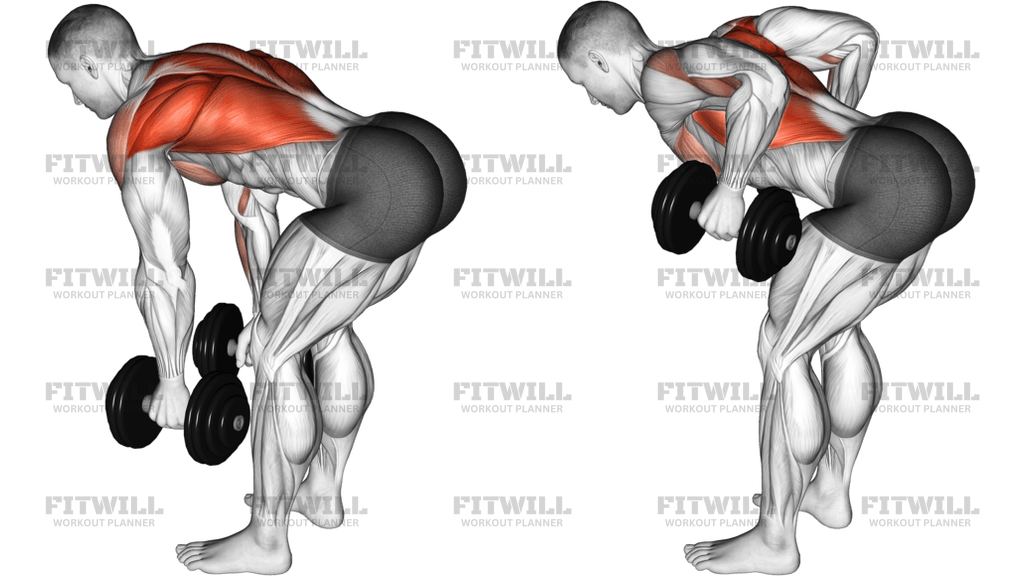
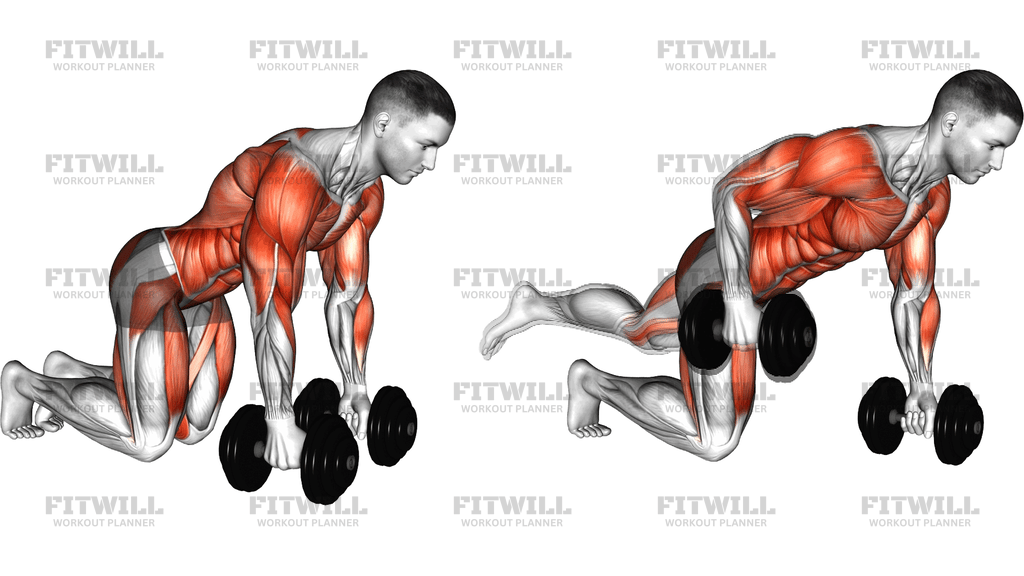
The Dumbbell Single Arm Row (Bird Dog Stance On Bench) is a unilateral row performed from an unstable three-point position on a flat bench. Instead of bracing with both a hand and a knee planted on the bench, you kneel with only one knee down and your supporting hand flat on the pad, then extend your opposite leg straight behind you so it floats parallel to the floor. From there you row a dumbbell with the free arm, pulling it toward your hip and lowering it under control.
This variation is worth learning if you have already become comfortable with a standard single-arm bench row and want more challenge for your trunk. Because only one knee is anchored and the extended leg has no support, your body has to resist rotation and sagging on every rep. The lats and upper back still do the main work of pulling, but the deep core, obliques, and glutes of the lifted leg work hard to hold a long, level line from head to heel.
The setup is what separates this exercise from an ordinary row. A narrower base means less external stability, so any twist of the torso or hitch of the hip effectively steals work away from the target muscles and turns the set into a balance scramble. Keeping the extended leg at hip height, the shoulders square to the bench, and the neck neutral lets the row stay honest and keeps stress off the lower back.
Execution should feel deliberate rather than explosive. Start with the arm hanging straight down from the shoulder, pull the dumbbell up beside your ribs by driving the elbow back, pause briefly at the top, and lower it until the arm is fully extended without letting the shoulder blade slump. Breathe in on the way down, exhale as you pull, and keep the grip firm but not white-knuckle tight.
This movement suits intermediate lifters who want to combine back training with anti-rotation core work in a single slot, as well as athletes who need hip and trunk stability under load. Because the balance demand is significant, use a lighter dumbbell than you would for a supported one-arm row, and treat quality of position as the measure of a good set rather than the number on the bell.
For safety, keep the weight modest while you learn the stance, place the bench on a non-slip surface, and stop the set if your hips begin to rotate or the extended leg drops noticeably. If you cannot maintain the bird dog position with control, regress to a standard knee-and-hand supported row and build up to this version.
[ Workout Log & Planner ]
Put your next workout in Fitwill
Keep your plan and training log ready when you are.


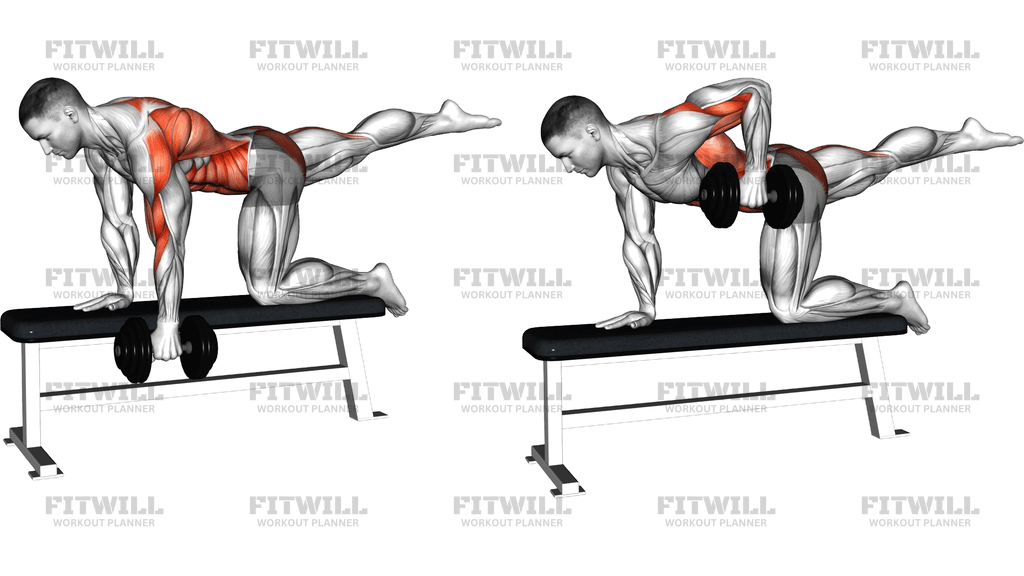
Instructions
- Place a flat bench on a stable floor and set a dumbbell on the ground beside it.
- Kneel so your left knee is on the middle of the bench and place your right hand flat on the pad directly under your right shoulder.
- Reach back with your right leg and extend it straight behind you until it is roughly parallel to the floor, toes pointing down, then pick up the dumbbell with your left hand with a neutral grip.
- Set your gaze slightly down and forward so your neck stays in line with your spine, and square your chest and shoulders toward the bench.
- Brace your abdominal muscles and squeeze the glute of the extended leg to lock in a long, level line from your head to your back heel.
- Let the dumbbell hang straight down from your left shoulder with the arm fully extended.
- Pull the dumbbell up toward your lower ribs by driving your elbow back and close to your body until it reaches roughly hip height.
- Pause for a beat at the top, feeling the lat and shoulder blade pull in, without twisting your torso toward the weight.
- Lower the dumbbell slowly until the arm is straight again, allowing the shoulder blade to move slightly but not letting the shoulder collapse.
- Exhale as you pull, inhale as you lower, complete all reps on one side, then switch sides so the opposite hand rows and the opposite leg extends.
Tips & Tricks
- Start lighter than your normal one-arm row weight. The narrow base makes the same dumbbell feel far heavier through the trunk, and most people's first failure point is hip rotation, not back strength.
- Actively reach the extended leg back and squeeze its glute. If the leg drifts downward mid-set, it is usually a sign the glute has switched off and the lower back is absorbing the load.
- Keep the working elbow tracking close to the ribs. Flaring it wide turns the rep into a rear shoulder pull and reduces the lat involvement.
- Do not let the supporting hand's shoulder sink toward the bench. Press the floor away slightly so that shoulder stays stacked over the wrist.
- If your hips twist toward the dumbbell at the top of each pull, cut the range slightly and focus on pulling to the hip rather than past it.
- Keep the foot of the extended leg relaxed and pointed down. Tensing the whole leg often causes shaking and pulls the hips out of position.
- Set the dumbbell down between sides instead of transitioning while holding it. Switching knees with a weight in hand is where most balance mistakes happen.
- A brief pause at the top of each rep, rather than rushing the return, helps you feel whether the lat or momentum is doing the work.
Frequently Asked Questions
Which muscles does the Dumbbell Single Arm Row (Bird Dog Stance On Bench) work?
The lats are the primary mover, with the upper back, rear shoulders, and biceps assisting the pull. The bird dog stance additionally challenges the core, obliques, and the glute of the extended leg as stabilizers.
Why extend one leg behind me instead of kneeling on both knees?
The extended leg removes one point of support, forcing your trunk to resist rotation while you row. This trains anti-rotation core strength at the same time as back strength, which a fully supported row does not.
Should the working arm and extended leg be on the same side or opposite sides?
They are on opposite sides: when your left hand rows, your right leg extends back and your left knee kneels on the bench. This contralateral setup mirrors the bird dog position and balances the load across your trunk.
Is this exercise suitable for beginners?
Beginners can attempt it with a very light dumbbell, but most people should first master the standard single-arm row with both a hand and knee on the bench. Once you can row with a stable torso there, progress to the bird dog stance.
My hips rotate toward the dumbbell on every rep. How do I fix this?
Reduce the weight and consciously squeeze the glute of the extended leg while bracing your abdominals before each pull. You can also shorten the range slightly, pulling the dumbbell to your hip rather than past it.
How heavy should I go on this exercise?
Choose a load noticeably lighter than your supported one-arm row, since the narrow base shifts much of the demand to stabilizers. Prioritize holding a level, still torso over adding weight.
What can I use instead of a bench for the Dumbbell Single Arm Row (Bird Dog Stance On Bench)?
A sturdy plyometric box or a stable low surface of similar height works well. The surface needs to support both your supporting hand and kneeling knee without wobbling under load.
How do I breathe during this row?
Inhale as you lower the dumbbell and exhale as you pull it toward your hip. Keep the breath steady and avoid holding it, since bracing too hard while balancing can make you shaky.
Is it safe for my lower back?
When performed with a moderate weight, a braced trunk, and a level hip line, the position is well controlled and back friendly. Problems arise when the load is too heavy and the hips twist or the extended leg drops, so scale the weight to your stability.
How many reps and sets should I do?
Two to four sets of 8 to 12 controlled reps per side works well, resting between sides. Because balance degrades with fatigue, end the set when your hip position breaks down rather than grinding out extra reps.