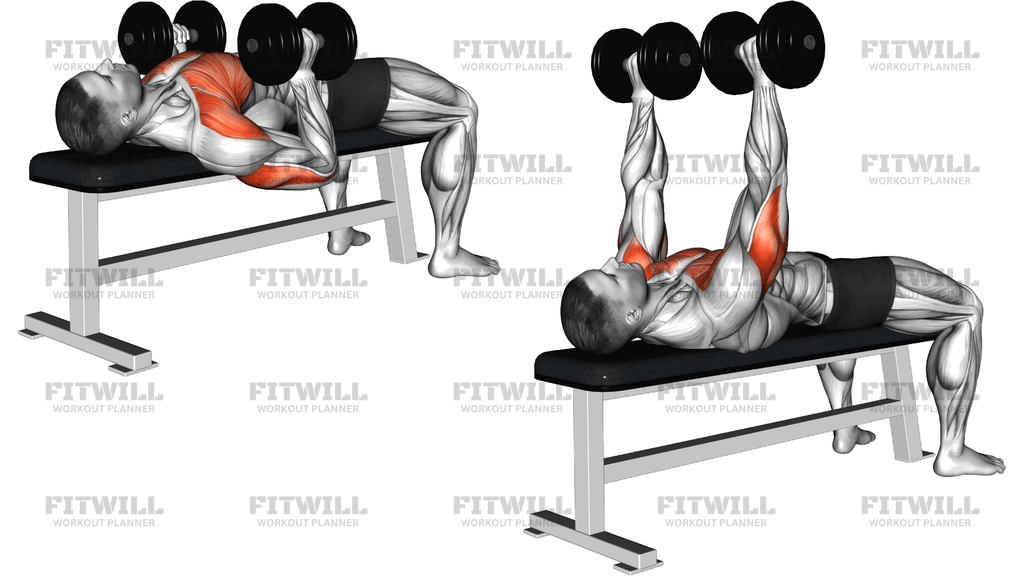
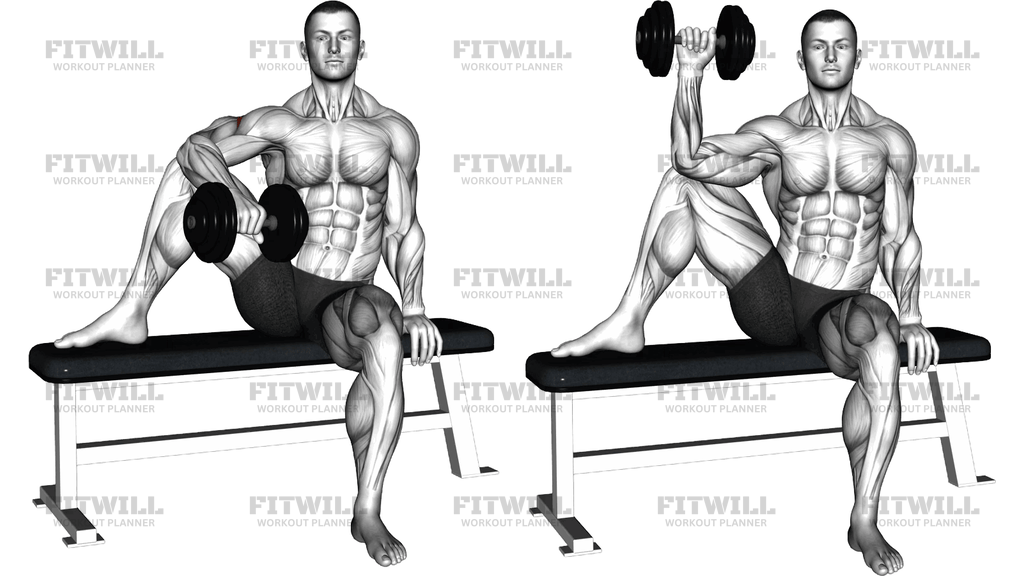
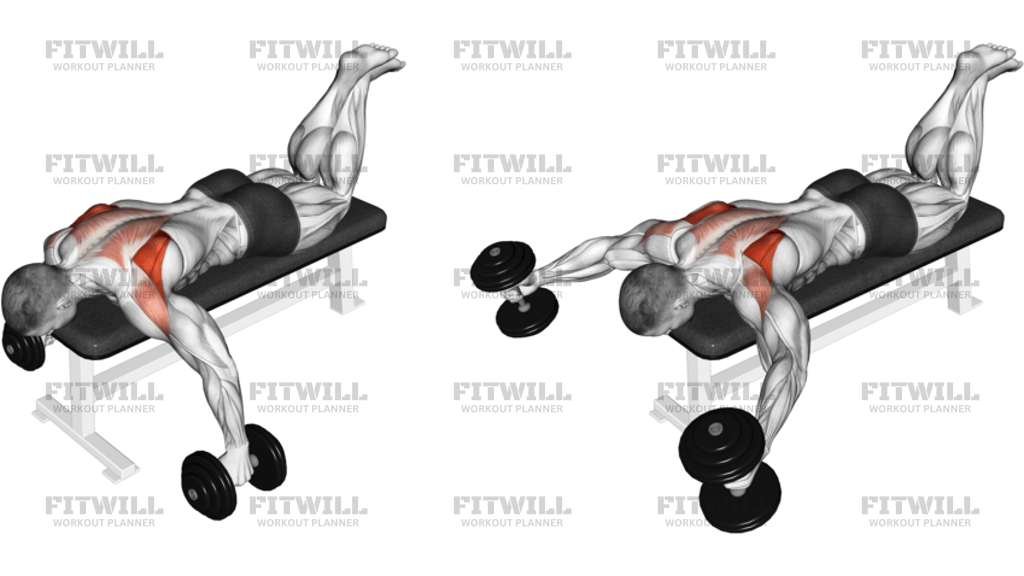
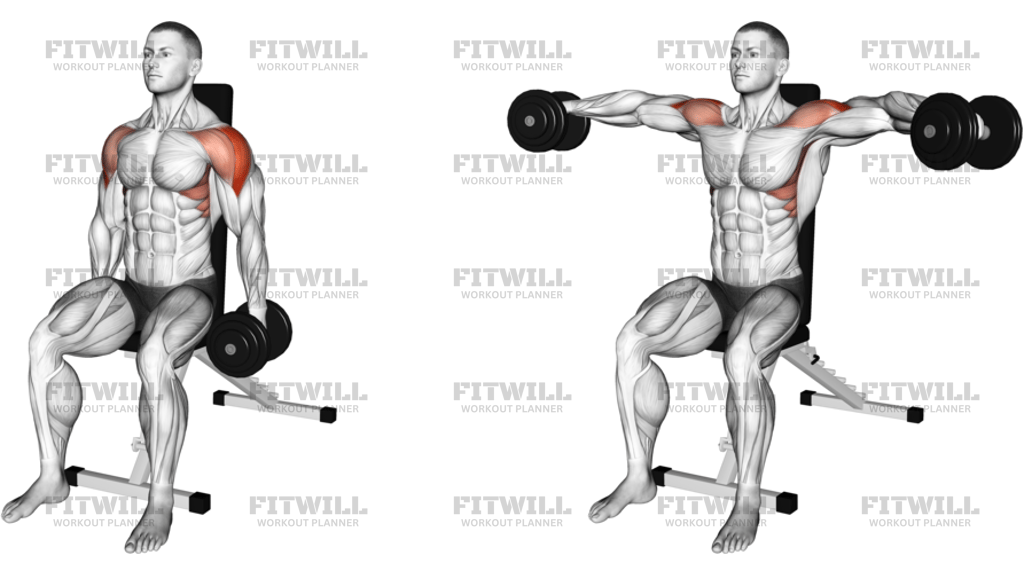
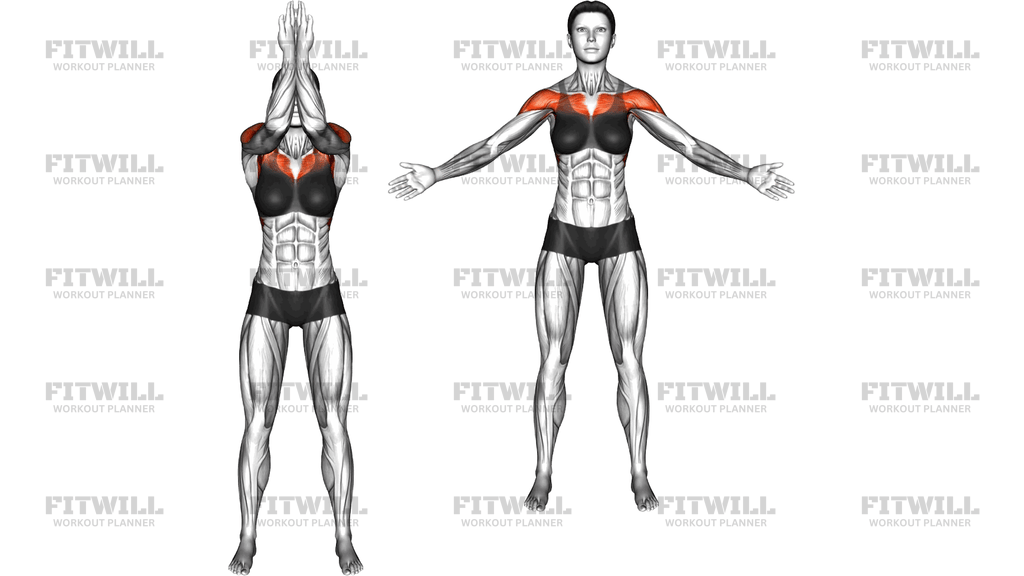
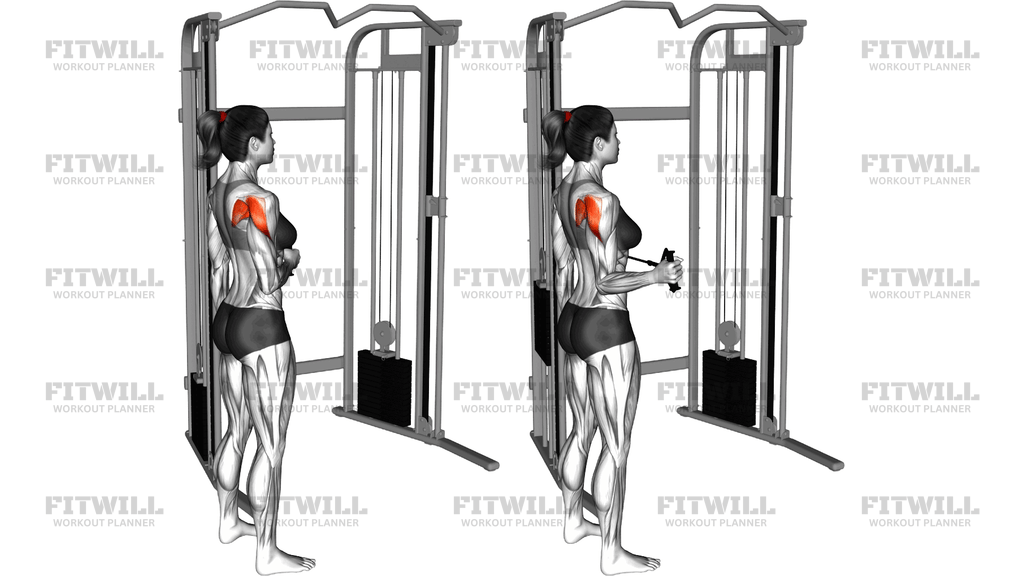
Dumbbell Lying Supine Shoulder External Rotation
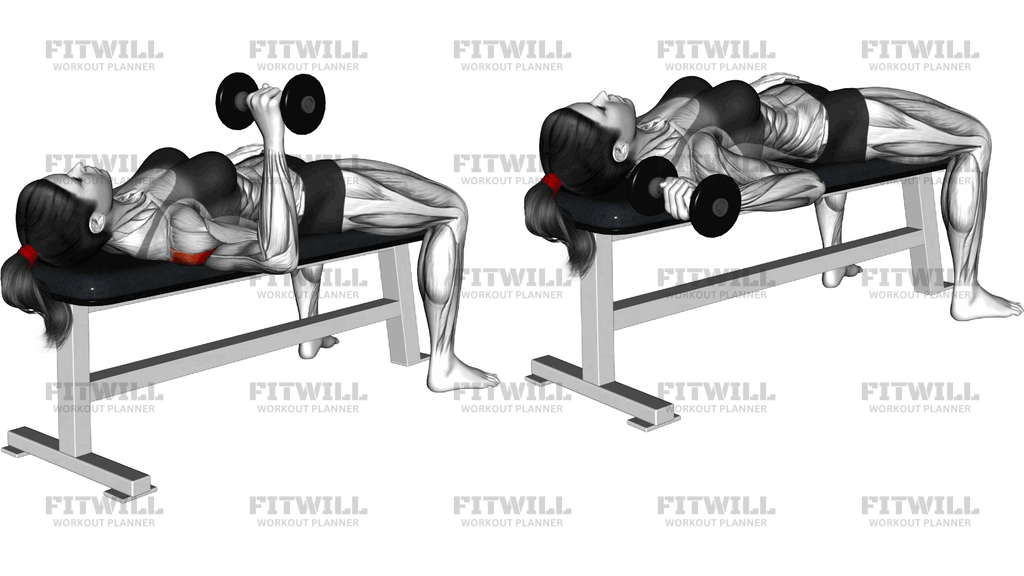
The Dumbbell Lying Supine Shoulder External Rotation is a rotator cuff exercise performed lying face-up on a flat bench with your upper arm held out to the side at roughly shoulder height and your elbow bent to 90 degrees. From that position, you rotate your forearm from pointing straight up toward the ceiling back toward the floor beside your head, then rotate it back up. The small dumbbell provides light, even resistance through the exact arc your shoulder's external rotators work in.
This movement targets the infraspinatus and teres minor — the two muscles that make up most of your shoulder's external rotating strength. These muscles sit on the back of the shoulder blade and are responsible for rotating the upper arm outward, stabilizing the ball of the shoulder joint inside the socket, and decelerating internal rotation during throwing, pressing, and swinging actions. Because the bench supports your torso and pins your upper arm in place, the rotation happens purely at the shoulder joint rather than being helped by body English.
The 90/90 setup is what makes this version worth doing. With your upper arm level with your shoulder and your elbow fixed at a right angle, the rotator cuff works in its most commonly stressed position — the same arm position used when throwing a ball or reaching overhead and outward. Lifters who press and bench heavily, overhead athletes, and anyone rebuilding shoulder strength after a layoff all benefit from training this arc directly, and the supine position gives your shoulder a stable reference point that makes cheating almost impossible.
Execution is deliberately slow. Lie back on the bench with a light dumbbell in one hand, bring the arm out so the upper arm sits at about 90 degrees of abduction, and set the elbow at a right angle with the forearm pointing toward the ceiling. Keep the back of the upper arm and elbow in contact with the bench throughout. Rotate at the shoulder only, lowering the dumbbell back and down toward floor level beside the bench until you reach your comfortable end range, pause briefly, then rotate the forearm back up until it points toward the ceiling again.
The most common mistakes are loading too heavy, letting the elbow drift forward off the bench, and arching the torso to grind out extra range. Because the rotator cuff is a small muscle group, this exercise works best with light dumbbells in the 2–10 kg range, strict elbow position, and controlled tempo. Treat it as a precision movement you do for quality reps, usually at the start of a shoulder session as an activation drill or at the end as targeted rotator cuff work, rather than a lift you chase numbers on.
[ Workout Log & Planner ]
Put your next workout in Fitwill
Keep your plan and training log ready when you are.


Instructions
- Lie face-up on a flat bench with your head supported and both feet planted on the floor for stability.
- Hold a light dumbbell in one hand and raise that arm out to the side until your upper arm sits at about shoulder height, roughly in line with your shoulder joint.
- Bend your elbow to 90 degrees so your forearm points straight up toward the ceiling, and let the back of your upper arm and elbow rest fully on the bench.
- Grip the dumbbell firmly but without squeezing hard, and brace your trunk lightly so your ribs stay down and your torso stays flat against the bench.
- Slowly rotate your forearm backward, lowering the dumbbell in an arc toward the floor beside the bench until it hangs beside or just below head level.
- Stop at the point where your shoulder reaches a comfortable end range without your elbow lifting off the bench, and pause there for one to two seconds.
- Rotate the forearm back up under control until it points toward the ceiling again, squeezing the external rotators at the top.
- Exhale as you rotate the dumbbell back up and inhale as you lower it into the stretched position.
- Complete all reps on one side, then switch the dumbbell to the other hand and repeat, or alternate sides each set if balance feels easier.
- Set the dumbbell down on the floor beside the bench when finished rather than dropping it from the raised position.
Tips & Tricks
- If the dumbbell feels heavy at the top of every rep, the weight is too much — the rotator cuff responds better to loads you can pause and control at the end range than to heavier swings.
- Watch your elbow, not the dumbbell: the instant the elbow lifts forward off the bench, the rotation changes from a shoulder movement into a shoulder-and-torso movement, so reset with a lighter weight.
- Place your free hand on the working shoulder to feel whether the upper arm stays quiet during the rotation — excess shrugging means the upper traps are taking over.
- Keep the wrist in a neutral, straight line rather than cocked back, since a bent wrist turns this into a grip endurance test before the shoulder gets real work.
- Think about rotating the humerus, not moving the dumbbell — the arc should feel like a door swinging on a hinge pinned at your elbow.
- If you lack range toward the floor, do not force it; work in the range where you can keep the elbow planted and expand gradually over weeks.
- A very light weight or even a small water bottle is a legitimate starting point — most people are stronger at this pattern with bands or cables than with a free weight hanging overhead, so build up slowly.
- Keep your head relaxed on the bench instead of craning to watch the dumbbell travel; turning the neck mid-rep commonly pulls the shoulder position with it.
Frequently Asked Questions
Which muscles does the Dumbbell Lying Supine Shoulder External Rotation work?
The primary targets are the infraspinatus and teres minor, the external rotators of the rotator cuff. The posterior deltoid assists, and the muscles around the shoulder blade work to keep the arm position steady.
Why is my upper arm kept at 90 degrees on the bench for this exercise?
Holding the upper arm at shoulder height with a bent elbow pins the rotation to the shoulder joint itself and mimics the arm position used in throwing and overhead actions. If the elbow moves or lifts, other muscles start compensating and the rotator cuff gets less direct work.
How heavy should the dumbbell be for the Dumbbell Lying Supine Shoulder External Rotation?
Start light — most people begin somewhere between 1 and 5 kg per hand. If you cannot pause the dumbbell at the bottom of the rotation with your elbow still on the bench, drop the weight.
How many reps and sets should I do?
Two to four sets of 10 to 15 controlled reps per side works well, either as activation before pressing or as dedicated rotator cuff work at the end of a session. The tempo matters more than the load.
My elbow keeps drifting forward during the rotation — what should I change?
This usually means the weight is too heavy or you are chasing range you do not have yet. Reduce the load, shorten the range slightly, and consciously keep the back of the upper arm in contact with the bench on every rep.
Can beginners do the Dumbbell Lying Supine Shoulder External Rotation?
Yes, and it is actually a good first rotator cuff exercise because the bench gives clear feedback — if your elbow leaves the bench, the rep was done wrong. Beginners should start at the very light end and prioritize smooth, quiet rotations.
What can I substitute if I do not have a bench and dumbbell?
A side-lying dumbbell external rotation, a band or cable external rotation with the elbow tucked at your side, or a cable external rotation at 90 degrees all train the same rotator cuff pattern. The lying supine version is simply the most stable of the three.
Should I feel this in the back of my shoulder or is that a problem?
A working, mild effort in the back of the shoulder around the shoulder blade is exactly what you want. Sharp pain, pinching at the front of the shoulder, or pain that lingers afterward are signals to reduce the weight and range or have the shoulder assessed.
Is the Dumbbell Lying Supine Shoulder External Rotation useful for pressing and benching?
Yes. Strong external rotators stabilize the shoulder socket during heavy pressing and help decelerate the arm, so many lifters use this movement regularly as low-volume, high-quality supplementary work alongside their main presses.