Dumbbell Seated Single Arm External Rotation
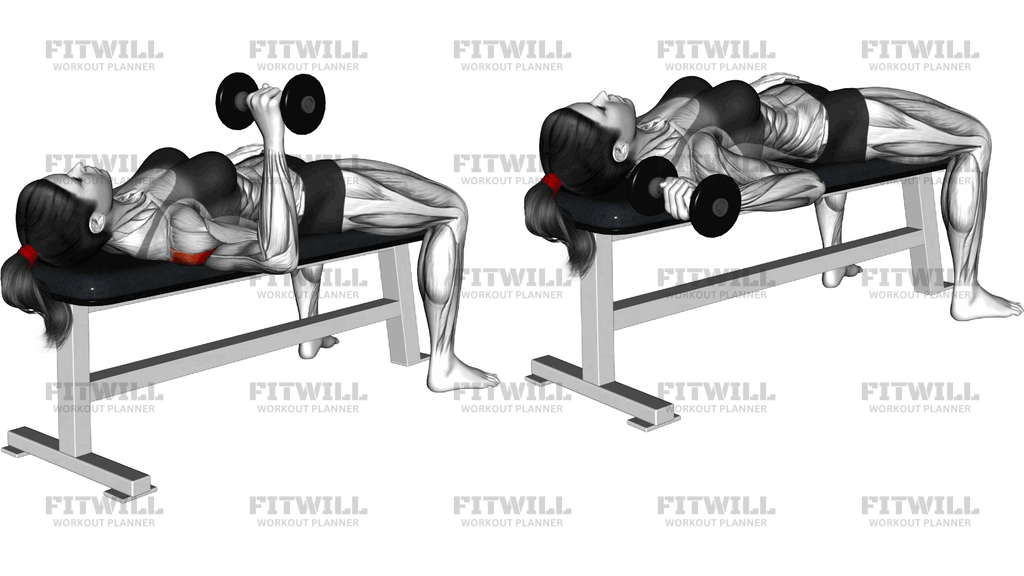
Dumbbell Seated Single Arm External Rotation is a targeted rotator cuff exercise that trains the small muscles on the back of your shoulder, primarily the infraspinatus and teres minor. You sit sideways on a flat bench with one leg raised so your foot rests on the bench, then brace the elbow of your working arm against that elevated knee and rotate the forearm from a lowered position up and outward, lifting the dumbbell through an arc until it points toward the ceiling.
This movement earns its place in almost any program. Overhead athletes like baseball players, tennis players, and volleyball players rely on external rotation strength for throwing power and shoulder resilience, while lifters who bench or press heavily benefit from the stability these muscles provide. Desk workers with internally rounded shoulders also find it useful for restoring balance around the joint.
The setup is what makes this variation effective. Bracing your elbow against the raised knee pins the upper arm in place, which removes the ability to cheat by swinging the arm or shrugging the shoulder. With the joint locked in position, the rotation has to come from the rotator cuff itself, so even a light dumbbell becomes genuinely challenging.
Execution should be slow and deliberate. Keep your torso upright, hold the dumbbell with a neutral grip, and rotate the forearm up in a smooth arc without letting the elbow drift forward or the shoulder roll backward. Pause briefly at the top, then lower the weight with the same control instead of letting gravity pull it down.
Choose a dumbbell far lighter than what you would use for lateral raises or curls, usually between 2 and 8 pounds to start. Because the rotator cuff muscles are small, heavy loading tends to shift work to the larger shoulder and chest muscles and can aggravate the joint. Stop the set the moment your form changes, and expect to feel a deep, focused burn at the back of the shoulder rather than general fatigue.
[ Workout Log & Planner ]
Put your next workout in Fitwill
Keep your plan and training log ready when you are.


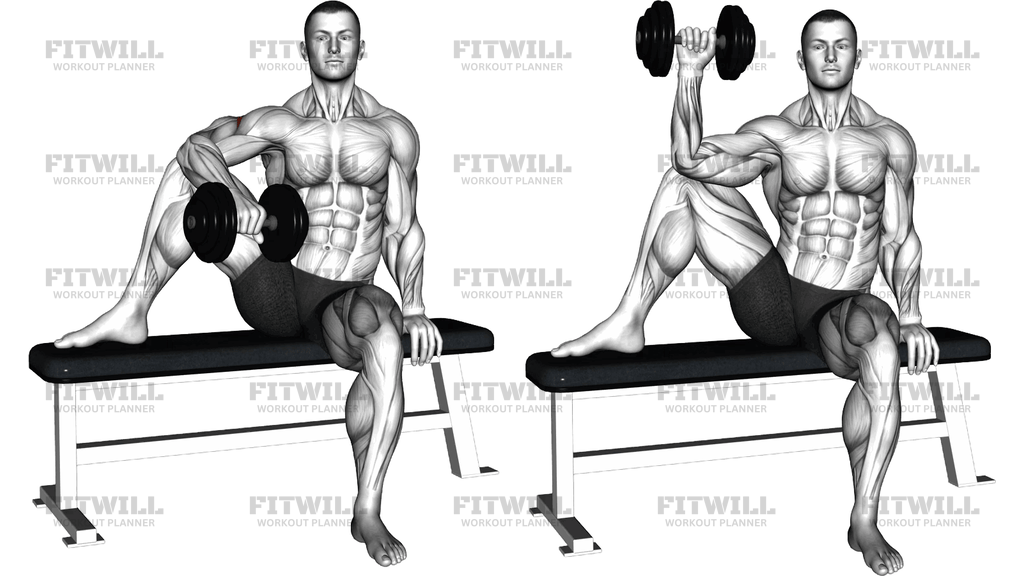
Instructions
- Sit sideways on a flat bench and place one foot flat on the floor with that knee bent to roughly 90 degrees.
- Raise your opposite leg so the foot rests on the bench and the knee points outward, creating a stable ledge for your working arm.
- Pick up a light dumbbell with the hand on the same side as the raised leg and rest that elbow firmly on the inside of your elevated knee.
- Start with the forearm hanging down across your body and the dumbbell pointing toward the floor, keeping a relaxed but upright torso.
- Brace your core and keep the elbow glued to the knee so the only moving joint is the shoulder rotating the forearm.
- Exhale and rotate the forearm up and out in a smooth arc until the dumbbell points toward the ceiling and your forearm is roughly vertical.
- Pause for a second at the top without letting the elbow slide or the shoulder shrug up toward your ear.
- Inhale and slowly lower the dumbbell back down along the same arc, resisting gravity for two to three seconds.
- Complete all repetitions on one side, then switch legs and arms so the other shoulder works against the same setup.
Tips & Tricks
- The most common mistake is elbow drift: as the dumbbell gets heavy, the elbow slides off the knee and the shoulder takes over. If your elbow keeps moving, drop the weight rather than tightening your grip.
- If your torso twists to help lift the dumbbell, sit taller and place your free hand on your opposite thigh for extra stability, as the supporting hand does in the setup.
- A flat-backed dumbbell plate can bump your thigh at the bottom of the rep. Turn the dumbbell slightly or shorten the range so the plates clear your leg.
- Avoid curling the weight with your biceps. The forearm should sweep in an arc, not travel upward in a straight line toward your shoulder.
- Keep your neck relaxed and your gaze forward. Craning to watch the dumbbell usually comes with shoulder shrugging.
- If you feel pinching at the front of the shoulder, check that the rotation actually starts from the lowered forearm position and that you are not lifting the whole arm away from the knee.
- Slow the lowering phase before adding weight. A controlled three-second descent on a light dumbbell builds more usable rotator cuff strength than a fast rep with a heavy one.
- Do not let the dumbbell swing at the top. If momentum carries it past vertical, reduce the range slightly and keep the end position deliberate.
- Warm up the shoulder with a few unloaded rotations first, since cold rotator cuff muscles are more likely to complain even with light weight.
Frequently Asked Questions
What muscles does the Dumbbell Seated Single Arm External Rotation work?
It primarily targets the infraspinatus and teres minor of the rotator cuff, which produce external rotation at the shoulder. The rear and middle deltoids assist, and the core works lightly to keep your torso upright on the bench.
Why does my elbow need to rest on my knee during this exercise?
Bracing the elbow on the raised knee locks the upper arm so the rotation comes only from the shoulder joint. This prevents swinging and ensures the rotator cuff, not momentum or the larger arm muscles, does the work.
How heavy should the dumbbell be for the Dumbbell Seated Single Arm External Rotation?
Start with 2 to 8 pounds even if you are strong elsewhere, because the rotator cuff muscles are small. If you cannot complete 10 to 15 slow reps with your elbow glued to your knee, the weight is too heavy.
Can beginners do the Dumbbell Seated Single Arm External Rotation?
Yes, and it is actually a good first rotator cuff exercise because the bench and knee provide clear positional feedback. Beginners should start with no weight or a very light dumbbell to learn the rotation path before adding load.
Should I feel the Dumbbell Seated Single Arm External Rotation in the back of my shoulder?
Yes, a focused working sensation deep in the rear of the shoulder is expected. Sharp pain, pinching at the front of the shoulder, or discomfort in the neck signals that your position or range needs adjusting.
What is the most common mistake in this exercise?
Letting the elbow drift away from the knee or using the biceps to curl the weight up. Both turn a precise rotator cuff drill into a sloppy arm movement, so lighten the load and re-check your elbow position each rep.
How does this differ from the lying side-lying external rotation?
The seated version uses your raised knee instead of your torso to anchor the arm, which many people find easier to set up and hold. The rotation path and muscles trained are essentially the same.
Can I substitute a cable for the dumbbell in this exercise?
Yes, a low cable with a single handle offers constant tension through the whole arc, while the dumbbell is hardest at the top and easiest at the bottom. Both are valid, and alternating them covers each other's weaknesses.
How often should I include the Dumbbell Seated Single Arm External Rotation in my routine?
Two to three sessions per week works well, either as a warm-up before pressing or pulling or as a finisher. Keep the reps moderate, around 12 to 15 per side, and prioritize control over load every time.