Dumbbell Rotational Bench Press
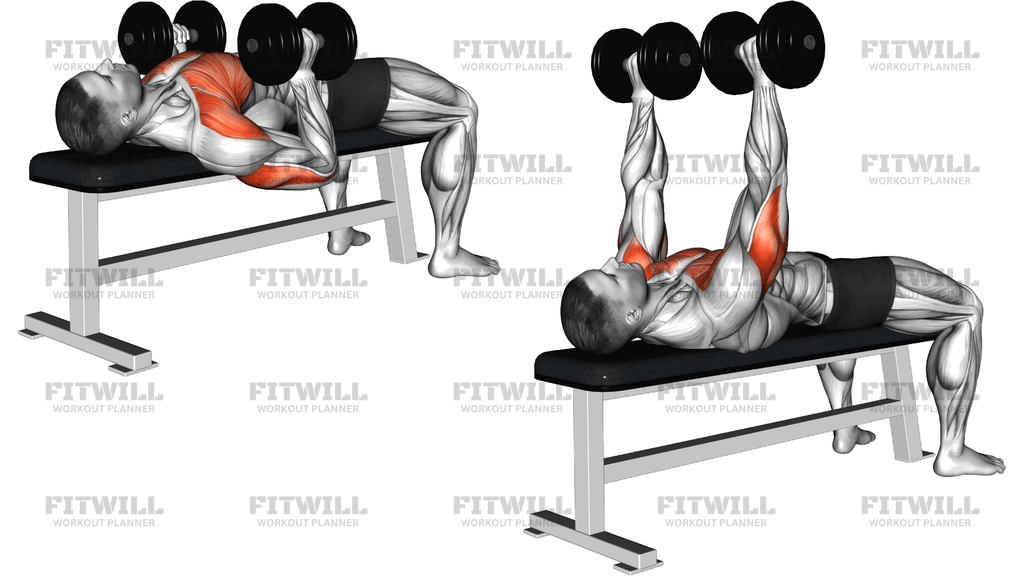
The Dumbbell Rotational Bench Press is a flat bench press variation where your wrists rotate as you press. Instead of holding one fixed grip from start to finish, you begin the rep with your palms facing forward or down toward your feet, then twist the dumbbells outward so your palms face each other by the time your arms reach the top. On the way down, the rotation reverses. This turning motion adds a dimension that a standard dumbbell bench press does not have, because your forearms, shoulders, and rotator cuff have to control the dumbbells in three dimensions instead of just moving them up and down.
The muscles doing the bulk of the work are the same as in a regular press: the chest drives the weight, with strong support from the triceps and the front of the shoulders. What changes is the extra demand placed on the smaller stabilizing muscles around the shoulder joint. Because the wrist position shifts throughout every rep, the rotator cuff and forearm muscles work continuously to keep the dumbbells balanced, which is exactly why many lifters use this variation as a joint-friendly way to press rather than as a pure heavy max-strength lift.
This exercise suits intermediate lifters who already own a solid flat dumbbell press and want something that challenges shoulder control, as well as anyone whose shoulders feel pinched in a fixed pronated grip. The rotation lets the upper arm settle into a more natural path at the top of the movement, and many people find the finish position noticeably more comfortable than a locked-out press with palms facing forward. It also works well as a second or third chest exercise on pressing days, using lighter weights than your standard press.
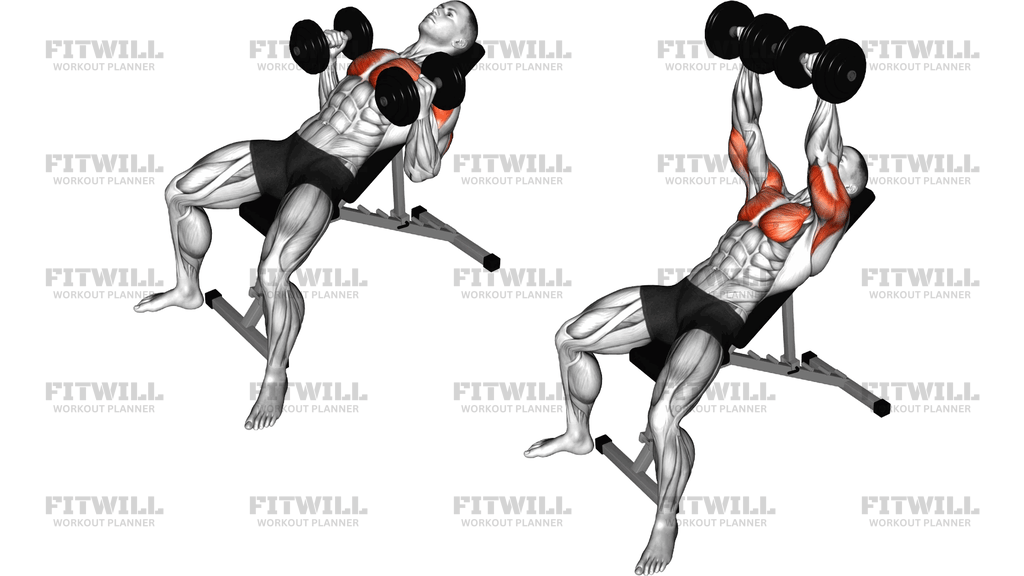
Setup matters here more than in a normal press because rotation gives the dumbbells a chance to drift. Lie flat on a bench with your head, upper back, and hips in contact with the pad, feet planted firmly on the floor, and start with the dumbbells at chest level, elbows at roughly 45 to 60 degrees from your torso. If you begin each rep from the same stable position, the rotation stays smooth and repeatable; if you start loose or twisted, the error compounds as the weight travels up.
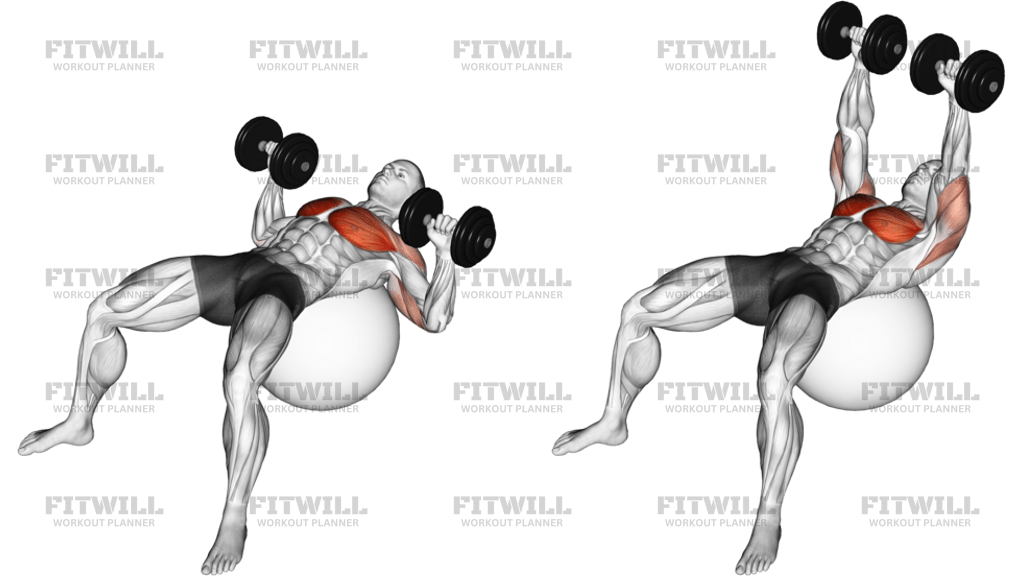
Execution should feel like a press and a turn happening together, not two separate actions. Press the dumbbells up along a slight inward arc while rotating your wrists outward, so that at lockout your palms face each other and the dumbbells nearly touch above your chest. Lower under control, rotating the palms back as the dumbbells descend, until they reach the sides of your chest. Because the wrists are moving, use a weight you can steer confidently for every rep, and stop the set as soon as the rotation becomes sloppy or the dumbbells start drifting toward your head or hips.
[ Workout Log & Planner ]
Put your next workout in Fitwill
Keep your plan and training log ready when you are.


Instructions
- Sit on the middle of a flat bench, place a dumbbell upright on each thigh, then kick the weights back one at a time as you lie down so they finish at chest level.
- Plant your feet flat on the floor, keep your head and upper back on the bench, and position the dumbbells beside your chest with palms facing forward toward your feet and elbows at about 45 degrees from your torso.
- Brace your core lightly and pull your shoulder blades down and back so your upper back stays pinned to the bench before the first press.
- Exhale as you press both dumbbells up and slightly inward, rotating your wrists outward during the press so your palms turn to face each other at the top.
- Finish each rep with your arms nearly straight above your upper chest, palms facing each other, dumbbells close together but not clanging.
- Pause briefly at lockout and feel the chest squeezed with the shoulder blades still retracted against the bench.
- Inhale as you lower the dumbbells along the same slight arc, rotating your palms back toward your feet so they return to the starting grip beside your chest.
- Keep your elbows from flaring wide past your torso line on the way down; the forearms should stay roughly vertical throughout.
- Complete all reps on both sides at the same tempo, then set the dumbbells down by bending your knees and returning them to your thighs before sitting up.
- Reset your shoulder position and grip before every rep if the dumbbells feel uneven in your hands.
Tips & Tricks
- Use a lighter weight than your normal flat dumbbell press. The rotating wrists change the leverage mid-rep, and a weight that feels fine at the bottom can get hard to control near lockout.
- Time the rotation with the press rather than doing it in two stages. Turning the wrists first and then pressing makes the rep feel disjointed and puts the shoulder in an awkward spot.
- If your elbows drift outward and your forearms tilt as you rotate, cue yourself to keep the elbows stacked under the dumbbells for the whole descent.
- Keep the dumbbells tracking above your lower chest and nipple line. Letting them drift toward your face as your palms turn is the most common path error in this movement.
- Squeeze the dumbbell handles firmly. A loose grip makes the rotation wobbly and forces your forearms to correct constantly instead of supporting the press.
- Stop short of letting the two dumbbells bang together at the top. A controlled near-touch keeps tension on the chest and protects the shoulder at lockout.
- Keep your ribcage down. Because the rotation adds coordination demands, many lifters arch their lower back and push their hips up without noticing; keep your glutes and midback on the bench.
- Breathe in a steady rhythm: exhale through the press and turn, inhale through the lowering and reverse rotation. Holding your breath for multiple rotations fatigues you fast.
- If one side rotates smoothly and the other lags, slow the tempo down for a few sessions rather than adding weight, so the weaker side sets the pace.
Frequently Asked Questions
Which muscles does the Dumbbell Rotational Bench Press work?
The chest is the primary mover, with the triceps and front shoulders assisting strongly. The rotation also keeps the rotator cuff and forearm stabilizers active through the entire range of motion.
Which direction should my palms rotate during the Dumbbell Rotational Bench Press?
Start with palms facing forward toward your feet at chest level, then rotate outward so your palms face each other at the top of the press. Reverse the rotation as you lower the dumbbells back down.
Is the Dumbbell Rotational Bench Press good for beginners?
Beginners should first build a stable standard dumbbell bench press, since the added rotation makes balancing the weights harder. Once that press feels controlled, this variation can be introduced with light dumbbells.
Why do my wrists wobble at the top of the press?
Usually the weight is too heavy or the rotation is happening too fast for you to control it. Reduce the load, grip the handles tightly, and make the turn smooth and deliberate through the second half of the press.
Can I substitute the Dumbbell Rotational Bench Press for a regular flat dumbbell press?
It can replace the regular press on some days, especially when your shoulders feel restricted in a fixed grip, but it is not the best choice for very heavy pressing because the rotating wrists limit how much load you can safely steer.
How heavy should I go on the Dumbbell Rotational Bench Press?
Choose a weight you can press with clean, symmetrical rotation for your target reps, typically lighter than your standard dumbbell press. If the dumbbells drift or the turn becomes jerky, drop the load.
Should my elbows flare out to the sides during this press?
A moderate flare of about 45 degrees from the torso is fine, but avoid tucking the elbows fully to the ribs or flaring them out to shoulder height. The rotation already changes the shoulder position, so keep the elbows stacked under the dumbbells.
Do I need a spotter for the Dumbbell Rotational Bench Press?
A spotter is a good idea when the dumbbells are near your limit, because rotating hands make bail-outs less predictable. With moderate weights and dumbbells you can lower safely to your thighs, you can train without one.
How is the Dumbbell Rotational Bench Press different from a neutral-grip dumbbell press?
A neutral-grip press holds the palms facing each other for the whole rep, while this exercise rotates from a forward-facing palm at the bottom to a neutral palm at the top, which adds forearm and shoulder stabilizer work and changes the feel of the chest contraction.
Is it safe for my shoulders?
Many lifters find the rotating press comfortable because the palms can settle into a natural position at lockout, but stop the set if you feel pinching or sharp discomfort. Keep the load moderate and the movement smooth, and consult a professional if shoulder pain persists.