Dumbbell Prone Full Can Exercise
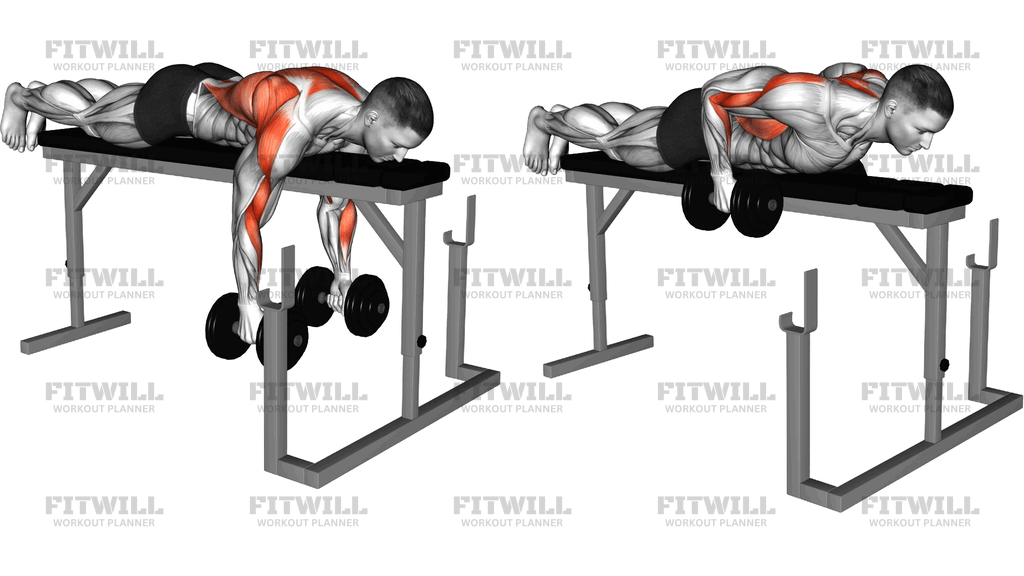
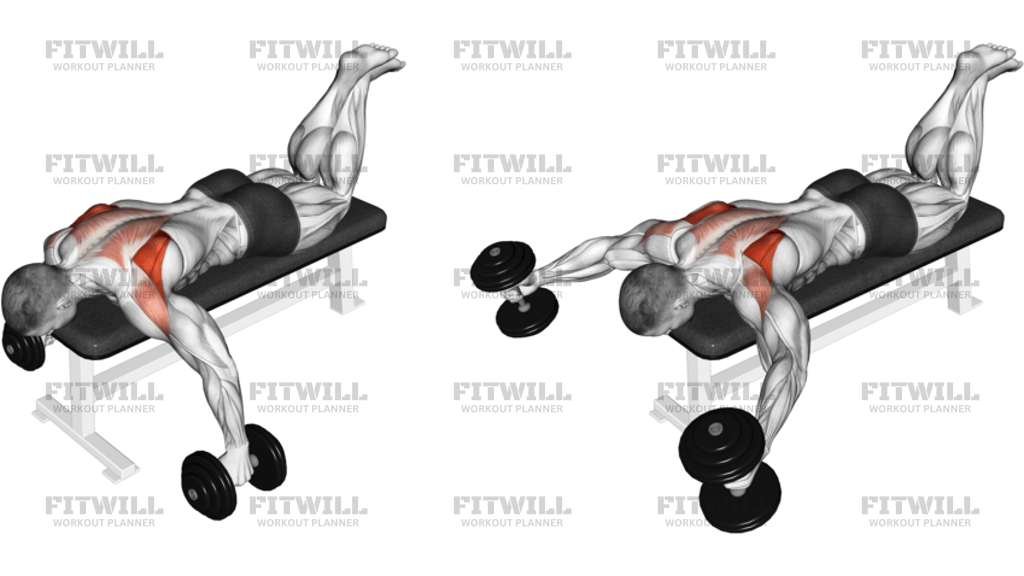
Dumbbell Prone Full Can Exercise is a chest-supported shoulder raise built to train the shoulders without the body English that often shows up in standing raises. The prone bench setup fixes the torso in place, so the movement comes from the shoulder joint and the muscles that keep the shoulder blade organized. That makes it a useful accessory exercise for lifters who want cleaner shoulder work, better control, and less cheating from the low back or legs.
The full can version uses a thumbs-up grip and a slightly forward arm path in the scapular plane, which is why it usually feels smoother than a straight-out lateral raise. Instead of flaring the arms directly to the side, the dumbbells travel a little in front of the torso while the elbows stay softly bent. That small angle matters because it changes how the shoulder is loaded and helps keep the rep friendly for controlled, repeatable training.
A good Dumbbell Prone Full Can Exercise rep starts with the chest and abdomen supported on the bench, neck long, ribs quiet, and shoulders set away from the ears. From there, the dumbbells should rise under control until the upper arms approach shoulder height, then pause briefly before lowering on the same path. The goal is not to chase the biggest arc possible; it is to keep the shoulders moving smoothly while the upper back and rotator cuff help stabilize the joint.
This exercise fits well in warmups, shoulder accessory blocks, and higher-rep hypertrophy work when precision matters more than load. It is especially useful after pressing or pulling sessions because it reinforces shoulder control without requiring heavy weights. Keep the motion strict, the dumbbells light enough to stay honest, and the neck relaxed so the upper traps do not take over the set.
When the setup is right, Dumbbell Prone Full Can Exercise is a small, deliberate movement that teaches the shoulders to work through a clean path. Beginners can learn it with very light dumbbells, and experienced lifters can use it to keep shoulder volume high without turning every rep into a shrug. The best sets look smooth from the first rep to the last, with the torso staying glued to the bench and the dumbbells following the same controlled arc each time.
[ Workout Log & Planner ]
Put your next workout in Fitwill
Keep your plan and training log ready when you are.


Instructions
- Lie face down on a flat bench with your chest supported, your head just past the front edge, and your feet relaxed behind you.
- Hold a dumbbell in each hand with your arms hanging straight down, your thumbs pointing up, and a soft bend in your elbows.
- Set your ribs against the bench, tighten your abdomen and glutes, and keep your neck long and neutral.
- Lift both dumbbells in a slight forward arc, about 30 degrees in front of your torso rather than straight out to the sides.
- Raise the weights until your upper arms are about in line with your shoulders or just below it.
- Pause briefly at the top without shrugging your shoulders toward your ears.
- Lower the dumbbells slowly along the same path until your arms hang under your shoulders again.
- Keep your chest pressed to the bench and exhale as you lift, then inhale as you lower.
- Set the dumbbells down carefully or reset at the bottom before starting the next rep.
Tips & Tricks
- Choose lighter dumbbells than you would for a standing lateral raise; this version turns sloppy fast when the load is too high.
- Keep your thumbs pointing up the whole time. If the palms start turning down, the shoulder position changes and the rep gets harder to control.
- Think about reaching the dumbbells long and slightly forward instead of yanking them upward. That cue helps keep the traps from shrugging early.
- Stop the raise when your upper arms line up with your shoulders. Going higher usually turns the top of the rep into a trap-driven shrug.
- Keep your chest glued to the bench. If your torso lifts to finish the rep, the weight is too heavy.
- Hold the bend in your elbows almost unchanged from the bottom to the top so the movement stays a shoulder raise, not a row.
- Lower the dumbbells for two to three seconds so the rear shoulders and upper back stay under tension.
- If the front edge of the bench digs into your stomach or ribs, slide a little higher so your chest is supported and your breathing stays smooth.
Frequently Asked Questions
What muscles does Dumbbell Prone Full Can Exercise work?
It mainly trains the shoulders, especially the rear and side delts, while the upper back and rotator cuff help keep the arms on a clean path.
Why is Dumbbell Prone Full Can Exercise done face down on a bench?
The bench supports your torso so you cannot cheat with body swing or low-back extension. That makes the shoulder work much cleaner and easier to control.
Why use a thumbs-up grip in Dumbbell Prone Full Can Exercise?
The thumbs-up position keeps the arm in a friendlier shoulder angle and usually feels smoother than turning the palms down. It also helps you keep the movement in the scapular plane instead of flaring straight out to the side.
How high should I lift the dumbbells in Dumbbell Prone Full Can Exercise?
Lift until your upper arms are about level with your shoulders, then stop. Higher than that often turns into a shrug instead of a clean shoulder raise.
Can beginners do Dumbbell Prone Full Can Exercise?
Yes, beginners can learn it well with very light dumbbells and a short, strict range. The bench support makes it easier to feel the shoulder working without balancing the whole body.
What is the most common mistake in Dumbbell Prone Full Can Exercise?
Shrugging the shoulders up to the ears is the biggest problem. Keep the neck long and stop the rep before the traps take over.
Is Dumbbell Prone Full Can Exercise the same as a prone lateral raise?
Not quite. The full can version keeps the thumbs up and the arms slightly forward, which usually makes the shoulder feel more comfortable and controlled.
What rep range works best for Dumbbell Prone Full Can Exercise?
Most people do best with moderate to high reps, usually with light weights, because the exercise is about shoulder control rather than heavy loading.
What should I do if my lower back or neck starts helping?
Lower the weight, keep your ribs on the bench, and shorten the range until the movement stays isolated to the shoulders and upper back.