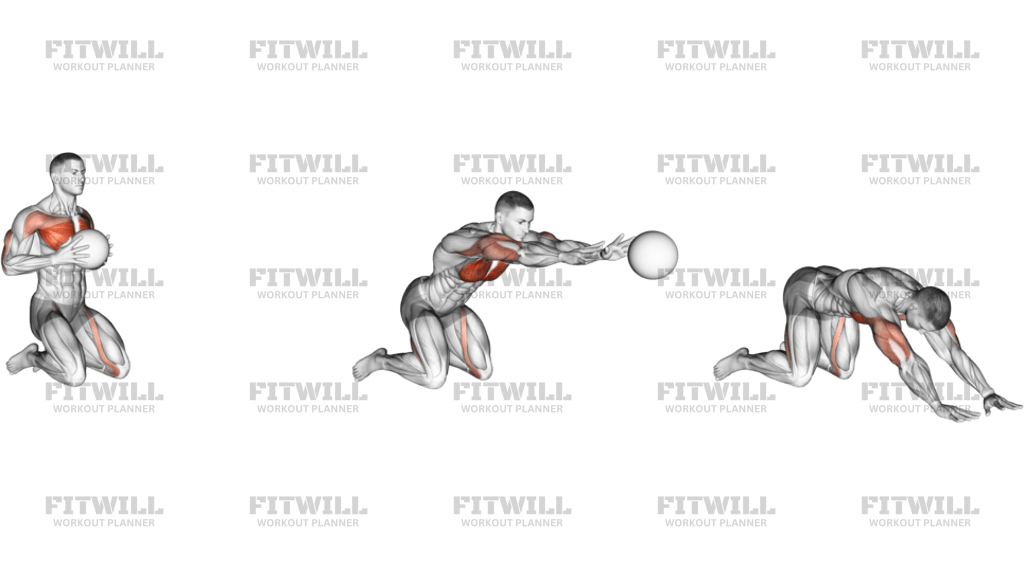
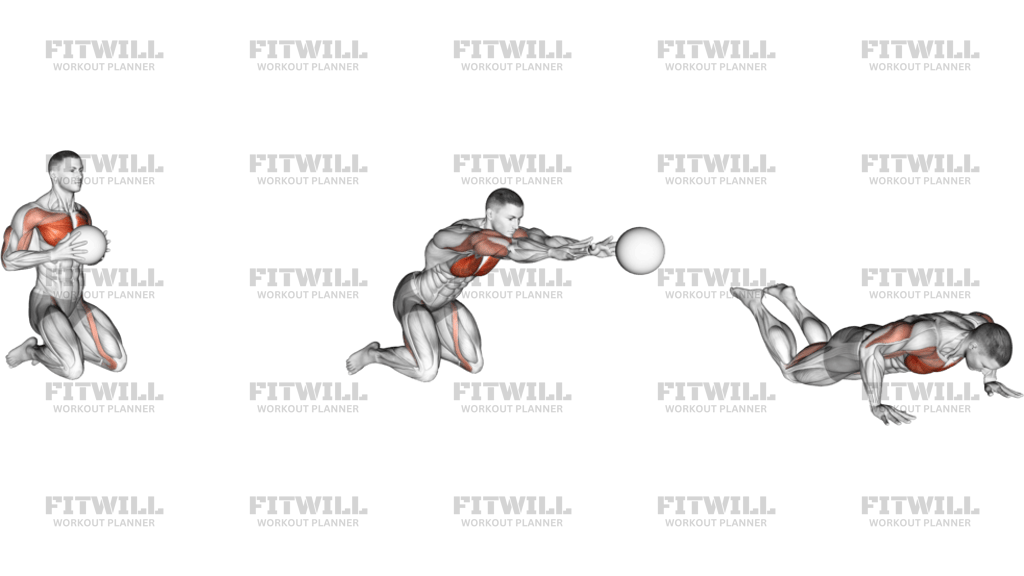
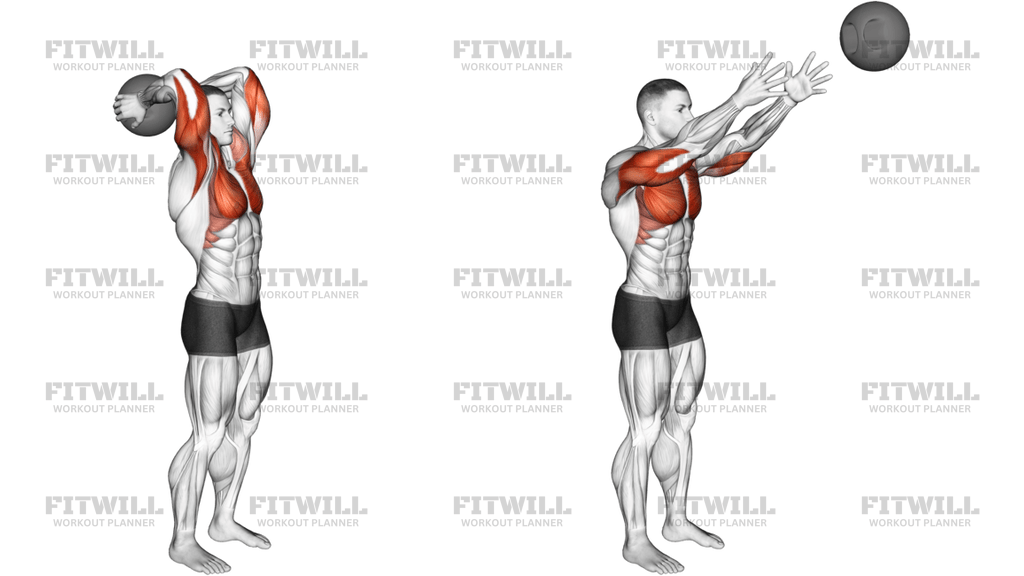
Medicine Ball Horizontal Smash
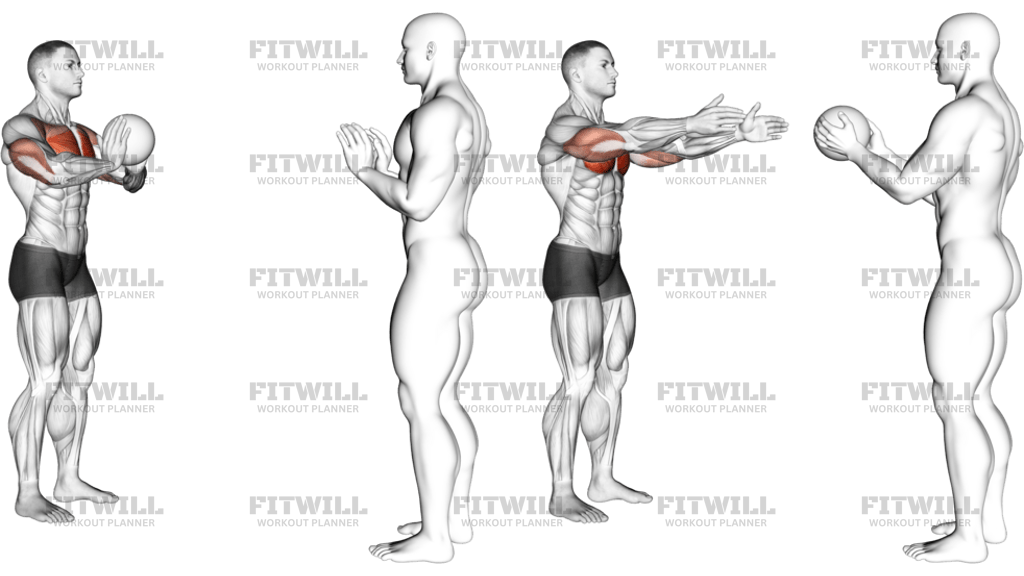
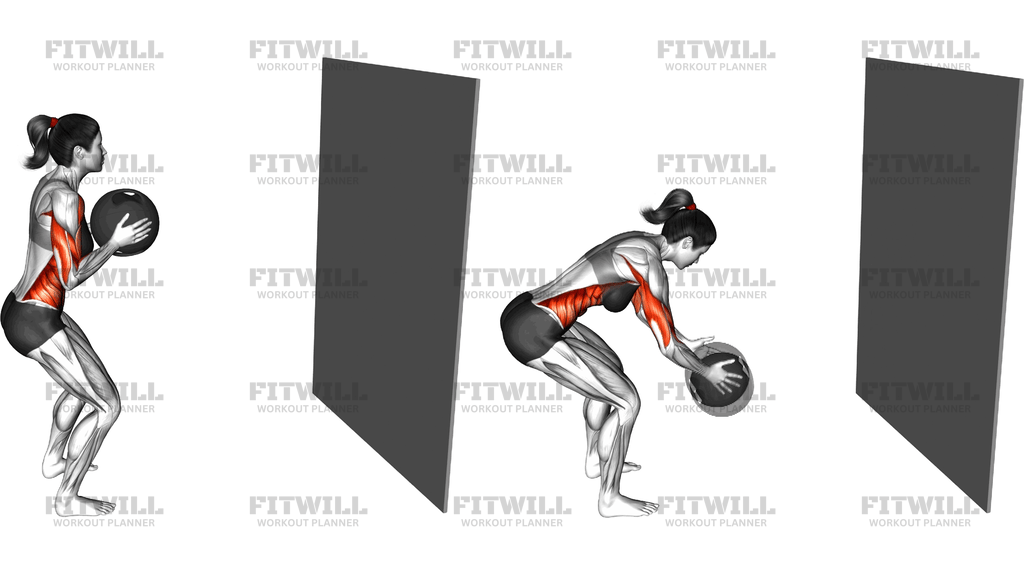
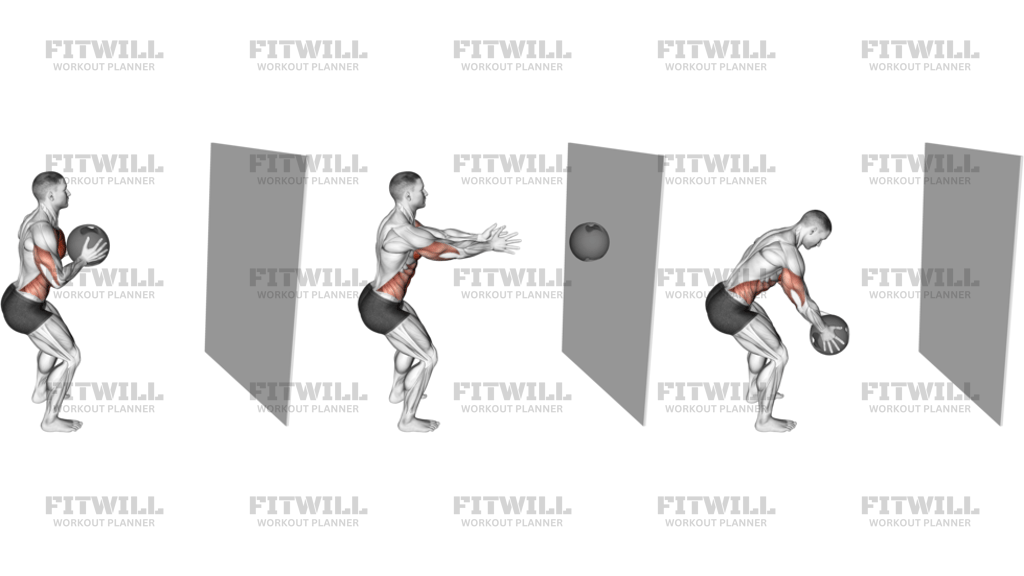
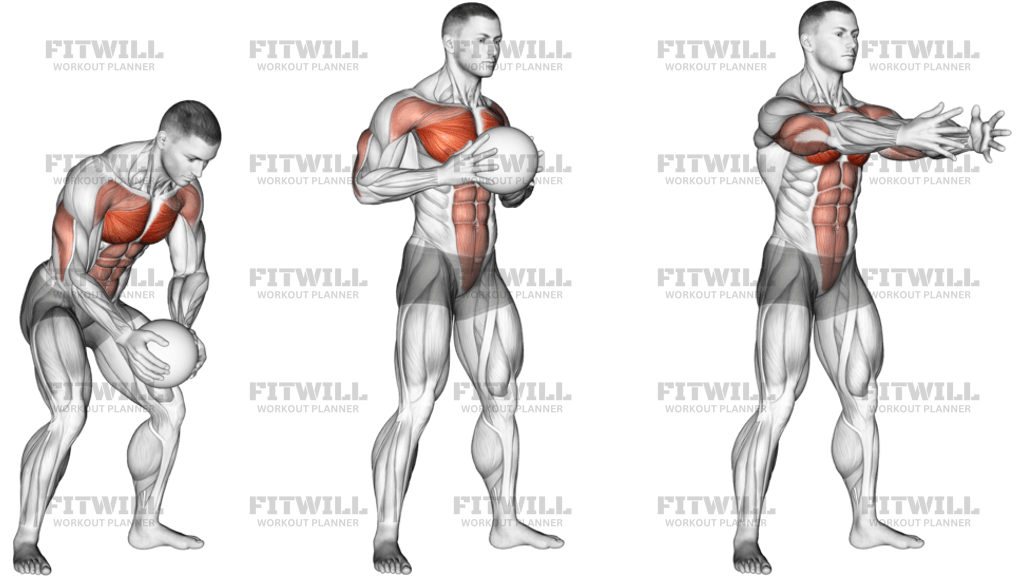
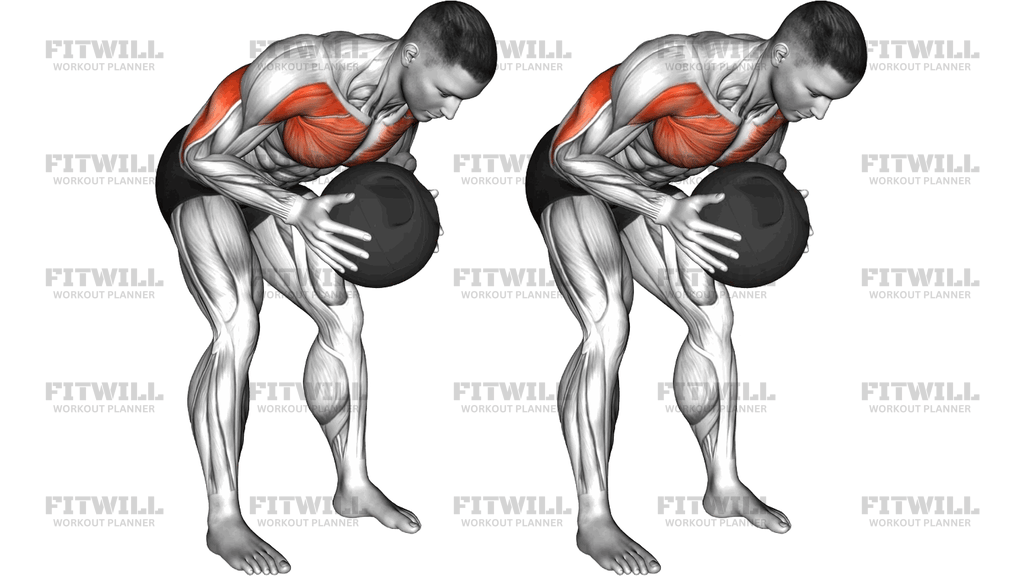
The Medicine Ball Horizontal Smash is an explosive throw performed from a hip-hinged stance, where you drive the ball horizontally to one side using the chest, shoulders, and trunk rather than lifting it overhead. Unlike the vertical slam, where the ball travels straight down into the floor, this version sends the ball out to the side at roughly waist-to-chest height, either against a sturdy wall, into a open floor space, or to a partner. The starting position shown here is the key to the whole movement: knees soft, hips pushed back, torso angled forward, and the ball held with both hands in front of the chest.
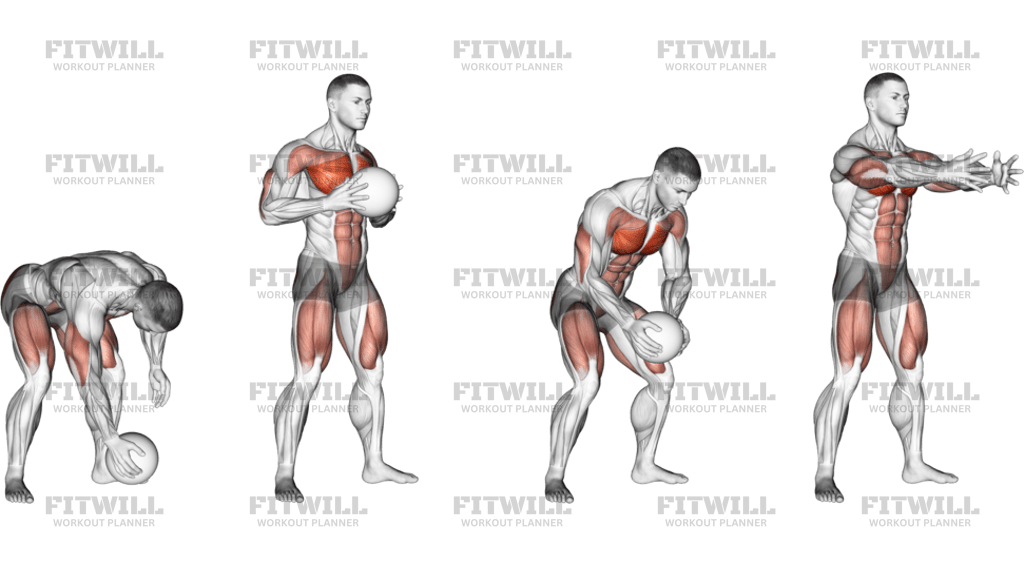
This drill trains explosive horizontal pressing and rotational power. The pectoral muscles and front delts do the bulk of the accelerating work, the triceps finish the throw, and the obliques and lower back stabilize and transfer force as the torso rotates slightly toward the release. Because you hinge at the hips instead of squatting, the hamstrings and glutes also stay involved as postural support throughout the set.
The hinged setup matters more than it might look. With the torso leaned forward and the ball held close to the body, your arms are free to snap the ball outward in a short, violent arc, which is exactly what develops punching, throwing, and pushing power. If you stand too upright, the movement drifts toward a chest pass and loses the hip-hinge stability demand that makes this variation valuable.
To execute well, grip the ball firmly with both hands on opposite sides, brace the trunk as if about to absorb contact, and throw with intent — a hesitant push leaves the ball lobbing and robs you of the training effect. After release, let the arms follow through naturally, then either chase the rebound, take the returned ball from a partner, or walk to the ball and reset the hinge before the next rep.
This exercise fits well into conditioning circuits, combat-sport and throwing-athlete preparation, and general power work at the start of a session when the nervous system is fresh. Because each rep is a maximal-effort throw, sets are usually short — three to six explosive reps per side — rather than long high-repetition sets where form breaks down. Choose a ball you can accelerate hard; a ball that is too heavy turns an explosive throw into a slow grind.
[ Workout Log & Planner ]
Put your next workout in Fitwill
Keep your plan and training log ready when you are.


Instructions
- Stand with feet roughly shoulder-width apart, knees softly bent, and hinge forward from the hips so your torso is angled toward the floor with a flat back.
- Hold the medicine ball with both hands, one on each side of the ball, and draw it in close to your chest and upper abdomen.
- Brace your core and squeeze your shoulder blades down so your torso feels stable before any throwing begins.
- Keep your eyes on the target — a wall, open floor space, or partner — positioned out to one side at chest height.
- Explosively push the ball horizontally away from your chest toward the target, letting your torso rotate slightly in the direction of the throw.
- Extend the arms fully at release and allow a short, natural follow-through rather than stopping the arms abruptly.
- Exhale sharply through the throw and inhale as you recover.
- If throwing against a wall or to a partner, absorb the rebound with soft elbows and bring the ball back into the hinged position.
- Reset the hip hinge and your brace before every rep instead of throwing again from a slack position.
- Complete all reps on one side, then switch the throw to the opposite side for balanced development.
Tips & Tricks
- A common mistake is rounding the lower back in the hinge; push the hips back and keep the chest proud so the spine stays neutral under the throwing effort.
- If the ball lobbs upward instead of traveling flat, you are pushing too much from underneath — aim the throw slightly downward through the line of the target.
- Holding the ball far away from the body lengthens the lever and strains the shoulders; keep it tucked close to the chest until the moment of release.
- Quality comes from speed, not ball weight — if you cannot throw with full intent, drop to a lighter ball.
- Rotate from the trunk toward the target instead of only extending the arms; the chest and obliques should feel like they drive the throw.
- Do not let the knees drift forward or lock out — the hinge position should stay consistent from the first rep to the last.
- Reset your brace between reps; throwing again from a loose torso is where most sloppy, low-power reps happen.
- Work on a surface that gives the ball a predictable rebound, and never perform this throw toward a window, mirror, or anything fragile.
- Keep reps per set low and effort high — once the throws slow down, the set is over.
Frequently Asked Questions
Which muscles does the Medicine Ball Horizontal Smash work?
The chest and front shoulders do most of the accelerating, with the triceps finishing the throw. The obliques and lower back stabilize and rotate the torso, while the glutes and hamstrings support the hinged position.
How is the Medicine Ball Horizontal Smash different from a regular medicine ball slam?
A regular slam throws the ball straight down from an overhead position, while the Horizontal Smash sends it out to the side at chest height from a hip hinge. This shifts the emphasis toward horizontal pressing power and trunk rotation instead of vertical hip drive.
Can beginners do the Medicine Ball Horizontal Smash?
Yes, as long as they start with a light ball and learn the hip hinge first. Beginners should throw at maybe seventy to eighty percent effort for the first few sessions while the hinge position becomes automatic.
What weight medicine ball should I use for the Horizontal Smash?
Pick a ball you can throw with full speed — typically 4 to 8 kg for most adults. If the ball noticeably slows your throw, it is too heavy for power development.
Why does the setup use a forward lean instead of a tall standing position?
The hip hinge with the ball held close to the chest lets the arms deliver a short, explosive horizontal throw while the trunk resists collapsing. Standing upright turns the drill into a simple chest pass and removes much of the stability demand.
Do I need a wall or a partner for this exercise?
No — you can throw into open floor space or grass and walk to the ball to reset. A wall or partner simply shortens the rest between reps and gives a faster return.
What is the most common mistake in the Medicine Ball Horizontal Smash?
Throwing with the arms only while the torso stays passive. Let the chest, shoulders, and a slight trunk rotation drive the ball out, and keep the spine neutral in the hinge rather than rounding forward.
How many reps and sets should I do?
Three to six explosive throws per side for three to five sets works well. Because this is a power drill, stop the set as soon as the throws lose speed.
Is the Medicine Ball Horizontal Smash safe for the lower back?
It is generally safe when the hinge is controlled and the spine stays neutral, but avoid it if you cannot hold a flat-back hinge comfortably. Keep throws to one side at a time and reset your brace between reps rather than twisting forcefully from a loose position.
Where should I place this exercise in my workout?
Early in the session, after your warm-up and before heavy lifting, when you are fresh and can throw at maximal intent. It also works well as a power station in circuit training, provided the ball stays light enough to throw fast.