Medicine Ball Chest Pass Against Wall
Medicine Ball Chest Pass Against Wall is a standing power drill that teaches you to drive a medicine ball straight from the chest into a wall and absorb the rebound with control. It looks simple, but the exercise is really about coordinating the legs, torso, shoulders, and arms so the pass is explosive without turning into a sloppy throw. Because the wall gives you instant feedback, every rep shows whether your stance, brace, and release are sharp enough to keep the ball on a clean line.
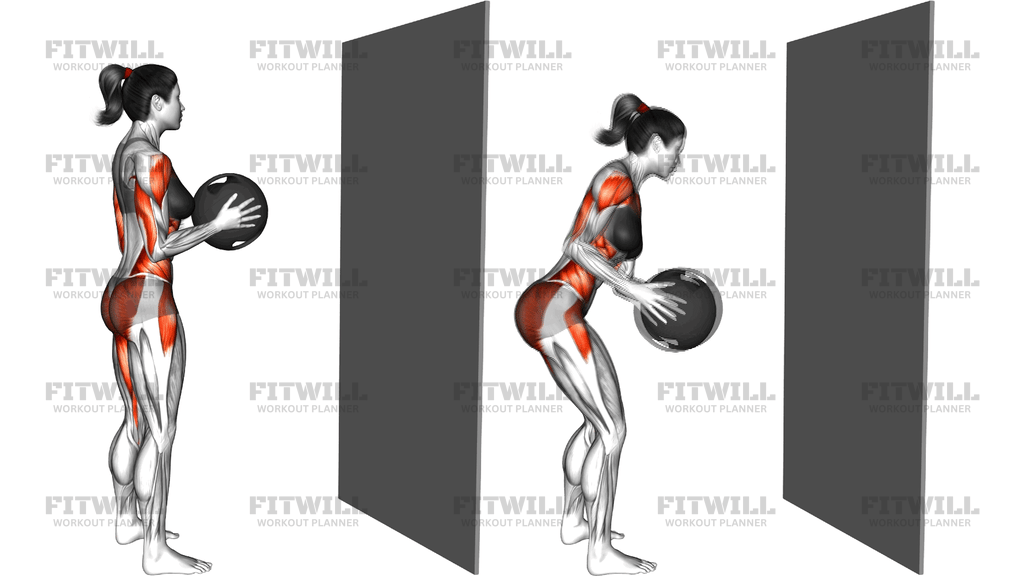
The movement is usually used for upper-body power, warmups, athletic conditioning, or sport-specific preparation rather than slow hypertrophy work. The chest, front shoulders, and triceps do the pressing work, while the core and lower body keep your torso stacked and stable as you drive the ball forward. The image shows a shallow athletic stance with the hips back and knees bent, which is important because the pass should start from a strong base instead of a loose upright position.
Setup matters because the quality of the rebound depends on where you stand and how you receive the ball. Face the wall, hold the ball at chest height, and keep enough distance that your arms can extend without overreaching. From there, brace, push through the floor, and release the ball straight ahead with a firm, fast press. When it comes back, meet it with soft elbows and a controlled catch so the return does not slam your shoulders backward.
The best repetitions feel crisp and athletic. You should accelerate the ball into the wall, briefly own the catch, and reset before the next pass instead of chasing speed with rushing or body sway. Use a light enough medicine ball that you can keep the throw path consistent, stay balanced on the balls of your feet, and stop the set if the ball starts drifting off line or your torso starts collapsing toward the wall. That keeps the drill useful for power development and safer on the wrists, shoulders, and lower back.
[ Workout Log & Planner ]
Put your next workout in Fitwill
Keep your plan and training log ready when you are.


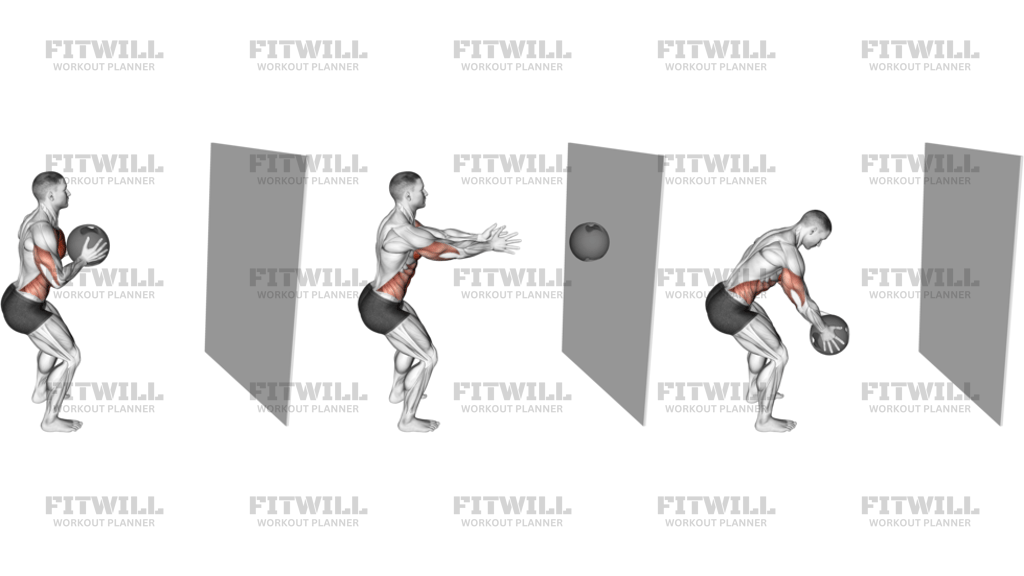
Instructions
- Stand facing a solid wall and hold the medicine ball at chest height with both hands, elbows bent and tucked just in front of your ribcage.
- Step back far enough that you can extend your arms fully into the wall without leaning or losing balance.
- Set your feet about shoulder-width apart, soften your knees, and sit into a shallow athletic stance with your hips slightly back.
- Brace your midsection and keep your chest tall so your torso stays stacked over your feet before the throw.
- Drive the ball straight forward by extending your arms powerfully from the chest and shoulders.
- Release the ball into the wall at chest level with an explosive but controlled pass, not a lob or an overhead throw.
- Catch the rebound with both hands, letting your elbows bend to absorb the force instead of letting the ball hit your chest hard.
- Reset the ball back at the chest, reestablish your stance, and repeat for the planned reps.
- Breathe in during the reset and exhale sharply as you drive each pass into the wall.
Tips & Tricks
- Pick a medicine ball light enough that the rebound is quick but not so heavy that you have to shove it off your chest.
- Keep the throw path straight ahead; if the ball drifts upward or downward, adjust your hand height instead of muscling the pass.
- Use your legs and trunk to stay braced, but do not turn this into a squat throw with a big dip and drive.
- Receive the ball quietly with bent elbows and relaxed shoulders so the catch does not jar your wrists or collarbones.
- Stay on the balls of your feet without letting your heels pop up so far that you lose balance on the catch.
- If the wall is too close, the pass becomes cramped and hard to control; if it is too far, you will start reaching and losing power.
- Keep your chin neutral and your ribs down so you do not overarch your lower back while chasing the pass.
- Stop the set when the rebound speed causes you to shorten the catch or twist sideways to save the rep.
Frequently Asked Questions
What does Medicine Ball Chest Pass Against Wall train?
It trains explosive chest, shoulder, and triceps drive along with core stiffness and fast hand-eye coordination on the catch.
Is this a strength exercise or a power exercise?
It is mainly a power drill. The goal is to move the ball fast and clean, not to grind through slow, heavy reps.
How should I stand for the wall pass?
Use a shoulder-width athletic stance with soft knees, hips slightly back, and your torso stacked so the throw comes from a stable base.
How far should I stand from the wall?
Stand far enough to fully extend your arms on the pass without leaning forward, but close enough that you can still catch the rebound with control.
What is the biggest mistake on this exercise?
The most common mistake is turning it into a loose shove or letting the catch slam the shoulders backward instead of absorbing the rebound.
Can beginners use this movement?
Yes, beginners can use a light medicine ball and focus on a clean chest-height pass and a soft catch before trying faster reps.
What muscles should I feel most?
You should feel the chest, front shoulders, and triceps on the throw, with the core working hard to keep the torso steady.
How many reps work best?
Short sets of explosive reps usually work best because the goal is speed and precision, not fatigue.
How do I make the exercise harder?
Use a slightly heavier ball, stand a little farther back, or make each catch more precise, but keep the pass line and posture clean.