Lever Pec Deck Fly
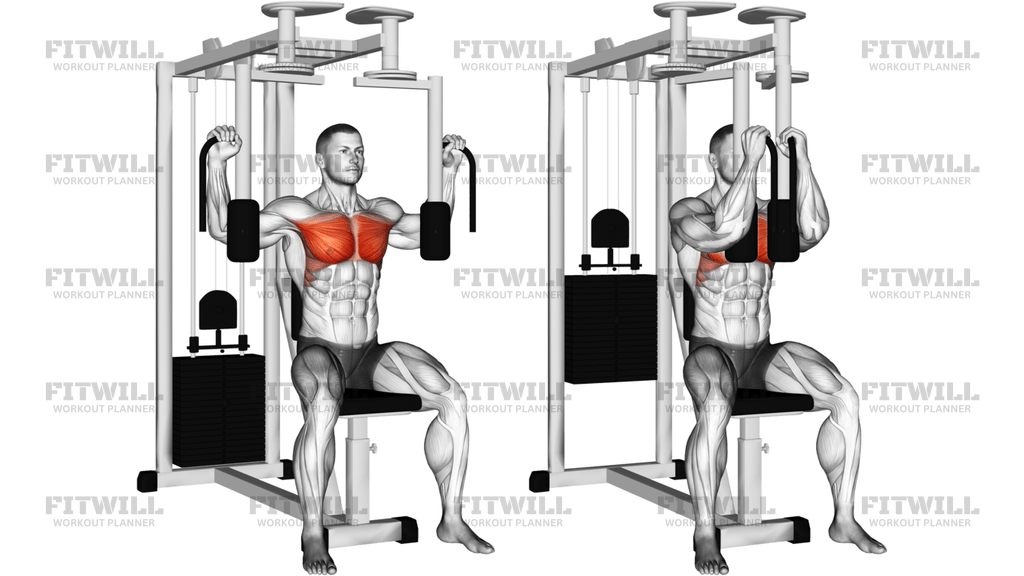
Lever Pec Deck Fly is a machine-based chest fly that keeps the arms on a fixed arc so you can focus on squeezing the chest instead of balancing a free weight. It is especially useful when you want a straightforward isolation movement for chest size, controlled tension, and clean repetition quality. Because the machine guides the path, the exercise is easier to learn than a dumbbell fly and usually lets you train the chest with less setup complexity.
The setup matters more than the load on this movement. Set the seat so the handles or forearm pads line up with mid-chest, then sit tall with your upper back supported, feet flat, and chest lifted. Your shoulders should stay down and away from your ears, and your elbows should have a slight bend so the joints stay stacked as the arms travel. If the seat is too low or too high, the front of the shoulder tends to take over and the fly stops feeling like a chest exercise.
Each rep should feel like a controlled hug. Open the arms until you feel a stretch across the chest without losing contact with the pad or letting the shoulders roll forward, then bring the handles or pads together in front of the chest in a smooth arc. Pause briefly when the chest is fully shortened, then return slowly to the start while keeping tension on the machine and breathing under control. The lowering phase matters here because it keeps the chest loaded and prevents the stack from dropping too quickly.
Lever Pec Deck Fly works well as accessory chest work after a press, as a warm-up to get blood into the upper body, or as a lower-fatigue option when you still want direct chest work without a barbell. It is also a good choice for beginners because the path is fixed and the machine helps remove a lot of balance demands. Keep the range pain-free and controlled, especially near the bottom, where too much stretch can irritate the front of the shoulder.
For the best result, choose a load that lets you keep the same arm angle from the first rep to the last. The goal is not to bounce the weight or slam the pads together, but to keep the chest doing the work through a smooth, repeatable arc. When the movement stays quiet and controlled, the machine becomes a very precise way to train the chest without relying on momentum.
[ Workout Log & Planner ]
Put your next workout in Fitwill
Keep your plan and training log ready when you are.


Instructions
- Adjust the seat so the handles or forearm pads line up with the middle of your chest, then sit with your back against the pad and your feet flat on the floor.
- Plant your upper back on the seat, lift your chest, and keep your shoulders down so the machine arms start from an open but controlled position.
- Place your forearms and elbows on the pads or grip the handles with a neutral wrist and a slight bend in the elbows.
- Brace your torso without arching hard, and keep your neck long and relaxed before the first rep.
- Drive the arms together in a smooth hugging arc until the handles or pads meet in front of your chest.
- Squeeze the chest for a brief pause at the front without letting the shoulders roll forward.
- Lower the arms slowly until you feel a stretch across the chest, but stop before the shoulders lose position or the stack drops.
- Breathe out as you close the arms and inhale as you open them back up.
- Finish the set by returning the machine arms under control and letting the weight settle before standing up.
Tips & Tricks
- Set the seat height first; if the handles sit too low, the front delts usually take over and the fly turns into a shoulder movement.
- Keep a small bend in the elbows the whole time so the chest stays loaded and the elbows do not lock out at the front.
- Stop the opening phase when you feel a chest stretch, not when the shoulders start to glide forward.
- Do not slam the machine arms together; a brief squeeze at the front is better than using momentum to finish the rep.
- If your wrists bend back, adjust your grip on the handles so the forearms stay stacked and relaxed.
- Use a lighter load if the movement gets jerky at the bottom of the rep or your shoulders lift off the pad.
- Keep the chest tall and the ribs controlled; over-arching the lower back makes the machine feel heavier without improving the rep.
- Slow the return for two to three seconds so the chest stays under tension instead of letting the weight drop.
- If one side reaches the front earlier than the other, reduce the load and match the arm path before adding weight.
Frequently Asked Questions
What muscles does Lever Pec Deck Fly train?
It mainly trains the chest, with the front shoulders helping during the arm arc. The triceps assist a little, but they should not be doing most of the work.
Can beginners perform this exercise?
Yes. The fixed machine path makes Lever Pec Deck Fly beginner-friendly as long as the seat height is correct and the load is light enough to keep the shoulders in position.
How far should I open my arms on Lever Pec Deck Fly?
Open until you feel a stretch across the chest, then stop before the shoulders roll forward or the upper arm loses control. The bottom range should feel like tension, not a pinch.
Should my elbows or hands lead the movement?
On Lever Pec Deck Fly, think about bringing the upper arms together in a hugging motion. Keep the elbows softly bent and let the chest guide the arc instead of reaching with the hands.
Why do my shoulders feel this more than my chest?
The seat is usually too low, the arms are opening too far, or the shoulders are drifting forward at the bottom. Raise or lower the seat and shorten the range so the chest stays in control.
Is Lever Pec Deck Fly better than dumbbell flys?
It is often easier to stabilize and easier to repeat with consistent tension. Dumbbell flys give more freedom, but the machine version usually feels more controlled and shoulder-friendly.
Where should Lever Pec Deck Fly fit in my workout?
It works well after presses as accessory chest work, or earlier in a session if you want a low-skill warm-up that opens the chest and shoulders without much fatigue.
What should I do if the machine feels rough at the bottom?
Reduce the load and shorten the opening range until the movement feels smooth. A rough bottom usually means you are asking for more stretch than your shoulders can control.