Lever Bicep Curl
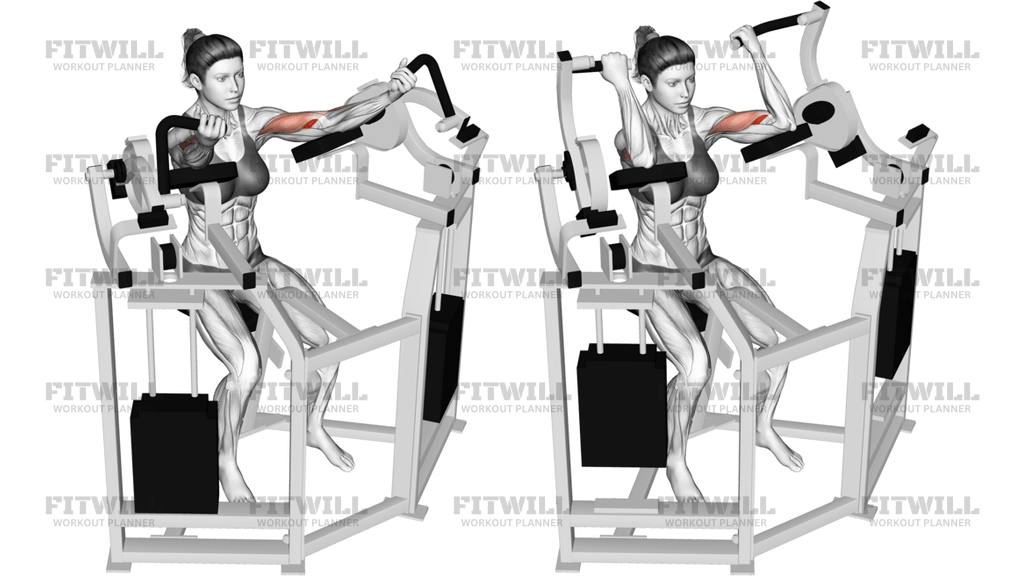
Lever Bicep Curl is a seated machine curl that keeps the upper arms supported while the elbows do the work. It is a strict arm exercise built around elbow flexion, so the torso does not need to swing and the set stays focused on the front of the upper arms. The machine path also makes it a useful option when you want repeatable tension and cleaner form than a free-weight curl.
The main muscles trained are the biceps, with the brachialis and forearms helping through the pulling arc. Because the arms are braced against the pads, the shoulders and upper back should stay quiet while the curl happens. That support is the point of the exercise: it lets you isolate the arm without turning every rep into a body English contest.
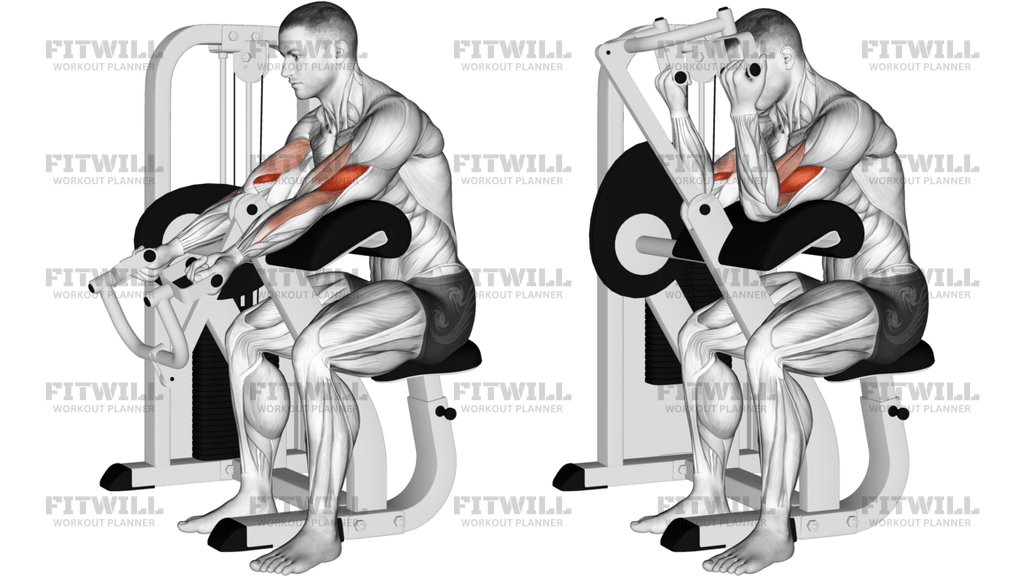
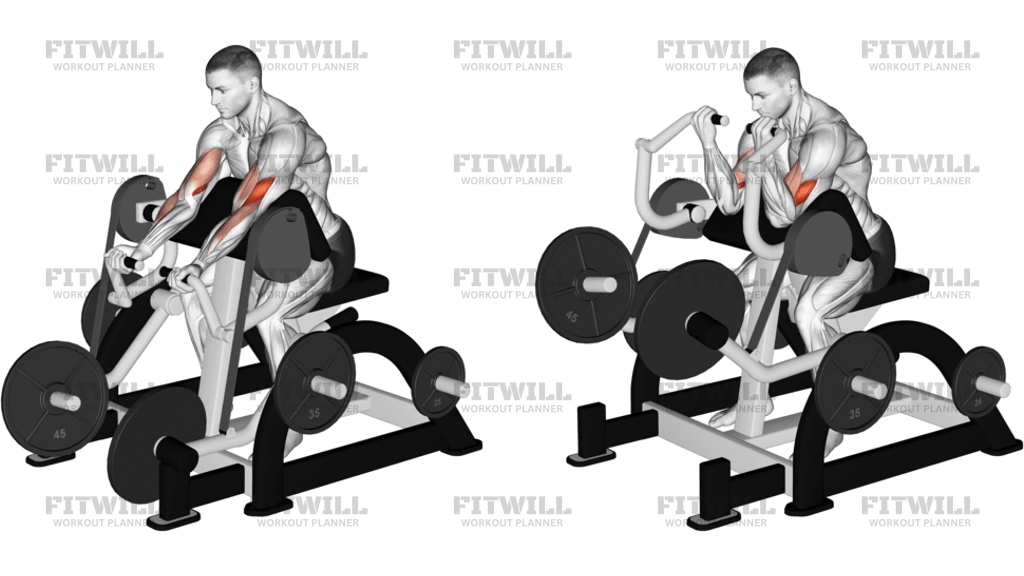
The setup matters more here than on many curls. Sit squarely in the seat, plant both feet, and bring the back of the upper arms into the arm pads so the elbows line up with the machine's pivot or handle path. Grip the handles with straight wrists and keep the chest steady against the support. If the seat is too low, too high, or too far away, the shoulders will take over and the curl will feel awkward before the first rep even starts.
On each rep, curl by bending the elbows and bringing the handles toward your shoulders or upper chest, depending on the machine design. Keep the upper arms pressed into the pads and avoid letting the elbows drift forward as the weight rises. Squeeze briefly at the top, then lower the handles slowly until the arms are almost straight and the biceps are still under tension. Breathe out as you curl and inhale as you lower.
Lever Bicep Curl works well as a finishing movement after bigger pulling exercises, or as a strict arm-builder when you want to stay away from swinging dumbbells and cheating reps. It is also a good choice for newer lifters because the machine gives a clear path and a stable body position. Keep the load honest, use a controlled lowering phase, and stop the set if your shoulders start rolling forward or your wrists lose a neutral position.
[ Workout Log & Planner ]
Put your next workout in Fitwill
Keep your plan and training log ready when you are.


Instructions
- Sit on the lever curl machine with your chest against the support and the backs of your upper arms resting on the pads.
- Plant both feet flat, line your elbows up with the machine's pivot or handle path, and grip the handles with straight wrists.
- Set your shoulders down and back, then keep your upper arms pressed into the pads before the first rep.
- Start with your arms nearly straight and the handles hanging under control, without locking out hard at the bottom.
- Curl the handles upward by bending only at the elbows and bringing your hands toward your shoulders or upper chest.
- Keep your elbows and upper arms pinned to the pads so your torso does not lean or swing to help the lift.
- Squeeze briefly at the top without shrugging your shoulders or letting your wrists bend back.
- Lower the handles slowly until your arms are almost straight, then reset your posture before the next rep.
- Breathe out as you curl up and inhale as you return to the start.
- Finish the set by lowering the handles under control and stepping out of the machine safely.
Tips & Tricks
- Set the seat height so the elbow joint lines up with the machine pivot before you start; that keeps the curl smooth instead of awkward.
- Keep your chest heavy against the support so the set does not turn into a lean-and-heave motion.
- If your elbows slide forward off the pads, drop the load and shorten the range slightly until the upper arms stay fixed.
- Use a grip that lets the wrists stay stacked over the forearms; bending the wrists back usually makes the handles feel heavier than they are.
- Pause for a second at the top only if you can keep the shoulders down; otherwise, the pause should happen lower in the range.
- Lower the handles more slowly than you lift them to keep tension on the biceps instead of letting the machine drop the stack.
- Stop one rep before the bottom if the machine yanks your elbows straight or forces the shoulders to roll forward.
- Choose a load that lets both sides match evenly on independent arms rather than letting one handle race ahead of the other.
- If you feel the front delts taking over, move the seat or chest pad so the upper arms are better supported.
- Keep the rep path clean and repeatable; this exercise works best when every curl looks almost identical.
Frequently Asked Questions
What muscles does Lever Bicep Curl work most?
It mainly trains the biceps, with the brachialis and forearms helping through the curl. The shoulders stay mostly supportive if the upper arms stay on the pads.
Can beginners perform this exercise?
Yes. The machine path and arm pads make Lever Bicep Curl easier to learn than a free curl, as long as the seat is set correctly and the wrists stay straight.
Where should my elbows be on Lever Bicep Curl?
Your elbows should stay planted on the arm pads and line up with the machine's pivot or handle path. If they drift forward, the shoulders start helping too much.
Should I curl both handles at once or one arm at a time?
Either works if the machine is built for independent arms. If one side dominates, use single-arm reps or slow the stronger side down so both arms work evenly.
How far should I lower the handles?
Lower until the arms are almost straight and the biceps still have tension. Don't slam the handles into the bottom or let the elbows lose the pad contact.
Why do my shoulders take over on this machine?
The seat is usually off, or the elbows are drifting off the pads. Reset the position, keep the chest supported, and lighten the load if you still have to shrug to finish the rep.
Is Lever Bicep Curl a good replacement for dumbbell curls?
Yes, especially if you want stricter form and less body swing. Dumbbells give more freedom, while the machine gives more stability and constant support.
How many reps should I do on Lever Bicep Curl?
Most people do well with 8-15 controlled reps. The best range is the one where you can keep the upper arms pinned and the lowering phase slow.