Lever Tower Chest Press
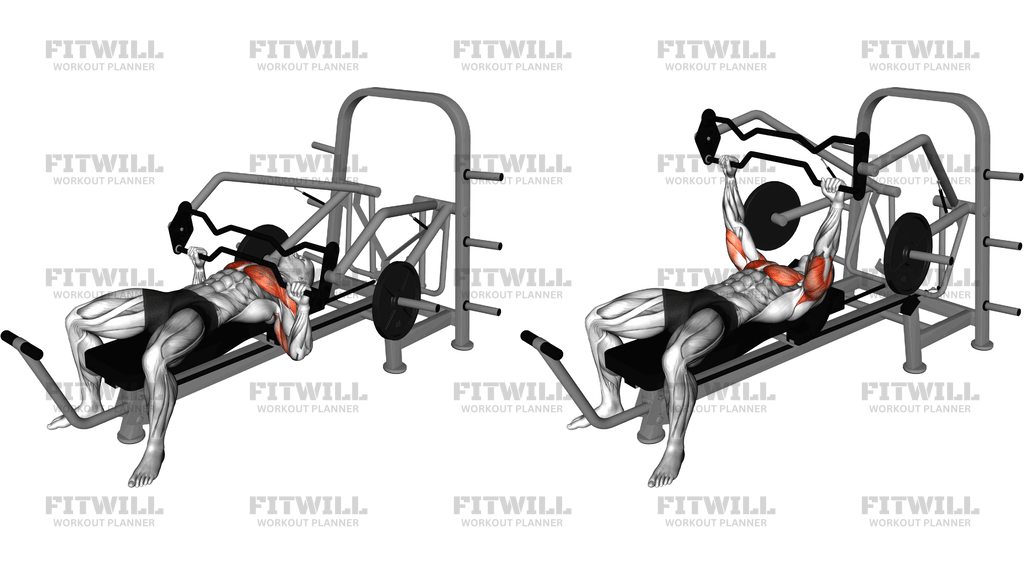
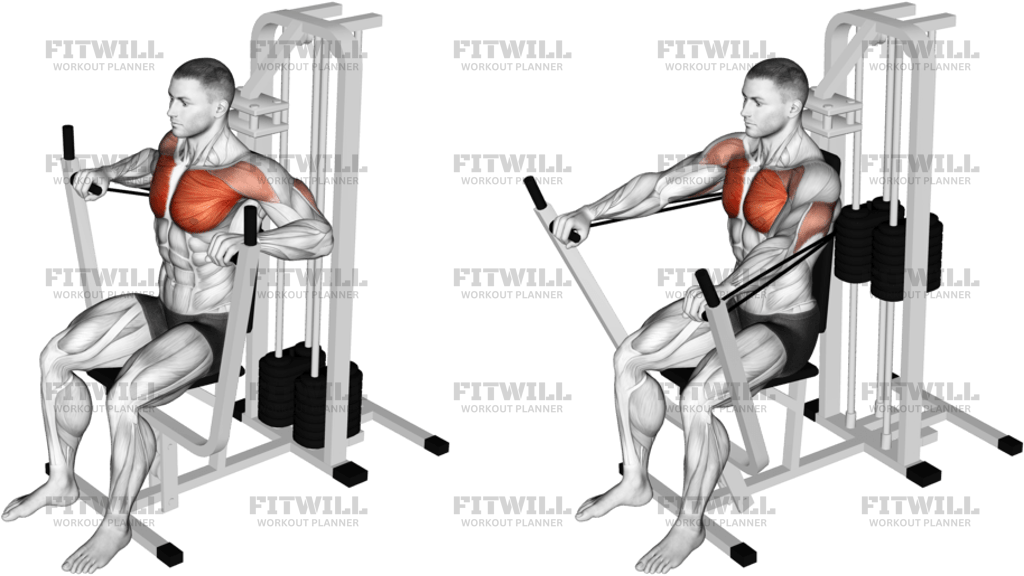
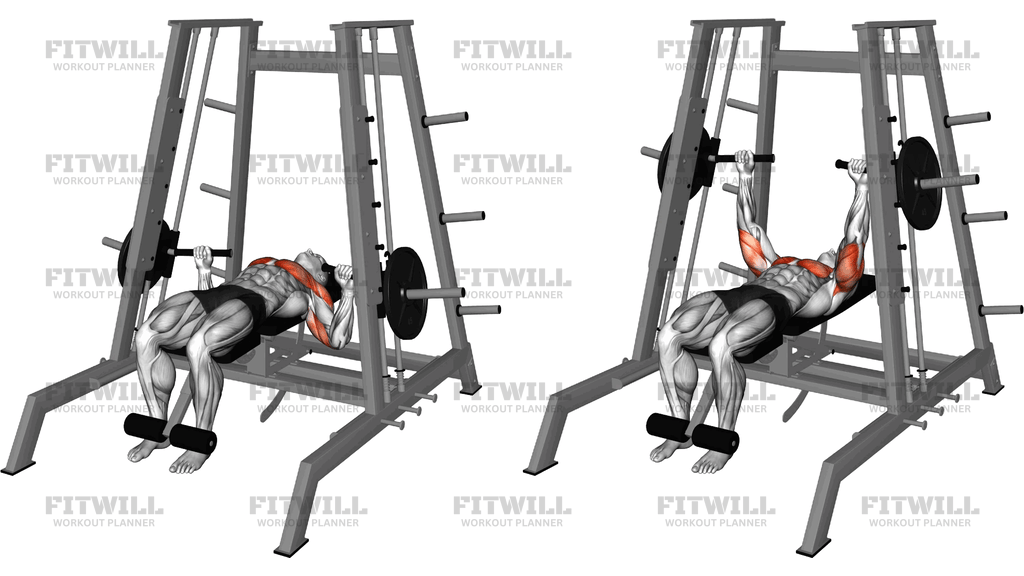
The Lever Tower Chest Press is a plate-loaded machine press performed from a supine position on a bench built into a leverage tower. Instead of free weights, you press two weighted lever arms from chest height up toward the ceiling, with the resistance traveling along a fixed path on each side of your body. Because the levers move independently, each arm does its own share of the work, which helps expose and eventually correct left-to-right strength differences.
This movement is a solid fit for lifters who want heavy chest pressing without a spotter. The fixed arc of the levers means you can safely push to failure or train close to your limit, since the weight simply travels back along its track rather than drifting toward your face. It also suits beginners learning the feel of a horizontal press, and experienced lifters using it as a strict, machine-based accessory after barbell or dumbbell bench work.
The primary muscles worked are the pectorals, with the front delts assisting at the start of the press and the triceps locking out each rep at the top. The anchored foot pads and supported back remove most of the stabilization demand, so the work concentrates on the pressing muscles themselves. That makes it easy to feel the chest contracting and to keep tension on the target area through the whole set.
Setup matters more than people expect on this machine. Your back, head, and hips should stay in contact with the bench, and the handles should line up roughly with your mid-chest when your elbows are bent at the bottom. If the seat or bench position puts the handles too high toward your neck or too low toward your ribs, the shoulder joint gets loaded awkwardly, so take a minute to adjust before adding plates.
Execution is straightforward: press the levers up and slightly inward until your arms are extended without being jammed straight, pause briefly, then lower under control until your elbows drop just below chest level. Breathe in on the way down and exhale as you press. The most common error is loading too much weight and bouncing the elbows out of the bottom, which shifts tension away from the chest and irritates the shoulder joint over time.
In practice, the Lever Tower Chest Press works well as a main strength lift in a machine-focused program, a safe pressing option when training alone, or a finishing press where you chase fatigue without worrying about controlling free weights. Keep the reps deliberate, let the machine dictate the path, and put your attention into squeezing the chest at the top of every rep.
[ Workout Log & Planner ]
Put your next workout in Fitwill
Keep your plan and training log ready when you are.


Instructions
- Sit on the bench of the leverage tower and lie back so your head, upper back, and hips are fully supported, then hook your feet under the foot pads so your legs stay anchored.
- Grip the two lever handles with a palms-forward grip, positioned so the handles sit at roughly mid-chest height with your elbows bent near your sides.
- Check that the plates on each lever arm are equal and that the starting position has your elbows just below chest level, not flared up toward your shoulders.
- Brace your core lightly and pull your shoulder blades into the bench so your upper body stays stable against the pad.
- Press both levers up and slightly inward along the machine's fixed path until your arms are extended, stopping just short of locking the elbows hard.
- Squeeze the chest for a beat at the top while keeping the elbows soft.
- Inhale and lower the levers slowly, letting your elbows travel down and slightly out until they reach the starting point just below chest level.
- Exhale as you drive the next press up, keeping your hips and shoulders glued to the bench throughout.
- Complete all reps with the same controlled depth, then let the levers settle into the support, release the handles, and unhook your feet before standing up.
Tips & Tricks
- Set the handles at mid-chest before loading plates; if the handles start near your collarbones or ribs, adjust your position on the bench first, because a bad line drives the shoulder into an awkward angle under load.
- Do not bounce out of the stretched position. The lever arms are heavy at the bottom, and rebounding there is the main way lifters strain the front of the shoulder on this machine.
- Press the two handles evenly. If one arm reaches lockout before the other, the stronger side is dominating, so reduce the weight until both arms finish together.
- Keep the elbows at roughly 45 degrees to your torso rather than flaring straight out to the sides, which keeps the chest in a strong line and eases stress on the shoulder joint.
- Drive your feet into the foot pads instead of letting the legs go slack; this anchors your torso so pressing force goes into the levers rather than sliding you up the bench.
- Stop the press just before a hard elbow lockout. Full hard lockouts shift the load onto the joints and let the triceps rest, reducing work on the chest.
- Lower each rep over about two seconds. The fixed path makes it tempting to let the levers drop, but slow eccentrics are where most of the chest-building tension lives on this press.
- Start lighter than your barbell bench press would suggest. Leverage machines often feel heavier at the bottom of the stroke, and the first rep from a dead stop is the hardest.
- If your shoulders feel pinched at the bottom, reduce depth slightly instead of forcing the elbows below the bench line every rep.
Frequently Asked Questions
Which muscles does the Lever Tower Chest Press work?
The pectorals do most of the work, with the front delts assisting during the initial drive and the triceps finishing each lockout. Because the machine stabilizes your torso, these pressing muscles get nearly all of the load.
Is the Lever Tower Chest Press good for beginners?
Yes. The fixed path of the lever arms removes the balance and control demands of a barbell, so beginners can learn pressing mechanics and build strength without needing a spotter.
Why are my feet hooked under pads during the Lever Tower Chest Press?
The foot pads anchor your body so the pressing force does not slide you up the bench. Bracing your feet keeps your back and hips planted and lets you push harder with the upper body.
Where should the handles be set at the start of the press?
The handles should line up with about mid-chest when your elbows are bent at the bottom. Handles set too high load the shoulder near the neck, and handles set too low turn the movement into something closer to a dip.
Can I train to failure safely on the Lever Tower Chest Press?
It is one of the safer ways to push close to failure, since the levers travel on a fixed track away from your body and you can simply stop pressing. Still, keep your hands on the handles until the weight is fully settled.
My arms extend at different speeds on each side. What should I change?
That usually means one side is stronger, so the weak arm gets dragged along. Drop the weight until both handles reach the top together, and the imbalance typically narrows over several weeks.
What can I substitute if my gym has no leverage tower?
A machine chest press, a dumbbell bench press on a flat bench, or a barbell bench press with a spotter all train the same pressing pattern. The lever version's main advantages are its fixed path and independent arms.
Should my elbows flare out wide or stay tucked during the press?
Aim for a middle ground, around 45 degrees from your torso. Straight-out flaring stresses the shoulder at the bottom, while fully tucked elbows shift too much work to the triceps.
How does this differ from a barbell bench press?
The leverage machine fixes the arc, stabilizes your torso, and lets each arm work independently, while the barbell requires you to control the path and stabilize the weight yourself. Many lifters use both, with the machine as accessory or solo-training work.